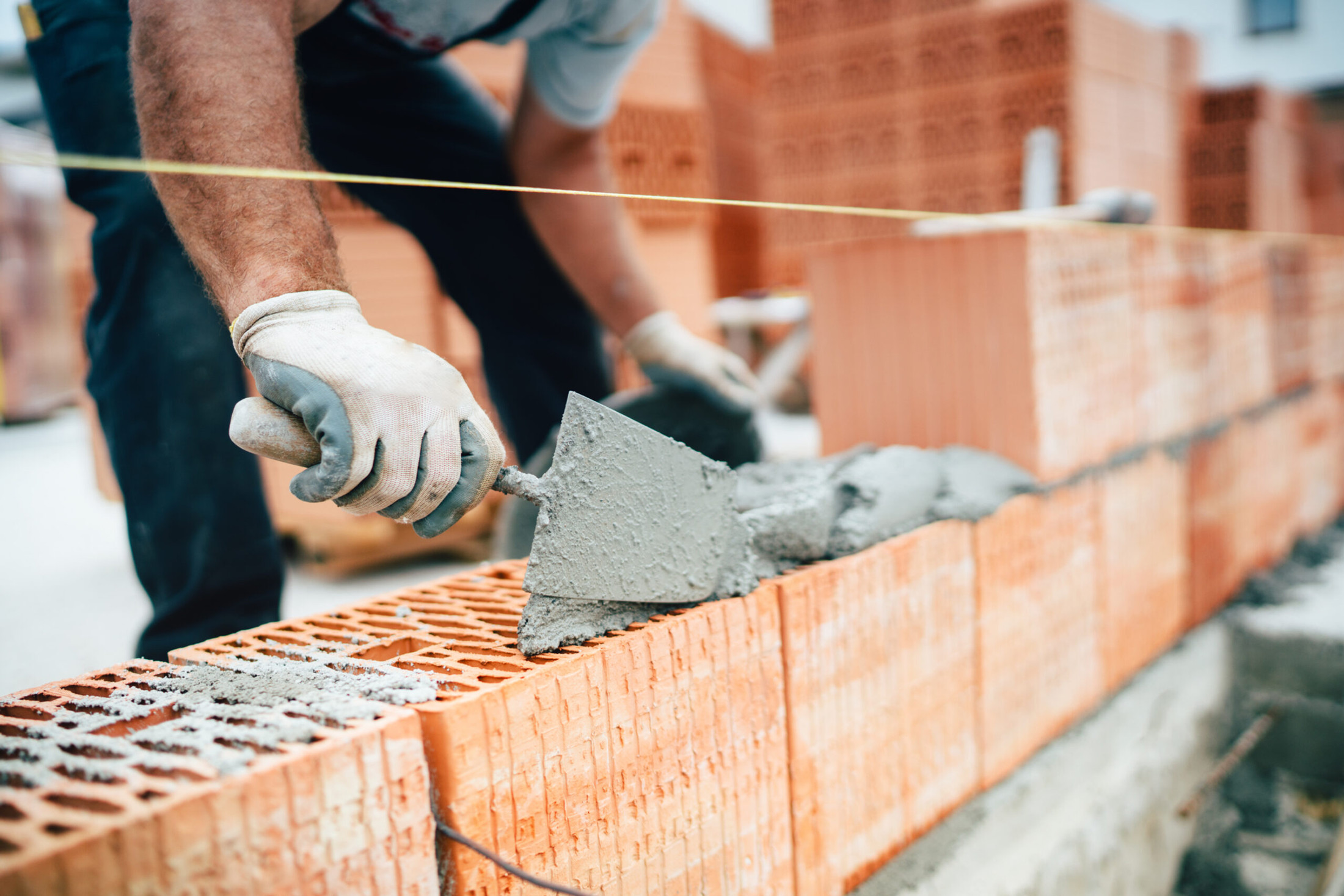
Bricklaying & Brickwork Repairs Bournemouth
New brickwork, extensions and garden walls, plus repairs and expert repointing to restore and strengthen walls that are already there. Lime or cement mortar, matched to the building.
Brickwork
Bricklaying, Brick Repairs & Repointing in Bournemouth
Repointing is a repair to the mortar joints, not to the bricks, and the mortar has to be softer than the brick it sits between. On a solid-walled Victorian or Edwardian house that means lime. On modern cavity brickwork a cement-based mortar is normally correct. Getting that one decision wrong is what turns a repoint into a brick-replacement job five winters later.
Bournemouth Roofing & Building provide professional bricklaying and repointing services across Bournemouth, Poole, and Christchurch. We specialise in new brickwork, extensions, repairs, and expert repointing to restore and strengthen existing walls for residential and commercial properties. Our experienced team delivers high-quality workmanship using durable materials to ensure strong, long-lasting results. Whether you need new brickwork, structural repairs, or repointing to improve and protect your property, we offer the same team from first visit to last, an itemised written price, and work throughout the Bournemouth, Poole, and Christchurch area.
Good brickwork is mostly about the things you cannot see afterwards: the footing, the mortar mix, the ties, the damp proof course and keeping the wall true as it goes up.
We lay new brickwork and blockwork for extensions, garages, outbuildings, garden and boundary walls, and we repair and restore existing walls that have cracked, bowed, spalled or lost their pointing. Every job is set out properly, gauged so the courses land where they should, and pointed to a finish that suits the building rather than whatever is quickest. The same team handles chimney repointing in Christchurch and brick repairs right across the conurbation.
- New brickwork, extensions, garden walls and blockwork
- Full and partial repointing, including chimneys
- Lime mortar for older and heritage properties
The site visit is free and so is the written itemised quote. Thomas Hannen prices every job himself.
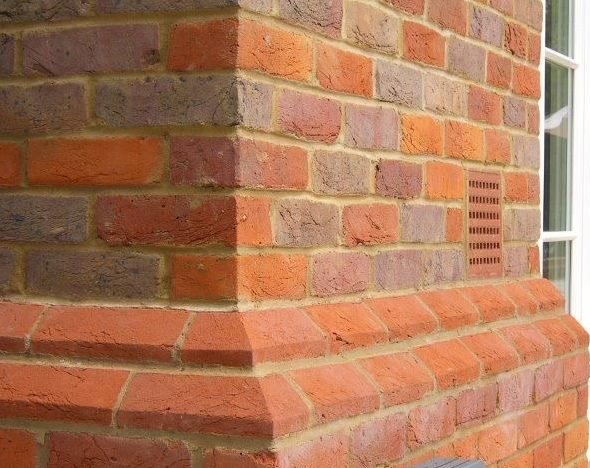
What we do
New Brickwork, Brick Repairs & Repointing Services
From a single spalled brick to a full elevation of new work. Tell us what the wall is doing and we will tell you what it actually needs.
New Brickwork & Construction
We provide professional bricklaying services for new builds and construction projects, including garden walls, house extensions, garages, outbuildings, and structural blockwork. Our experienced team delivers strong, high-quality brickwork built to last and finished to a high standard.
We handle the footings, cavity work, wall ties, damp proof course and lintels, and set the work out so the courses line through with the existing building where there is one.
Brickwork Repairs & Restoration
We carry out all types of brickwork repairs, from damaged or weathered bricks to structural issues. This includes brick replacement, crack repairs, chimney repairs, and restoring existing brickwork to its original condition using carefully matched materials.
Bowed or loose sections are rebuilt, and chimney work includes rebuilds above the roof line. We match materials to what is already there so a repair reads as part of the wall instead of a patch.
Repointing Services
We offer expert repointing services to restore and protect your brickwork. This includes full or partial repointing, chimney repointing, and mortar joint repairs using a range of finishes such as flush or weather-struck pointing. We also specialise in lime mortar for older and heritage properties.
Old joints are raked back to sound mortar first, the wall is brushed and damped down, then pointed and finished to suit the elevation.
Brickwork Maintenance & Finishing
We provide brick cleaning, sealing, and general maintenance to improve appearance and protect your property from the elements. Our finishing services help extend the life of your brickwork while enhancing its overall look and durability.
That covers lifting moss, algae, staining and old mortar smears. Keeping brickwork clean and the joints sound is what stops small problems turning into a rebuild.
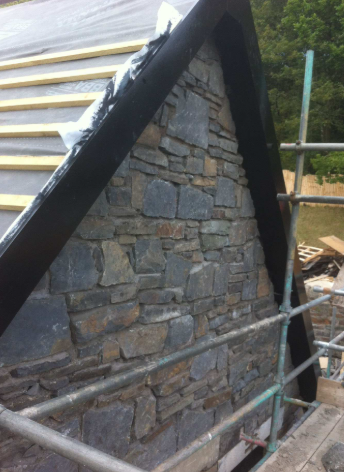
Older properties
Lime Mortar Repointing for Period & Heritage Property
This is the single most common thing we get called out to put right, and it is worth understanding before anyone points your house.
Older houses, roughly anything Victorian or earlier, are built with solid walls and no cavity. They were never meant to keep water out completely. They are meant to soak a bit of rain up and then dry out again, and they do that through the mortar joints, which is why the original mortar is soft lime rather than cement. The lime is weaker than the brick on purpose: it takes the moisture, it takes any small movement, and if anything is going to crack or crumble it is the mortar and not the brick.
Cement mortar behaves the other way round. It is hard, it is dense, and water does not pass through it easily. Point a solid wall in cement and the rain still gets in, but now the only way out is through the face of the brick. The brick stays wet, salts move through it, and the first hard frost freezes that trapped water and blows the face off. You end up with crumbling, pitted brickwork, damp showing inside, and mortar joints standing proud of the bricks they were supposed to protect. Once that starts, you are replacing bricks, not just repointing.
So on an older or heritage property we point in lime, matched to the existing mortar and finished to match the original joint. On modern cavity brickwork a cement-based mortar is normally the right call. The point is that the mortar has to suit the wall, and we work that out before we mix anything. Where the brickwork itself is sound and it is only the joints that have gone, the job is repointing, and that has a page of its own covering raking out, the mixes and the joint profiles.
A good deal of our lime work is on older property inland, and we regularly carry out repointing on period buildings in Wimborne as well as on the Victorian and Edwardian terraces closer to town.
One thing to check before anyone starts. Repointing a listed building in a different mortar can affect its character, so listed building consent may be required, and in a conservation area the controls are lighter but still real. The Planning Portal sets out the other permissions you may require, and your local authority confirms your particular case. We will tell you when we think a wall needs that check, and we will put the mortar specification in writing so you have something to submit.
| Mortar | Lime | Cement-based |
|---|---|---|
| Right for | Solid-wall property, roughly Victorian or earlier, and soft or handmade brick | Modern cavity brickwork built to shed water rather than absorb it |
| How the wall handles water | Absorbs a little rain, then dries out again through the joints | Keeps water out at the face, with a cavity behind to deal with the rest |
| Relative hardness | Softer than the brick, deliberately | Harder and denser than many older bricks |
| What fails first | The mortar, which is the cheap part and the part meant to be sacrificial | On an old wall, the face of the brick, which is not repairable by pointing |
| Movement | Takes small movement without cracking the brick | Rigid, so movement shows as cracks through brick and joint alike |
| Working season | Slower to set and must not be caught by frost, so it is weather-dependent | Less weather-sensitive, still not laid in frost |
| Effect on the price | More labour, slower raking out, longer working window | Quicker to work, and much more expensive if it is used on the wrong wall |
Joint finishes
Flush & Weather‑Struck Pointing Finishes
The joint finish is not just a look. It changes how water behaves when it runs down the wall, so we pick it to suit the elevation and the age of the brickwork.
Flush pointing
The mortar is finished level with the face of the brick, with no groove and no ridge. It is the plainest finish and the usual choice on older brickwork and on lime work, partly because it looks right on a period building and partly because there is no recess for water to sit in. It also suits soft or irregular bricks where a shaped joint would look heavy-handed.
Weather-struck pointing
The top of the joint is pressed back into the wall and the bottom is left slightly proud, so the joint forms a small slope that throws rainwater clear of the brick below. It is a good finish on exposed elevations and on chimneys, and it is what you will normally find on more modern brickwork. Done well it also gives a very crisp, even shadow line across the wall.
Whichever finish is used, the preparation matters more than the profile. Joints are raked back to sound mortar rather than skimmed over, so the new mortar has something to key into and enough depth to last.
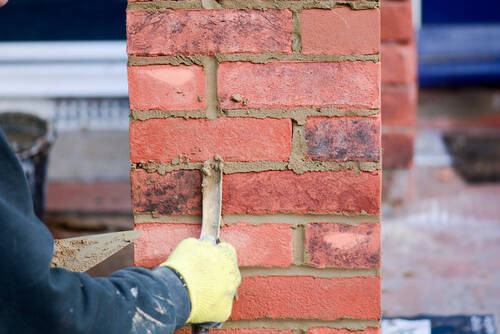
How it works
Our Bricklaying & Repointing Process
You will know what is happening, who is coming and what it costs before anyone lifts a trowel.
Look at the wall
We come out, check the mortar, the bricks and the age of the build, and work out whether it is a repair, a repoint or a rebuild.
Written quote
An itemised price covering access, mortar type, joint finish and how much of the wall is included. No vague estimates.
Match the materials
Bricks matched on size, colour and texture. Mortar matched on sand and binder, with a test patch left to dry before we commit.
Build and point
Work carried out, joints finished consistently across the elevation, and the site swept up and cleared when we are done.
Small jobs welcome
Garden Walls, Boundary Walls & Brick Repairs
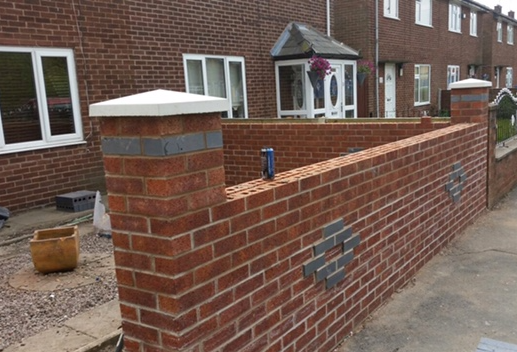
Not everything needs to be a big job. Garden and boundary walls, gate piers, low retaining walls, a bowed section that needs taking down and rebuilding, a handful of frost-damaged bricks cut out and replaced, one elevation repointed while the scaffolding is up for something else.
Small brickwork gets the same footings, the same mortar mix and the same finish as anything larger. Send a couple of photographs with your enquiry and we can usually tell you whether it needs a site visit or whether we can price it from what you send.
Garden walls are one of the jobs we get asked for most, and if you need a bricklayer in Poole we are only a short run round the harbour.
Two things worth checking on a boundary job before we price it. Height and position decide whether a wall needs planning permission at all, which the Planning Portal guidance on fences, gates and garden walls sets out. And if the wall sits on the boundary line, or you are excavating close to a neighbour's structure, the Party Wall etc. Act 1996 may require you to serve notice on your neighbour first. Neither is our paperwork to file, but both change your timescale, so we raise them at the survey rather than on the day the digger arrives.
What it costs
What Drives the Cost of Repointing and Brickwork
Repointing is priced on how much mortar has to come out, how hard it is to reach, and which mortar goes back in. The pointing itself is the visible part and the small part. Raking joints back to sound mortar is the slow, skilled, expensive part, and it is also the part that decides whether the job lasts twenty years or two winters.
We price after we have looked at the wall, because the same elevation can be a light repoint or a rebuild depending on what the mortar is doing. These are the variables behind the figure.
What moves the number
- Access. A garden wall you can reach off the ground, a first-floor elevation off a tower, and a chimney stack above the roof line are three different prices for the same square metre of pointing. A chimney means working at roof level with materials, water and tools, which needs a proper platform under the HSE rules on work at height, not a ladder.
- How deep the joints have to be raked. Mortar is raked back to sound material, not skimmed over. A wall where that is 15 or 20 millimetres in is a different job from one where the failure is superficial, and it is the single biggest labour variable on a repoint.
- Joint width and brick condition. Fine joints on gauged brickwork take longer per metre than wide joints on common brick. If bricks have to be cut out and replaced as we go, that is separate work and it is priced separately.
- Which mortar. Lime is slower to work, needs a longer working window and must not be caught by frost, so it costs more in labour and it constrains when the job can run. Cement is quicker, and ruinous on the wrong wall.
- Whether we can match it. Matching sand, binder and joint finish, and mixing a test patch and letting it dry before committing to the elevation, is time nobody sees on the finished wall. Skipping it is why patched pointing reads as a patch forever.
- Full or partial. One weather-beaten elevation is a different job from all four. Doing the exposed south-westerly wall now and the sheltered ones later is often the right call, and we will say so.
- Shared access. If a scaffold is already up for a roof repair or a render, pointing the same elevation while it stands costs a fraction of what it costs as a stand-alone visit. It is the easiest saving on this page.
What we will ask you
Roughly when the house was built, and whether it is solid wall or cavity. Whether you can rake the mortar out with a screwdriver or your finger, and whether there is sand collecting at the base of the wall. Whether damp is showing inside on that elevation. Which elevations you are asking about, and how high. Whether it is listed or in a conservation area. Two photographs, one of the whole elevation and one close enough to see the joints, will usually tell us most of it.
Why two repointing quotes differ so much
Because one of them is raking out and the other is not. Mortar smeared over failing joints looks identical on the day it is finished and starts dropping out within a couple of winters, and it costs a fraction of the price to do. That is the difference you are usually looking at when one quote is half the other.
So ask each quote three things: how far back the joints will be raked, what the mortar is made of and why that mix suits this wall, and whether the access is included. If a quote for a solid-walled period house does not mention lime at all, that is the answer to the third question by itself.
Questions
Bricklaying & Repointing Questions, Answered
How do I know if my property needs repointing?
Look at the mortar joints, not the bricks. If you can rake the mortar out with a screwdriver or your finger, if it is dropping out as sand at the base of the wall, or if the joints have eroded back behind the face of the brick so water can sit in them, the pointing has failed. Other signs are damp patches appearing inside on an exposed elevation, moss or green growth following the joint lines, and mortar that has cracked away from the edge of the brick. Chimneys and south-westerly facing walls usually go first here on the coast because they take the worst of the weather.
How long does repointing last?
It depends on how exposed the wall is, how deep the joints were raked out before the new mortar went in, and whether the right mortar was used for the wall. Properly raked and filled joints on a sheltered elevation last a very long time. A patch of mortar smeared over old failing joints will start dropping out within a couple of winters. We rake back to sound mortar before we point, because that is what decides how long the job lasts.
Can you match my existing bricks and mortar colour?
Usually, yes. For bricks we take a sample or photographs to a merchant and match on size, colour and texture, and where the match matters we will often use reclaimed bricks of the same era. For mortar we match the sand, the binder and the joint finish, then mix a small test patch and let it dry before we point the whole wall, because wet mortar always looks darker than it will end up. On a repair we can also take bricks from a hidden elevation and use new ones there instead.
Do you need scaffolding for a chimney?
In most cases yes. A chimney means working at roof level with materials, water and tools, and it needs a proper working platform with edge protection rather than a ladder. We price the access with the job so you can see what it costs, and we tell you up front whether scaffolding, a tower or a roof edge system is needed. If access can be shared with other work such as a roof repair or repointing on the same elevation, it is worth doing both at once.
Should I use lime mortar or cement mortar?
It depends on the wall. Older solid-wall properties were built to absorb water and then dry out again through the joints, and they need a soft, breathable lime mortar to do that. Cement mortar is harder and much less porous, so on an old wall it traps moisture in the brick instead of letting it escape, and the face of the brick then blows off in frost. Modern cavity-wall brickwork is a different construction and a cement-based mortar is normally correct. We look at the wall, the existing mortar and the age of the property before deciding.
Do you do garden walls and small jobs?
Yes. Garden walls, boundary walls, piers and gate posts, low retaining walls, rebuilding a section that has been hit or has bowed, replacing a few spalled bricks, repointing one elevation. Small brickwork jobs are a good part of what we do, and they get the same footings, materials and finish as a larger job. Send a photograph with your enquiry and we can usually tell you straight away whether it needs a site visit.
Where we work
Bricklaying & Repointing Across Dorset
We serve these areas for new brickwork, brick repairs and repointing:
Bricklaying and repointing by location
Bricklaying and repointing in every town and village we cover
Each page is written from the ground, the housing stock and the planning position of that settlement, using Environment Agency, British Geological Survey, Valuation Office Agency and Census records. 84 pages covering 115 settlements.
Within 8 miles
8 to 14 miles
- Stone (also Sturminster Marshall)
- Furzehill
- Ashley Heath
- Beacon Hill
- Swanage
- Holt (also Chalbury Common, Gaunt's Common and more)
- Holton Heath
- Thorney Hill
- Three Legged Cross
- Lytchett Matravers
- Langton Matravers (also Worth Matravers, Harman's Cross)
- Barton on Sea
- Corfe Castle (also Studland)
- Sandford
- Ridge (also Stoborough)
- Ringwood
- New Milton
- Wareham
- Bashley
- Burley (also Burley Street)
- Verwood
- Hangersley (also Hightown)
- Ashley
- Milford on Sea
- Everton (also Hordle)
- Spetisbury (also Charlton Marshall)
- Alderholt
- Cranborne (also Whitmore)
14 to 20 miles
- Tarrant Monkton (also Pimperne)
- Hyde (also Frogham, North Gorley and more)
- Winterborne Kingston
- Lymington
- Brockenhurst
- Boldre (also Sandy Down, Tiptoe and more)
- Sandleheath
- Bere Regis
- Fordingbridge
- Blandford Forum
- Freshwater and Totland
- Walhampton and Portmore (also Pilley)
- Wool
- Norton
- Bryanston
- Yarmouth (also Bouldnor)
- Rockbourne (also Martin)
- Lyndhurst
- Sixpenny Handley
- West Lulworth (also Burngate)
- Breamore (also Woodgreen)
- Minstead
- Winterborne Stickland
- Winfrith Newburgh (also Briantspuddle)
- Milborne St Andrew (also Winterborne Whitechurch)
- Stourpaine (also Durweston, Ash)
- Tolpuddle
- East Boldre
- Cadnam and Bartley
- Lover
- Redlynch
- Downton
- Ashmore
- Woodlands
- Crossways
- Iwerne Minster (also Shroton)
- Owermoigne
Free quote
Get a Quote for Bricklaying or Repointing in Bournemouth
Send us a photograph of the wall or the chimney and we will come out, look properly, and put a clear written quote in front of you.