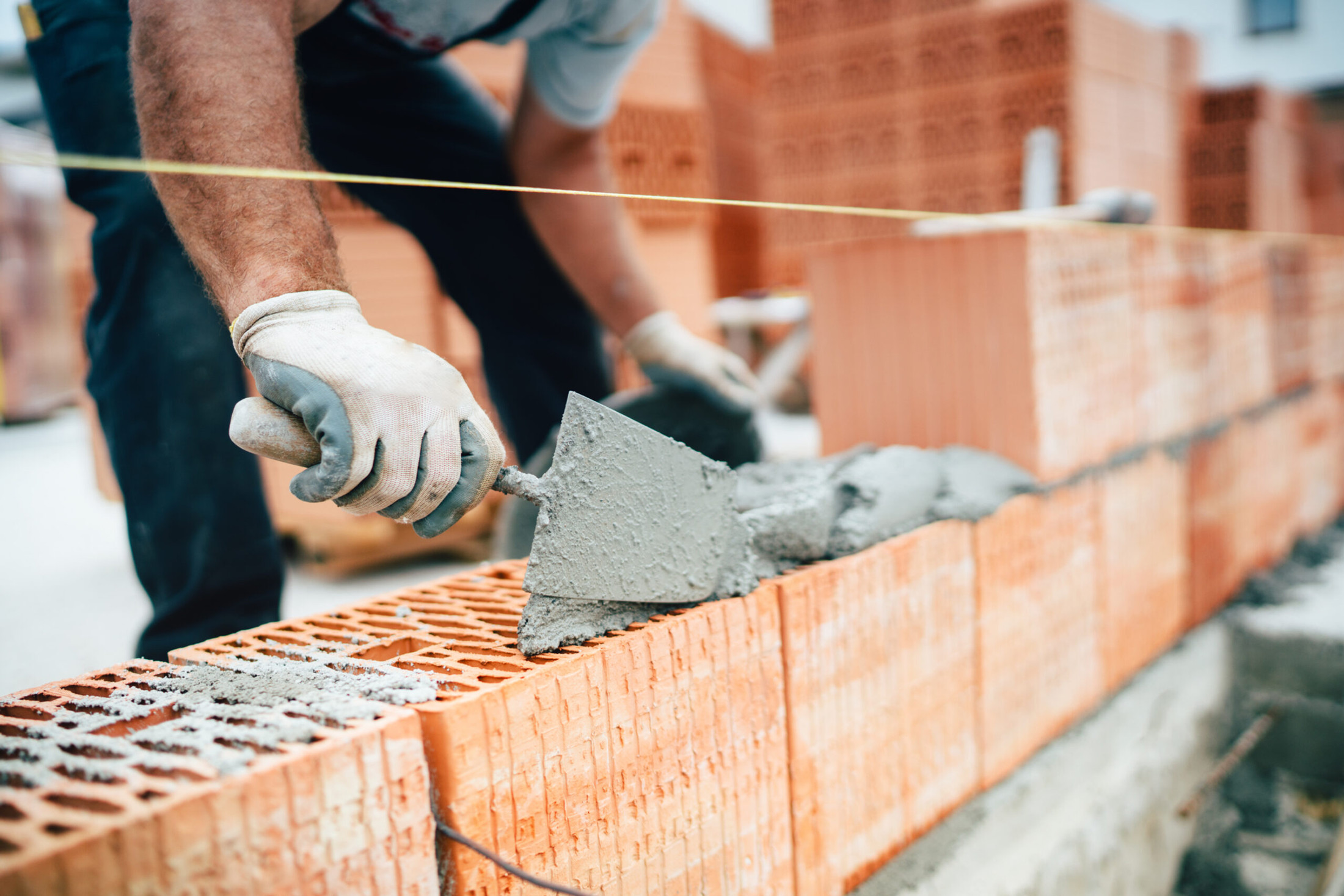
Bricklaying and repointing in Owermoigne
Lime repointing, stacks, cob plinths, barn walls and roadside walls, done the way an old wall needs rather than the fast way.
The site visit is free and so is the written itemised quote. Thomas Hannen prices every job himself.
Bricklaying and repointing
Brickwork in Owermoigne: soft walls, hard mortar, and what to do about it
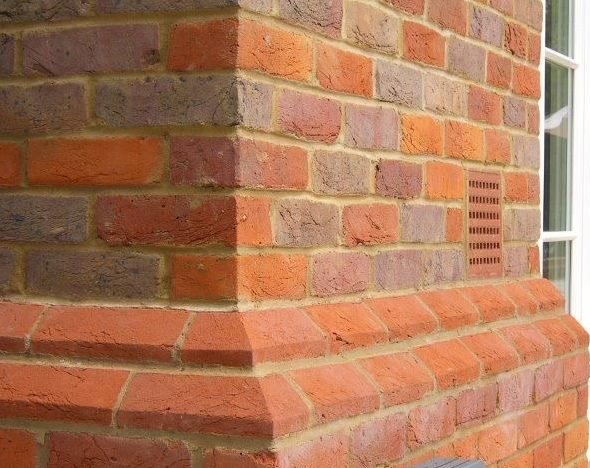
The older walls in Owermoigne were built soft, in lime, so they could take water in and let it back out again. A lot of them were repointed in hard sand and cement at some point in the last fifty years, and that is where nearly all the brickwork trouble here comes from. The cement traps the damp and pushes it out through the brick face instead of the joint, which is why the faces are crumbling and the joints look fine.
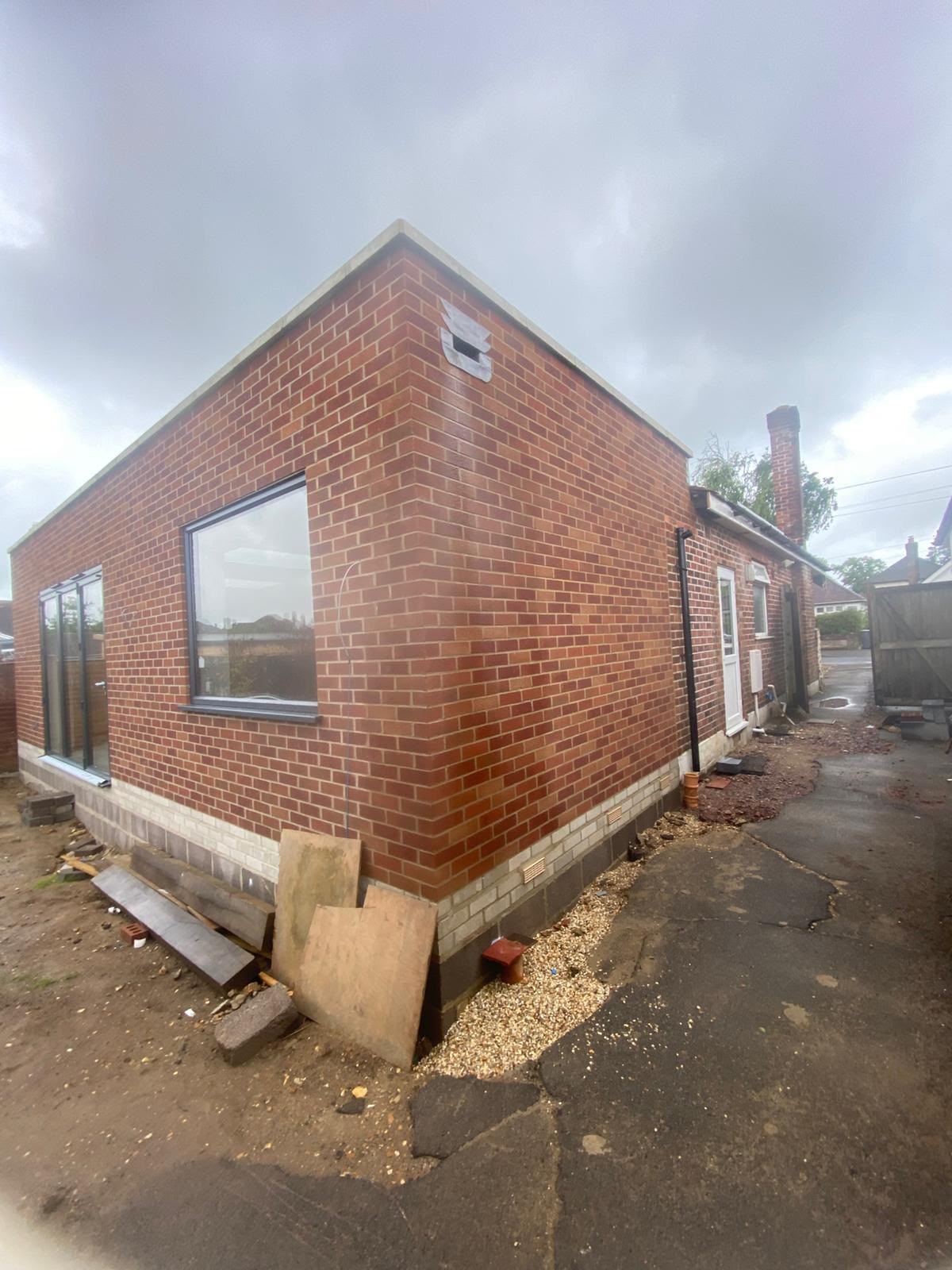
People ring us here about a handful of things. Brick and stone faces flaking off at the bottom of a wall. A chimney stack that has started shedding mortar down the roof. A step crack over a window or across the corner of a single storey extension. Or a roadside wall that a lorry has clipped on the bend.
We come out, look at the whole building rather than the patch you have spotted, and tell you what is actually happening in the wall. Sometimes the answer is that it needs nothing yet and a gutter needs fixing instead. The site visit and the itemised written quote are free either way, and it is Thomas who comes out to look.
The work
The brickwork jobs we do in and around Owermoigne
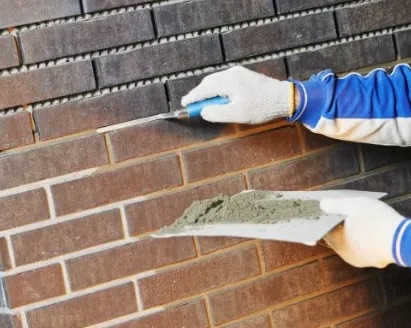
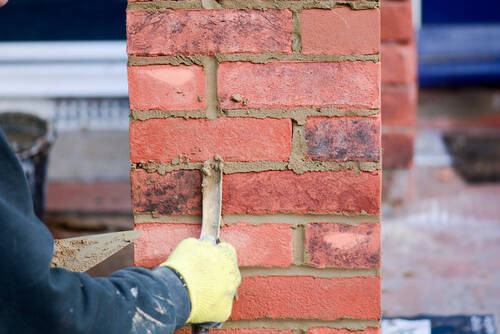
Repointing old solid walls in lime. The village core is rubble stone and soft handmade brick, often mixed in the same elevation, with brick used for the quoins, the window reveals and the chimney, and no cavity anywhere in it. We rake the joints out by hand rather than with a disc, because a disc widens the joint and takes the arris off a soft brick in a single pass, and point back in an NHL lime mortar matched for sand, colour and texture. The finish is kept slightly back from the face on rubble work and struck bucket handle or weather struck on brick, never smeared flush across the face of the stone, which is what makes an old cottage look rendered from the road.
Plinths, stacks and roadside walls. Several of the older buildings here are cob sitting on a brick or rubble plinth, and the plinth is doing a real job: it keeps the earth wall clear of the splash line. When it loses its mortar or a few units, water gets behind it and the cob above starts to go, so rebuilding a plinth course by course in lime is a repair worth doing early and a very expensive one to leave. On a thatched or tiled cottage the stack is the most weathered brickwork on the building: we repoint above roof level, cut out perished brick, renew the flaunching round the pots and rebuild from the flashing up. Thatch changes how the access is set out and we take that seriously, no grinders, no naked flame, sheeting over the coat. The lanes are narrow and the walls sit right on them, so they get hit, and we rebuild damaged lengths on a dug foundation, reset coping and rebuild gate piers properly bonded. The former farm buildings round the village bring blocked up cart openings cracked along the joint between old and new, and bowed gables that want stitching.
How it runs
From your call to a written price
You get one person to ring and a price broken down by elevation, so it can be compared properly. Owermoigne is Dorset Council. There is no conservation area covering the village, so for most properties here repointing and brick repair is maintenance and needs no application at all. There are thirteen listed entries in the parish, though, including the parish church and Moignes Court, and on a listed building even like for like repointing needs listed building consent first. New or raised garden walls have height limits, set out in Planning Portal guidance on fences, gates and garden walls. Structural work goes through building control, and where a wall is shared with a neighbour the Party Wall etc. Act 1996 applies.
Cost
What decides the price of a brickwork job
There is no rate per square metre, because a wall tells you little until somebody has looked at its joints. A thatched cottage with a stack on the ridge, a rubble stone barn up a farm track and a modern bungalow with a low garden wall are three different set ups. Access is a priced line rather than an extra, since work at height rules cover how long a platform stands as well as how big it is. Hand raking is the only safe way on soft old brick. Ask about rake depth and whether the mortar was matched.
If something has moved
Loose brickwork, or a wall that has shifted
Ring, do not use the form. Anything overhead or leaning goes to the front of the queue. The first visit makes it safe and stable, and the permanent repair is priced once we can see how far the movement goes. Round here it is a roadside wall caught on the bend, or the top of a stack after a gale. The phone is answered 24 hours for emergencies; scheduled work runs Monday to Friday, 8am to 6pm.
The one local thing
The ground moves, so watch where your rainwater goes
The ground around Owermoigne is cohesive and it shrinks and swells with the seasons, which matters more to brickwork than most people expect. Clay that dries out in a hot summer pulls away from a footing and lets it drop a fraction. Then it takes water back on through the winter, swells and lifts.
Shallow foundations feel that most, which in practice means garden walls, porches, conservatory dwarf walls and single storey extensions rather than the house itself. The signature is a step crack running diagonally through the joints, wider at one end than the other, that opens in late summer and closes again by spring.
What to do with that. The single most useful thing is to control where rainwater lands. A gutter running over at one corner, a downpipe discharging onto the soil beside a wall or a soakaway sited too close to a footing will make the ground beside that wall behave completely differently to the ground three metres away, and that difference is what cracks a wall. Approved Document H is the document that governs where surface water is allowed to go, and getting it right is far cheaper than underpinning.
Trees matter too: a mature tree drawing water out of clay in a dry summer can move a garden wall on its own. Before you pay anybody to rebuild a cracked wall, ask what is going to stop it happening again, because rebuilding it in the same place with the same drainage buys you a few years and no more.
Who you are dealing with
A local firm you can check
We are about twenty miles from Owermoigne and out through DT2 regularly, covering the villages between Wareham and Dorchester including Crossways, Warmwell, Winfrith Newburgh and Wool. Bournemouth Roofing & Building Ltd, registered in England and Wales, company number 15471719, which you can look up in a minute. Thomas Hannen's business, and he is the one who comes out to price the job, not a salesman. A verified customer's 10 out of 10 on Checkatrade. The visit and the written quote are both free.
Questions
Owermoigne questions we get asked
Do you do the brickwork on thatched cottages?
We do the masonry, not the thatch. On a thatched cottage the wall is sheltered from above but takes splash at the base, so the failure is usually in the bottom metre and around the openings. We work off a tower rather than leaning anything against the thatch, and we sheet the roof edge before starting. Thatching is a separate trade and we would not put a hand to it.
Why has the crack come back after being repaired?
Because the mortar was the symptom. The ground at Owermoigne is cohesive with a significant shrink and swell rating, so a shallow footing rises in winter and drops in summer and any crack above it reopens on the same line. Filling it does nothing. We open the ground at the crack, look at what the wall is standing on and either underpin that bay or rebuild it so it can move.
Moignes Court is listed. Does that affect our repair?
Only if your own address is one of the 13 listed entries at Owermoigne, and the Parish Church of St Michael and Moignes Court are two of them. There is no conservation area over the village, so an ordinary house carries no appearance control and Dorset Council has nothing in front of it. On a listed building the consent, the mortar and the joint finish are settled before we start.
Is twenty miles too far for a small repair?
Not on its own. Owermoigne is 20 miles from our base, so we would rather run a small job in with a full day out here than make two short trips, and that sometimes means waiting a week or two for the right slot. The site visit and the written itemised quote are still free, and Thomas Hannen still comes out in person to look at the wall.
Can a crack be stitched without rebuilding the wall?
Most cracks can be. We cut the damaged bricks out in a stepped pattern, stitch across the line with bed joint reinforcement and rebuild only the affected section. A wall comes right down when the footing has failed or it has gone too far out of plumb to save. At Owermoigne the cause is usually seasonal ground movement, and that gets dealt with at the base rather than the top.
Nearby, and next door
Bricklaying and repointing near Owermoigne
Bricklaying and repointing nearby
Our other trades in Owermoigne
Everything we do in Wareham Bricklaying and repointing, all areas Every area we cover
Free quote
Find out what that wall actually needs
A free site visit, a straight answer about lime or cement, and a written itemised quote you can compare against anyone else's.