Roofers in Christchurch
Roofing, plastering and rendering, brickwork and repointing, insulation, driveways and patios, and exterior cleaning throughout Christchurch, the Priory and the quay, the bungalow streets inland, and the exposed coast at Mudeford, Friars Cliff and Highcliffe.
The site visit is free and so is the written itemised quote. Thomas Hannen prices every job himself.
Christchurch
Here, the material has to be right before anything else
Repairing or replacing a roof like for like is normally treated as maintenance and needs no planning permission. Changing its appearance is where it gets complicated. In a conservation area that includes swapping natural slate for a lookalike, or plain clay tiles for concrete. On a listed building, listed building consent is a separate matter again and is normally needed for alterations inside as well as out.
There is a lot of protected fabric in this town. Conservation areas run through the streets around the Priory and down to the quay, and listed and period buildings sit among ordinary houses rather than in a separate quarter.
That changes the first question on a job. Before we talk about how a roof goes back on, we need to know what it has to look like when it is finished. Plain clay tiles rather than concrete. Natural slate rather than a fibre-cement lookalike. Lime mortar rather than cement. On a listed building, consent is normally needed before altering anything, and that is a conversation to have before the scaffold goes up, not after.
Christchurch comes under BCP Council, and the two things worth checking before you order any material are whether your street sits in one of the council's conservation areas (there are 48 across Bournemouth, Christchurch and Poole), and whether the building itself is listed. We will tell you when we think a job needs that check, and we will price the like-for-like option so you can see what the compliant route costs before you decide anything.
Matching an old roof is mostly careful stripping. The sound tiles or slates come off in order, get sorted, and go back on the elevation that faces the street; the new stock goes on the rear slope where the difference does not show. It costs a little more in labour and it is what the finished job should look like.
Two river valleys
Low ground, damp air, and the north slope
The Avon and the Stour meet here, and a good deal of the town sits low between them. Low ground and open water mean the air holds moisture, and it shows first on any roof slope that never gets the sun.
Moss on a north slope is not just a cosmetic problem. It sits in the tile laps and holds water against the tile, and when that water freezes it lifts the surface off. It also washes down into the gutters and valleys, and a blocked valley backs water up under the bottom courses of tile, which is a far more common cause of a leak here than storm damage is. The same damp pressure sits on the walls: shaded render greens up, cracked render holds water behind it, and a solid wall that cannot dry out pushes the damp inside.
Out at Mudeford, Friars Cliff and towards Highcliffe the problem flips round. Those roofs are in the open with salt spray and wind reaching them directly, so it is the nails, clips, flashings and ridge bedding that go first. Two different sets of pressures inside one town, and they need two different specifications.

What we do in Christchurch
Every trade, one company
Period property in the middle, post-war bungalows inland, exposed coast on the edge. Each one asks for something different.
Roofing
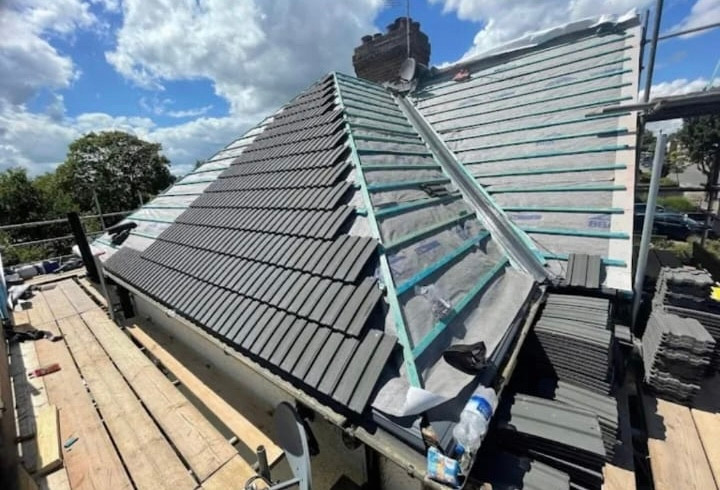
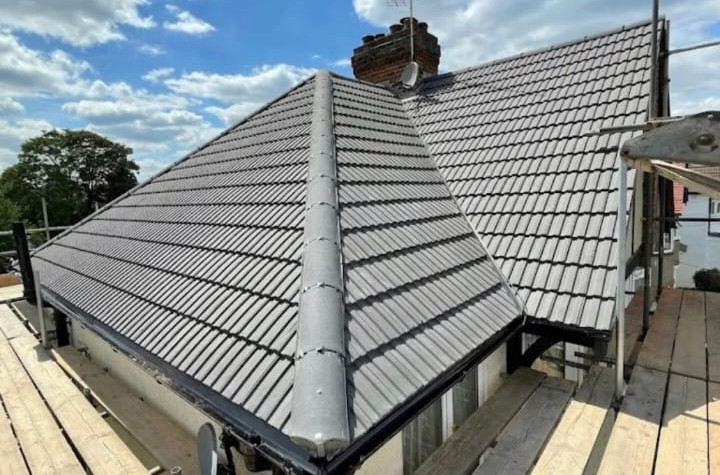
Plain clay tile and natural slate on the period roofs, concrete tile on the post-war bungalow stock, and flat roofing on the rear extensions. On a wide, shallow-pitch bungalow roof the minimum pitch of the tile matters, because a tile laid below its rated pitch will let wind-driven rain past however well it is nailed down.
Roofing servicesPlastering & Rendering
Skimming, dry lining, render and K Render. On a solid-walled period house a gypsum skim laid over a wall that is still wet will only blow again, so the source of the damp comes first and the finish comes second.
Plastering & renderingBricklaying & Repointing
Period brick and chimney work around the Priory and the quay, and repointing in lime rather than cement. On a conservation-area frontage cement is both the wrong finish to look at and the wrong material to use, because it seals a soft brick that was built to breathe.
Brickwork & repointingInsulation
A bungalow loses a bigger share of its heat through the roof than a two-storey house does, simply because the roof covers the whole floor plan. On the post-war bungalow streets inland, topping up the loft is usually the cheapest improvement available, and Celotex or TLX suits the low-headroom roofs where a deep roll will not fit.
Insulation servicesDriveways & Patios
Block paving, resin-bound, tarmac and porcelain patios. On low-lying ground near the rivers, where the water goes matters as much as what the surface is made of, so the falls and the drainage get set out before anything is laid.
Driveways & patiosExterior Cleaning
Roof, wall and driveway cleaning with a biocide treatment afterwards. Damp river-valley air and shaded slopes grow moss and algae faster here than on open ground, and soft washing takes it off without blasting water under the tiles or stripping the surface of the render.
Exterior cleaningWorth a look
What keeps coming back on Christchurch roofs
A mix of period fabric, damp ground and an exposed coastal edge produces a fairly predictable list of faults. These are the ones we are called out to most.
- Heavy moss on a north slope, with the gutters and valleys blocked behind it
- Concrete tiles patched into a period clay or slate roof at some point and now obvious
- Cement pointing on soft period brick, with the brick face spalling around it
- Rain getting past a shallow-pitch bungalow roof in wind, with perished felt underneath
- Ridge bedding washed out and flashings corroding on exposed roofs near the coast
- Green, cracked or hollow-sounding render on a shaded elevation holding water behind it
Questions
Christchurch roofing questions
My house is in a conservation area. Do I need permission to re-roof it?
As a general rule, repairing or replacing a roof with the same materials in the same appearance is treated as maintenance and does not need planning permission. Changing the appearance is where it gets complicated, and in a conservation area that includes swapping natural slate for a lookalike or plain clay tiles for concrete. If the building is listed, listed building consent is a separate matter and is normally needed for alterations, inside as well as out. The council for Christchurch is BCP Council and their planning team will confirm your particular case. We will quote for the like-for-like option as well so you can see what the compliant route costs before you decide.
Can you match the tiles or slates on a period roof?
Usually, yes. On an older roof the sound tiles or slates are worth saving, so we strip carefully, sort what comes off, and re-lay the salvaged material on the elevation that faces the street. New or reclaimed stock then goes on the rear slope where the difference in weathering does not show. Plain clay tiles and natural slate both come in enough sizes and colours to get close, and we will bring samples up against the existing roof before anything is ordered rather than guessing from a brochure.
Why does the north side of my roof go green when the south side stays clear?
Because it never properly dries out. Christchurch sits low where the Avon and the Stour meet, so the air holds more moisture than it does on higher ground inland, and a slope that gets no direct sun stays damp for most of the winter. Moss and algae take hold in those conditions and then hold water in the tile laps, which freezes and takes the surface off the tile. The growth also washes down and blocks gutters and valleys, which backs water up under the bottom courses. Soft washing with a biocide treatment clears it without driving water up under the tiles.
Do you cover Mudeford and Highcliffe as well as the town centre?
Yes. We are based in Bournemouth and travel to the job, so the town centre, the Priory and the quay, Purewell, Somerford, Burton, Jumpers, Mudeford, Friars Cliff and Highcliffe are all inside our normal working area, broadly the BH23 postcodes, and Christchurch comes under BCP Council. The exposed coastal edge is worth flagging when you call, because a roof at Mudeford or Friars Cliff takes salt spray and wind straight off the water and we will want to look at the fixings and flashings as well as the covering.
Trade by trade
Each trade, written for Christchurch
The same local evidence, read through each trade in turn. Ground conditions decide a driveway, exposure decides a roof, and the age of the housing decides insulation.
- Roofing in Christchurch
- Flat roofing in Christchurch
- Bricklaying and repointing in Christchurch
- Repointing in Christchurch
- Driveways and patios in Christchurch
- Patios in Christchurch
- Plastering and rendering in Christchurch
- Rendering in Christchurch
- Insulation in Christchurch
- Loft insulation in Christchurch
- Wall insulation in Christchurch
- Exterior cleaning in Christchurch
- Gutter cleaning in Christchurch
- Fascias, soffits and guttering in Christchurch
Who you are dealing with
A local firm you can check
Christchurch sits inside our normal working area, from the Priory and the quay out through Purewell, Somerford, Burton, Jumpers and Mudeford, broadly the BH23 postcodes under BCP Council.
You are dealing with Bournemouth Roofing & Building, the trading name of Bournemouth Roofing & Building Ltd, registered in England and Wales, company number 15471719. That takes a minute to check. Thomas Hannen owns the firm and he prices every job himself, so the person who quotes it is the person answerable for it. One multi-trade team does the work, and none of it is sub-contracted out to somebody you have never met.
There is a verified customer's 10 out of 10 on our Checkatrade profile. The site visit is free and so is the written itemised quote. The phone is answered 24 hours for emergencies, and scheduled work runs Monday to Friday, 8am to 6pm.
Free quote
Get a price for your Christchurch property
Tell us what the building is and what it needs. If it is period or in a conservation area, say so, and we will price the like-for-like option properly.