
Plastering in Christchurch
Skimming, ceilings in flats, lath and lime repairs in the old streets, dry lining and coastal render across Christchurch, priced in writing after a free visit.
The site visit is free and so is the written itemised quote. Thomas Hannen prices every job himself.
Before you book a plasterer in Christchurch, check who is allowed to instruct the work. Inside your own front door the plaster is yours and you can get on with it. The outside walls of a flat, the render, and the communal hall almost always belong to the freeholder and come out of the service charge, so the call to make first is to the managing agent. We will tell you which side of that line your job falls on before we quote it.
Most of what we get called to in this town is one of three things. A ceiling in a flat that has stained, bowed and finally cracked after water came through from above. A wall in an older terrace that has gone hollow and powdery low down, usually where damp has been working at the back of it for years. And render on a seaward elevation that has crazed and started letting water sit behind it.
We take on all three, in houses and in flats, and we are close enough that looking at a ceiling is not a special trip. The site visit is free, the written itemised quote is free, and if the plaster is not the actual problem we will say so rather than sell you a room.
The work
Boards get cut outside and carried up the stairs
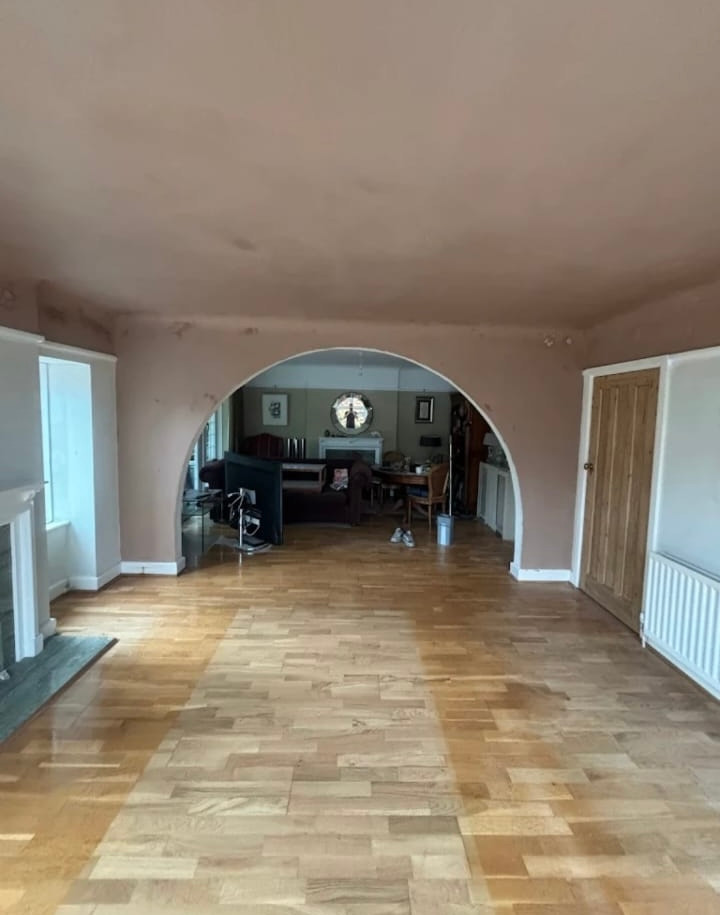
Skimming and replastering, room by room. Where the old surface is sound we prepare it, seal it with PVA or a bonding primer, and lay two coats of finish plaster on with a trowel. Where it sounds hollow it has blown off the background and comes off, and a backing coat goes back first, browning or hardwall on solid brickwork, bonding where the wall is a patchwork of old repairs, floated out and ruled level before the finish coat.
Flats, maisonettes and the communal parts. Nearly two in five homes here are flats, and plastering one is a different day's work from plastering a house. Boards are cut down outside and carried up, the stairwell and the landing carpet get covered before anything moves, and there is often nowhere to park a van, so the material comes in one run rather than four. Flat ceilings are usually plasterboard on timber joists and the older blocks carry artex on them. Where a ceiling has been soaked from above it comes down rather than gets skimmed over, because plaster laid on a board that is still wet will not stay up.
A fifth of the town predates 1919, and around the Priory, Castle Street and the lanes off them there are Georgian and Victorian terraces with solid walls, no cavity and lath ceilings. Those walls need to stay breathable. A gypsum skim over one still holding moisture blows again in a winter or two, so the repair is lime plaster on riven lath, haired in the backing coats, with any cornice run or pieced in rather than lost. Where a chimney breast has been taken out we make good the scar properly rather than filling it.
Out at Somerford, Burton and Jumpers a lot of the housing is dry lining, plasterboard stuck to blockwork on dabs with taped joints, or board on stud. A wall that sounds hollow there is normal rather than broken. It matters for fixings, for cutting in a new opening, and for the beads: angle bead and stop bead on every corner and window reveal, because there is no solid backing to hold an arris on its own.
Two kilometres from the water the seaward elevation takes salt as well as driven rain, which keeps a wall damp between showers and eats at anything ferrous in it. Old sand and cement render goes rigid, crazes and lets water behind, and the panel starts to sound hollow. Small areas get cut out and patched. A whole elevation comes off and goes back as a thin coat silicone system, primer, a mesh reinforced basecoat, then the coloured topcoat, with a bell cast bead at the base to throw water clear.
How it runs
From your call to a written price
The quote is itemised rather than one figure: what comes off, how each background is prepared, the beads, the backing coat, the finish coat, the making good and the waste on separate lines. Inside a house or a flat, nothing we do needs planning permission. Outside it depends where you are. Christchurch Central is a conservation area, appearance is controlled inside it, and a change of external finish is a change of appearance rather than maintenance, so the council keeps the list. There are 24 listed entries in the old streets as well, and on a listed building consent reaches inside the house too. BCP Council for planning and building control, and we check the address first.
Cost
What decides the price of a plastering job
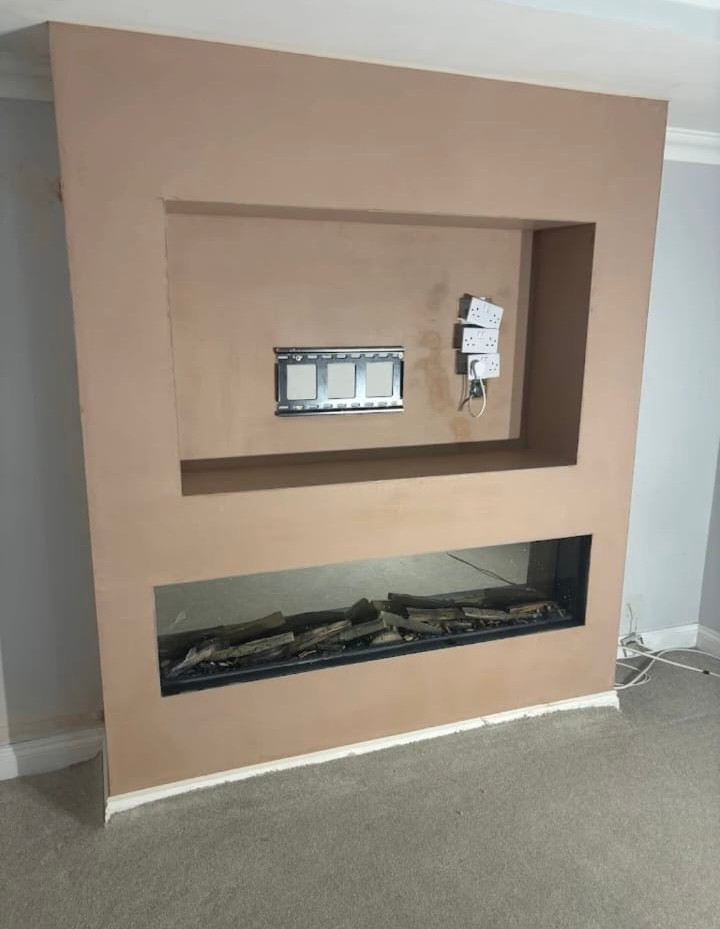
No rate per square metre. What sits behind the finish decides it: sound plaster takes a skim, a hollow wall comes off and brings a backing coat with it. A second floor flat off Bargates with a shared stair, a terraced house in the old town with nowhere to park, and a detached house at Somerford with a drive are three different jobs. Outside, render brings a platform into the price, and the work at height rules are why that is its own line. A full re-render counts as renovating a thermal element, so Approved Document L and building control take an interest.
If it has started to come down
A sagging ceiling, or plaster off the wall
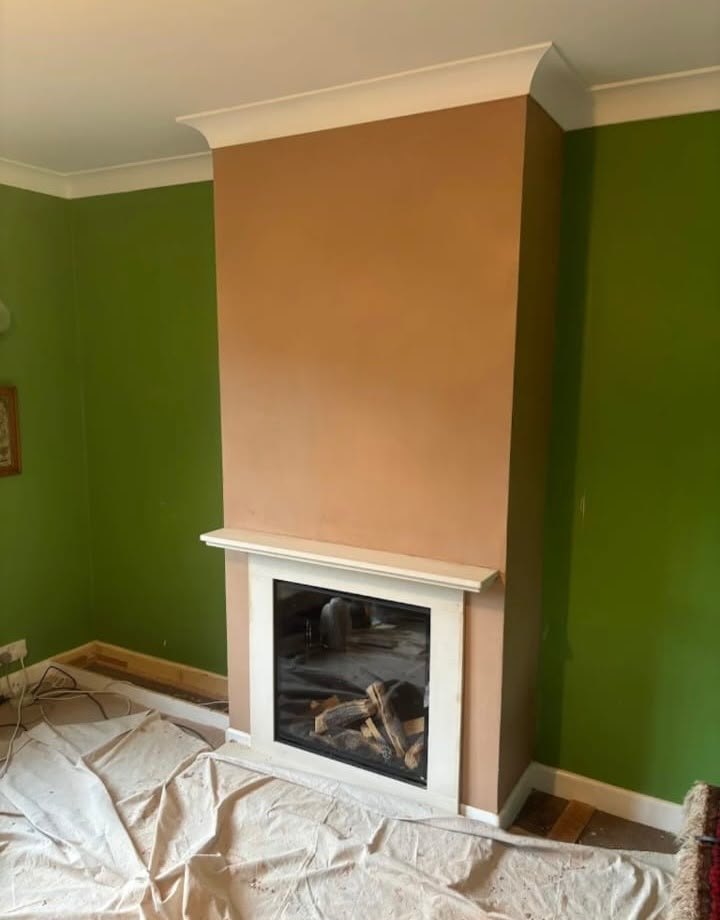
Ring rather than use the form. A ceiling that has begun to bow, or plaster coming off a wall in sheets, goes to the front of the queue. We are four miles away, so a ceiling here is usually looked at the same day or the next; if it is a flat, say whether the water came from above, because that changes who has to be told.
Worth knowing
Who is actually allowed to order the work
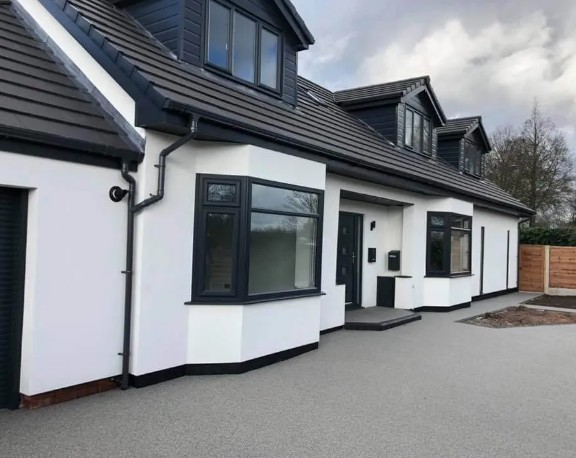
This is the question that wastes the most time in Christchurch, because so much of the town is flats and maisonettes. Inside your own front door the plaster is yours. Skim a ceiling, replaster a bedroom, take an old Artex finish off, and you need nobody's permission beyond what your lease says about structure.
Step outside it and almost nothing is yours. The render, the external walls, the roof over the top flat and the communal stairwell belong to the freeholder, they are maintained out of the service charge, and a leaseholder who books that work privately can end up paying twice.
So if the render is crazing or the hall ceiling has come down, ring the managing agent first and ask two things in writing: who is responsible for that element, and whether it comes from the reserve fund. We are glad to quote for a freeholder, an agent or a residents' association, and we write it up in the itemised form they need.
Where the work will cost any one leaseholder more than £250 the freeholder has to run a formal consultation under section 20 of the Landlord and Tenant Act 1985, which takes months rather than weeks. Starting that in the autumn for spring work is the difference between render being done next year and the year after.
Who you are dealing with
A local firm you can check
We cover Christchurch, Somerford, Burton, Mudeford and the BH23 addresses either side of the Stour, with BCP Council for planning and building control. It is a short run from us, so a look at one ceiling is not a special trip.
Bournemouth Roofing & Building Ltd, registered in England and Wales, company number 15471719, which you can look up in a minute. Thomas Hannen's business, and he is the one who comes out to price the job, not a salesman. A verified customer's 10 out of 10 on Checkatrade. The visit and the written quote are both free.
Questions
Christchurch questions we get asked
The block's render is failing. Who has to order the work?
The freeholder or the managing agent in most cases here, because 39.5% of Christchurch homes are flats and the outside walls belong to the building rather than to any one flat. The work comes out of the service charge, and above a certain value the leaseholders have to be consulted first. We are happy to quote for an agent or for a residents' group, but a single leaseholder cannot instruct it.
Does being two kilometres from the sea change the render?
It changes what goes in it and what holds it on. Christchurch is 2.0km from the coast, so salt lands on the walls and holds moisture on the surface between showers, and it attacks the metal first: beads, mesh, lath and any fixing driven through the render. We use stainless beads on the seaward elevation and a silicone finish that sheds rather than soaks. Rust stains breaking through a render are usually cheap beads.
We live in Christchurch Central. Can we change the render colour?
Not without asking first. Christchurch Central is a conservation area, and colour and texture are exactly what it controls, so putting back what is there is maintenance while a new look is not. BCP Council handles that. There are 24 listed entries in the town as well, and if yours is one of them the internal plaster is covered too, which rules out a straight gypsum skim over old lime.
The old part of our house takes plaster differently. Why?
Because it was built before the cavity wall arrived. Around 20.2% of Christchurch stock predates 1919, and those walls move damp through themselves and back out, so whatever goes on the inside has to let that happen. A gypsum coat traps it, darkens, then lifts away in sheets. On the 1980s side of the same house, and the 1980s is the town's biggest building period, ordinary board and skim is right.
Parking is tight in the old town. Where does the van go?
As close as we are allowed and no closer. We work from one van rather than a convoy, carry the materials in at the start of the day and take the waste out at the end, so nothing is shuttling past your neighbours all afternoon. Where a terraced street has no frontage, and 25.7% of Christchurch housing is terraced, we ask you about a permit before the first morning.
Nearby, and next door
Plastering and rendering near Christchurch
Plastering and rendering nearby
Our other trades in Christchurch
Everything we do in Christchurch Plastering and rendering, all areas Every area we cover
Free quote
Get a written price for your Christchurch plastering
Send the postcode and tell us the room, or the elevation outside. We come out, look behind the finish where we can, and put the price in writing.