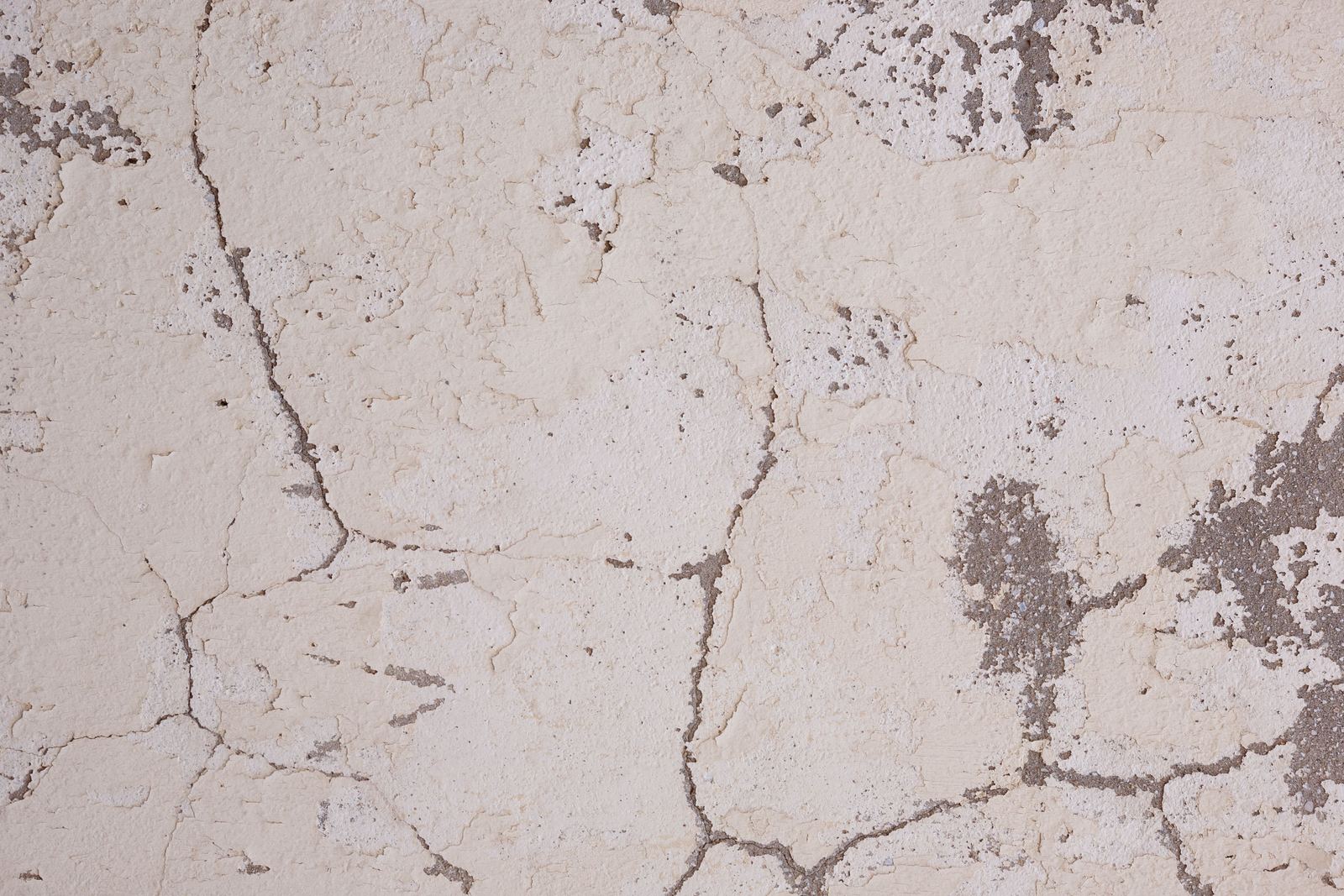
Blown plaster and the hollow-sounding wall: what it actually means
Tap a wall, hear a drum, and the first thought is that something has failed. Very often nothing has.
A hollow sound is not a fault on its own. A dot and dab wall sounds hollow almost everywhere, because the plasterboard sits on adhesive dabs over a void and that is how it was built. Blown plaster sounds hollow in a patch with a definite edge, surrounded by wall that still rings solid.
The short version
- Tap the whole wall, not the one spot that worried you. The answer is in the map: hollow everywhere is construction, hollow in an island with an edge is a defect.
- Work out what the wall is made of before you decide anything. A window reveal, a skirting board and a switch plate all tell you, and none of them costs anything.
- Plaster blows because the wall behind it got wet, or because someone put a hard coat on a soft background. Find the water before you find a plasterer.
- If the wall is being dabbed, ask for a continuous band of adhesive at the top, the bottom, the vertical edges and round every opening and pipe. You cannot check it once the board is on, which is exactly why to ask first.
The test
Tap the whole wall, not just the patch
One knock tells you nothing. Go over the whole wall with a knuckle, a hand's width between taps, working up in rows from the skirting, and pencil a line wherever the note changes. The shape of the hollow area is what separates ordinary construction from something that has failed.
If nearly all of it drums, with firmer spots in a regular pattern and a faint vertical line every board width, that is dry lining. The board is stuck on with bands of adhesive, so most of the board face is not touching the wall at all. The firm spots are the dabs. You can confirm it with a cheap stud detector, which will pick out the board joints and the screw heads round the edges.
If the hollow area is an island with solid-sounding plaster all round it, and you can hear the edge as you cross it, that is blown plaster. Press gently with the flat of your hand and debonded plaster gives slightly, sometimes with a faint crunch. The edge is the point. Construction does not leave edges in the middle of a wall. Failure does.
| What you hear | Also look for | What it is |
|---|---|---|
| Hollow over most of the wall, regular firm spots | Board joints every board width, screw heads, a crisp edge at reveals | Dot and dab plasterboard. Normal construction, nothing wrong |
| Hollow and slightly springy on a pre-1930s wall or ceiling | A little give under the palm, fine cracking in a horizontal pattern | Lath and plaster. Hollow is normal, but give means the nibs behind it are breaking |
| Hollow in one island, often low down, with a clear edge | White salt bloom, paint lifting, crumbly plaster at the edge when you press it | Blown plaster, debonded because the wall got wet or salts crystallised behind it |
| Hollow over a wide patch of hard grey skim on an old wall | The skim is noticeably harder than the soft, dusty material behind it | A cement coat on a background too soft to hold it |
Construction
Work out what your wall is actually made of
Everything else follows from this, and you can settle it in five minutes without damaging anything. Dry lining is a modern method: common from the 1970s onwards and close to standard in new build, so a 2004 house that drums end to end is behaving as built.
A Victorian house is a different animal. Its partitions are usually lath and plaster, timber laths with plaster squeezed through the gaps to form nibs behind, hollow and slightly springy by nature. Its solid external walls carry plaster bonded straight onto the brick, and those should ring solid nearly everywhere.
Four places give the game away. Window and door reveals: dry lining brings the wall face forward, so reveals are deep and the corner is a sharp board edge rather than a soft, rounded arris. Skirtings: on a dabbed wall the board often stops short of the floor and sits behind the skirting. Old fixings: a hole left by a shelf bracket shows board and a void, or solid material all the way in. Sockets and switches: with the circuit off at the consumer unit, taking a faceplate off shows board and a cavity, or plaster hard against masonry. If you would rather not touch the electrics, the other three say the same thing.
The construction also tells you what is likely to have gone wrong. A dabbed board fails at the perimeter and where it has been wet, solid plaster fails where water has been in the masonry, and lath and plaster fails when the nibs snap, which is the one case where a hollow, springy ceiling deserves urgency.
Before you scrape, sand or drill anything textured. HSE's position is that if the building was built or refurbished before 2000, assume that there is asbestos in it, and it lists textured decorative coating, for example Artex among the materials to expect. Tapping it and looking at it are safe. Sanding, scraping, wire-brushing, dry-brushing or drilling it are not, and sanding down a pre-2000 textured ceiling or wall is one of the commonest ways a householder creates a real exposure in their own home. Most work on textured coatings does not need a licensed contractor, but that is a statement about who is allowed to do it, not that it is safe done carelessly. HSE publishes task sheets for drilling and screwing through a textured coating and for removing a small area. If your job is not in there, it belongs with someone equipped for it.
The comparison
Dot and dab or wet plaster: what you gain and what you give up
Both are proper systems and the choice is decided by the wall, not by which one is better. Dry lining has its own code of practice, BS 8000-8:2023, which replaced the withdrawn BS 8212:1995 in January 2023. Dot and dab exists because old walls are not flat.
Bringing a bowed, out-of-plumb wall true in wet plaster means dubbing out in layers, which is slow and expensive; a boarded wall can be packed straight in an afternoon. Wet plaster earns its keep the other way, by bonding to the masonry over its whole area, so it takes a fixing anywhere and feels solid when you lean on it.
| What matters | Dot and dab | Wet plaster |
|---|---|---|
| Contact with the wall | Partial. Dabs plus a perimeter band, most of the board over a void | Full. Bonded to the masonry across its whole face |
| The cavity behind | There by design. If the perimeter is not sealed, air moves in it | None |
| A wall that is out of plumb | Handles it easily. The reason the method exists | Needs dubbing out in coats, slow and expensive |
| Fixing things to it later | Poor. A screw over a void needs a cavity fixing | Good. Straight through into the masonry |
| How it sounds and feels | Hollow, and it drums when knocked | Solid |
| Time before you can decorate | Fast. Boarded and skimmed in days | Slow. Weeks of drying, and rushing it shows |
| Relative cost of the trade work | Lower | Higher |
So dot and dab is the right answer on dry blockwork, on a badly out-of-true wall, and when a room has to go back into use quickly. Wet plaster is the right answer when the wall is sound and reasonably true, when you want to hang things on it, and on the solid external wall of an older house, where a void behind the board is somewhere for moisture to sit. Dabbing onto an exposed solid external wall is the case most likely to give trouble later.
The detail that decides it
The void behind the board, and what to ask for before boarding starts
The real performance question with dot and dab is not the hollow sound. It is whether the void behind the board is sealed. Adhesive is meant to run as a continuous fillet at the top of the board, along the bottom, up both vertical edges and around every opening and every service penetration, so the cavity is closed off. Skip it, or leave gaps for the sake of speed, and air can move freely in the space behind the plasterboard.
That air movement is a thermal bypass. Cold air tracking up the back of the board carries heat away and travels round whatever insulation is in the wall rather than through it, so the wall performs worse in use than on paper. The symptoms get put down to bad luck: a room that never quite warms up, a draught at the skirting, mould in the corner of an outside wall.
Ask for the continuous perimeter fillet before a single board goes up. Top, bottom, both edges, and around each window, door, socket, switch and pipe. It is the item most often left out, because it takes longer and uses more adhesive, and it is unverifiable once the board is on and skimmed. That is exactly why it has to be raised beforehand, and why it belongs on the written spec alongside everything else a quote should set out.
Never dab or plaster over a wall that is still damp. The board hides the wall, the void gives the moisture somewhere to go, and in two years you have a mouldy board, a ruined skim and no clue where the water came from. Find the source and let the wall dry first. A quote to board or reskim before anyone has identified where the water is coming from is a quote to do the job twice.
The real failure
When the plaster genuinely has blown
Plaster blows because the wall behind it is wet, has been wet, or was never the right background for the coat put on it. On a solid wall, damp is nearly always the answer, and the salts that water carries out of the masonry crystallise behind the plaster and push it off the wall.
That is why a blown patch so often sits low down, and why brushing the white bloom off achieves nothing at all. BRE names soluble salt analysis on drilled samples as an established way of getting to the bottom of it, and is blunt that dampness is very often misdiagnosed.
So work backwards to the water before you work forwards to a finish. Government guidance splits damp into condensation, penetrating, rising and traumatic, and those have completely different fixes. If the patch is at the base of the wall, start outside with the ground levels, because a bridged damp proof course is more common than the thing usually quoted for. If it only appears after wind-driven rain from one direction, that is water coming through the wall itself and the repair is on the outside face.
Cracking changes the reading. A hairline crack in a skim on a wall that still rings solid is shrinkage and needs filler. Hollowness plus a crack means the coat has let go of what is behind it, and filling that crack just hides it for a season. Outside, the same logic is why tapping render tells you more than the crack does, why lime beats cement on old brickwork, and why it is worth knowing what a render system actually is before agreeing to one.
Next
What to do next, in order
- Tap the whole wall and pencil round the hollow area. Note whether it has an edge or whether it runs off in every direction.
- Check the reveals, the skirting and an old fixing hole, and decide whether it is board, lath and plaster, or solid plaster.
- If it is dry lining and the wall is dry and flat, stop. A drum when the vacuum hits the skirting is not a defect.
- If there is an island with an edge, look for the water: ground levels outside, gutters and downpipes, the wall face behind the patch, and anything plumbed on the other side.
- Let the wall dry once the source is fixed, and only then get the plastering priced.
For a lot of readers the honest end of this is that the wall is dot and dab, it has always sounded like that, and there is nothing to buy.
Where plaster really has blown, hacking off and reskimming is ordinary plastering and rendering work, and where the cause is the masonry rather than the finish it is repointing or render repair first. On a new wall, the void and the perimeter are worth settling before the boards arrive, because they also decide how well the wall insulates.
Thomas comes out and taps the wall in front of you, and tells you which of the four patterns he is hearing. If the wall is fine he will say so. You can ask for a written itemised quote or send him a photograph first.
Questions
Common questions
Does a hollow-sounding wall mean the plaster has failed?
Not on its own. Dot and dab plasterboard is fixed on adhesive dabs, so most of the board sits over a void and the wall sounds hollow everywhere by design. Failure sounds different: an island of hollow with an edge you can hear, surrounded by plaster that still rings solid.
How do I tell whether my wall is plasterboard or solid plaster?
Look at a window reveal, the skirting and an old fixing hole. Dry lining brings the wall face forward, so reveals are deep with a sharp board edge at the corner, the board often stops short behind the skirting, and an old screw hole shows board then a void. With the circuit off, a switch faceplate shows the same thing.
Why does dot and dab sound hollow when it is done correctly?
Because the plasterboard is bedded on bands of adhesive instead of being stuck down over its whole back, so most of the board face is not in contact with the wall. The gap between the board and the masonry is what drums. You can map it yourself: tap across the wall and the firmer spots are the dabs.
What causes plaster to blow off a wall?
Water, in almost every case on a solid wall. Moisture in the masonry carries soluble salts to the back of the plaster, they crystallise there and push the coat off. The other cause is a hard cement coat applied to a background too soft to hold it, which lets go over a wide area rather than in a small patch.
Can I replaster over a damp wall?
No, fresh plaster or a dabbed board over a wall that is still wet fails, and boarding it makes the problem harder to find because the wall is now hidden and the void gives the moisture somewhere to go. Identify the source, repair it, let the wall dry, and then have the plastering done.
Read next
Related advice
The guides below pick up where this one leaves off, and the plastering and rendering page covers the work itself and the places we cover, if you would rather have the job looked at.
- Damp at the bottom of a wall
- Cracked render: which cracks matter
- Silicone render vs sand and cement render
- Brown stain on a ceiling: what it means
Plastering and rendering, and where we cover All advice articles
Who wrote this
Thomas Hannen
Thomas owns Bournemouth Roofing & Building and prices every job himself instead of sending somebody else. The company is Bournemouth Roofing & Building Ltd, number 15471719, registered in England and Wales. If you want to talk something through before you commit to anything, the site visit and the written itemised quote are both free.
Free quote
Not sure whether your wall is dot and dab or a defect?
Thomas comes out, taps the wall with you standing there, checks the outside for the water if there is any, and puts what he found in writing. If the wall is sound, that is what the report will say.