Lime or cement mortar: which your wall actually needs
On an old solid wall the joint is meant to be the weak part. Point it in cement and the brick face goes instead.
On a solid wall built before about 1919, use lime. The joint is meant to be the soft part, so moisture leaves through the mortar rather than through the brick. Point that wall in cement and the brick face spalls instead. On post-1930s cavity brickwork, cement is correct. Most walls, though, do not need repointing at all.
The short version
- In a lime-built solid wall the mortar is sacrificial by design. The wall dries through the joint, so the joint is what wears back. That is the mortar working, not failing.
- Cement closes that route, so the wall dries through the brick face instead. Pointing standing proud in a hard grey grid, with the faces crumbled back behind it, is that damage.
- Most walls do not need comprehensive repointing. Only the most exposed parts, or a patch affected by a defect such as a leaking downpipe. We do repointing for a living and we are still saying leave sound mortar where it is.
- “We are using NHL 2, it is the soft one” is not a specification. The classes overlap and the number is a floor, not a value. Ask for the binder, the sand and the ratio in writing, and for the protection allowed if the job runs into cold weather.
The mechanism
The mortar is meant to be the part that decays
In a solid wall built in lime, the joint is the weakest thing in the wall on purpose. It is softer and more porous than the brick around it, so the wall dries through the mortar, any salt the water carries crystallises in the joint, and over decades the joint wears back.
Historic Environment Scotland describes mortar joints as protecting the masonry by acting sacrificially, so that a correctly specified mortar weathers faster than the masonry next to it. It is the mortar that decays, not the brick, and that is the design.
Point the same wall in cement and that route is closed. Cement is harder and far less permeable than pre-1919 brick, so the water has one way left: the face of the brick. Salts crystallise in the outer few millimetres instead, and HES is blunt about it, that crystallisation below the surface exerts pressure on the masonry and causes more rapid decay.
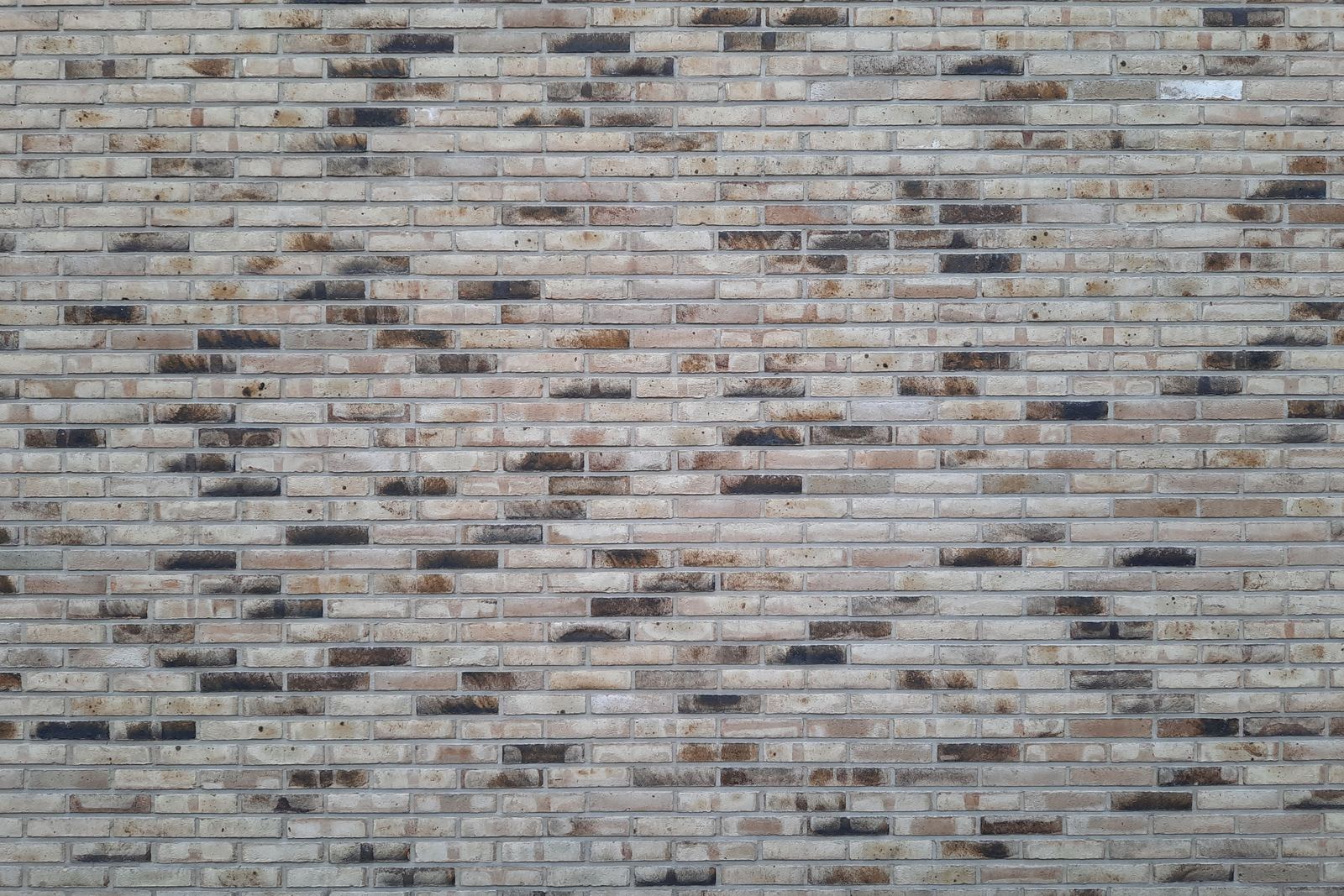
Here is the thing to look for, and you can check it from your own path. On a wall cement pointed thirty or forty years ago the pointing stands proud of the brick. The joints read as a hard grey grid and the faces sit back behind them, pitted, in bad cases gone entirely, so you are looking at the soft core of the brick. The mortar that was supposed to be sacrificial has outlived the masonry it was meant to protect. A brick face does not come back.
Cement also shrinks as it cures, and fine cracks open where the mortar meets the brick. HES describes those cracks acting as capillaries, drawing water in from the outer face while the impermeable mortar stops it evaporating out. The wall finishes wetter than it started, then a wet face meets a frost and comes off in sheets, which is frost damage to brickwork and paving after the thaw. If the damp sits low down rather than up the elevation, read damp at the bottom of a wall first.
Read your own wall
How to tell what you have got
Two questions settle most of this. Solid or cavity? Measure the brickwork at a window or door reveal. Around 215 mm means a one-brick solid wall; past 250 mm usually means a cavity. Then look at the bond. Short bricks, headers, appearing every few courses means the wall is almost certainly solid, because those headers tie a thick wall together. Stretchers all the way usually means a cavity.
Lime or cement? Lime pointing is the colour of the sand it was made with, so pale, buff or pinkish, and it sits slightly back from the brick face. Cement is grey, hard, and often finished with a raised ribbon that laps over the edge of the brick. A lime joint gives to the corner of a key and yields a soft powder; cement will not mark. That tells you the family, not the mix. And because so much cement repointing has been done over the last seventy years, HES warns that care is needed to establish what is actually original: picking cement off carefully often exposes sound lime behind it.
If brick faces have already spalled, reclaimed against new brick covers replacing individual units. If the house is listed this stops being purely technical, because works affecting the character of a listed building need consent and the wrong mortar can be exactly that. We set out where the line falls in listed building consent for repointing and rendering.
Side by side
Lime and cement compared, dimension by dimension
Lime and cement mortar differ across ten dimensions, from hardness and vapour behaviour to cure time and cost, and only two are about the mortar itself. The row that decides the job is which fails first, the mortar or the brick face.
| Dimension | Lime mortar | Cement mortar |
|---|---|---|
| Standard | BS EN 459-1:2015, building lime | BS EN 998-2, masonry mortar |
| Relative hardness | Softer than the masonry it sits in | Harder than most pre-1919 brick and soft stone |
| Which fails first | The mortar. Sacrificial by design, and meant to be renewed | The masonry face. The pointing is left standing proud |
| Vapour behaviour | High. The joint is the evaporation route | Low. Moisture is pushed out through the brick face |
| Movement | Accommodates movement; fine cracks partly heal themselves | Rigid. Shrinks on curing, cracks at the joint edge |
| Right substrate | Solid walls, pre-1919 brick, soft stone, cob, rubble | Post-1930s cavity brickwork, engineering brick, block |
| Season | Spring to early autumn. Carbonation is minimised below about 5°C | Wider window, still restricted by frost |
| Cure time | Slow. Twelve weeks of frost protection, plus cover from rain and wind | Days |
| Repairability later | Easy. Rakes out with a hand tool, no damage to the brick | Hard. Getting it out of soft brick takes the arris with it |
| Relative cost | Higher. More labour, more protection, more return visits | Lower |
The row people argue about is cost. The row that decides the job is the third, because it is the only one where getting it wrong destroys something you cannot put back.
The specification
“NHL 2, it is the soft one” is not a specification
The class number on a bag of natural hydraulic lime is a floor, not a value. BS EN 459-1:2015 classifies building lime by compressive strength at 28 days: NHL 2 is 2 to 7 N/mm², NHL 3.5 is 3.5 to 10, NHL 5 is 5 to 15.
Read those again. An NHL 2 may legally test at 7 N/mm², above the minimum a product needs to be sold as NHL 5, and two bags both labelled NHL 3.5 can be materially different and both compliant.
Strength is the wrong thing to select on anyway. HES notes that the standards classify hydraulic limes by strength although that is not necessarily the most important factor, and that permeability and flexibility often matter more. Historic Scotland's technical advice goes further, that durability is not necessarily correlated with compressive strength, and that higher strength brings more density, more impermeability and more brittleness. Those are the three things you were trying to avoid.
A real specification names the binder, whether a stated NHL product or a hot mixed lime; the aggregate, a well graded sharp sand at a maximum grain size around a third of the joint width; and the ratio between them, ideally informed by analysis of the original mortar. Historic Scotland's position is that model specifications are not feasible here, because the mortar is designed for the wall it goes on. So a quote saying “rake out and repoint in lime mortar” and nothing else is not a scope you can compare. Reading a repointing quote covers the rest, including raking depth, roughly twice the joint width.
Ask what they rake out with. An angle grinder run down the joints of an old wall widens them and chews the arris off every brick it touches. Historic Scotland's advice is that power tools should generally not be used on historic masonry, and that where hard cement cannot come out without damaging the brick, serious thought should be given to leaving it there.
Timing
Lime work has a season and cement does not
Lime needs warmth and time, which rules out a good part of the British year. Non-hydraulic lime hardens by taking carbon dioxide back out of the air, and the Historic Scotland's technical advice note on lime mortars records that this activity is minimised below about 5°C. That figure is Historic Scotland's and it gets misattributed constantly. Historic England's published guidance takes a different form, naming the season, spring, summer or early autumn, with no temperature at all.
The curing window is longer than people expect. The same advice says non-hydraulic mortars should not be exposed to freezing within at least twelve weeks of placing, and that hydraulic limes should not be frozen while wet for around twelve weeks either. Protection covers frost, driving rain and rapid drying, because lime that dries too fast shrinks and stays friable. A quote for lime repointing in October with no line for protection is priced as a summer job.
Exposure matters as much as the calendar. The code of practice for assessing a wall's exposure to wind driven rain exists because a south-westerly gable in the open takes several times the wetting of a sheltered wall on the same house. That is usually the elevation where the pointing has genuinely gone, and often the only one.
The verdict
So which does your wall need?
Four answers, and two of them are “neither”. The neither cases cover more houses than the other two, which is awkward for a repointing contractor to say and is exactly why it is worth saying.
Lime is right when
The wall is solid with no cavity, the building is pre-1919, or the units are soft enough that a cement joint will outlive the brick. Also whenever the existing mortar is lime, because running two mortars of very different stiffness across one wall concentrates stress at the boundary and cracks along it. Lime here is not a heritage affectation. It is what the wall was designed around.
Cement is right when
The brickwork is post-1930s cavity construction with dense modern facings, or it is engineering brick, block, or below damp proof course. There the brick is harder than any lime you would put beside it, and lime is not virtuous, just weaker than the job needs. Render follows the same logic in silicone render against sand and cement render.
Neither, and this is the common one: the joints are sound
The default pitch on an old house is “the pointing has gone”, and most of the time most of it has not. Weathered is not failed. If the mortar is raked back a few millimetres but is hard behind and you cannot push a key into it, leave it. Historic Scotland's guidance is that joints are normally only cleaned out and repointed to the extent needed to secure stability and keep water out, and that sound historic material is too often cut out and replaced. Fix the gutter soaking that elevation and look again in five years.
Also neither: the wall is wet from something above
Before anyone opens a joint, find where the water comes from. A blocked downpipe, a split gutter joint, a failed gully, ground levels raised above the damp proof course, or a cement render higher up shedding water into the brickwork below. Repointing a wall wet from a defect above will not dry it, and it costs you twice: once for the pointing, and again when you fix the real defect. Historic Scotland says the same in trade terms, that roof coverings, flashings, gutters and downpipes should be working before pointing begins. If yours overflow in heavy rain, start with why a gutter overflows in heavy rain.
Next steps
What to do next
Before repointing, photograph every elevation, establish whether the wall is solid or cavity, check the rainwater goods on the wet side and mark where a key goes into the joints. The first four cost nothing, and the written specification comes after them.
- Photograph every elevation. Note where pointing stands proud and where faces have spalled, because that pattern already tells you the mortar is wrong.
- Measure the wall at a reveal and look for header bricks. Solid or cavity is the single fact that decides the binder.
- Check every gutter, downpipe and gully on the wet elevation, in the rain if you can.
- Poke the joints with a key and mark where it goes in. Those are the areas that need doing, and on most houses that is a fraction of the wall.
- Ask for the specification in writing: binder, sand and ratio, raking depth, joint finish, cold weather protection.
- If the building is listed or in a conservation area, speak to the conservation officer before you commission anything.
If you want somebody to say honestly how much of the wall needs doing, that is what our bricklaying and repointing work covers, and a free written itemised quote comes out of it either way. Thomas Hannen prices the job himself, and if what he finds is one gable and a chimney stack with three elevations to leave alone, that is what the quote will say.
Questions
Common questions
Can I repoint a Victorian house in cement mortar?
You can, and it is the commonest way old brickwork gets damaged. A pre-1919 solid wall dries through its joints because the lime mortar is softer and more porous than the brick. Cement closes that route, so the wall dries through the brick face instead and the face spalls off.
How do I know if my wall is solid or cavity?
Measure the brickwork at a window or door reveal. Around 215mm of brickwork means a one-brick solid wall; noticeably thicker usually means a cavity. Then look at the bond: short header bricks appearing every few courses point to solid construction, while stretchers only usually mean a cavity.
Is NHL 3.5 the right lime for repointing?
The class number alone does not answer that. BS EN 459-1 sets NHL 2 at 2 to 7 N/mm2, NHL 3.5 at 3.5 to 10 and NHL 5 at 5 to 15, so the bands overlap and the class is a floor rather than a value. Ask instead for the binder, the sand and the ratio, ideally informed by analysis of the original mortar.
Can lime pointing be done in winter?
Not without protection, and often not at all. Historic Scotland's technical advice records that carbonation is minimised below about 5C, and that new lime work should not be exposed to freezing for around twelve weeks after placing. Work started late in the year may need protecting through to spring.
Does the whole wall need repointing?
Usually not, Comprehensive repointing is rarely necessary and sound old mortar should be left undisturbed. Normally only the most exposed elevation, or a patch affected by a specific defect such as a leaking downpipe, actually needs opening up.
Read next
Related advice
The guides below pick up where this one leaves off, and the bricklaying and repointing page covers the work itself and the places we cover, if you would rather have the job looked at.
- Reading a repointing quote: what rake out should mean
- Damp at the bottom of a wall
- Reclaimed vs new brick
- Listed building consent for repointing and rendering
Bricklaying and repointing, and where we cover All advice articles
Who wrote this
Thomas Hannen
Thomas owns Bournemouth Roofing & Building and prices every job himself instead of sending somebody else. The company is Bournemouth Roofing & Building Ltd, number 15471719, registered in England and Wales. If you want to talk something through before you commit to anything, the site visit and the written itemised quote are both free.

Free quote
Not sure how much of your wall actually needs doing?
Thomas comes out, looks at every elevation and puts in writing which parts need opening up and which should be left alone. Often that is a much smaller job than you were expecting.