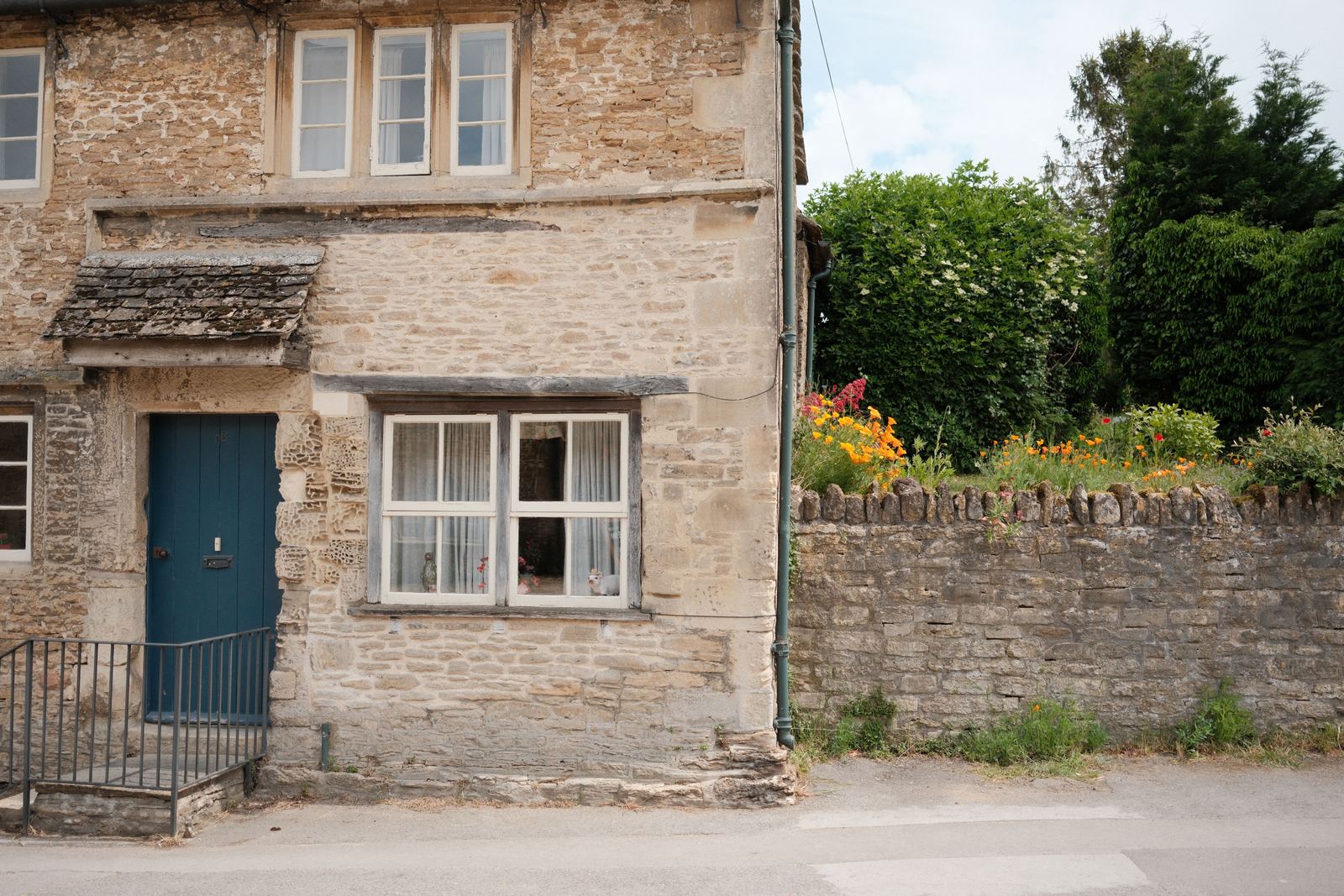
Listed building consent for repointing and re-rendering
Repointing a listed building can be good practice and a criminal offence at the same time, and the mortar is what decides which.
Often, yes. Section 7 of the Planning (Listed Buildings and Conservation Areas) Act 1990 catches any work that affects the character of a listed building, and it sets no minimum size. Repointing in a mortar that matches what is already there rarely affects character. Changing the mix, or rendering over bare masonry, usually does.
The short version
- Section 7 has no scale threshold. One elevation pointed in the wrong mortar can need consent when a bigger job that changes nothing does not.
- Matching the existing binder, sand, colour and joint finish normally leaves the character unaffected. Matching rarely needs consent, changing the mix usually does, a cover render almost always does.
- There is no repair exemption in the Act. “Like for like never needs consent” is a prediction about the character test, not a rule.
- Doing it without consent is a criminal offence under section 9, up to two years on indictment. Not knowing the building was listed is no defence, nor is not knowing cement was wrong.
- Ring the conservation officer before anything is raked out and get the mix agreed by email. It is free, and it is the difference between a repair and an offence.
Start here
Repointing a listed building can be good practice and a criminal offence at once
Which one it is depends on the mortar, not the size of the job. Nobody writes that down, because the people who explain how to repoint a wall are not the people who explain consent.
Section 7 of the Planning (Listed Buildings and Conservation Areas) Act 1990 says that “no person shall execute or cause to be executed any works for the demolition of a listed building or for its alteration or extension in any manner which would affect its character as a building of special architectural or historic interest, unless the works are authorised under section 8”.
Notice what is absent. No square metre figure, no percentage of the elevation, no line between repair and alteration, no mention of grade. The test is effect on character, and a small job can affect it far more than a big one.
Mortar is the clearest case. Rake the lime out of a soft-fired brick or rubble wall and put cement back, and you have permanently changed how the wall reads from the pavement and how it handles water: it dries through the brick face instead of the joint, and the faces spall. That argument is in lime mortar against cement mortar for repointing. The legal point is shorter. It is an alteration affecting character, so section 7 catches it whether it is one gable or the whole house.
What is protected
The listing covers more of the building than people expect
The listing protects the whole building, inside and out, and the list entry is a description rather than a schedule: a feature going unmentioned is not unprotected. Two things surprise people.
The interior counts. This is the commonest surprise by a wide margin, and it lands harder on plastering than on pointing. Hacking off soft lime plaster and skimming in gypsum alters the inside of a listed building, and inside is as protected as outside. So is a fireplace, a staircase and a run of cornice. People check before touching the front elevation, then re-plaster three rooms without asking.
The curtilage counts. Section 1(5) of the same Act treats any object or structure fixed to the building, and any structure in the curtilage that formed part of the land before 1 July 1948, as part of the listed building. A boundary wall, a coach house, an old privy. Repointing a garden wall you never thought of as listed is the same offence as repointing the house, and if the wall is shared you are in two systems at once: see the Party Wall etc. Act 1996 for chimneys, garden walls and extensions. Since 2013 a list entry may say a particular object or feature is not to be treated as part of the building, so read your own entry.
Scotland runs the same idea under the Planning (Listed Buildings and Conservation Areas) (Scotland) Act 1997, administered with Historic Environment Scotland. Northern Ireland works under the Planning Act (Northern Ireland) 2011. The rest of this page states the position in England.
The working rule
Matching rarely needs consent. Changing the mix usually does.
Where this rule comes from matters. It is not an exemption. It is a prediction about the character test. Historic England's published position on repointing is that work copying the existing mix and appearance normally leaves the significance of the building unaffected.
Put that beside section 7 and the consequence follows: character unaffected, section not engaged, nothing to apply for. Change the binder, the sand, the colour or the joint profile and you are arguing the opposite case, after the fact. The danger in the shorthand is that people hear “repairs are exempt”. The word repair does not appear in section 7.
| The job | Effect on character | Usual consent position |
|---|---|---|
| Repointing failed joints to match the existing mix and finish | Normally none | Not usually needed. Agree the match by email first |
| Repointing a lime-bedded wall in cement | Changes appearance and how the wall handles water | Caught, and unlikely to be acceptable anyway |
| Changing the joint profile, such as a ribbon on a flush wall | Reads differently across the elevation | Caught, even where the mix is right |
| Raking out sound historic mortar across a whole elevation | Loss of fabric that can itself be significant | Caught, even if the new mix matches |
| Rendering over masonry that has always been bare | Changes the elevation completely | Almost always needed |
| Stripping an historic render to expose the masonry | The same change in reverse, often irreversible | Needed. One of the commonest unauthorised works |
| Re-plastering an interior wall in gypsum over lime | Alters protected internal fabric | Caught, and routinely missed because it is indoors |
Two rows catch working builders. Stripping render feels like uncovering something rather than altering it, and nothing about a bag of multi-finish suggests the criminal law. Silicone render against sand and cement render covers the materials, but on a listed elevation that question comes second.
The offence
What section 9 does if you get it wrong
Contravening section 7 is a crime, not a planning irregularity, and that separates it from every other permission a builder deals with.
Before anyone rakes out a joint. Section 9 of the Act makes contravening section 7 an offence. On summary conviction the maximum is six months or a fine or both. On indictment it is up to two years or a fine or both. Section 9(5) requires the court, in fixing the fine, to have particular regard to any financial benefit that has accrued or appears likely to accrue from the offence. Saving money on the mix makes the sentence worse, not better.
Nothing in the section requires that you meant to do it. Not knowing the building was listed is no defence, and neither is not knowing cement was the wrong mortar, which is the one people rely on. “Execute or cause to be executed” also reaches past the person holding the trowel to the owner who ordered the work, so both are exposed. It is why an experienced contractor asks whether a building is listed before pricing anything.
Separately from any prosecution, the authority can require the work to be put back, and on mortar that is the worst outcome there is: taking hard cement out of soft masonry damages the arris of every unit it touches.
One defence sits in section 9(3), and it is narrower than people hope. All four limbs must be proved: that the works were urgently necessary in the interests of safety or health or to preserve the building; that this could not practicably be secured by repair or by temporary support or shelter; that what was done was the minimum immediately necessary; and that written notice justifying the works in detail went to the local planning authority as soon as reasonably practicable. A loose coping after a gale, propped and sheeted, may get you there. An elevation repointed because the scaffold was up will not.
Corrections
Three things you will be told that are wrong
“Like-for-like repair never needs listed building consent”
No rule exempts like-for-like repair from listed building consent. Section 7 contains no repair exemption and no other section supplies one. What is true is the weaker statement above: work copying the existing mix and appearance normally does not affect character, so in practice it needs no consent. That conclusion collapses the moment the new work does not match.
“Historic England says do not lay lime below 5°C”
That figure is Historic Scotland's, and it is misattributed constantly. Historic Scotland's technical advice note on lime mortars records that carbonation is minimised below about 5°C and that new lime work should not be exposed to freezing for around twelve weeks after placing. Historic England names a season instead, spring, summer or early autumn, with no temperature. Both are worth following. If a quote cites the number to the wrong body, ask what else came from memory.
“Only Grade I and II* are properly protected”
False, and expensively so. Section 7 does not grade and neither does section 9, so the offence is identical for a Grade II terrace and a Grade I country house. Most listed houses in this country are Grade II.
Before you start
Ring the conservation officer before anything is raked out
Ringing the conservation officer before anything is raked out is the most useful thing on the page. The call is free, it takes about ten minutes, and it belongs before the scaffold rather than after the first elevation is open.
Have four things ready: a photograph of each elevation; a close-up of an open joint so the officer can see the existing mortar; the proposed mix in words, meaning binder, sand, ratio, joint finish and raking depth; and which elevations you propose to touch.
You are after one of three answers. This does not affect character, so carry on. This needs an application. Or this is acceptable if you match a stated thing, which is the answer worth ringing for, because it turns a judgement into something your contractor can price against. Ask for the reply by email and keep it.
Get the agreed mix into the written quote in the officer's own words. A quote saying “rake out and repoint in lime mortar” and nothing else cannot be checked against anything, which is the subject of reading a repointing quote.
Consent is a separate application from planning permission
Separate law, and neither excuses the other. Work can be permitted development and still need listed building consent, because the General Permitted Development Order and this Act do not talk to each other. It can need consent while needing no planning permission at all, which is the normal position for repointing. Planning permission, building regulations and listed building consent sets the five regimes side by side, and re-roofing in a conservation area covers what designation removes.
Check who your planning authority is first, because a national park authority is the planning authority inside its own boundary. Dorset Council explains how to find out whether a building is listed, and BCP Council holds the records for its area. The national list itself is published by Historic England, free to search by address.
This page states the general position in England and is an explainer, not legal advice. Confirm your own case with your planning authority before work starts.
Next steps
What to do, in order
For a listed building, check the listing and curtilage, establish what mortar is there, decide whether the wall needs anything, and ring the conservation officer before anything is booked. The first four cost nothing and settle most of it.
- Find out whether the building is listed and pull the entry for your own address, then work out what else is in the curtilage. Walls and outbuildings standing before 1 July 1948 are part of the listing unless the entry says otherwise.
- Establish what mortar is there. Pale, sandy and slightly recessed usually means lime. Hard, grey and proud of eroded faces means somebody has already done this wrong.
- Decide whether the wall needs anything. Weathered is not failed, and on most old houses only the exposed elevation and a stack need opening.
- Ring the conservation officer with the photographs and the proposed mix, and ask for the answer by email. If consent is needed, apply before you order materials or book scaffolding.
- Put the agreed binder, sand, ratio, raking depth and joint finish in the written quote, and keep the officer's email with it.
- If anybody offers to start before the answer comes back, say no. The saving is days and the exposure is criminal.
If you want someone to say honestly how much of the wall needs doing, that is what a site visit is for. Thomas Hannen prices the job himself, and if the answer is one gable and a stack with three elevations to leave alone, that is what the quote will say. Our bricklaying and repointing work and our plastering and rendering work are both on the site, and you can ask for a free written itemised quote.
Questions
Common questions
Do I need listed building consent to repoint my house?
Not always, and it turns on the mortar, not the size of the job. Repointing that copies the existing binder, sand, colour and joint finish will normally not affect the character of the building, so section 7 is not engaged and there is nothing to apply for. Change the mix or the joint profile and it usually is engaged.
Is repointing a listed building in cement illegal?
It can be a criminal offence, yes. Cement pointing on a lime-bedded or soft-fired wall changes both how the elevation looks and how it handles water, which is an alteration affecting character under section 7 of the Planning (Listed Buildings and Conservation Areas) Act 1990. Doing that without consent is an offence under section 9.
Does listed building consent apply to a Grade II house?
Exactly as much as to a Grade I one. Section 7 does not mention grades and section 9 does not either, so the offence is identical. The grade affects how hard the application is and who gets consulted, not whether you needed consent in the first place.
Do I need consent to render a listed building?
Almost always for a cover render over masonry that has always been bare, because that changes the elevation completely. Removing an historic render to expose the masonry underneath is the same problem in reverse and is one of the commonest unauthorised works. Ask before anything is ordered.
What if repointing was done without consent before I bought the house?
It usually surfaces at conveyancing, and the practical questions are what the authority wants done about it and who pays. Speak to the conservation officer early, not late, and take advice on your own position. A blog page cannot tell you where liability sits on a particular sale.
Read next
Related advice
The guides below pick up where this one leaves off, and the bricklaying and repointing page covers the work itself and the places we cover, if you would rather have the job looked at.
- Lime or cement mortar: which your wall actually needs
- Planning permission, building regulations and listed building consent: which one you actually need
- Re-roofing in a conservation area: what actually changes
- Reading a repointing quote: what rake out should mean
Bricklaying and repointing, and where we cover All advice articles
Who wrote this
Thomas Hannen
Thomas owns Bournemouth Roofing & Building and prices every job himself instead of sending somebody else. The company is Bournemouth Roofing & Building Ltd, number 15471719, registered in England and Wales. If you want to talk something through before you commit to anything, the site visit and the written itemised quote are both free.

Free quote
Not sure whether your wall needs consent or just needs leaving alone?
Thomas comes out himself, looks at every elevation and puts in writing what the existing mortar is, which parts genuinely need opening up and what he would put back. The site visit and the written itemised quote are both free.