Roofing in Christchurch
Roof repairs, re-roofs, leadwork, flat roofs and guttering across Christchurch, from the Priory and the quay out to Somerford, Mudeford and Highcliffe.
The site visit is free and so is the written itemised quote. Thomas Hannen prices every job himself.
The first question on a Christchurch roof is usually not what is wrong with it, but who is allowed to have it fixed. Two in five homes here are flats or maisonettes, and on a flat the roof belongs to the freeholder, not to you.
The second question is what the covering is, because a fifth of the town was built before 1919 and those roofs want matching, not replacing. We tell you which of the two you are dealing with before anything else, and if the answer is that you cannot instruct the work, we will say so rather than quote you for it. Four miles from us, the site visit is free, and most repairs here run to two or three working days once we start.
The work
Section 20 comes into it once a roof is shared
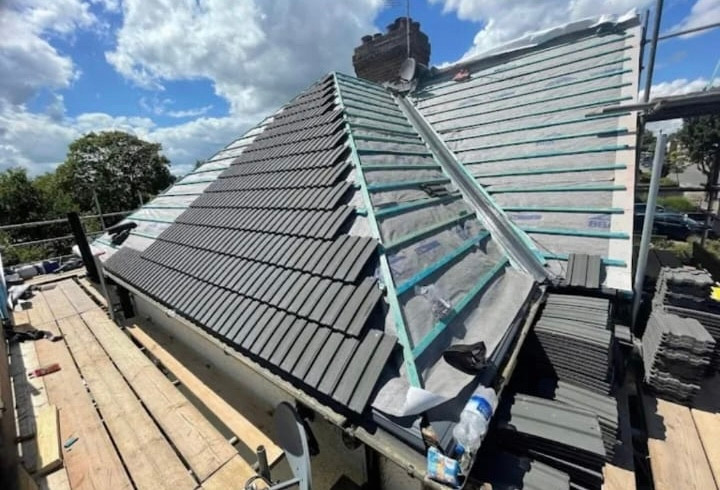
Matching a period covering. Around the Priory and the older streets running down to the quay you find plain clay tile and natural slate on steep pitches, often original, and a fifth of the town predates 1919. The right repair is a matched one: reclaimed or handmade clay of the same size and camber, slate of the same type and thickness, hung on sound battens. A modern interlocking tile on a Georgian or Victorian roof looks wrong from the pavement and, inside the Christchurch Central conservation area, is a change of appearance rather than maintenance. We source the match rather than talk you out of it.
Communal and flat roofs. Two fifths of the dwellings here are flats or maisonettes, which usually means a shared roof, a managing agent and a service charge, and a caller who cannot instruct the work on their own. We quote in the form an agent or a residents' management company actually needs, with the scope written out so it can be compared against other tenders. Where the cost passed to any one leaseholder goes over the statutory threshold, Section 20 of the Landlord and Tenant Act 1985 requires a consultation before the work goes ahead, so the paperwork matters as much as the price.
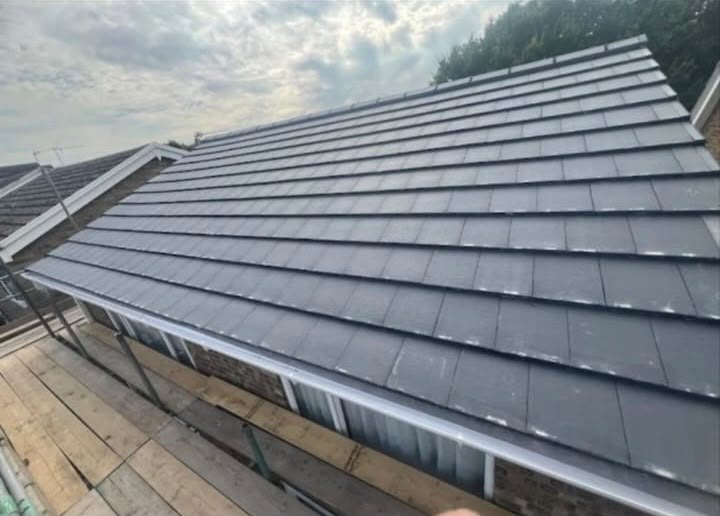
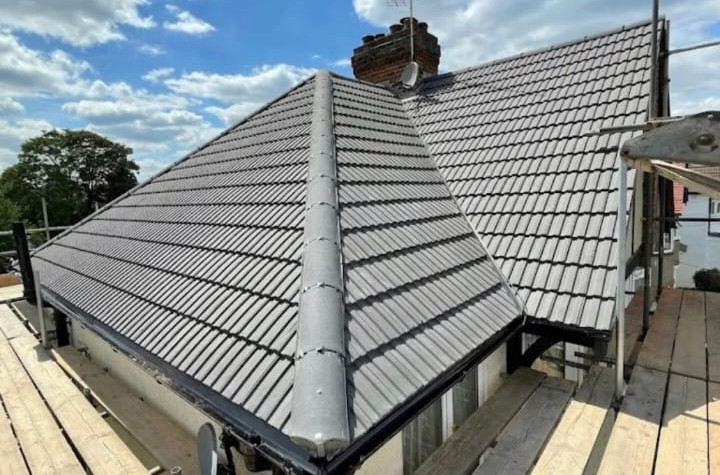
On the inter-war and post-war streets the ridge and hip tiles sit on mortar bedding, and mortar is what goes first. A bed cracks, water gets behind it, frost widens the crack and the next gale lifts the tile. We convert to a dry fix system, screwing a dry ridge onto a ventilated roll and closing the gable with a dry verge. BS 5534 sets out how a covering should be mechanically fixed for its exposure, and two kilometres from the water that matters: salt takes the galvanising off a nail and corrodes a clip from the head down, so fixings go back in stainless.
When a covering is lifted we look at what is under it. Old bitumen felt torn at the laps, sarking boards on the older slate roofs, battens too thin or too far apart for the tile, and occasionally a rafter that has taken water for years. A concrete tile roof from the 1980s estates, which is the largest single cohort in the town, and a plain tile roof near the Priory fail in different ways, and neither is automatically a new roof.
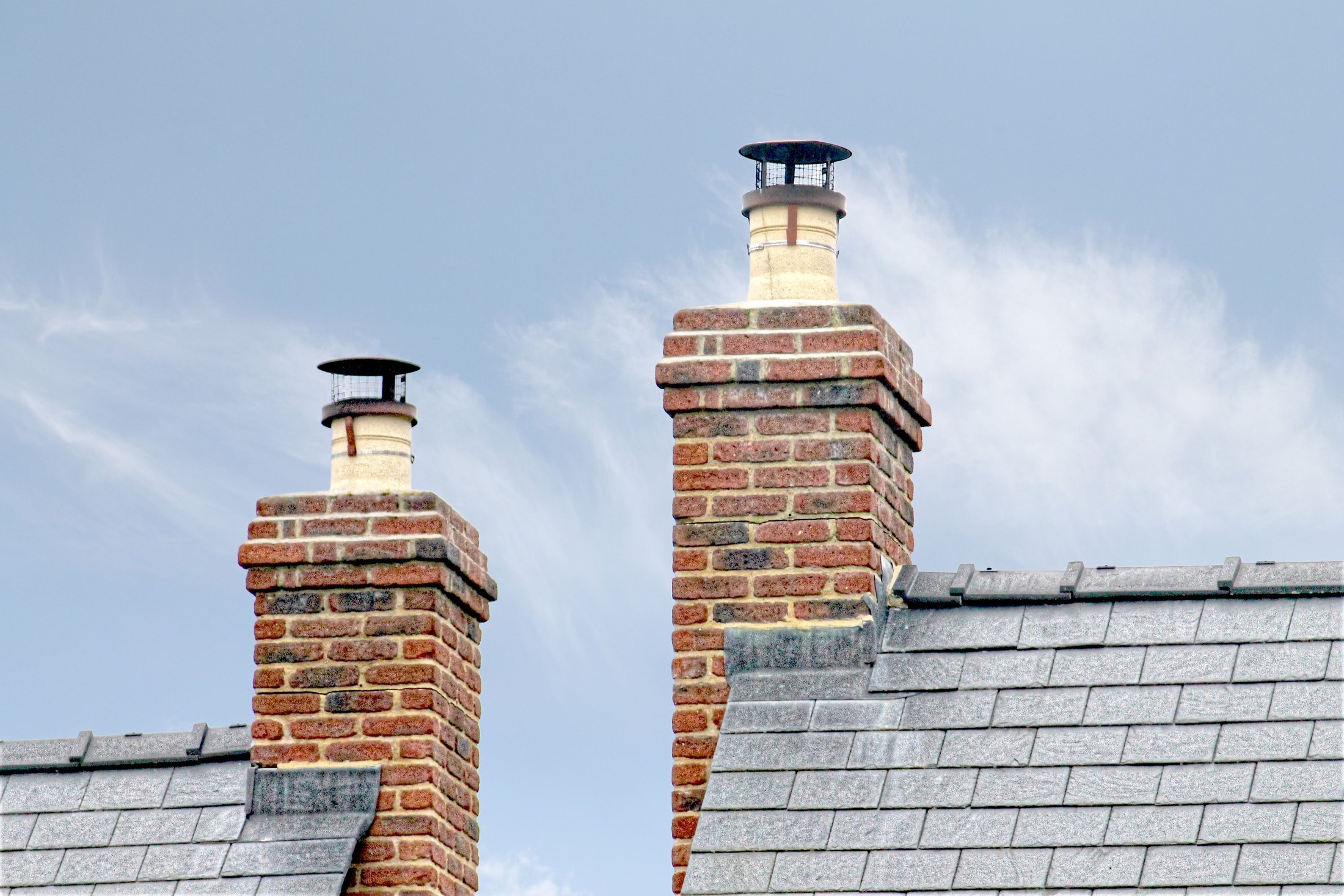
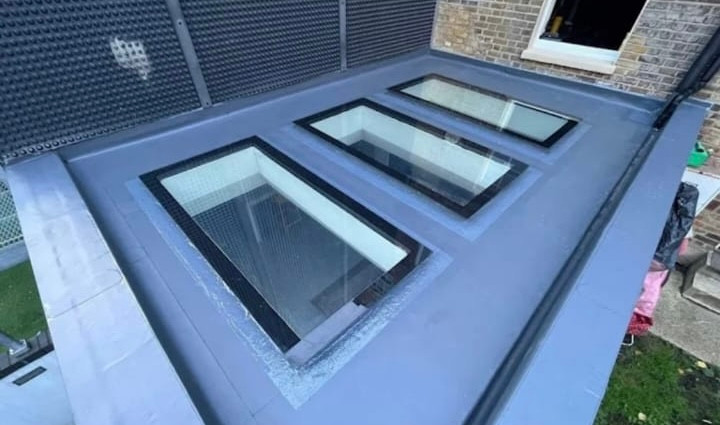
On a terraced street, and a quarter of the housing is terraced, the leak is often at the party wall or in a shared valley, which is worth establishing early because it changes who pays. Those terraces bring hidden valleys and parapet gutters that nobody sees until they overflow. Period houses carry tall stacks, and the flashings, soakers and back gutters around them are the commonest source of a stubborn damp patch upstairs, in code rated lead with the pointing above it in a lime mix that suits old brick. Back extensions, bay tops, dormers and porches come in felt, GRP fibreglass or EPDM rubber, and where the deck has gone soft an overlay only hides it. While the roof is open, insulation, eaves ventilation and condensation are far cheaper to deal with, and Approved Document L sets what a renovated roof is expected to reach.
How it runs
From your call to a written price
Same team from first visit to last, one person to ring, and no sub-contracting. The quote is itemised line by line so you can compare it against anyone else's, the site is swept daily, and anything found on the strip gets a photograph and a price before we carry on. Like for like re-covering is permitted development. Christchurch Central is a conservation area, where the appearance of the roof is part of what is protected, so a change of covering or material is a planning question rather than a building control one. The council keeps the list, and the twenty four listed entries here need consent for work most people would call maintenance. We check the address before anything is ordered.
Cost
What decides the price of a roof
No rate per square metre. A two-bedroom terrace near the Priory, a 1980s semi off Barrack Road and a top-floor flat with a shared roof are three different jobs before a tile moves, and a terrace with no side alley is a different scaffold from a detached house. How long a platform stands matters as much as its size, and the work at height rules are why it is a priced line rather than an optional extra. On a shared roof, ask who is tendering it and on what scope, and whether battens and membrane are renewed or covered over.
If it is leaking now
Water coming in today
Ring rather than use the form. Anything letting water in goes to the front of the queue, and the first visit is about making it safe while you decide. If you are a leaseholder, ring the managing agent while you ring us. We can make it safe, but they instruct the permanent repair. The phone is answered 24 hours for emergencies; scheduled work runs Monday to Friday, 8am to 6pm.
Worth knowing
Two rivers, and the slope that never dries
The town sits where the Avon and the Stour meet, and the air here holds moisture in a way it does not a few miles inland. On a roof that shows up as growth: moss and algae take hold on north-facing and shaded slopes and stay there, because the slope never really dries out between one wetting and the next.
Moss is not only cosmetic. It holds water against the covering, it feeds frost damage on clay and concrete alike, and clumps of it wash down and block gutters and valley outlets, which is how a roof problem becomes a wall problem. It is worth clearing, and worth clearing carefully: a pressure washer on old clay or slate strips the weathered surface, takes off the nibs and drives water under the laps. Scraping and brushing is slower and does not shorten the life of the covering.
Who you are dealing with
A local firm you can check
We cover the town centre and the quay, Purewell, Somerford, Highcliffe, Mudeford, Burton and Stanpit, broadly BH23, under BCP Council. Bournemouth Roofing & Building Ltd, registered in England and Wales, company number 15471719, which you can look up in a minute. Thomas Hannen's business, and he is the one who comes out to price the job, not a salesman. A verified customer's 10 out of 10 on Checkatrade. The visit and the written quote are both free.
Questions
Christchurch questions we get asked
The roof over my flat leaks. Can I just book you?
Not on your own, in most cases. Flats and maisonettes are 39.5 per cent of the housing in Christchurch, and the outside of a flat, roof and walls alike, belongs to the freeholder and is paid for through the service charge. Ring the managing agent first. We will attend, look properly and put a written itemised quote in front of them, which is often what finally moves the job along.
We are two kilometres from the water. Do fixings rust here?
They do, and faster than most owners expect at about 2.0 kilometres from the coast. Salt lands on the covering, sits in the laps and never quite rinses off, so galvanised nails and the steel straps holding a ridge lose their coating from the cut edges inwards. The tile outlives its own fixings. Orange staining running below a ridge end or a hip iron is the sign to get somebody up there.
Does Christchurch Central conservation area cover the whole town?
No, it covers the historic core rather than all of Christchurch, so the first thing we do is check your address against the boundary. Inside it, replacing what is there with the same thing is maintenance. A change of covering or material is an appearance change and goes to Bournemouth, Christchurch and Poole council. Twenty four entries in the town are listed, and those need consent whatever you intend to put back.
Our house went up in the eighties. Is it due yet?
Possibly on the edges only. The largest single group of homes in Christchurch dates from the 1980s, and that generation went on with mortar bedded ridges over bitumen underlay. The underlay is the part that ages out first, going brittle where light reaches it in the loft, while the ridge bedding cracks along its whole length. Neither of those means the tiles have to come off wholesale.
What goes in the skip and what gets kept?
The battens, the old underlay and anything cracked go straight out. Sound tiles get sorted and stacked on boards, because matching an older covering is far easier off your own roof than out of a reclamation yard. A fifth of the stock here predates 1919, so that salvage is worth the labour. We keep enough to face the elevation seen from the street and clear the rest as we go.
Nearby, and next door
Roofing near Christchurch
Roofing nearby
Our other trades in Christchurch
Roofing guides
Concrete vs clay roof tiles: which is right? Planning, building regs or listed building consent Storm damage to a roof: the first 24 hoursEverything we do in Christchurch Roofing, all areas Every area we cover
Free quote
Get a price for your Christchurch roof
Tell us the address and whether the property is a house or a flat. We will tell you who can instruct the work, then put an itemised price in writing.