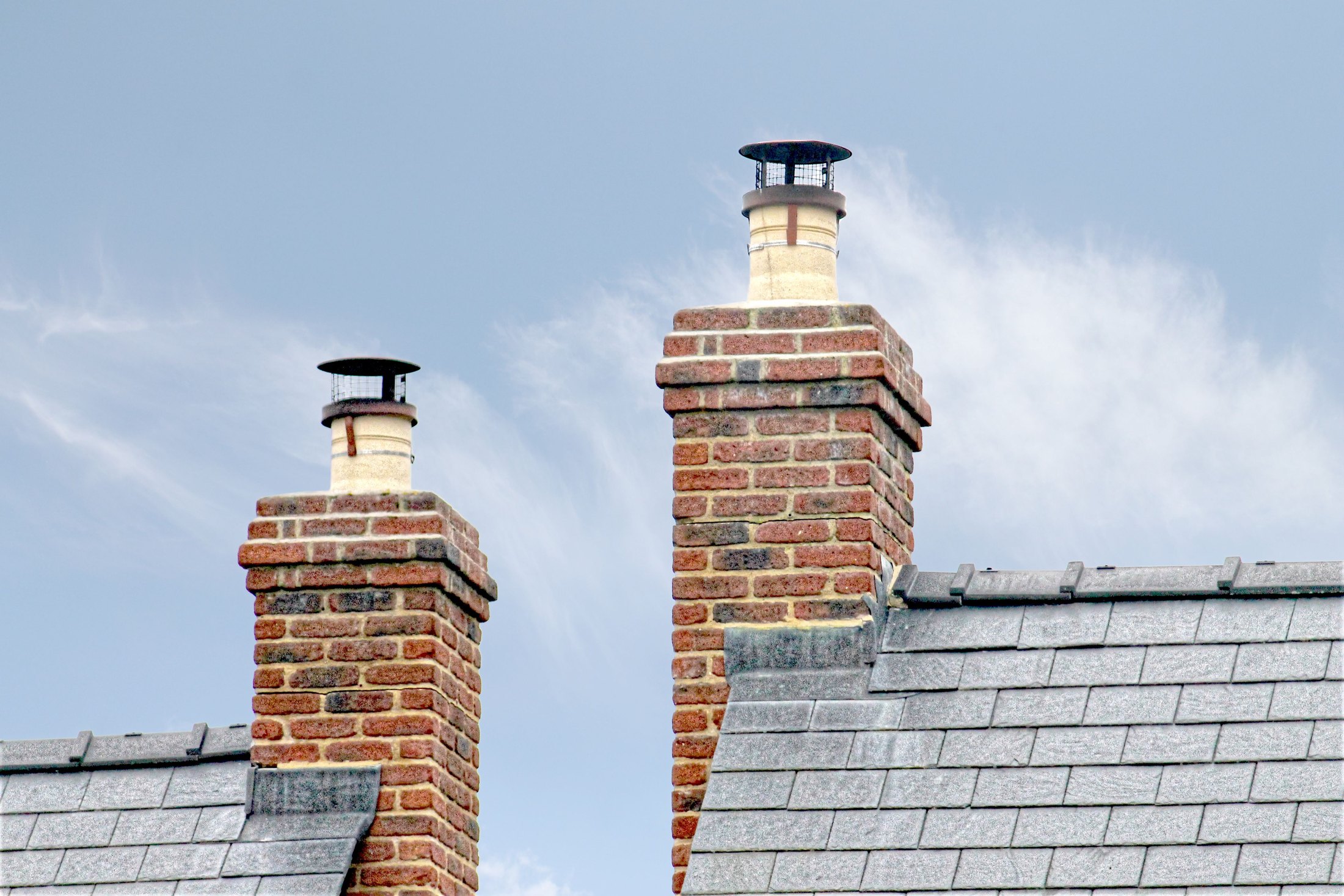
Roofing in Highcliffe
Ridge, hip and verge work, repairs, re-covering, leadwork and flat roofs in Highcliffe, priced in writing after we have been up and looked.
The site visit is free and so is the written itemised quote. Thomas Hannen prices every job himself.
Last updated
Most Highcliffe roofs fail at the edges before they fail anywhere else. If somebody has knocked on the door and told you the whole roof needs replacing because your neighbour has just had one done, get the ridge, hips and verges looked at first. That is usually the actual job.
Highcliffe roofs tend to fail in a set pattern. A ridge tile has lifted after a gale off the water. Mortar is on the drive in lumps and the verge above it has gone. A bungalow roof has started letting go a tile at a time and the felt at the eaves has torn where it laps into the gutter.
Or you own a flat, the ceiling has stained and nobody can tell you whose job the roof is. We come out, get on the covering, look at the underside where there is loft access, and photograph what we find so you have something to look at, not a verdict over the phone. If it is one slipped tile, a loose hip or a single leak rather than the whole roof, our page on roof repairs in Highcliffe goes through that work fault by fault. If water is coming through a Highcliffe ceiling after a blow off the sea, ring 07435 839745 before anything else. About five and a half miles from us, so a small repair is worth the trip.
The work
Every tile has a pitch it stops working below
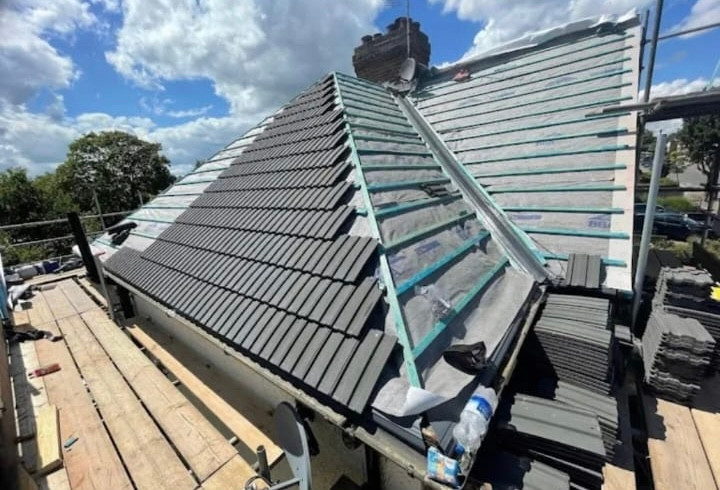
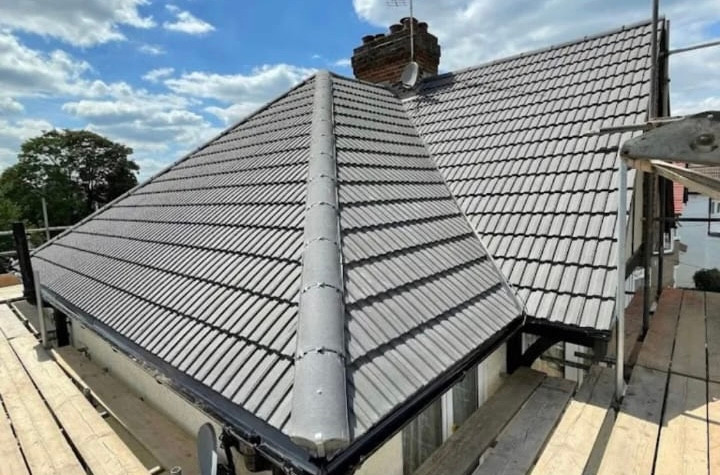
Ridge, hip and verge go first on roofs in Highcliffe. Mortar bedding cracks, lets go and washes out, and on a gable the verge takes the wind first.
We convert to a dry ridge and dry verge system, screwed and clipped onto a ventilated roll rather than re-bedded in mortar, which is the mechanical fixing BS 5534 expects and vents the roof space along the ridge while it is up there. It is measured by the metre of edge. Nearly two thirds of the housing went up between 1945 and 1982, the largest wave in the late fifties and early sixties, so many of those edges are reaching the same age together. The water is a couple of hundred metres away and salt corrodes metal from the edge inwards, so a covering can look perfectly sound while the nails and clips holding it down have gone, which is why tiles start slipping in ones and twos with no obvious damage anywhere. On the seaward elevations we fix with stainless rather than whatever came off.
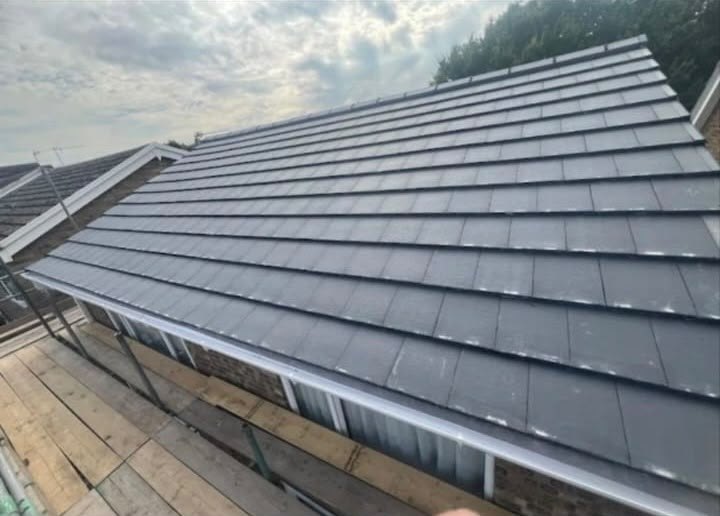
Every tile has a pitch it stops working below. More than a quarter of the dwellings here are bungalows and a fair share of those roofs are shallow. That matters, because every interlocking tile has a minimum pitch below which it is not weathertight however well it is laid. If a roof is under it, the answer is a tile rated for the pitch, or a different system, not the nearest lookalike. Anyone quoting a re-cover without measuring the pitch is guessing. Concrete interlocking tile is what most of the post-war stock carries, with plain clay tile and natural slate on the older houses and the odd hand made tile near the Castle. The bitumen felt on a roof of this age has usually perished and tears first where it laps into the gutter, which is the usual cause of a wet fascia and a damp wall plate. Battens and rafter feet are checked from inside first, and when nails, battens and underlay have all gone together, a strip and re-cover on breathable membrane and treated battens is the honest answer.
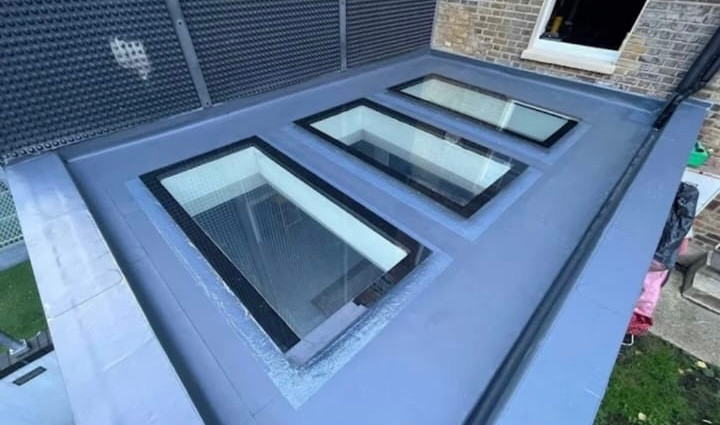
Nearly four in ten dwellings here are flats, and the roof over a block belongs to the freeholder and is managed out of the service charge, so the person who rings is often not the person who can authorise the work. Rear extensions, garages, porches and dormer tops are felt, GRP fibreglass or EPDM rubber, and the deck is looked at before the falls, upstands and outlet, because a new covering over a soft deck fails in the same place as the old one. Chimney flashings, soakers, valleys and abutments go in code rated lead. Gutters, downpipes, fascias and soffits, where a fair share of what gets reported as a roof leak actually turns out to be. With the covering off, insulation and eaves ventilation are much cheaper to sort, and Approved Document L sets the standard a renovated roof is expected to reach.
How it runs
Re-covering a Highcliffe roof, from the loft to the ridge
Your first call gets Thomas round in person. He looks at the roof from the pavement, from the back garden and through the loft hatch, because the felt and battens up there tell him more than any tile.
The written price splits the job into parts: scaffold or tower, taking off the old tiles, fresh battens with a breathable membrane, the new coverings, ridge and verge, lead flashing round any chimney or dormer, and a skip. Start and finish are covered by that same quote.
Plenty of roofs in Highcliffe sit over bungalows, where a tower along the eaves is often enough. A house or a block of flats wants a full scaffold, and on a block the freeholder or managing agent instructs the work; a large job can mean a section 20 consultation with the leaseholders before a date is set.
Old tiles leave with us. Should rotten rafter feet or a failed valley board appear under the old covering, Thomas photographs it, prices it and waits for your yes. Permitted development covers a like for like re-covering, plus repairs, replacement rainwater goods and rooflights sitting close to the slope; Planning Portal guidance gives the limits, and no planning permission is needed. The parish does have conservation areas, around Bramble Lane and Verno Lane, and the council keeps the list; check with BCP Council there before changing the material. Highcliffe Castle, Greystones and the other listed buildings need consent for any roof work.
Cost
Salt air, old battens and access: what moves a roof price
Nobody can price a roof honestly by the square metre. On this stretch of coast two roofs of the same size can be weeks apart, and the difference is nearly always at the edges and in the fixings.
When it went on. The largest single wave, about a fifth of homes, went up in the late fifties and early sixties, so whole streets of roofs are the same age. The tiles in the middle of a slope are often still sound while the ridge mortar, the verge and the nails have given up. That can be edge work rather than a full re-cover, and the survey should tell you which.
The sea. You are close enough to the cliff for salt in the air to rust plain steel nails and clips, beginning at the eaves and verges. On the seaward, south west facing slope the fixings should be stainless or aluminium, and the ridge and verge should be fixed to the slating and tiling code of practice.
The platform. A single storey bungalow is often a tower job. A house or a block wants a scaffold, and on a communal building where it stands has to be agreed first. Access is costed separately because the rules on working at height decide which platform is used.
Under the tiles. A roof laid in that era usually went onto bitumen felt, which perishes along the eaves, and the battens under it may have softened. Renewing the underlay and battens costs real money, and leaving them is a false saving.
Near the sea in Highcliffe, check that any other roofer's price includes the scaffold, new battens and membrane, and stainless fixings.
If it is leaking now
Tiles or a ridge cap blown off in a south westerly
If tiles or a ridge cap have come down in a gale, keep everyone away from that side of the house and photograph what is lying on the ground, because it shows which edge let go. Put a bucket under any drip and stay off the ladder.
The first visit makes the roof watertight: loose tiles refixed, a sheet over any gap, and a look along the ridge and verge on the exposed side. Flat owners should let the managing agent know too. Scheduled work runs Monday to Friday, 8am to 6pm. Water coming in is a reason to phone, not to fill in a form, and if nobody picks up, expect our call back the moment one of us is free.
Worth knowing
Many roofs here are the same age
Roughly two thirds of the homes in Highcliffe went up between the end of the war and the early 1980s, and the biggest single wave of that was the late 1950s and early 1960s. Those roofs were covered within a few years of each other, with the same tile, the same mortar and the same bitumen felt, so they reach the end of their lives at the same time as well.
That is why a whole road can lose ridge tiles in one winter and why the man on the doorstep has an easy pitch to make. What it actually means for you is more cheerful than it sounds. A roof of that age has usually failed at the edges rather than through the field of the slope, so the job is ridge, hip and verge work and a check of the eaves, not a strip. We will tell you which of the two you are looking at, and we will tell you if it is the cheaper one.
Who you are dealing with
Who climbs your roof, and where they come from
Highcliffe is 5.7 miles along the coast from our base on Wolverton Road in Boscombe. We cover roofs across Highcliffe, Walkford, Chewton and Friars Cliff, and out towards Barton on Sea and Christchurch, and BCP Council deals with both planning and building control here.
It is Thomas Hannen's business, and Thomas is the one who climbs up, looks at your roof and prices it. A verified customer has scored us 10 out of 10 on Checkatrade. The site visit costs you nothing, and neither does the written quote with every item listed. The company is Bournemouth Roofing & Building Ltd, registered in England and Wales, company number 15471719. Before you book a visit in Highcliffe, you can read our customers' Google reviews, word for word, on our reviews page.
Planning at a glance
Do you need planning permission in Highcliffe?
Most repairs in Highcliffe need no application at all. What decides whether a change to the outside of your house does is who the council is, whether a conservation area or a listing applies, and whether the place sits in a protected landscape.
| Question | In Highcliffe |
|---|---|
| Who decides | BCP Council is the planning authority for Highcliffe. BCP Council's heritage pages set out what it controls. |
| Conservation area | Yes: Bramble Lane Conservation Area and Verno Lane Conservation Area. They cover parts of Highcliffe, so check whether your street is inside one. |
| Listed buildings | Yes, there are listed buildings in and around Highcliffe. If yours is one, work can need listed building consent. |
| Protected landscape | No National Park or National Landscape covers Highcliffe. |
Questions
Questions about roofing in Highcliffe
Who signs off a roof on a Highcliffe block of flats?
The freeholder or the managing agent, never the leaseholder on their own. Flats and maisonettes are 38.2 per cent of the dwellings in Highcliffe, and on almost every lease the outside of the building, roof included, stays with the freeholder and is paid for out of the service charge.
Above a set threshold the freeholder also has to consult leaseholders formally before committing. We will quote for an agent or a residents company, but the instruction has to come from whoever holds that duty.
We are two hundred metres from the sea. What corrodes first?
The metal in the roof, well before the covering. Highcliffe sits 0.2km from the coast, and salt laden air works into every fixing on the seaward side then holds moisture against it between showers. Nails rot down to nothing while the tile above them still looks new, so the first sign is normally a tile that has moved instead of one that has broken. That is why the fixing specification on the south side of a roof here is not the same as the north.
Should a 1960s bungalow roof be stripped or just repaired?
Repaired, more often than not. Highcliffe is 64.1 per cent 1945 to 1982 stock, peaking in the late 1950s and early 1960s at 22.5 per cent, so a lot of these roofs are the same age and reach the same point together. What has actually failed is the mortar at ridge, hip and verge plus the felt at the eaves, while the tiles themselves are sound. Edge work is a far smaller job than a strip, and we say so when that is what we find.
What is actually written on the quote?
Every element separately, so you can take one out and still understand the rest. Access and scaffold, the strip, what goes back onto the battens, ridge and verge, flashings, gutter work and the disposal all sit on their own lines. Thomas measures the roof and writes the quote himself after the site visit, and neither the visit nor the written quote costs you anything.
What happens if a gale blows up mid job?
We plan around it rather than react to it. On an exposed coastal roof nothing is left open overnight and loose material comes off the scaffold at the end of each day, because a strong onshore blow on this stretch will take anything not fixed down. If the forecast is bad we do not start a strip that morning. We do the flashings, the verge work and the gutter runs instead, and go back to the slope once it drops.
Nearby, and next door
Roofing near Highcliffe
Nearby places we also cover for roofing, with straight-line distances from Highcliffe, and the other trades we offer in Highcliffe itself.
Roofing nearby
Our other trades in Highcliffe
Roofing guides
Concrete vs clay roof tiles: which is right? Planning, building regs or listed building consent Storm damage to a roof: the first 24 hoursEverything we do in Highcliffe Roofing, all areas Every area we cover
Free quote
Get a written price for your Highcliffe roof
Tell us the address and what the roof is doing. We come out, look properly and put an itemised price in writing.