Driveways and patios in Highcliffe
Drives, patios, paths and communal parking across Highcliffe, Walkford and BH23, built for the ground and the weather they actually sit in.
The site visit is free and so is the written itemised quote. Thomas Hannen prices every job himself.
One sunken bay on a Highcliffe drive is usually a repair rather than a replacement. The surface is normally fine. What has gone is the edge holding it in and the sub-base holding it up, and both can be put right under the paving you already have.
Three things bring people to us here. A drive laid when the bungalow was new is now too narrow for the car and too uneven to walk on comfortably. A block of flats has a car park with standing water at the gullies and potholes by the bin store, and somebody has been asked to get quotes. Or a patio facing the sea is slippery from October to April and nobody wants to use it.
We look at all three the same way: open the ground, see what the last people did, and price the smallest thing that genuinely fixes it. That means you sometimes get a quote for half of what you asked about, with a written note explaining why the rest can wait.
The work
Bungalow frontages and communal parking, minutes from the sea
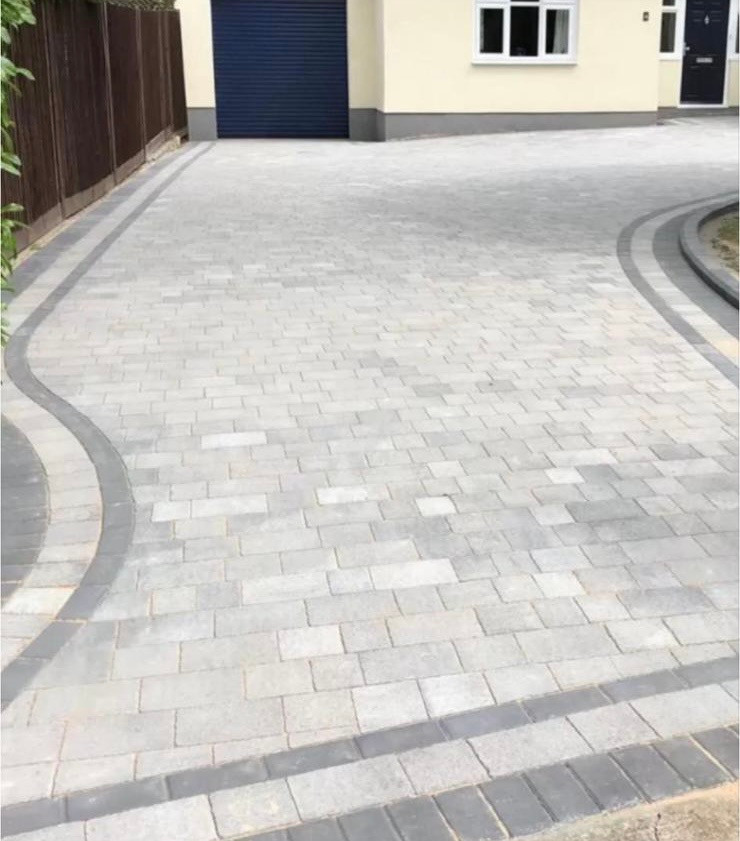
Communal parking areas. About a third of the homes in Highcliffe are flats, and most of those blocks have a shared parking court laid decades ago in tarmac. The faults repeat: ponding where the falls have flattened, a gully that has silted up and stopped taking water, potholes at the turning point, and edges crumbling into the planting. We can patch, plane and overlay, or dig out and rebuild, and the three are priced separately so a committee can see the choice. If the block is leasehold, work over the statutory threshold triggers consultation under section 20 of the Landlord and Tenant Act 1985, so we set the quote out in a form a managing agent can put straight into that process.
Bungalow drives and level access. Bungalows are close to three in ten homes here, and a lot of what we do on them is about getting in and out safely rather than about looks. A flush threshold instead of a step, a gentle fall away from the door, a textured surface rather than a polished one, and a handrail line kept clear. The paving has to finish clear of the damp proof course, so where the ground is tight we drop the level and run a channel drain across the door instead of building up to it.
Two thirds of the stock here went up between 1945 and 1982, peaking in the late fifties and early sixties, and those original drives were sized for a smaller car. The usual job is widening onto part of the front garden. The build up matters more than the widening: a proper excavation to formation, a geotextile membrane, a compacted sub-base at a depth set by the ground, and an edge restraint haunched in along the new border so the blocks have something to push against.
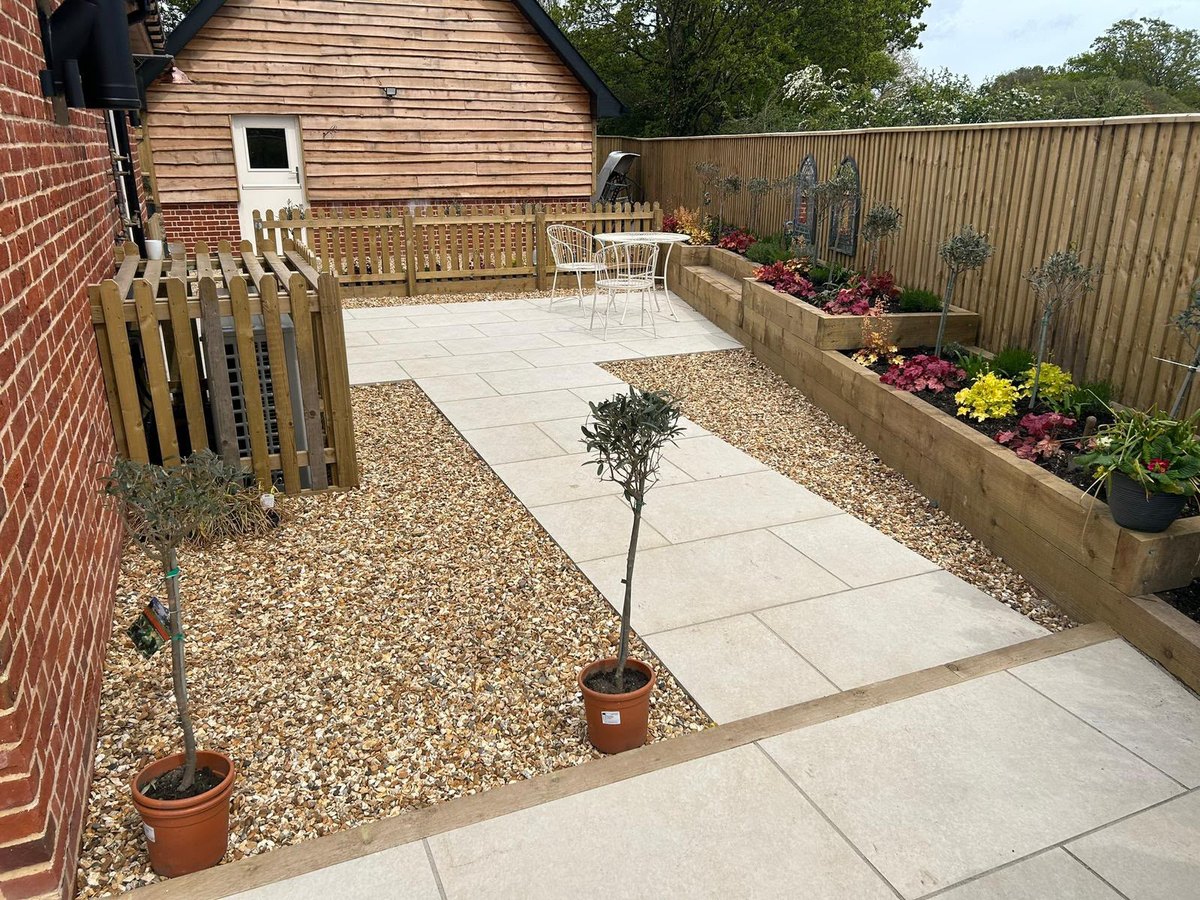
The sea is a couple of hundred metres away, anything facing it stays damp between showers, and damp paving grows algae. Smooth pressed concrete slabs are the worst of it. Textured porcelain and riven natural stone hold their grip far better, and both sit on a full mortar bed over a compacted sub-base rather than on blobs. Where a terrace has already dropped and rocks underfoot, relaying it properly costs less than people expect, because the slabs themselves usually lift clean.
On block paving, sunken bays, rutting where the car parks, weed growth and white staining across the surface are the four we see most. The first two are a base and edging problem. The last two are maintenance: a full re-sand with kiln dried sand closes the joints again, and efflorescence weathers off over a season or two rather than being scrubbed away. We will tell you which of the four you actually have before you spend anything.
How it runs
From your call to a written price
One person to ring, and an itemised quote: excavation, muck away, sub base, edgings, the surface and the drainage on separate lines. Paving a front garden stays permitted development for as long as the water is dealt with on your own land. Lay more than five square metres draining onto the road and you need planning permission, which the Planning Portal guidance on paving a front garden explains. Widening the opening onto the road is a dropped kerb application to BCP Council as highway authority. Highcliffe has no conservation area of its own, but there are listed entries in the parish, Highcliffe Castle among them, and the council's listed building records is the place to check first.
Cost
What decides the price of a driveway
No rate per square metre. What is under it decides more of the cost than what goes on top. A bungalow with a single width drive and a garage at the end, a seafront flat with a share of a communal car park, and a terraced house whose only route to the back is a shared alley. Those are three different jobs before a surface is chosen. In a shared court the gullies and the falls are usually the real work. Ask how deep the dig is, what sub base goes in, where the water goes and whether the edgings are haunched.
If it is urgent
A trip hazard, or a drive that floods
Ring rather than use the form. A lifted slab, a sunken bay by a doorway or a gully that has stopped taking water will not wait. The first visit is about making it safe and getting the water going somewhere. A silted gully in a shared car park is worth ringing about before the first heavy autumn rain. The phone is answered 24 hours for emergencies; scheduled work runs Monday to Friday, 8am to 6pm.
The one local thing
Two hundred metres from the sea changes the details
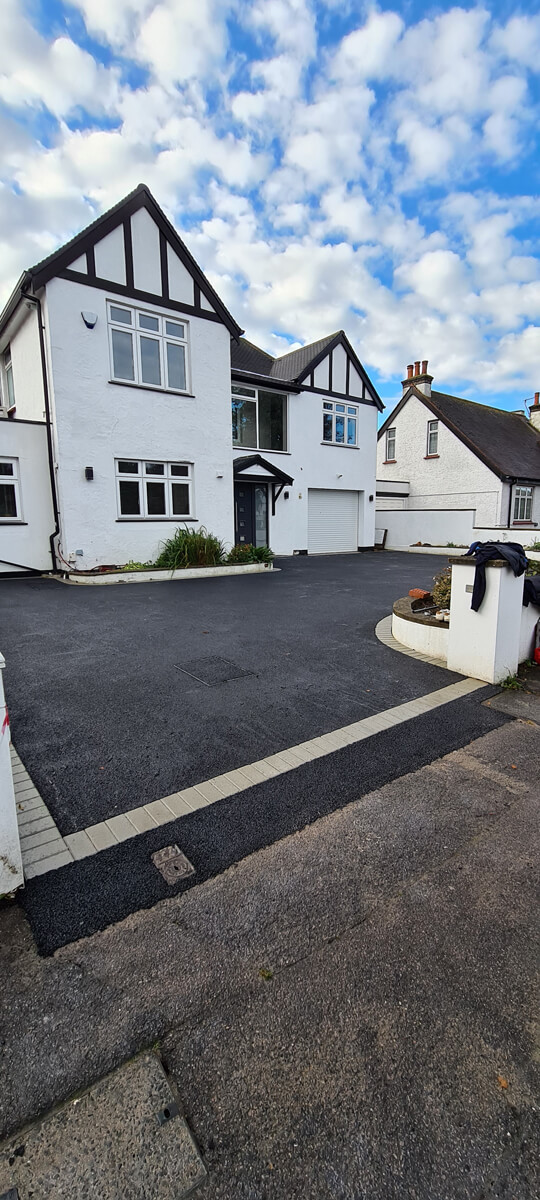
Salt air does not attack paving the way it attacks a roof, but it changes three details that decide how a drive here ages. First, fixings and metal edgings. Thin steel edging rusts from the cut ends inwards on an exposed frontage, so we use concrete edgings haunched in, or aluminium where a slim line matters.
Second, the joints. Wind carries fine sand and works open joints loose faster than it does inland, so a tighter joint and a proper re-sand schedule are worth more here than an extra thickness of block. Third, everything stays damp for longer between showers, which is why algae comes back sooner on a north or east facing terrace.
None of that is a fault, and none of it needs an expensive answer. It means choosing a textured surface over a polished one, keeping a gravel margin or a channel drain along the house so splash back does not leave a band of staining up the brickwork, and treating an annual clean as ordinary maintenance rather than evidence something has failed.
The most exposed elevation here faces south west, so the frontages that take the driven rain are the ones where the edges and the pointing want checking first. If you are on the seaward side of the road, mention it when you ring and we will price the edging in something that will still be there in ten years.
Who you are dealing with
A local firm you can check
We cover Highcliffe and Walkford, the rest of BH23 and across to Christchurch, Mudeford and Barton on Sea. Bournemouth Roofing & Building Ltd, registered in England and Wales, company number 15471719, which you can look up in a minute. Thomas Hannen's business, and he is the one who comes out to price the job, not a salesman. A verified customer's 10 out of 10 on Checkatrade. The visit and the written quote are both free.
Questions
Highcliffe questions we get asked
Being this close to the sea, does salt harm a drive?
It harms the metal in it more than the paving. Highcliffe is 0.2km from the coast, so salt sits on everything and works into steel edging pins, gully gratings and the fixings in any handrail beside the steps. Blocks and slabs cope with it, but galvanised ironmongery on the seaward side corrodes and stains down the face of the paving. We use stainless or plastic edge restraint on that elevation instead.
We are a block of flats. Who signs the work off?
The freeholder or the management company, not the individual leaseholders, and it is worth settling that before we quote. Flats make up 38.2% of the homes in Highcliffe, so a fair number of the parking areas are communal. Thomas Hannen will meet whoever holds the lease, measure the whole area and set the quote out in sections, so a committee can decide to do the bin store end first and the rest later.
How high can the patio go against the back wall?
No higher than a good step below the internal floor. Highcliffe is 64.1% post war stock built between 1945 and 1982, so almost all of it has a damp proof course in the brickwork, and that course only works while it stays above the outside ground. Where the level has to come up to meet a door, we form a drained channel along the wall and grate it over rather than burying the course.
Does a permeable surface actually help here?
It does, and on this free draining ground it works rather than being a box ticking exercise. Permeable blocks sit on open graded stone that holds the rain and lets it soak away under the drive, which keeps run off out of the road and off next door. The catch is the joint grit. It needs brushing and topping up, and a drive under trees clogs faster than one in the open.
One end of the drive always looks worse. Why?
Because it gets the driven rain and the sheltered end does not. The exposed elevation here faces south west, so that section stays damp between showers, which is what feeds the green film and washes sand out of the joints. Salt lands on it too. We would price a lift and relay on that stretch and leave the rest alone, rather than doing the whole drive just to make it match.
Nearby, and next door
Driveways and patios near Highcliffe
Driveways and patios nearby
Our other trades in Highcliffe
Everything we do in Highcliffe Driveways and patios, all areas Every area we cover
Free quote
Want to know whether it is a repair or a rebuild?
Give us the address and what you have noticed. We come out, open the ground and put an itemised written quote in front of you. Both are free.