
Driveways and patios in Barton on Sea
Block paving, resin, terraces and shared parking courts in Barton on Sea, built for the salt and the wind. Free site visit and a written itemised quote.
The site visit is free and so is the written itemised quote. Thomas Hannen prices every job himself.
A mile from the sea, a Barton on Sea drive or patio spends most of the year damp and salty, so the details that fail first are the joints, the edges and anything metal. Build those right and the surface itself is the easy part.
The calls from Barton tend to be one of three. The block paving has gone green and the joints are empty, so weed comes through and the blocks rock underfoot. The old concrete in front of the garage has cracked and dropped at one corner. Or the terrace at the back catches the wind and the view, and is slippery from October to April.
We come out and survey what is there before saying anything about price. That means looking at the falls, checking where your rainwater actually goes, and digging a small trial hole so we can see the build up under the surface. Then you get a written price, itemised, so you can tell the difference between a relay and a rebuild instead of taking our word for it.
The work
Drives, terraces and the parking outside the flats
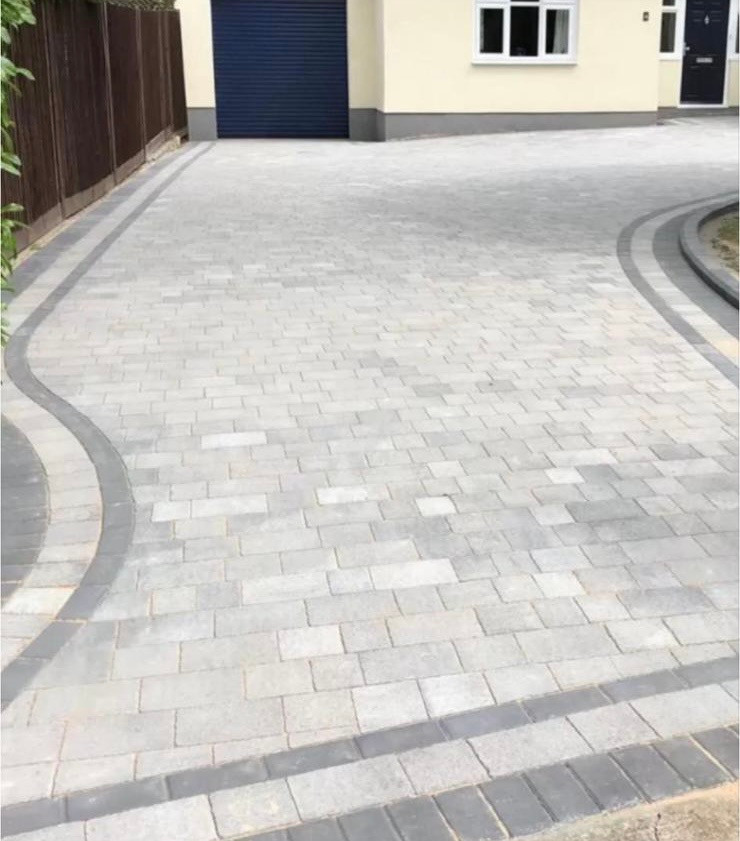
Shared parking courts and forecourts. There is a good deal of flatted housing in Barton and the parking outside it belongs to the block rather than to any one household. That changes who instructs the job, not the job: the surface still sinks under the wheel tracks, the gully still silts up, the edges still fail where cars overrun them. What is different is the paperwork, because work of any size on a block is usually consulted on with leaseholders under section 20 of the Landlord and Tenant Act 1985, and an itemised quote is exactly what that process needs. We are used to pricing for a residents' company or a managing agent, and to phasing a large area so the parking does not all shut in the same week.
Block paving here loses its joints faster than it does inland. Wind driven sand and rain empty them, and once the jointing sand has gone the blocks move against each other, the restraint pushes out and the weed arrives. On a sound base that is a lift and relay on fresh sharp sand, the edgings re-haunched and kiln dried sand brushed back in. Where the base has gone we excavate to formation, membrane it and compact a new sub-base in layers.
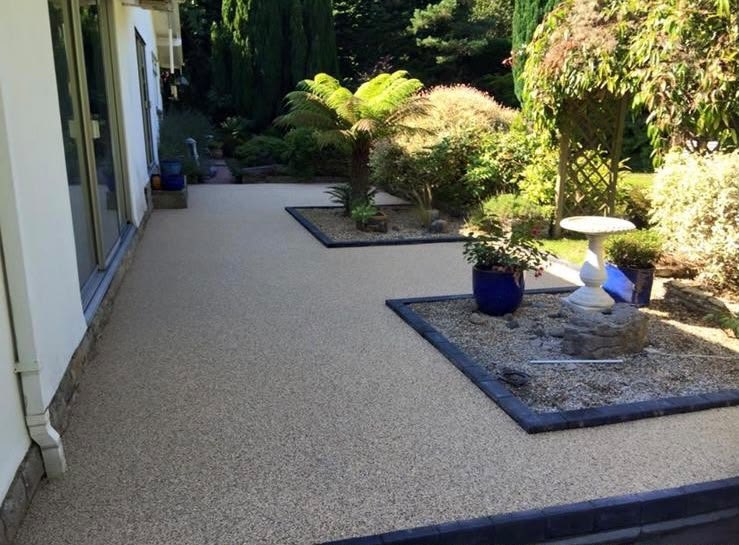
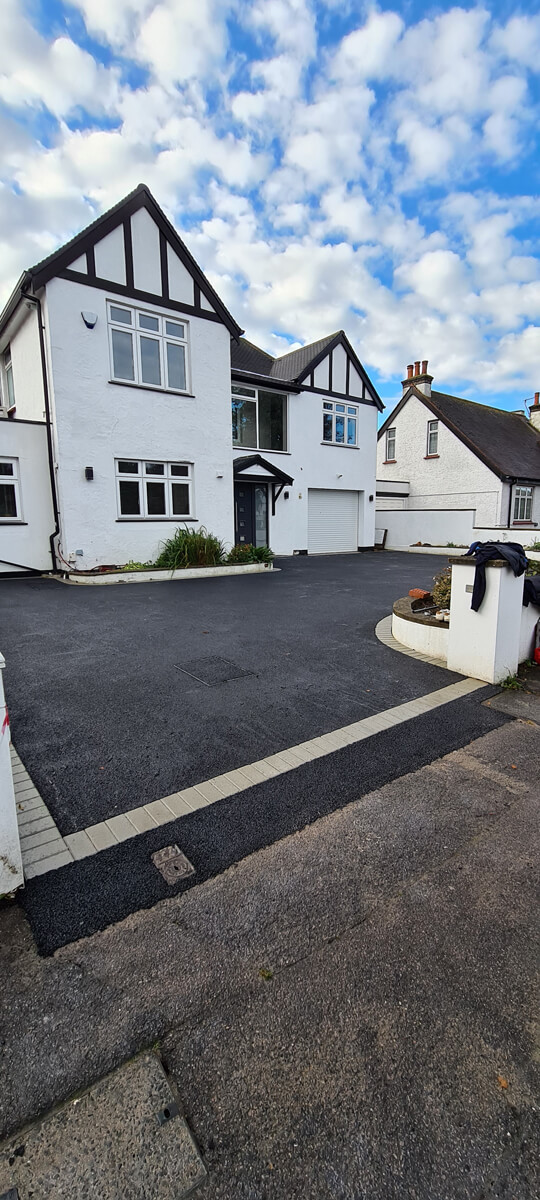
Plenty of frontages still have the concrete apron or the tarmac they were built with in the fifties and sixties, and both have had a hard life in this air. Concrete cracks along its bays, tarmac ravels and goes grey. Sound, well drained concrete will take resin bound gravel and avoid a dig altogether. Concrete that has moved will not, and resin over it cracks in the same line, so we check before quoting.
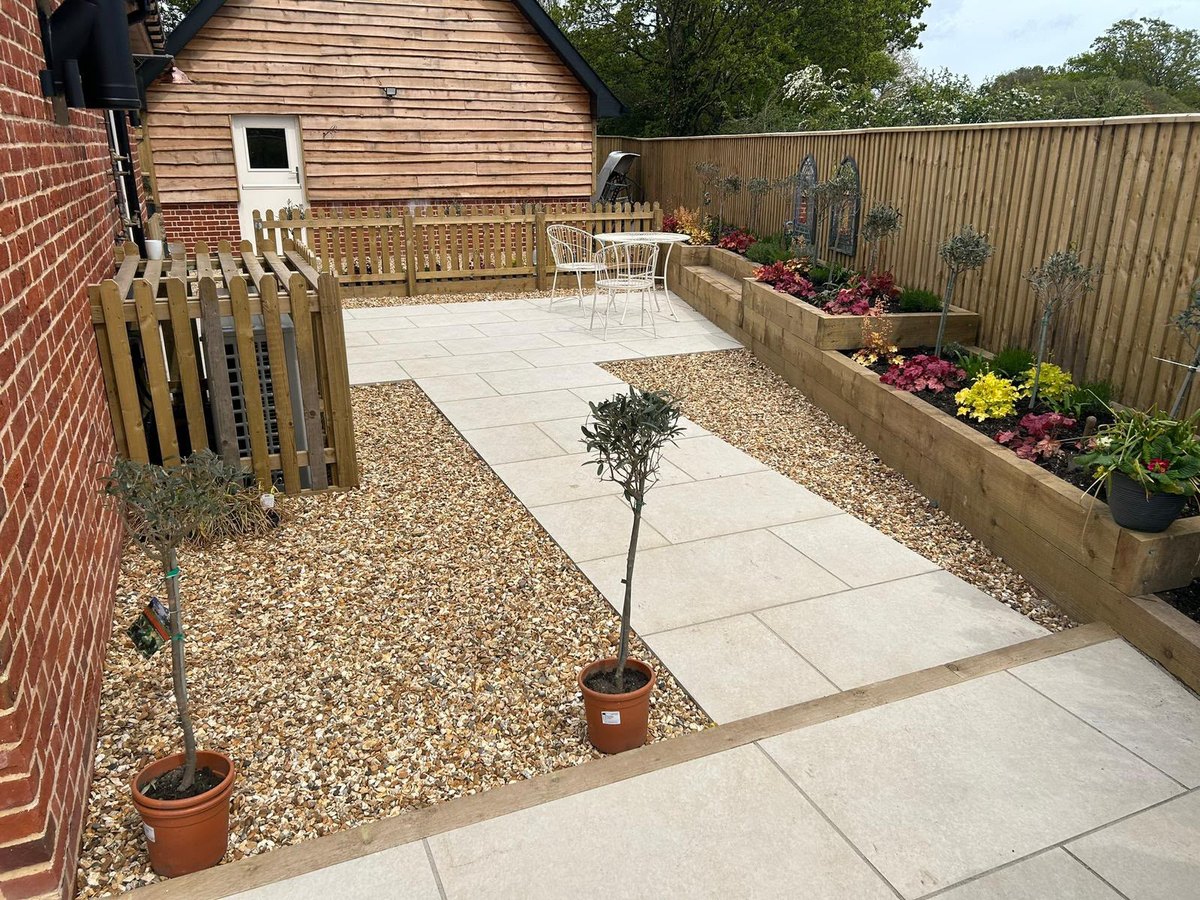
A terrace a mile from the water. Barton sits a little over a kilometre from the sea, so a back terrace is a suntrap and a wind tunnel by turns and it stays damp longer than one two miles inland. Textured porcelain keeps its grip when it is wet and shrugs off salt and staining. Natural stone and riven slab work bedded fully in mortar and pointed properly, with a fall away from the house and the level kept below the damp proof course. Single storey roofs drop their water at low level, so a gully full of blown sand means ponding at the front door within two winters: we clear or replace it, add a channel drain at a garage threshold, and take it to an outfall where the ground will not soak.
How it runs
From your call to a written price
The quote is itemised and nothing is left open overnight. Paving the front garden is permitted development as long as the water stays on your land. Over five square metres of new hard surface it has to be permeable, or run to a soakaway or a border rather than out into the road, and the front garden rules are on the Planning Portal. For a new or wider opening onto the highway, a dropped kerb is applied for separately through the highway authority, so start it early. Barton on Sea has no conservation area and two listed entries. On a flat or a maisonette, check the lease first, because the forecourt is usually the freeholder's to instruct.
Cost
What decides the price of a driveway
A bungalow with a single width apron, a detached house on a corner with an opening at each end, and a block of flats with one way into a shared court are three different jobs before any material is priced. On a shared court there is a fourth cost, phasing, because the parking cannot all shut at once. Under it, the dig depth and the weight of spoil are the real variables, and salt air makes the choice of edgings worth a question too. Ask for the dig depth, the sub base, where the water goes and who takes the spoil.
If it is urgent
A trip hazard, or a drive that floods
A lifted slab, a bay sunk by a doorway, or a gully packed with blown sand that has stopped taking water are phone calls rather than form fillings, because somebody falls or the water starts standing against the house. Making it safe and getting the water away comes first; the permanent work is priced once the ground opens. Barton on Sea is about nine and a half miles from us.
Worth knowing
Salt air, and the parts of a drive it goes after first
A mile or so from the water, everything outside your house is dealt a slightly different hand. Salt in the air keeps surfaces damp between showers, so algae and black spot come back faster and a north facing patio never really dries out through the winter.
Salt also attacks metal from the edge inwards, which is why the fixings, brackets and any galvanised edging on an exposed frontage give up long before the paving does. And wind driven sand does the rest, scouring the jointing out of block paving and filling the gullies that are supposed to take your water away.
So the specification changes in small, cheap ways that pay for themselves. Use a proper jointing compound rather than loose sand on an exposed drive, or accept that a re-sand is part of ordinary maintenance every few years. Choose a textured surface for a terrace that faces the weather, because grip matters more here than it does behind a sheltered house. Keep steel and aluminium edge details out of the design where a concrete haunched edging will do the same work and not corrode.
Ask for the gullies and the channel drain to be somewhere you can lift and clear, because they will need clearing. And in the first winter after new concrete goes down, keep the salt based de-icer off it, a bag of grit does the same job without eating the surface. None of this is exotic, but it is the difference between a drive that looks tired in five years and one that does not.
Who you are dealing with
A local firm you can check
We cover Barton on Sea, New Milton and the rest of the BH25 coast out towards Milford on Sea, working from Bournemouth. Bournemouth Roofing & Building Ltd, registered in England and Wales, company number 15471719, which you can look up in a minute. Thomas Hannen's business, and he is the one who comes out to price the job, not a salesman. A verified customer's 10 out of 10 on Checkatrade. The visit and the written quote are both free.
Questions
Barton on Sea questions we get asked
We are a kilometre from the cliff. Does salt matter?
For the metal in the job it does. Barton on Sea sits about 1.2km from the coast, and salt goes for steel edging pins, gate sockets, drainage gratings and any reinforcement long before it touches the paving. The surface can look sound while the restraint holding it in line has rusted through. So the buried metalwork gets specified for a coastal plot, and concrete haunching replaces steel pegs wherever it can.
Who instructs the work on the parking outside our flats?
Whoever holds the freehold, or the managing agent acting for them, rather than one leaseholder. About one home in six at Barton on Sea is a flat, and shared forecourts here are usually common parts, so a resurface cannot be ordered on a single owner's say so. Thomas prices it from a site visit and itemises the quote line by line so an agent can put it to the block. One named instruction is needed before anything starts.
Why does the seaward end of a drive fail first?
Because that end takes the weather and the other does not. The exposed elevation at Barton on Sea looks south west into the wind, so driven rain scours jointing sand out of that end of a block drive and keeps the edge damp between showers. Empty joints let blocks rotate under a wheel, and then the edge course pushes outwards. Topping the joints and rebuilding the restraint at that end beats lifting a drive that is sound behind it.
Our bungalow frontage is shallow. Is there room for two cars?
Often, though not in the shape people picture. Bungalows are 42.0% of the housing at Barton on Sea, and a single storey pushed forward on the plot leaves a short frontage, so two cars normally have to sit side by side rather than nose to tail. That needs the full width paved and the edge restraint carried right to the boundary, which is where thin drives fail. We mark the bays on the ground at the visit.
Is there a bad time of year to lay this by the sea?
Wind matters more than cold. At Barton on Sea a south westerly straight off the water dries a mortar bed and a resin mix far faster than the same day would inland, which pulls strength out of the joint and can skin a resin surface before it is closed. We screen the working area, adjust the mix and lay smaller sections in that weather. Frost stops mortar work outright, but a still cold day here is easier than a mild gale.
Nearby, and next door
Driveways and patios near Barton on Sea
Driveways and patios nearby
Our other trades in Barton on Sea
Everything we do in New Milton Driveways and patios, all areas Every area we cover
Free quote
Get a price for your Barton on Sea drive or terrace
Tell us what has sunk, opened up or gone slippery and we will come out, look under the surface and put a written price in front of you.