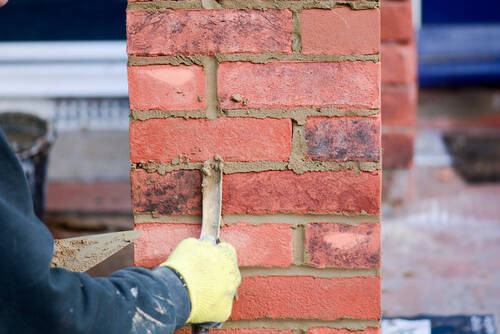
Roofers in Wimborne
Roofing, brickwork and repointing, plastering and rendering, insulation, driveways and patios, and exterior cleaning for the town around the Minster. A great deal of Wimborne is old fabric, and old fabric wants the right materials, not just a tidy finish.
The site visit is free and so is the written itemised quote. Thomas Hannen prices every job himself.
Wimborne, Dorset
An old town changes what the job actually is
On a solid-walled period house in Wimborne the mortar has to be softer than the brick, and the wall has to be allowed to breathe. Cement pointing traps water in the brick instead of letting it out through the joint, and the first hard frost takes the face off it. Undoing that is the single most common thing we are called to put right in this town.
Wimborne has a large conservation area and a high concentration of listed and period buildings. That is not a piece of local colour on a website. It changes the materials, the method and often the paperwork.
The walls are the starting point. A period house here is generally solid masonry with no cavity and no damp-proof course, sometimes soft handmade brick, sometimes cob or an older rendered elevation behind a Georgian frontage. A wall like that is not meant to be sealed. It takes water in during bad weather and gives it back when the weather turns, and it has to be allowed to do that or the damp has nowhere to go but inwards.
The town sits in the Stour valley rather than on the coast, so the wearing forces are different from Poole or Mudeford. There is no salt-laden air chewing through fixings and flashings. What you get instead is damp, frost and vegetation: shaded north slopes that never really dry, standing water at the base of walls, ivy and overgrown planting, and frost that works on anything already holding moisture.
We work right across Wimborne Minster and the villages around it, covering the BH21 postcodes: Colehill, Merley, Pamphill, Canford Magna, Stapehill and out towards Corfe Mullen. Wimborne comes under Dorset Council rather than BCP, which matters the moment a job needs listed building consent or touches anything inside the conservation area.
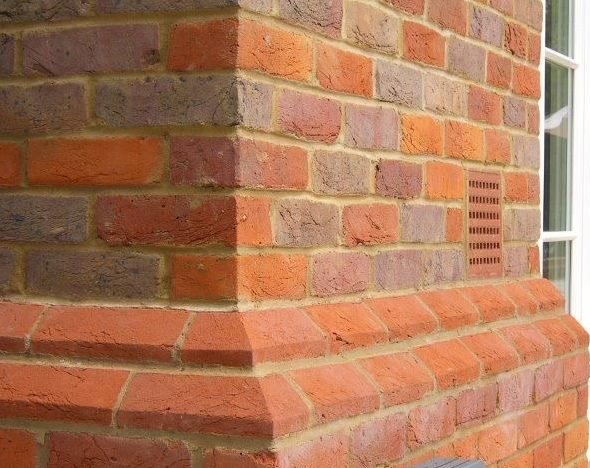
What we do here
Every trade, read through a period house
Same trades everywhere. The specification is what changes once the building is a hundred and fifty years old.
Roofing
Older roofs in the town are usually plain clay tile or natural slate on steep pitches, and the right repair is to strip, sort and relay the sound units with matching salvaged stock rather than drop in a modern substitute that stands out from the pavement. Where a covering has genuinely gone we re-lay to the original gauge and re-detail the verges, valleys and ridge the way the roof was first built.
Roofing servicesBricklaying & repointing
This is the trade Wimborne needs most, and it is the one most often done badly. Soft historic brick wants a lime mortar joint raked out by hand and pointed to the original profile, not an angle grinder and a bag of cement, and the same applies to chimney stacks, garden walls and boundary piers.
Bricklaying & repointingPlastering & rendering
Interiors in the older houses are frequently lime plaster on lath, and a modern gypsum skim straight over the top seals in moisture that the wall used to shed, which is why so much of it blows again within a couple of winters. We repair like for like where the building needs it, and we will talk you out of a hard cement render on an elevation that has to breathe.
Plastering & renderingInsulation
Warming up a solid-wall house is a different problem from warming up a modern one, because anything that stops the structure drying will show up as damp somewhere else. The loft is almost always the sensible place to start, and we will say plainly where an upgrade would do the building more harm than good.
Insulation servicesDriveways & patios
Frontages here are on show from the street, so colour, edging and jointing matter more than they would on an estate, and a hard surface laid tight to an old solid wall can raise the ground level and bridge the base of it. We set levels and drainage so water runs away from the building, and we flag anything that looks like it needs checking with the council first.
Driveways & patiosExterior cleaning
Inland and shaded means moss on north slopes and green algae on render and paving rather than the salt scouring you get on the coast. Historic tile, soft brick and lime render will not take an aggressive pressure wash, so it is soft washing and a biocide treatment that does the work slowly instead of blasting the surface off.
Exterior cleaningThe one thing worth understanding
Why cement mortar quietly destroys an old wall
If you own a period property in Wimborne and you only take one thing from this page, take this. The mortar is meant to be the weakest part of the wall.
A solid wall has no cavity and no barrier. It manages water by absorbing it in bad weather and releasing it afterwards, and a large share of that release happens through the mortar joints, because lime mortar is more open and more permeable than the brick or stone around it. Lime is also softer, so seasonal movement cracks along a joint instead of through a brick, and a worn joint can simply be raked out and replaced. The joint is sacrificial by design, and that is the whole idea.
Cement mortar inverts all of it. It is considerably harder than a soft handmade brick and much less permeable, so the water already in the wall cannot get out through the joints. It leaves through the only route left, which is the face of the brick. It carries dissolved salts with it, those salts crystallise just under the surface, and in winter the same trapped moisture freezes and expands in the same place. The brick face then spalls, crumbles and drops off. Movement makes it worse: instead of a hairline crack in the mortar, the crack runs through the masonry, because the mortar is now the strong part.
The damage takes years, which is exactly why people get away with selling it, and it does not undo itself. Once a face has blown you can repoint properly and stop the wall getting worse, but you cannot put the face back without cutting out and replacing the brick. The same logic applies to hard cement render and impermeable masonry paint on a solid wall, and to a chimney stack repointed in a mix meant for modern engineering brick.
Recurring faults
What we keep finding on period property here
None of these are unusual and none of them are emergencies. They are the things worth catching before another few winters go through them.
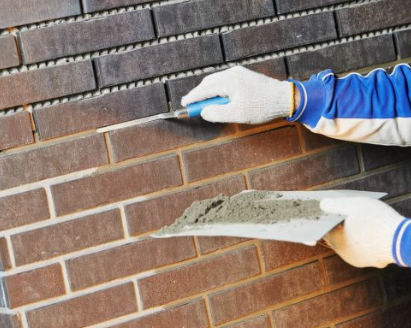
- Cement pointing from an older repair, with brick faces crumbling just below it
- Chimney stacks with washed-out joints and cracked flaunching around the pots
- Masonry paint or hard render trapping damp behind it on a solid elevation
- Slipped plain tiles and open swept valleys on steep original pitches
- Ivy and heavy planting holding water against the wall all year round
- A later path or patio raising the ground level over the base of the masonry
Questions
Wimborne questions we get asked
Why is cement pointing a problem on an older Wimborne wall?
Because it is harder and far less permeable than the brick it sits between. A solid wall gets damp and dries out again, and it does much of that drying through the joints. Cement blocks that route, so the moisture leaves through the face of the brick instead, carrying salts with it and freezing just under the surface in winter. The face then blows off. The mortar is supposed to be the part that wears out, and cement reverses that arrangement so the brick wears out instead. It is slow, and it is not reversible once a face has spalled.
My house is listed, or in the conservation area. Do I need consent?
Very possibly. Listed building consent is normally needed for work that affects the character of a listed building, inside or out, and that can include re-roofing in a different material or repointing in a different mortar. In a conservation area the controls are lighter but still real, and they bite hardest on anything visible from the street. We will tell you what we think needs checking, we will put the specification in writing so you have something to submit, and we will not start work on a listed building until you have confirmation from the council.
Can you match the original bricks, tiles and mortar?
That is usually the whole job on a period property. We source reclaimed or handmade bricks and plain clay tiles rather than dropping in a modern extruded brick that will never sit right next to a soft handmade one. Mortar is matched on colour, aggregate and joint profile, which is why we look at a clean section of original pointing rather than guessing from the weathered face. On a large elevation we will do a sample panel first so you can see the match before the whole wall is committed.
Is there a right time of year for lime work?
Yes, and it matters more than people expect. Lime mortar cures slowly by taking carbon dioxide back out of the air, and it has to be kept damp and off the frost while that happens. Frost on green lime mortar wrecks the joint. So the sensible window runs from spring to early autumn, and late-season work gets protected with hessian and sheeting. If you ring us in December about a large repointing job we will usually tell you to book it for the spring rather than take your money and risk the work.
Nearby
Working elsewhere in Dorset
Roofers in Ferndown
Ten minutes east and a completely different building stock: 1960s to 1990s estates on concrete interlocking tiles now due for full replacement, and lofts insulated to the standards of the day.
Ferndown pageAreas we cover
We are based in Bournemouth and travel out from there. Every town we work in is listed on one page, with what is particular about the housing in each.
See the full listTrade by trade
Each trade, written for Wimborne Minster
The same local evidence, read through each trade in turn. Ground conditions decide a driveway, exposure decides a roof, and the age of the housing decides insulation.
- Roofing in Wimborne Minster
- Flat roofing in Wimborne Minster
- Bricklaying and repointing in Wimborne Minster
- Repointing in Wimborne Minster
- Driveways and patios in Wimborne Minster
- Patios in Wimborne Minster
- Plastering and rendering in Wimborne Minster
- Rendering in Wimborne Minster
- Insulation in Wimborne Minster
- Loft insulation in Wimborne Minster
- Wall insulation in Wimborne Minster
- Exterior cleaning in Wimborne Minster
- Gutter cleaning in Wimborne Minster
- Fascias, soffits and guttering in Wimborne Minster
Who you are dealing with
A local firm you can check
We work right across Wimborne Minster and out through Colehill, Merley, Pamphill, Canford Magna and Stapehill towards Corfe Mullen, covering the BH21 postcodes under Dorset Council rather than BCP.
You are dealing with Bournemouth Roofing & Building, the trading name of Bournemouth Roofing & Building Ltd, registered in England and Wales, company number 15471719. That takes a minute to check. Thomas Hannen owns the firm and he prices every job himself, so the person who quotes it is the person answerable for it. One multi-trade team does the work, and none of it is sub-contracted out to somebody you have never met.
There is a verified customer's 10 out of 10 on our Checkatrade profile. The site visit is free and so is the written itemised quote. The phone is answered 24 hours for emergencies, and scheduled work runs Monday to Friday, 8am to 6pm.

Free quote
Get a price for your Wimborne property
Send a few photographs of the wall or the roof and we will tell you what we think it needs, then come and look at it properly before anything is priced.