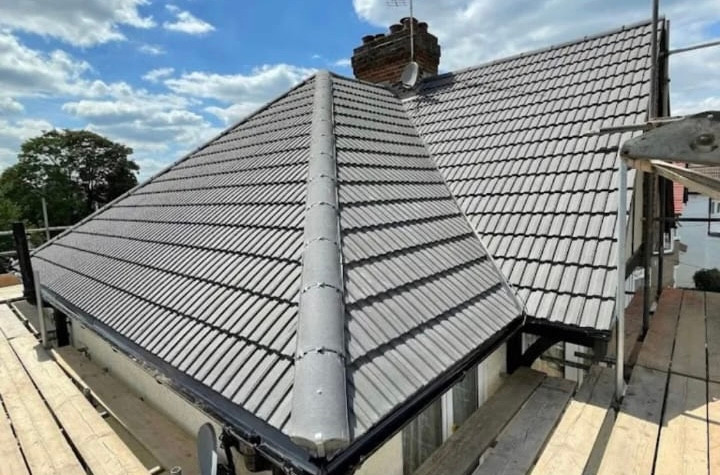
Chimney repairs and leadwork
A chimney is the one part of a house that sticks up through the roof and takes weather on all four faces. When it lets water in, it is nearly always at the pointing, the flaunching on top or the lead where it meets the tiles, and each of those is a repair you can put a name to.
The site visit is free and so is the written itemised quote. Thomas Hannen prices every job himself.
Last updated
Chimney stacks
Chimney Stack Repairs, Flashings and Leadwork Around Bournemouth and Poole
Most leaking chimneys need a repair, not a rebuild. The water gets in through worn pointing, cracked flaunching or lead that has split or pulled out of the joint, and each can be put right on its own.
Bournemouth Roofing & Building repoint chimney stacks, renew flaunching, re-form flashings, soakers, back gutters and aprons in code lead, and cap disused flues, across Bournemouth, Poole and Christchurch. Thomas Hannen prices every job himself, and the site visit and the written quote cost you nothing.
A failing stack shows up inside the house, at the lead, or in a surveyor's report: a brown mark on a chimney breast that grows after heavy rain, lead flapping at the side of the stack after a gale, or a survey saying the top of the stack looks rough. We get up to it, photograph what we find and tell you which part has failed. This page is about the brickwork, the mortar and the lead. We do not sweep chimneys, line flues or fit stoves.
If water is coming through a chimney breast right now, or a pot or brick looks loose after a gale, ring 07435 839745 instead of filling in the form, and keep people clear of the ground below the stack.
- Stacks raked out and repointed, spalled bricks cut out and replaced, flaunching renewed
- Soakers, step flashings, back gutters and aprons formed in code lead, cut to sensible lengths
- Disused flues capped with ventilation kept, and damp on the breast traced to its cause
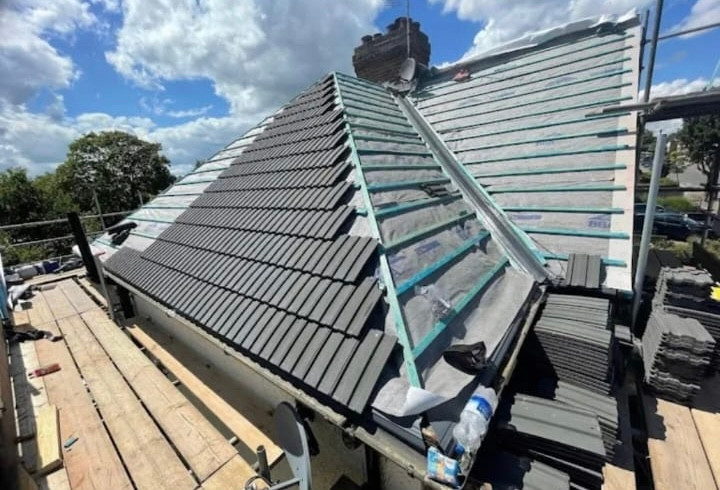
Brickwork and mortar
How Is a Chimney Stack Repointed?
Like a wall, but from a scaffold round the stack and in a mix that has to cope with the worst exposure on the house. The old mortar is raked out by hand to sound material, the joints are brushed out and damped, then filled in passes and usually weather struck so water is thrown clear of the face below.
The mix follows the brick. A Victorian or Edwardian stack in soft brick wants a lime mortar, because a joint is meant to be softer than the masonry and a hard cement joint forces the water out through the brick face instead. Historic Environment Scotland set out the case against hard cement on soft masonry, and the stronger grades of natural hydraulic lime bought against BS EN 459-1 on building lime are the ones kept for chimneys and parapets. A postwar stack in hard machine brick is pointed in a cement gauge that matches what is there.
Blown bricks are cut out and replaced with a match, not filled with mortar. If a stack has more spalled brick than sound, repointing is the wrong job and we will say so. The mortar side of this is set out in full on our repointing page, and cutting out and rebuilding brickwork sits with bricklaying and repointing.
Flaunching and cement fillets
Flaunching is renewed by breaking out the old cap, checking the pots are bedded and sound, and forming a new one that falls away from the pots on every side and finishes clear of the outer edge of the brickwork, so water drips off rather than running down the face. Loose pots are rebedded, cracked ones replaced like for like, and on an older house we reuse sound pots rather than fit something that reads as new from the street.
A cement fillet at the roof junction comes out and is replaced with lead: soakers and step flashings at the sides, an apron at the front and a back gutter behind. Resealing a cracked fillet with mastic buys a season at best.
Leadwork
Flashings, Soakers, Back Gutters and Aprons in Code Lead
Our leadwork covers flashings, valleys, chimneys and roof junctions. Around a chimney there are four parts, and each one does a different job.
The apron sits across the front, on the downhill side. It is tucked into a mortar joint in the stack and dressed down over the tiles so the water coming off the front face lands on the roof, not behind it. Soakers run down each side, one under every course of tiles or slates, turned up against the brickwork. Step flashings cover the top of the soakers, cut in steps to follow the courses, each step tucked into its own joint. The back gutter sits on the uphill side, where all the water running down the roof above hits the stack. It works hardest and is most often done badly: it needs a proper upstand, a gutter board with a fall under it, and enough lead dressed up under the tiles above that water cannot get round the ends.
Every piece that goes into the brickwork is set in a raked chase, held with lead wedges and pointed in, and clips hold the free edges against wind lift.
Why the lead code and the bay length matter
Rolled lead sheet is sold by code, and the code is its thickness. Code 3 is thin, code 4 is the common choice for soakers, step flashings and aprons, and code 5 is heavier and usual for a back gutter, which carries more water and takes more foot traffic from anyone working on the stack. On an exposed stack near the sea we may go a code up on the flashings.
Length matters as much as thickness. Lead expands in the sun and contracts at night, and a piece that is too long cannot move freely, so it fatigues and splits, usually along a fold. Trade practice is to keep a single piece to around a metre and a half and lap the next over it. Over long lead is one of the few faults you can spot from the garden: a crack across the apron, or a flashing bowed away from the brickwork.
| Piece | Where it sits | Usual code | What goes wrong |
|---|---|---|---|
| Front apron | Downhill face of the stack, over the tiles | Code 4, or 5 when exposed | Cracks across its width if cut too long |
| Soakers | Under each course, up the side of the stack | Code 3 or 4 | Left out altogether, or too short to reach the next course |
| Step flashings | Over the soakers, tucked into each joint | Code 4, or 5 when exposed | Wedges loosen and the steps pull out of the brickwork |
| Back gutter | Uphill face, taking the water off the roof above | Code 5 | No fall, a low upstand, or lead too short under the tiles above |
Valleys and abutments elsewhere on the roof sit with our roofing services, and the lead abutment where a flat roof meets a house wall is on our flat roofing page.
Disused flues
Should a Chimney You No Longer Use Be Capped?
Usually, yes, and capped properly. An open pot on a flue nobody uses lets rain straight down the inside of the stack and into the breast, and birds nest in it. A cap or a cowl stops the rain but must not seal the flue.
A flue that is closed at the top and bricked up at the bottom holds still, damp air, and that condenses on the cold inside of the stack and soaks through the breast into the room. It looks exactly like a leak.
So a disused flue wants air at both ends: a vented cap or cowl on the pot, and a vent into the flue low down in the breast inside, so a slow draught keeps it dry. We fit the cap on the pot while the scaffold is up, and we can fit the vent in the breast in the same visit. Where a stack has several flues, we check which ones are still in use before we cap anything.
If a flue still serves a fire, a stove or a boiler, we leave it alone. The terminal on a working flue is a matter for whoever services the appliance, and it is not work we do.
Fault finding
Why Is There Damp on My Chimney Breast, and How Do You Tell the Cause?
Damp on a chimney breast has four usual causes, and the timing and the position of the mark tell them apart, so note when it appears and where before anyone prices a repair.
Start with when it happens. A mark that grows after driving rain is water from outside. One that comes and goes with muggy rather than wet weather, leaving a brown or yellow bloom, is usually salts in the plaster. Then look at where it is. Damp high on the breast, near the ceiling, points at the stack and the lead. Damp low on a breast in a room below points at the flue or the salts. In the loft, a wet stain on the stack brickwork means it is coming down from the roof.
| What you see | What it usually is | What puts it right |
|---|---|---|
| Damp near the ceiling, worse after driving rain | Failed flashings, soakers or back gutter, or a cement fillet cracked away | Re-form the lead around the stack |
| Damp spread across the breast after wet spells | Porous stack, washed out pointing or cracked flaunching | Repoint, renew the flaunching, replace blown bricks |
| Damp in a room whose fireplace is blocked up | An open pot letting rain in, or a sealed flue condensing | A vented cap on the pot and a vent low in the breast |
| Brown staining that follows humid weather, not rain | Salts from old soot drawing moisture out of the air | Cure the water first, then replaster the breast |
The last one catches people out. Salts from years of fires pull moisture out of the air and keep a patch damp long after the stack is fixed. The plaster has to come off and go back in a salt resistant finish, which is plastering work we can do once the stack is dry. BS 5250 on managing moisture in buildings is the code of practice behind telling condensation from penetrating damp. Our blog post on what a brown stain on the ceiling means covers the same reading of timing and position for a ceiling.
Bigger decisions
Should a Chimney Stack Be Rebuilt or Taken Down?
Sometimes it should. A stack that leans, has cracked right through, or has lost so many brick faces that there is little left to point is past repair. We never decide that from the ground. A rebuild or a removal is quoted only after we have been up to the stack on proper access and seen the brickwork, the flues and the timbers round it.
Rebuilding means taking the stack down to sound brickwork and building it back in matching brick and mortar, with new flaunching and lead. Taking it down means removing it below the roof, tiling across the gap and leaving the flue ventilated. That ends the maintenance, but can change the look of the street.
Before a stack is rebuilt or taken down, planning, the party wall and the breast inside all want settling. On an ordinary house the work is not usually a planning application, and the Planning Portal guidance on roofs sets out where that line sits. Listed buildings and conservation areas are different, and are covered below.
Next, on semis and terraces the stack often sits on the party wall between two houses, with the neighbour's flues in the same brickwork. Work to that stack is work to a party structure under the Party Wall etc. Act 1996, and the owner doing the work has to serve notice on the neighbour, with two months notice for work to a party structure. Nobody should take down half a shared stack with a neighbour's fire still using it.
Finally, the stack above the roof is one job and the chimney breast inside the house is another. Removing a breast is structural work that needs building control and a check against Approved Document A before anyone prices it.
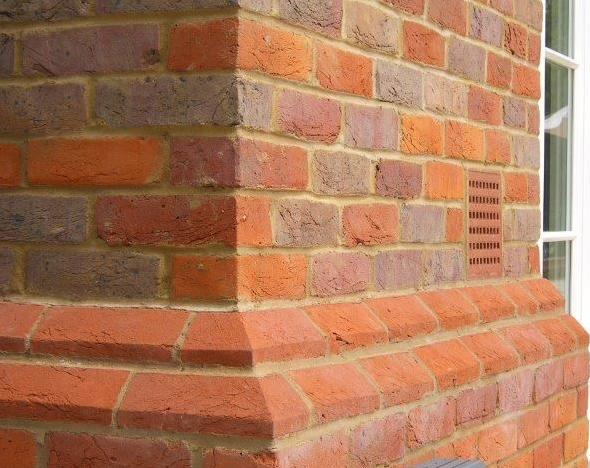
Consent
Chimneys on Listed Buildings and in Conservation Areas
Chimneys shape an old roofline, so this is where permission bites. On a listed building, anything affecting its character needs listed building consent first, and under section 7 of the Planning (Listed Buildings and Conservation Areas) Act 1990 that includes taking down or altering a stack, changing pots, and repointing in a different mortar or profile. BCP publish the council's listed building records, and Dorset Council explain listed building consent for addresses outside the conurbation.
In a conservation area the controls are lighter, but a stack taken down changes what the area protects. BCP publish the council's list of conservation areas. Those boundaries do not follow the roads you expect, so we check an address rather than a town. Like for like repair, in matching brick and lime, is the safe course. Our blog post on planning permission, building regulations and listed building consent sets out which one applies when.
Where consent may be needed, we put the mortar, profile, brick, pots and lead in writing, for you to hand to a conservation officer.
Access
Why does chimney repair work need a scaffold, not a ladder?
A chimney sits at the top of a slope and the work is heavy. The work at height hierarchy: avoid, prevent, mitigate means a proper working platform where the work cannot be done from the ground, and for a stack that is a scaffold carried up the roof to a guarded platform round the chimney, not a ladder hooked over the ridge.
HSE rules on roofwork cover the edge protection, and the HSE guidance on scaffolding covers how it is put up, inspected and handed over.
That is why the scaffold is a priced line on every chimney quote, and why it pays to do the pointing, flaunching, lead and caps together while it is up. If the scaffold has to stand on the pavement, the council's permission is needed, because scaffolding on or over a highway needs a licence in writing.
How we work
How does a chimney repair run from the first visit?
Thomas looks at the stack from the ground and the loft and asks what you have seen and when. Where the fault cannot be named without getting up there, we say so rather than guess. The written itemised quote names the repair: which faces, what mortar, which pieces of lead in what code, and the scaffold.
One company answers for it from start to finish. The roof is never left open overnight: tiles lifted for the soakers go back before we leave. If opening up shows something we could not see before, rotten timber round the stack or brick that has gone deeper than it looked, we photograph it and price it before we touch it, and you decide. The site is swept daily and the old mortar, brick and lead leave with us.
What it costs
What Decides the Price of a Chimney Repair?
A chimney repair is priced on the access, what has failed and how much of the stack has to be opened up, not on its size. A short stack on a bungalow and a tall party stack on a terrace are different jobs before a joint is raked.
- The scaffold. The height, where the stack sits, whether it needs a pavement licence, and how long it stands.
- What has failed. One apron is a different job from a full set of lead, which means tiles off round the stack.
- The brickwork and the mortar. How far the pointing has gone, how many bricks come out, and whether it wants lime, which cannot be caught by frost.
- Consent and neighbours. A listed house, a conservation area or a shared stack adds time and sometimes a party wall notice.
Reading two chimney quotes side by side
Ask whether the lead is being re-formed or sealed, and in what code. Ask whether soakers are going in under the tiles or a cement fillet is going back. Ask what mortar the stack is being pointed in, and whether the flaunching is included. Ask whether the scaffold is in the price. Our post on what a roofing quote should include has the full list.
If it is urgent
A Chimney Letting Water In, or a Pot Coming Loose
If water is coming through the breast now, move what you can and put a bucket down. Do not go up on the roof. If a pot is loose or the stack is visibly leaning after a gale, keep people away from the side of the house it would fall towards and ring us rather than using the form.
If we miss the call, we ring back. Scheduled work runs Monday to Friday, 8am to 6pm, and something that cannot wait is dealt with on our emergency roof repairs page. The first visit makes it safe, and the proper repair follows once it is dry. Our post on what to do in the first hours after storm damage covers what to do and what to photograph while you wait.
Questions
Chimney Repair Questions and Answers
Can a leaking chimney be fixed without rebuilding it?
Usually, yes. Most chimney leaks come from worn pointing, cracked flaunching or failed lead, and each can be repaired on its own. A rebuild is only the answer when the brickwork has gone or the stack leans, and we decide that from the scaffold.
Is mastic or a cement fillet good enough round a chimney?
No, a cement fillet cracks away because the roof and the stack move differently, and mastic buys a season at most. The lasting repair is lead soakers, step flashings, an apron and a back gutter.
What lead code should be used on a chimney?
Code 4 is the common choice for soakers, step flashings and aprons, with code 5 on an exposed stack and usually for the back gutter. Keeping each piece short enough to move without splitting matters just as much.
Why is my chimney breast damp when it has not rained?
Usually a disused flue sealed at both ends and condensing inside, or salts from old fires drawing moisture out of humid air. The first is cured by venting the flue top and bottom, the second by replastering once the stack is dry.
Should I cap a chimney I do not use?
Yes, with a vented cap or cowl and a vent low in the breast, so air moves through the flue. If a flue still serves a fire, stove or boiler, we leave it alone.
Do I need permission to take a chimney stack down?
On an ordinary house it is not usually a planning application. A listed building needs listed building consent, a conservation area may need the council's agreement, and a stack shared with a neighbour is work to a party structure, which needs a party wall notice before anyone starts.
Is the scaffold included in a chimney repair quote?
In ours it is a separate line, so you can see it. Chimney work needs a scaffold up to a guarded platform round the stack, and a pavement licence if it stands on the highway.
Areas
Chimney Repairs Across Bournemouth, Poole and Christchurch
We repair chimneys across Bournemouth, Poole and Christchurch, and out as far as Blandford Forum, Swanage and Lymington. Chimney stacks repointed, flaunching renewed and lead re-formed in these towns and between them:
- Bournemouth
- Boscombe and Southbourne
- Poole
- Christchurch
- Broadstone
- West Moors
- Ferndown
- Highcliffe
- Corfe Mullen
- Wimborne
- Swanage
- New Milton
- Ringwood
- Wareham
- Verwood
- Blandford Forum
- Lymington
Bournemouth Roofing & Building Ltd is registered in England and Wales, company number 15471719, and the Checkatrade review on the profile is a verified 10 out of 10. Related work: roofing, repointing, bricklaying and repointing and fascias, soffits and guttering. To check the stack yourself first, see roof checks before winter from the ground.
Free quote
Find Out Which Part of the Chimney Has Failed
Send a photograph of the stack and one of the mark inside. Thomas comes out, looks at the stack, the lead and the loft, and gives you a written itemised price that names the repair.