Roofers in Blandford Forum
Roofing, brickwork and repointing, plastering and rendering, insulation, driveways and exterior cleaning across Blandford Forum, Blandford St Mary and Bryanston. A town rebuilt in brick and tile by Act of Parliament, and it still shows.
The site visit is free and so is the written itemised quote. Thomas Hannen prices every job himself.
Blandford Forum
The one town in Dorset where the roof covering was set by statute
Blandford burned on 4 June 1731, and Parliament decided what went back on the roofs. The Blandford Forum (Rebuilding After the Fire) Act, passed the following year, required the town to be rebuilt in brick and tile. That is why a county known for thatch has a brick-and-tile market town at its centre, and it is still the starting point for any repair in the conservation area.
The fire started at about two in the afternoon at the junction of White Cliff Mill Street and Bryanston Street. A north-westerly wind carried it through the town inside an hour.
The conservation area appraisal records one detail that matters more to a roofer than anything else in the account: "tiled houses lasted longer than thatched but even so, by 7pm few houses were left standing." The eastern end of East Street came through it, and the reason is instructive. That stretch had already burned in 1713 and had been rebuilt in brick and tile. It survived the second fire because of what it was made of.
The monument John Bastard put up in 1760 records that fourteen inhabitants died and four hundred families lost their homes. He and his brother William then rebuilt the town, and the work was largely finished inside thirty years. They kept the medieval street plan and the burgage plots and simply rebuilt on them, which is why the centre reads as a single Georgian piece rather than a street that grew.
The practical consequence is that substitution shows here in a way it does not in a town that evolved. Put a concrete interlocking tile on a Georgian frontage in the Market Place and it is obvious from across the road, because everything either side of it went up in the same decade to the same specification.
Materials
Clay tile is the tradition here. Slate arrived with the railway
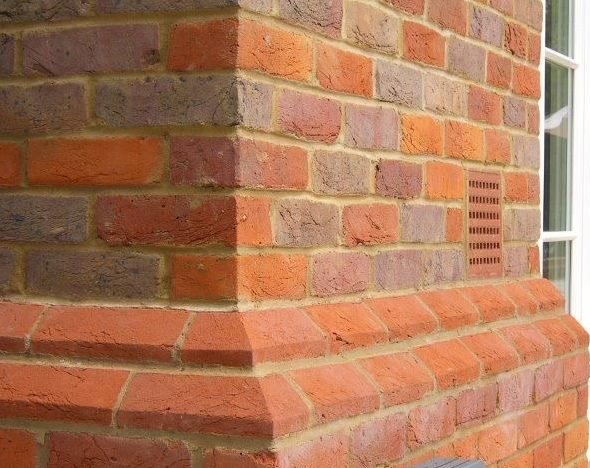
If you are matching a Blandford roof, the age of the covering tells you which century you are working in. Clay plain tile is the post-fire tradition. Natural slate is described in the conservation area appraisal as a later nineteenth-century import, and it arrives with the railway: Blandford St Mary station opened on 1 November 1860 and Blandford Forum on 31 August 1863.
So a slate roof in the town is, in practice, post-railway. A clay tile roof is older. That is a useful thing to know before anyone orders material, because "matching what is there" means different things on the two.
Two things here that catch people out
- Mathematical tiles. There are elevations in Salisbury Street, and at Artisan House in East Street, clad in mathematical tiles hung on a timber frame to imitate brickwork. They look like brick and they are not. They are a cladding, they are rare, and they need treating as a hung finish rather than as masonry.
- Painted false jointing. Many facades still carry traces of false brick jointing painted on in white over a coloured wall face, sometimes not lining up with the real joints underneath. A careless repoint or a pressure wash takes it off permanently, and it cannot be put back.
- Cast iron rainwater goods are the conservation area norm, and the appraisal is blunt that most of the damage it found came from rainwater goods not being maintained rather than from anything structural.
Dorset Council's guidance asks that new work take its reference from the host building, that bonds, mortar and pointing style be matched, and that conservation-pattern rooflights are used on anything predating the mid twentieth century. Its position on plastic is not ambiguous.
Worth knowing before you book
Blandford has a bat problem no other town on this site has
This is the single most useful thing we can tell you about roof and loft work in Blandford, and almost nobody mentions it until it holds a job up.
Bryanston SSSI, notified in 1977, is the only known breeding site for the greater horseshoe bat in Dorset, and one of only seven breeding colonies left in Britain. It sits immediately west of the town.
Dorset Council applies a consultation zone around it that reaches eight kilometres, split into bands: A out to 2.2 km, B to 4 km, C to 8 km. Proposals in bands A and B can require full season surveys, and a full season means what it says. The whole of Blandford Forum sits inside the eight-kilometre zone, and the town centre is roughly one to two kilometres from Bryanston, which puts much of it in the innermost bands.
In practice that matters for anything that opens up a roof space. It does not mean you cannot have your roof done. It means the survey window can dictate the start date, and that is worth knowing in January rather than in May. We will tell you if we think your address is likely to be caught, and we will not pretend the timing is our doing.
The other Blandford
Most of the town is not Georgian. It is 1980s, and it went up all at once
Blandford's population doubled from roughly four thousand to eight thousand during the 1980s alone. Dorset Council's own historic towns survey describes the result as vast networks of curvilinear culs-de-sac built in a single period. Those estates are now forty years old and more, and they were roofed to the same specification in the same few years.
That produces the same effect we see in Ferndown, for a different reason. When a whole cohort of houses is built together, it does not fail one at a time over a century. It arrives at the same point together: mortar bedding cracking off ridges and verges, sarking felt sagging and splitting where it laps into the gutter, plastic dry-verge caps gone brittle in the sun.
None of that is a new roof. It is edge work, and it is far cheaper than the re-roof people assume they are being sold. We will tell you plainly when a covering has years left in it.
| Part of town | Typical fabric | What usually needs doing | What governs it |
|---|---|---|---|
| Georgian core | Brick and clay tile, some slate, mathematical tiles in places | Matched tile repair, leadwork, lime repointing, cast iron rainwater goods | Listed building consent and conservation area control |
| Victorian and inter-war | Brick with slate or clay tile, bay-fronted and detached | Slate repair, chimney and flashing work, render repair | Conservation area in parts, otherwise permitted development |
| 1980s estates | Concrete interlocking tile, mortar-bedded ridge and verge | Dry-fix ridge and verge, sarking felt at the eaves, dry-verge caps | Nothing special, but the bat zone still applies |
Ground and water
Chalk under the town, and a rule that only bites on one side of it
The bedrock under Blandford is chalk, with alluvium along the Stour and clay-with-flints up on the downs. There is no London Clay and no Lambeth Group here, so the shrink-swell subsidence story that dominates a lot of southern England is not the local issue. What you get instead is a principal aquifer that drains through fractures, compressible ground in the valley, and dissolution pipes in the chalk under the clay-with-flints that can be anywhere from a metre to fifty across.
That aquifer creates a rule worth knowing before you price a driveway. The town centre is not in a groundwater source protection zone, but the north-east side of town is, including the innermost zone, with the boundary falling roughly a mile and a half north-east of the Market Place.
The Environment Agency's position is specific and it splits cleanly. Clean roof water to ground is acceptable even in the inner zone, with no permit needed, provided the downpipes are sealed against pollutants. Anything else in that zone, which includes driveway and yard drainage, wants a hydrogeological risk assessment first, and the agency will object to infiltration without one.
So on the north-east side, a roof soakaway is straightforward and a driveway soakaway is a conversation. We will tell you which side of that line your address falls before we quote the drainage, not after.
The Stour
The floods people remember are the ones the defences were built to stop
Blandford flooded badly in 1979, and the town museum records boats being paddled through the Market Place. That is what triggered the defences, which the Environment Agency records as built in 1986 and 1992: something over seven hundred metres of wall, close to six hundred metres of embankment, two flood gates and a pumping station on the Pimperne Brook, giving protection to a one per cent annual probability flood.
They changed the picture, and the agency's own recorded flood outlines show it. The 1979 outlines reach West Street, River Mews, Barnack Walk and Nightingale Court. The outlines for 2009, the winter of 2013 into 2014, and October 2021 stay in the open floodplain and touch none of the town-centre streets.
Two things follow for anyone owning property here. Flood zones are published ignoring defences, so land behind the wall still maps as zone three even though it is protected, and that affects what a surveyor or an insurer says rather than what actually happens. And the Market Place itself is in zone two rather than zone three, while still sitting inside the Environment Agency's flood warning area for the middle Stour. Those are three separate facts and they get merged constantly.
What we do in Blandford
The trades this town actually needs
Ordered by what comes up here rather than by what reads well in a list.
Bricklaying and repointing
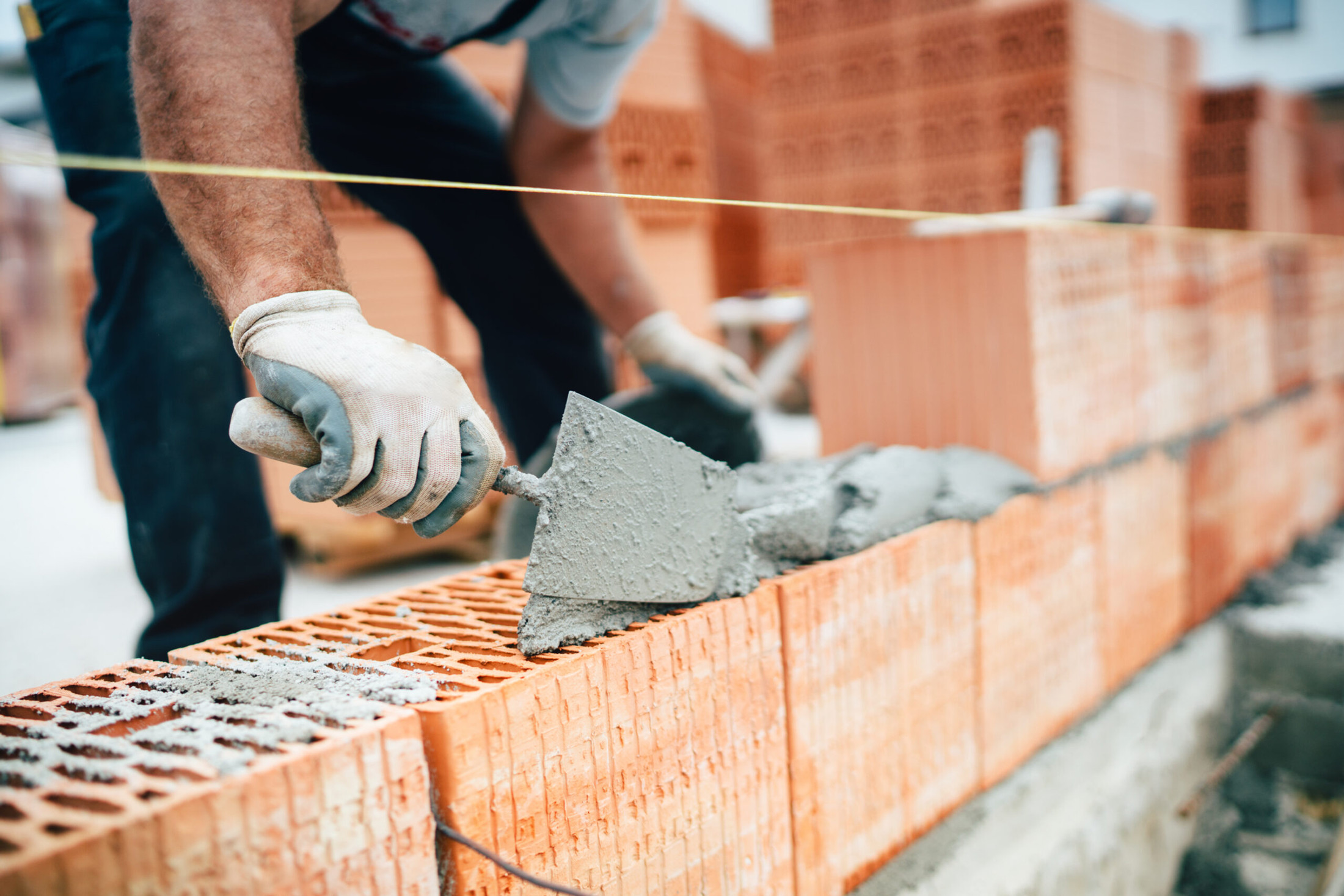
The town is brick because the Act said so, and the historic core is soft brick in lime with vitrified headers and painted false jointing on some elevations. That wants lime mortar, hand raking and a matched joint profile, not a grinder and a bag of cement. Garden and boundary walls here are often greensand with brick or stone piers, and the greensand was carted in rather than quarried locally.
Brickwork and repointingRoofing
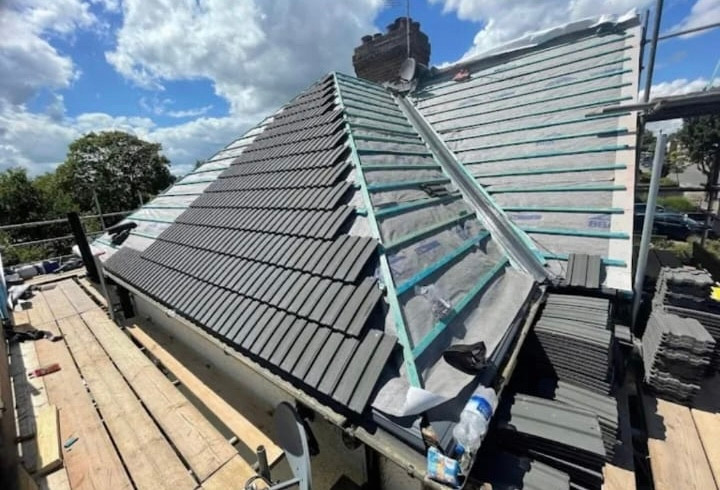
Two different jobs depending on where you are. Matched clay tile, slate and leadwork in the conservation area, where the covering is part of a listed or protected frontage. Dry ridge, verge and eaves work on the 1980s estates, where the tile is fine and the mortar and the felt are not.
Roofing servicesDriveways and patios
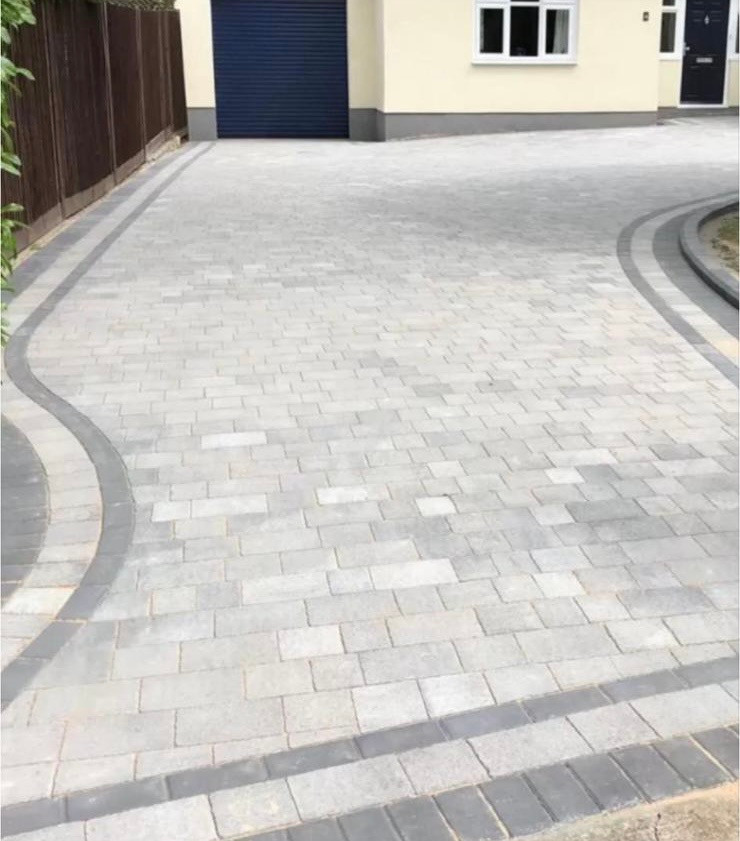
Permeable surfacing is policy rather than preference inside the conservation area, and on the north-east side of town the aquifer decides how the drainage is built. Chalk usually takes infiltration well, which is a genuine advantage, provided the design is the right one for the zone you are in.
Driveways and patiosPlastering, rendering and insulation
Solid-walled Georgian property needs to breathe, so a modern gypsum skim over a wall that is still damp will blow again. Render on the historic frontages is limited by what the appraisal will accept. On the 1980s stock it is the opposite problem: cavity walls, thin loft insulation settled under forty years of storage, and an easy win.
Loft and wall insulationWe also clean roofs, render and paving, and there is a local wrinkle to that as well. Cranborne Chase is an International Dark Sky Reserve, designated in 2019, so external lighting on the north and east side of town gets more scrutiny than it would elsewhere. Worth remembering if a driveway job comes with floodlights attached.
Questions
Blandford questions we get asked
Is Blandford in an Area of Outstanding Natural Beauty?
No, and this one gets stated wrongly a lot. The town sits in the gap between two of them. Dorset National Landscape starts roughly four hundred metres to the west and south-west, and Cranborne Chase roughly six hundred and sixty metres to the north and east, but the town itself is outside both. The parish clips Cranborne Chase on its undeveloped fringe only. AONBs were renamed National Landscapes in November 2023, though the designation and its legal effect did not change. What does bite on work in the town centre is listed building consent and conservation area control, not AONB policy.
Is there an Article 4 Direction in the conservation area?
No. We checked this three ways, against the national planning data, against Dorset Council's own published register of seventy-eight directions, and against the council's conservation pages. Milton Abbas and Iwerne Minster both have one. Blandford does not. That means ordinary householder permitted development rights, already restricted inside any conservation area, are not further withdrawn here for windows, doors, roof coverings, rainwater goods or hard surfacing. Listed building consent, demolition control and the six-week tree notification all still apply. The appraisal does say the council will consider a direction if cumulative change starts harming the area, so it is worth not being the reason they do.
My house is on one of the 1980s estates. Does it really need a new roof?
Usually not. Concrete interlocking tiles have a long service life, and a roof from that decade is normally middle-aged rather than finished. What wears out first is everything that is not the tile: the mortar bedding the ridge and the verge, the sarking felt where it sags and tears at the eaves, the flashing round a chimney or a soil vent, and plastic dry-verge caps that have gone brittle. Those are repairs. We would far rather quote you for the repair than sell you a re-roof you do not need, and we will put photographs of what we found with the quote.
Will bats hold up my roof job?
They might affect the timing, and it is better to know early. Bryanston, just west of the town, holds the only known greater horseshoe bat breeding site in Dorset and one of only seven left in Britain. Dorset Council applies a consultation zone reaching eight kilometres from it, and work in the two inner bands can require a full season survey. The whole town is inside that zone and the centre is close to the middle of it. It does not stop the work. It can move when the work starts, so raise it with us at the survey rather than the week you want the scaffold up.
Can I put a soakaway in for a new driveway?
On most of the town, yes, and chalk usually takes infiltration well. On the north-east side it is more involved, because that part of town sits in a groundwater source protection zone including the innermost band, with the boundary about a mile and a half north-east of the Market Place. The Environment Agency's position is that clean roof water to ground is fine even there, with sealed downpipes and no permit. Driveway and yard drainage in that zone is different and wants a hydrogeological risk assessment first. We will establish which side of that line you are on before pricing the drainage.
Was Blandford not a thatched town?
The opposite, and it is deliberate. The Act that governed the rebuilding after the 1731 fire required brick and tile, which effectively legislated thatch out of the town centre. Thatch in this part of Dorset belongs to the surrounding villages, most famously Milton Abbas about five miles south-west, which is a conservation area of thatched cob cottages laid out in the 1770s and which does have an Article 4 Direction. If you have a thatched property out in the villages we will point you at a thatcher rather than pretend otherwise.
We cover Blandford Forum, Blandford St Mary and Bryanston, and out to Pimperne, Charlton Marshall, Stourpaine, Durweston and Spetisbury, across the DT11 postcodes. Blandford comes under Dorset Council. Worth knowing that DT11 is a large outcode: the town is DT11 7, Blandford Camp and Pimperne are DT11 8, and Blandford St Mary and Charlton Marshall are DT11 9, so the postcode on its own does not tell you which parish you are in.
Trade by trade
Each trade, written for Blandford Forum
The same local evidence, read through each trade in turn. Ground conditions decide a driveway, exposure decides a roof, and the age of the housing decides insulation.
- Roofing in Blandford Forum
- Flat roofing in Blandford Forum
- Bricklaying and repointing in Blandford Forum
- Repointing in Blandford Forum
- Driveways and patios in Blandford Forum
- Patios in Blandford Forum
- Plastering and rendering in Blandford Forum
- Rendering in Blandford Forum
- Insulation in Blandford Forum
- Loft insulation in Blandford Forum
- Wall insulation in Blandford Forum
- Exterior cleaning in Blandford Forum
- Gutter cleaning in Blandford Forum
- Fascias, soffits and guttering in Blandford Forum
Who you are dealing with
A local firm you can check
We work in Blandford Forum, Blandford St Mary and Bryanston, and out to Pimperne, Charlton Marshall, Stourpaine, Durweston and Spetisbury. All of it is DT11 and all of it is Dorset Council.
You are dealing with Bournemouth Roofing & Building, the trading name of Bournemouth Roofing & Building Ltd, registered in England and Wales, company number 15471719. That takes a minute to check. Thomas Hannen owns the firm and he prices every job himself, so the person who quotes it is the person answerable for it. One multi-trade team does the work, and none of it is sub-contracted out to somebody you have never met.
There is a verified customer's 10 out of 10 on our Checkatrade profile. The site visit is free and so is the written itemised quote. The phone is answered 24 hours for emergencies, and scheduled work runs Monday to Friday, 8am to 6pm.
Free quote
Get a price for your Blandford property
Tell us the street and what it is doing. If it is listed or in the conservation area, say so, and we will price the matched option properly rather than the cheap one.