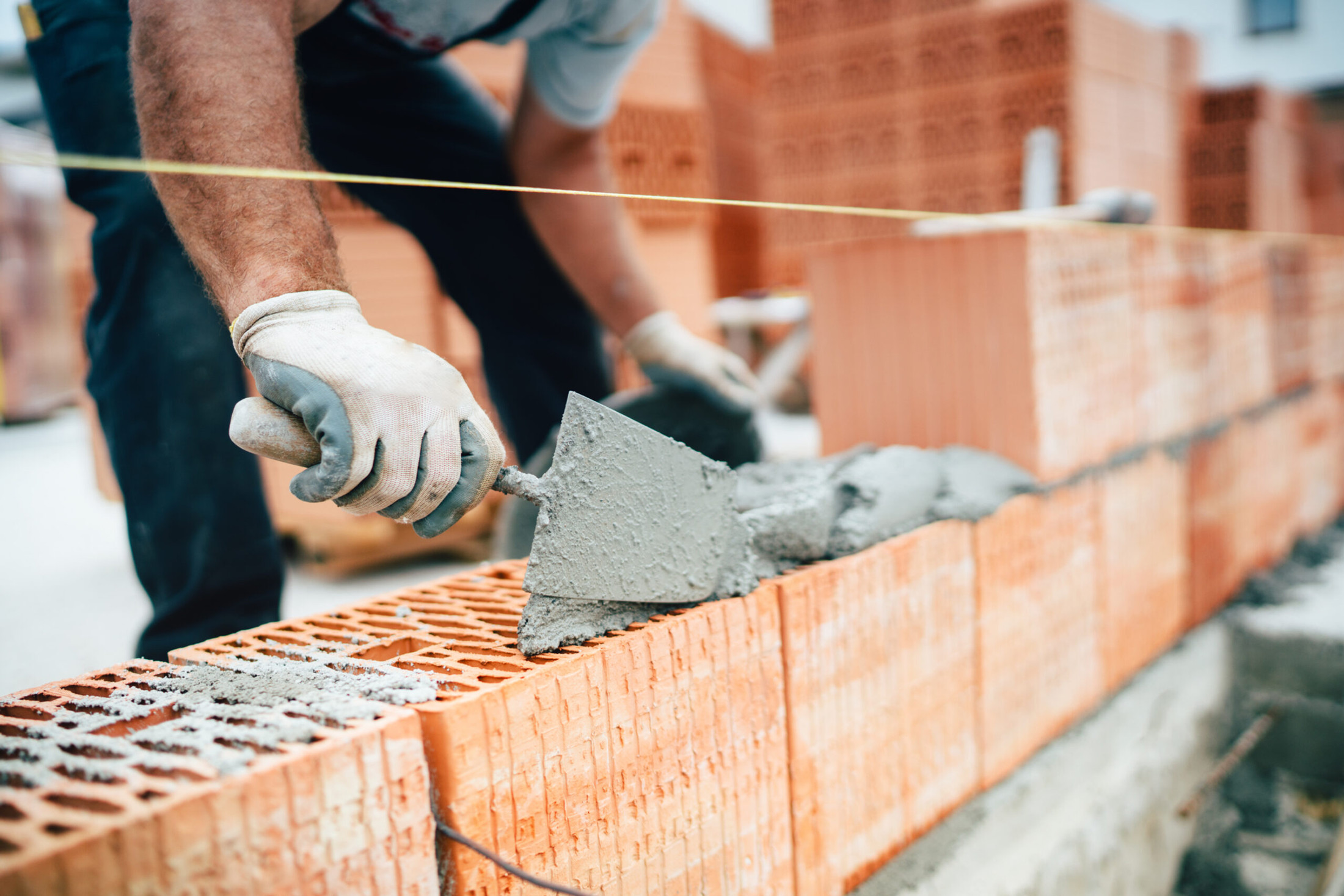
Bricklaying and repointing in Blandford Forum
Lime repointing on the old streets, brick repairs, boundary walls and new cavity work across Blandford Forum and DT11.
The site visit is free and so is the written itemised quote. Thomas Hannen prices every job himself.
Brickwork in the middle of Blandford Forum and brickwork on the estates round it are two different trades. On an old town front the joints are fine and the mortar wants to be lime; on a modern cavity wall it wants to be cement. Getting that the wrong way round is what ruins a wall, and it is the first thing we check.
The calls we get from Blandford tend to be one of three. A front elevation on one of the older streets where the pointing is crumbling out in lumps, or worse, where somebody has smeared cement over it and the brick faces are now coming away instead.
A stack or a parapet at the top of a terrace that has gone soft and is soaking the wall below it. Or a boundary wall to a yard or a back lane that has bellied out and is now leaning over something it should not be leaning over.
All three want a proper look before anyone quotes, because the age of the wall changes the method, and the heritage position changes the paperwork. We come out, survey it close up, photograph what we find, and tell you what is a repair, what is a rebuild, and what has to be cleared with the council before it can be touched at all.
The work
What we take on in the town, and on the edge of it
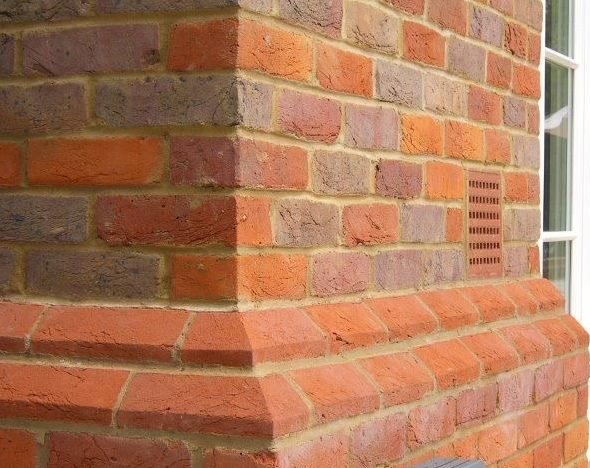
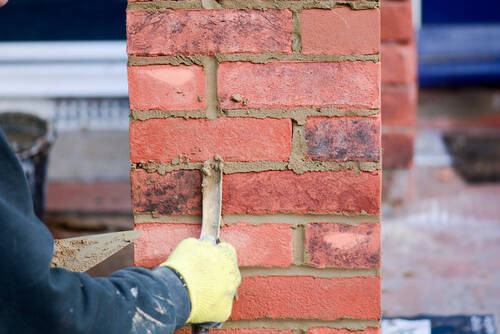
Repointing an old town front. Nearly a fifth of Blandford is pre-1919, and the joints on that brickwork are fine, sometimes barely wider than a pencil line, with lime and a local sand behind them. There is no way to rake that out with a disc without cutting the arrises off the bricks either side and leaving a wall of wide grey lines that can never be undone. It comes out by hand with a chisel and goes back in a lime mix, usually an NHL, matched to the old mortar for colour, sand and strength, finished to the profile the wall already carries rather than a modern weather struck edge. Fine joints are slow. A front elevation on one of these houses is a fortnight of work.
Where a terrace finishes in a parapet, the wall takes weather on both faces and from above, so it is always the wettest brickwork on the building. A cracked coping, a missing damp proof course under it or a blocked outlet behind it will soak the brick until it freezes, and the faces then start spalling in the room below the roof rather than up at the top. We rebuild the top courses, bed a coping that actually sheds water, and put the damp proof course back where it should have been. Older openings here are spanned by brick arches, and when one drops the crack over the window is only the sign. The arch has to be supported, cut out and set back with the bricks in their original order, and if the timber or lintel behind it has gone that comes out too.
Stacks, and the neighbour they sit on. Three in ten houses in the town are terraced, so a stack here is tall, exposed and often sat on the party wall between two houses, which means the joints and the flaunching go early and the repair involves your neighbour whether you like it or not. The Party Wall etc. Act 1996 sets out how that is handled, and the scaffold usually has to come off the pavement or through somebody's yard, which is worth sorting out before the work is booked rather than on the morning. Once a face has come off a brick, the one behind it takes water like a sponge and the next frost takes the one above, so damaged bricks are cut out one at a time and replaced, turning a sound brick where the back of it is still good and sourcing reclaimed brick of the right size and colour where it is not.
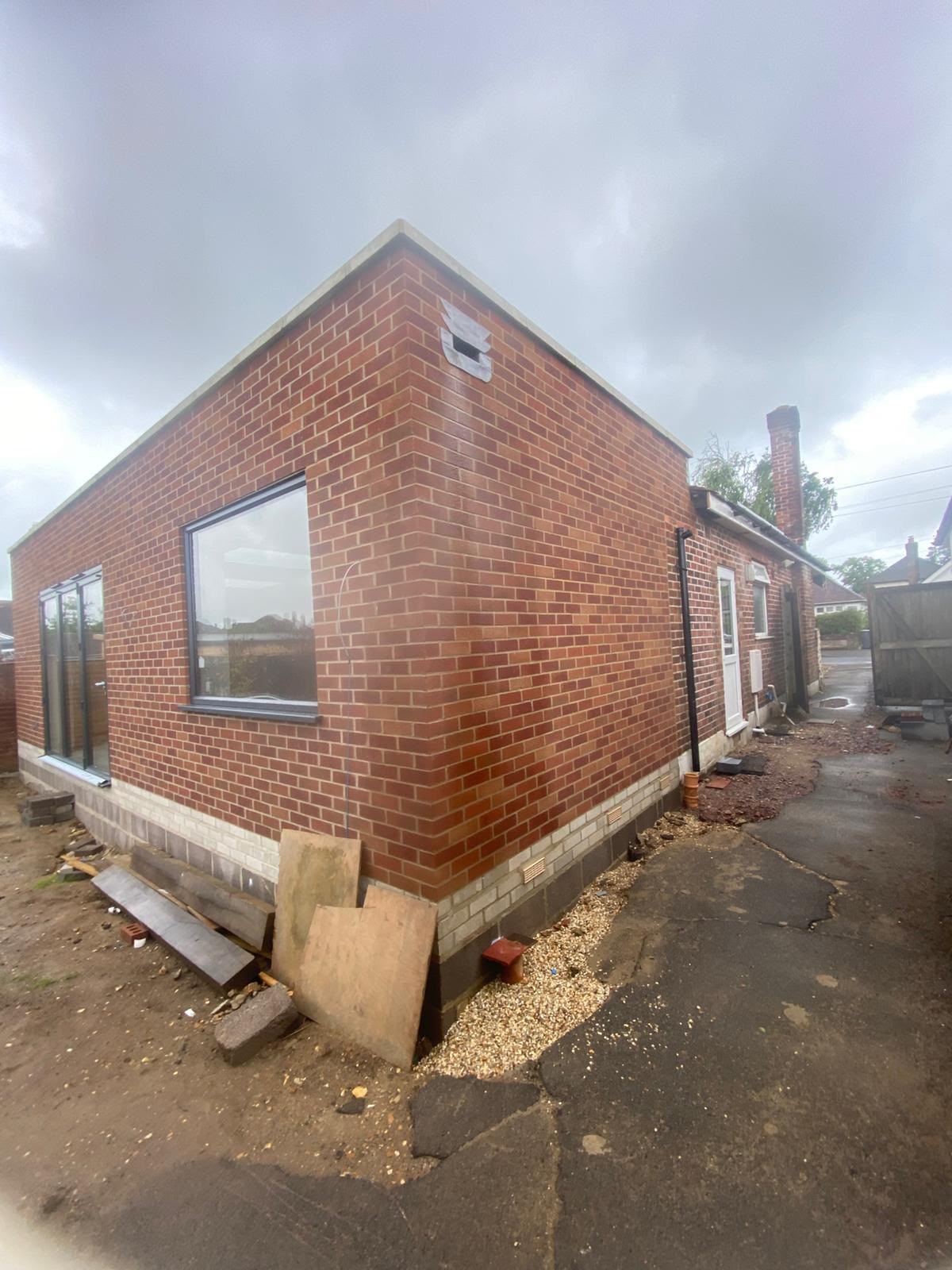
There is a lot of old boundary wall in this town, most of it half a brick thick with piers, standing on a footing nobody would build today, and roots, vehicles and water sitting on a lost coping are what finish them. We take down and rebuild the section that has moved, keep the old brick where it is sound, and put back a coping and gate pier that will not be doing this again in five years. Round the edge of the town it is the 1970s and 1980s housing: extensions, garage conversions, porches and opening a wall up. That is ordinary cavity work off a footing dug to a proper foundation depth, with building control inspecting it as the job goes.
How it runs
From your call to a written price
The quote is itemised: access, raking out, the mix, the area of each elevation, brick replacement and disposal on separate lines. On permission, like for like repair and repointing of an unlisted house is maintenance, so no planning permission and no building control. Blandford has a conservation area of its own, the Blandford St Mary and Bryanston Conservation Area, and a great many listed buildings besides, and on a listed building a change of mortar or of appearance needs listed building consent from Dorset Council before it happens. We check the address against both lists before we price the job. Building control is separate, and it applies to structure: an arch or a lintel, a widened opening or underpinning.
Cost
What decides the price of a brickwork job
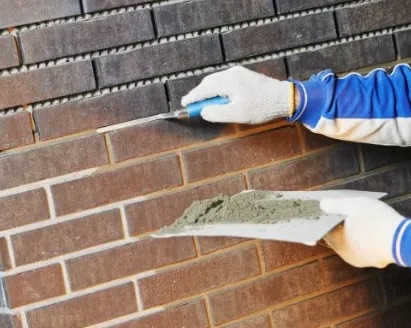
No rate per square metre, because the joints decide it and not the area. A town centre terrace where the scaffold has to stand on the pavement, a cottage up an alley where every barrow goes in by hand, and an estate semi with a drive beside it are three different jobs before a brick is cut. A chimney or a gable wants a scaffold, and how long it stands is why work at height rules make access a priced line. Raking by hand is slow, and joint depth and spalled faces decide the hours. Ask how deep, by hand or disc, what mix, and whether scaffold is in.
If something has moved
Loose brickwork, or a wall that has shifted
Ring rather than use the form. Anything overhead or leaning goes to the front of the queue, and the first visit makes it safe. Blandford is a straight run up the A350. If the wall or stack leans over a pavement or a shared alley, say so when you ring, because that needs sorting with the council the same day. The phone is answered 24 hours for emergencies; scheduled work runs Monday to Friday, 8am to 6pm.
The one local thing
In the conservation area, taking a wall down is the controlled bit
Most people assume a conservation area tells them what they can repair. It does not, really. Repointing and repairing an unlisted house inside the area needs no application at all, and you do not have to wait for anybody. What is controlled is demolition.
Knocking down a boundary wall over a metre high where it fronts a road, or over two metres elsewhere, counts as demolition in a conservation area and needs permission first, even where you fully intend to rebuild it exactly as it was. The Planning Portal sets out those heights, and the order matters: the consent comes before the wall comes down, not after somebody has already started clearing the rubble.
The practical version, for a town with this much old fabric in it, is to spend ten minutes finding out what your address actually is before you collect prices. There are three possibilities: unlisted and outside the area, unlisted but inside it, or listed, and each one changes the mix, the method and the timetable.
If you are listed, allow a couple of months for a determination and expect a conservation officer to ask about the sand, the mix and the joint profile, which is a question a sample panel answers better than a paragraph. We will build the panel and write the specification in the quote so it can go straight in with the application.
Who you are dealing with
A local firm you can check
We cover Blandford Forum, Blandford St Mary, Bryanston, Stourpaine, Charlton Marshall and the rest of DT11, and we work up here most weeks. Bournemouth Roofing & Building Ltd, registered in England and Wales, company number 15471719, which you can look up in a minute. Thomas Hannen's business, and he is the one who comes out to price the job, not a salesman. A verified customer's 10 out of 10 on Checkatrade. The visit and the written quote are both free.
Questions
Blandford Forum questions we get asked
With so many listed entries in town, is my house likely listed?
More likely than anywhere else we cover. Blandford Forum carries over two hundred listed entries, from the Ryves Almshouses to whole runs of Market Place frontage, and terraced housing is 31.1% of the town, so plenty of ordinary looking front doors sit on the list. Check the address on the national list before committing to anything. Consent covers the mortar as much as the brick, and it cannot be obtained after the event.
Am I inside the Blandford St Mary and Bryanston area?
Dorset Council maps it and will confirm the boundary against your address. Inside the Blandford St Mary and Bryanston Conservation Area the appearance is controlled, so like for like repointing is maintenance while a change of mortar colour, joint profile or brick reads as an alteration. Outside it, and a good deal of the town is outside it, the same repair is ordinary work. We establish which side of the line you sit on before pricing a finish.
Who arranges a licence for scaffold over a town pavement?
We do, and it appears as a priced line rather than a surprise. A frontage on Market Place or any of the narrow streets in Blandford Forum has no front garden to stand a scaffold in, so the frontage scaffold goes on the footway and that needs a licence from Dorset Council plus a pedestrian route kept open past it. It affects the programme more than the price, because the licence has a lead time on it.
My front wall is damp inside at ground level. Why?
On a solid wall the damp usually comes through the joint rather than up from the ground. Blandford Forum has a lot of pre-1919 building at 18.9%, much of it solid brick with no cavity, so once a hard cement pointing has cracked the water gets behind it and cannot get back out again. Stripping the cement and repointing in a soft mix lets the wall dry through the joint. Check the gutter above the wet patch first.
Is there a season you will not point a town frontage?
Frost is the stop. Mortar will not cure below about four degrees and a night frost on green pointing turns the surface to dust, so we do not run repointing through a cold snap. Rain matters less than people expect provided the face can be sheeted. Blandford Forum sits roughly fifteen miles from the sea, so a wall here dries more slowly in winter than a seafront job and we allow for that in the programme.
Nearby, and next door
Bricklaying and repointing near Blandford Forum
Bricklaying and repointing nearby
Our other trades in Blandford Forum
Everything we do in Blandford Forum Bricklaying and repointing, all areas Every area we cover
Free quote
Get the wall priced properly
A free site visit, the mix and the method written down, and the heritage position checked before we quote.