
Bricklaying in Spetisbury
Repointing, retaining and garden walls, chimney stacks and brick repairs in Spetisbury and the Blandford villages.
The site visit is free and so is the written itemised quote. Thomas Hannen prices every job himself.
Last updated
The work
Brickwork in Spetisbury: what we do, and what we talk people out of
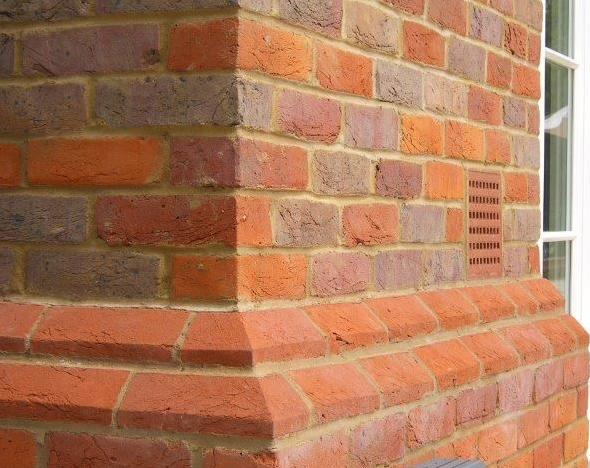
Spetisbury runs in a line along one road, and a good share of the brickwork here is holding something up: a garden that sits above the footway, a bank behind a boundary wall, a frontage that takes a wing mirror every few years. A retaining wall and a free standing wall look alike and fail for completely different reasons, so we work out which one you have before quoting anything.
Spetisbury walls tend to need a bricklayer for the frontage, the joints or the everyday list. A frontage wall that has started to lean out over the pavement, usually after a wet winter. Joints on a cottage elevation eroded back far enough to put a finger in. And the everyday list: a stack, a pier, a spalled patch of brickwork under a window, an opening that needs a lintel over it.
We come and look at the wall itself, get behind it where we can, and say plainly whether the problem is the pointing, the coping, the water behind it or the ground under it. You get a survey of what needs doing now, what will keep, and an itemised written price for the part that will not wait. The site visit and the quote are both free.
The work
Brickwork jobs in Spetisbury
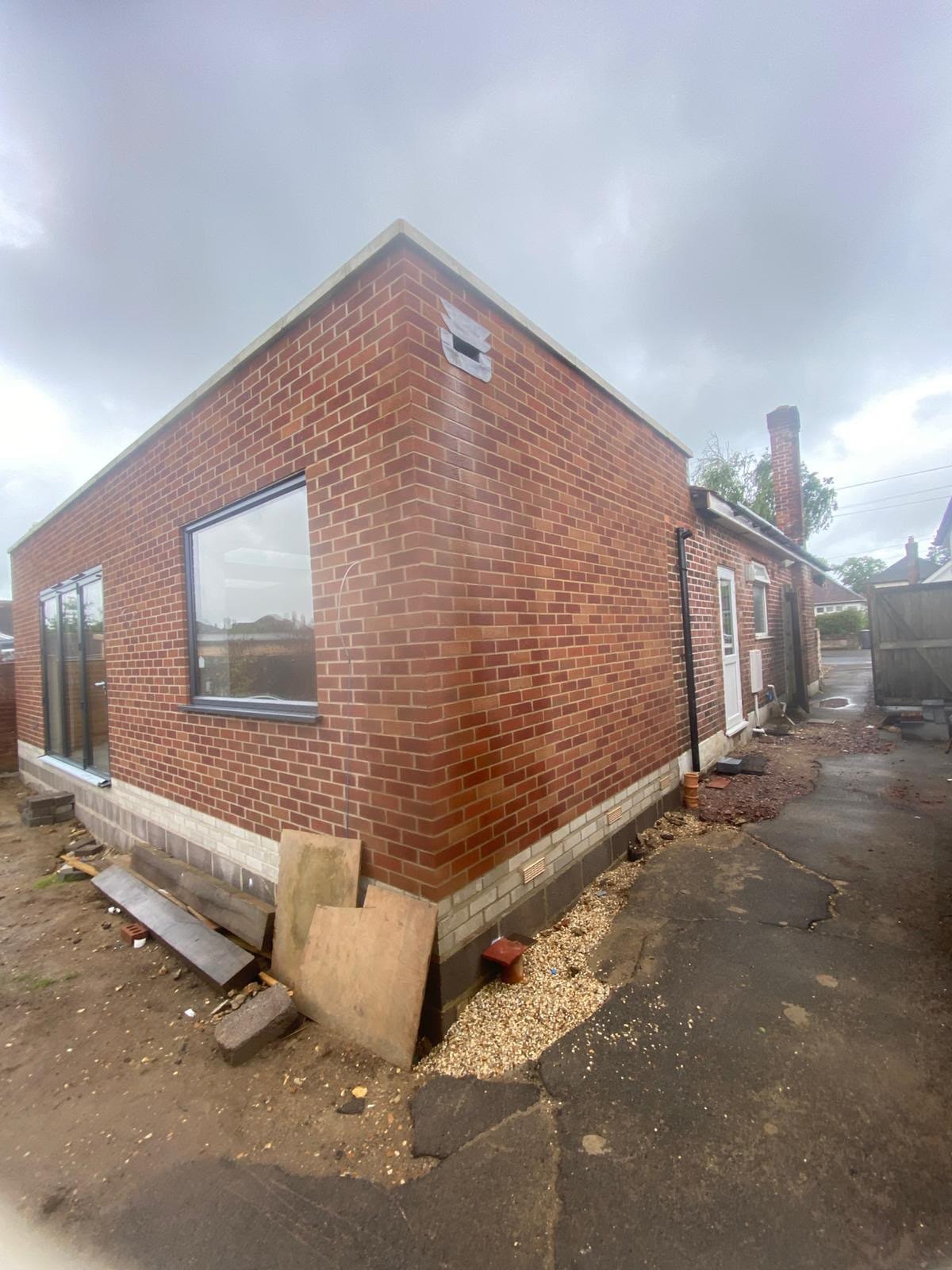
Retaining and frontage walls along the road. Where a garden sits above the footway the wall is holding back wet ground, and almost every failure starts with water rather than mortar: no weep holes, no drainage behind the wall, a coping that has let water into the core, and eventually the wall bows out and the bed joints open on the face.
Repointing a bowed retaining wall is money thrown away. We take it down to sound work, rebuild it with the drainage and weep holes it never had, and put a proper coping back on.
Old walls and post-war walls in one village. The older houses along the street are period fabric, soft brick with some flint laid in lime. It is solid wall and has to stay breathable, so it gets an NHL lime mix matched on sand for colour and grain, raked out by hand and finished in the profile the wall already carries. The post-war houses are hard brick in a strong sand and cement mortar that has eroded on one elevation and is sound on the others, and that gets a cement based mix to match and a bucket handle joint. There is no sense in pointing all four sides when one has failed, so we price by elevation and tell you which can be left.
Stacks come with cracked flaunching, top courses gone soft and a lean that has crept in. We rebuild course for course, reuse sound brick and match the rest, and re-form the flaunching so it sheds. That is work at height off a tower or a scaffold under work at height rules, and the platform appears as its own line. Once frost has taken the face off a brick, pointing round it only makes the damage tidy, so we cut out and replace with reclaimed or handmade stock, usually taking the replacements from a hidden wall so the front stays right.
How it runs
Brick repairs and new walls in the village, how the job goes
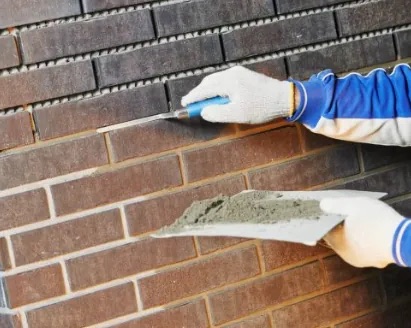
Thomas comes out, looks at the wall close up, scrapes a joint or two and checks whether cracks run through the bricks or only the mortar. He writes the quote himself, split by elevation or by length of wall: access, raking out, the mortar mix, bricks to be cut out and replaced, any new footing, and disposal. The job sits with one company throughout.
The older cottages along the main road are soft brick laid in lime and want lime back. The sixties and seventies semis and terraces behind are harder brick in cement mortar, where the work is more often a cracked garden wall, a damaged gable, or a new wall or pier. Working off the A350 footway means barriers and sometimes a licence; on the closes we work from the drive. Materials are stacked tidily, the site is cleared each evening, and anything unexpected, like a lintel rusted through behind a crack, gets a photograph and a price before we go further.
Repointing an unlisted house is maintenance and needs no planning, and no conservation area covers Spetisbury. On a listed building it counts as alteration and needs listed building consent. New or raised garden walls have height limits in the Planning Portal guidance on garden walls, structural work goes to building control at Dorset Council, and a wall on a shared boundary brings in the Party Wall etc. Act 1996.
Cost
Soft cottage brick or post-war brick, and the other costs
A metre of wall tells you little on its own. Here is what moves a brickwork price in Spetisbury. Old brick or newer brick. The pre-1919 cottages have soft bricks that need lime mortar and hand raking, and replacements have to be matched from reclaim. The later houses take standard bricks and a cement mix, which is quicker to source and lay.
Why it cracked. A crack through a gable or under a window might be old settlement, a failed lintel or corroded wall ties. Knowing which decides whether it is a stitch repair, a new lintel or something bigger, and Thomas tells you which he thinks it is before he prices.
Where the wall stands. A garden wall beside a drive is simple. A frontage wall on the main road means working next to traffic and protecting the footway. Anything at height, like a chimney or a gable, needs a scaffold, which the work at height rules require and which we price separately.
Footings. On a new or rebuilt wall, the depth of the footing and what the ground is like underneath can matter more than the bricks above it.
Ask any other bricklayer which mortar they will use, how they will match the brick, and whether the footings and scaffold are in their figure.
If something has moved
A wall that is leaning, cracked or dropping bricks
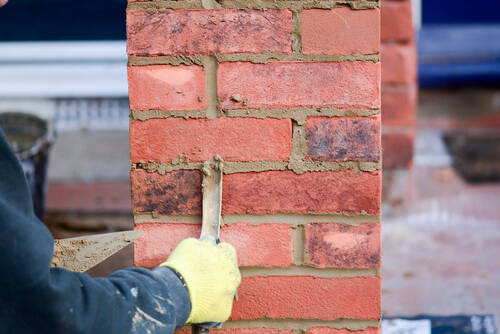
If a wall is leaning, bulging or losing bricks, keep children and cars away from it and do not prop anything against it. A frontage wall clipped by a vehicle, or a chimney shedding bricks, is a danger to people on the footway as well as to you.
The first visit makes it safe, which can mean taking down the loose top courses or fencing it off, and then Thomas works out why it moved and prices the repair. Booked brickwork is done Monday to Friday, 8am to 6pm. For something like this, please phone instead of using the form. If we miss your call, we get back to you as soon as we can.
The one local thing
Listed here is address by address, and it catches the garden wall too
Spetisbury has no conservation area, which surprises people, but listed buildings are strung along it. That combination is worth understanding before you collect prices. It means there is no blanket control on what the village looks like, so on an ordinary house the material and the mortar are your choice.
It also means the control that does exist is absolute and lands on individual addresses, and a listing is not always obvious from the street: a plain looking cottage in a terrace can be listed while the smarter house next door is not.
Curtilage and consent catch people out. A listing covers the whole curtilage, so the garden wall, the outbuilding and the old privy at the end are usually caught by it as well, and those are exactly the structures somebody repoints on a Saturday without thinking. And consent is needed even for like for like work, so the application is about proving what was there rather than arguing for a change.
Photograph the joint before anybody opens it and keep a lump of the old mortar, because that is the evidence, and allow weeks rather than days for the paperwork. We check the record for your address at the survey and tell you which side of the line you are on before you spend anything.
Who you are dealing with
Bricklayers covering Blandford, Bryanston and the valley
We work in Spetisbury and the places round it, including Blandford Forum, Bryanston and Charlton Marshall. The village is 14.2 miles from our base at Boscombe, and structural work here is signed off by Dorset Council building control.
Bournemouth Roofing & Building Ltd is registered in England and Wales, company number 15471719, and you can look it up. Thomas Hannen runs it and will look at the wall and price the work himself. Our Checkatrade page shows a 10 out of 10 from a verified customer. The visit costs nothing, and neither does the written quote that lists each part of the job. Before you book a visit in Spetisbury, you can read our customers' Google reviews, word for word, on our reviews page.
Planning at a glance
Do you need planning permission in Spetisbury?
Most repairs in Spetisbury need no application at all. What decides whether a change to the outside of your house does is who the council is, whether a conservation area or a listing applies, and whether the place sits in a protected landscape.
| Question | In Spetisbury |
|---|---|
| Who decides | Dorset Council is the planning authority for Spetisbury. Dorset Council's heritage pages set out what it controls. |
| Conservation area | None covers Spetisbury, so a like-for-like repair is ordinary maintenance. |
| Listed buildings | Yes, there are listed buildings in and around Spetisbury. If yours is one, work can need listed building consent. |
| Protected landscape | No National Park or National Landscape covers Spetisbury. |
Questions
Questions about bricklaying in Spetisbury
Some buildings here are listed. How do I check ours?
Search the national list by address, or ask Dorset Council, who hold the same records. Spetisbury has listed buildings of its own, the Church of St John and 26, 28 and 29 High Street among them. Being next door to a listed building does not catch you, but being inside its curtilage can, and that is where people come unstuck with garden walls and old outbuildings. Consent comes before work, not after it.
There are almost no flats here. Does that make it simpler?
It makes the instruction simpler. With so few flats in Spetisbury, nearly every job is a freeholder ordering work on their own building, not a leaseholder waiting on a managing agent and a consultation before anything can be signed off. We can look at it, price it and book it with one person. Where a wall is shared with a neighbour we still agree the access and the finish with both.
Much of the village is post-war. Does the mortar differ?
It does, and the difference matters more than the colour. The post-war cavity walls in Spetisbury were built in a cement mortar matched to a hard machine made brick. Repointing them in something soft would wash straight out. The pre-1919 houses are the opposite problem and want lime.
What is actually written on the quote?
Each elevation as its own line, the length or area of joint being raked, the mortar going back in, whether a tower or a scaffold is needed, the making good, and the removal of waste. If a lintel, a cill or a section of rebuilding is involved, that sits on its own line so you can include it or leave it. Thomas writes it up after the visit in Spetisbury rather than sending a figure from the van.
Can we do one wall now and the rest later?
That is usually the sensible way round. Walls do not weather evenly, so there is rarely a case for doing four elevations because one has gone. We price them separately, start with whichever is losing mortar fastest, and leave the others until they need it. The one reason to do two together is where a single scaffold covers both, in which case it saves setting the same access up twice.
Nearby, and next door
Bricklaying near Spetisbury
Nearby places we also cover for bricklaying, with straight-line distances from Spetisbury, and the other trades we offer in Spetisbury itself.
Bricklaying nearby
Our other trades in Spetisbury
Brickwork and repointing guides
Lime or cement mortar: which do you need? Single storey extension: planning and building regs Subsidence cracks: which ones matterEverything we do in Blandford Forum Bricklaying, all areas Every area we cover
Free quote
Get a written price for your brickwork in Spetisbury
Send us a photograph and we will come and look at the wall properly. Free visit, itemised written quote, and a straight answer about what is actually wrong.