
Bricklaying and repointing in Winterborne Kingston
Repointing in a matched mix, brick and flint repairs, chimneys and new brickwork in Winterborne Kingston, priced one elevation at a time.
The site visit is free and so is the written itemised quote. Thomas Hannen prices every job himself.
Most houses in Winterborne Kingston do not need repointing all the way round. One elevation takes the weather here and the other three sit in its lee, so the honest quote is often for the south west face and the gable, with the rest left alone until it needs doing.
Two or three things bring people to the phone. Joints that have washed back so far on one wall that you can put a finger in them, while the wall on the other side of the house still looks new. Brick faces flaking off below a window or beside a downpipe, so the wall is losing its skin course by course. Or a boundary wall on the road through the village that has bowed out, lost its coping, or been caught by something farm sized.
The village runs along the valley with old brick, flint and cob in the middle of it and twentieth century houses filling in around that, and the right answer is not the same on both. We survey the wall, tell you which parts genuinely need work now, and put the rest in writing as something to look at again rather than something to pay for today.
The work
The jobs we do on Kingston walls
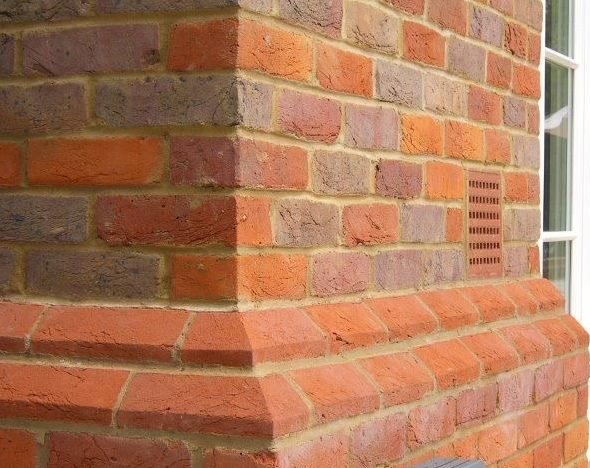
Repointing brick and flint in a matched mix. A lot of the older village is banded work: flint panels with brick at the corners, the openings and the string courses, bedded in lime. On that wall the joint is the sacrificial part, so it has to be softer than what it holds. We rake out by hand with a chisel and a hacksaw blade rather than a disc, back to sound material, and point in a lime mix matched to the existing for colour, sand and strength, flush or slightly recessed as the wall has it. Where one of these walls has been pointed in sand and cement, moisture that used to leave through the joint leaves through the face instead and one frost later the faces are spalling while the pointing is untouched. Taking it out is slow hand work, and the only way to let the wall breathe. Those bricks get cut out and replaced with a reclaimed handmade brick of the same size rather than filled with mortar.
The long walls along the road take ivy, standing water where the coping has gone and the occasional wheel, and the North Winterbourne runs seventy metres from the village in flood zones 2 and 3, so the ground under them is often saturated, and with no damp proof course in the base of a wall like that the bottom courses go soft first. Once a length is bowed the sound answer is to take that section down and rebuild off the same footing with the flint reset and the coping put back to shed. Gate piers are rebuilt and tied in rather than propped. A crack stepping out of a window head is usually the lintel or the ground rather than the mortar. What you can build without an application is worth a look before you change a wall height. Where a cottage is cob on a brick or flint plinth we look after the brick that protects it, because keeping the top and the base dry is most of what keeps cob standing; the cob itself is a specialist repair and we say so. Stacks get repointed and the flaunching renewed, and where the roof is thatched the access is planned around the thatch before the quote.
How it runs
From your call to a written price
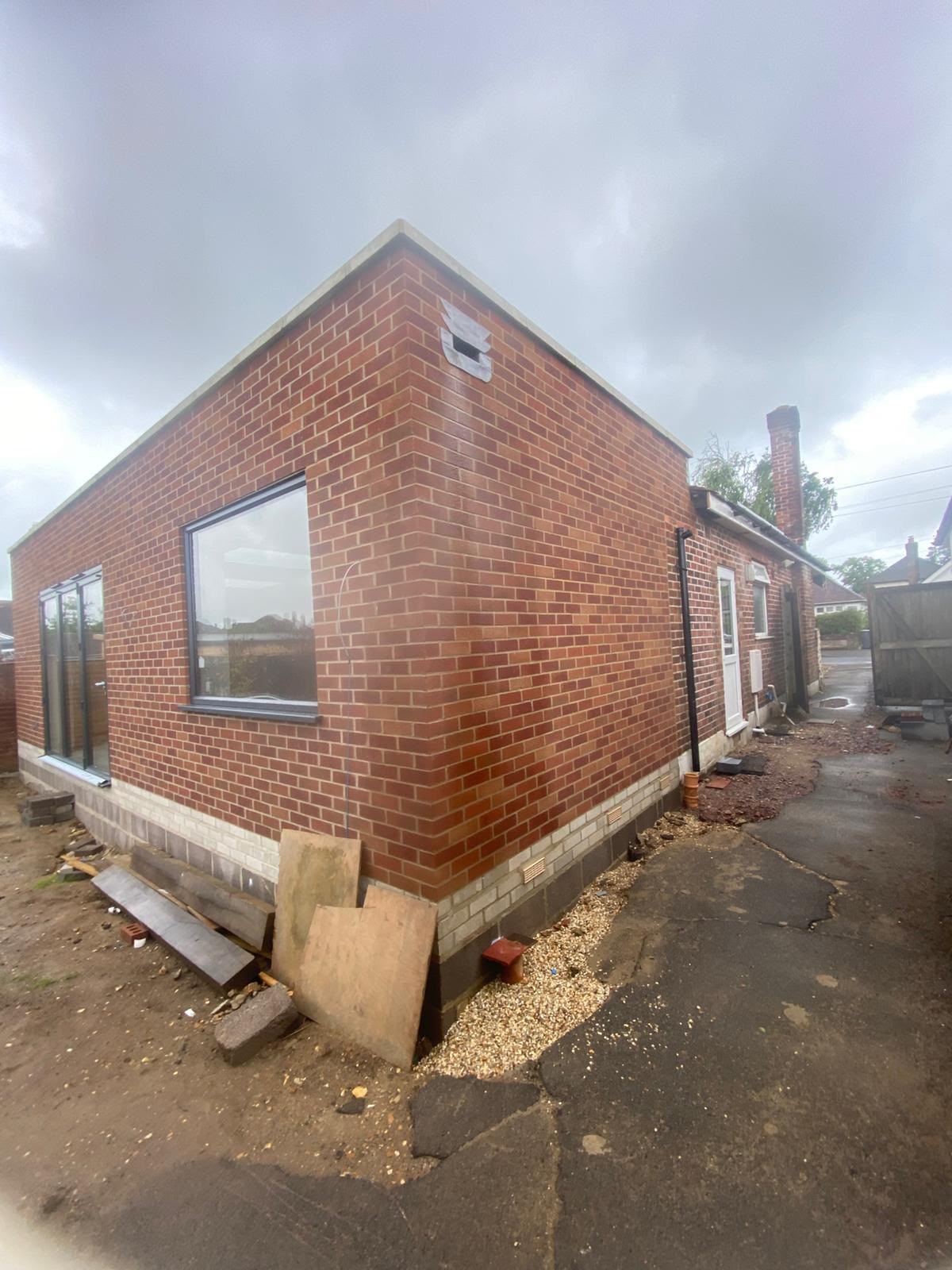
Repointing and repairing like for like is maintenance, so there is no planning permission and no building control involved, and Planning Portal guidance on external walls sets out where that line sits. Winterborne Kingston has no conservation area of its own, which surprises people, but it does have seven listed entries in it including the church, and on a listed wall even a change of mortar can need listed building consent from Dorset Council. We check the address before we quote, not after. Thomas Hannen comes out and prices the job himself, and the quote is itemised so you can compare it line for line.
Cost
What decides the price of a brickwork job
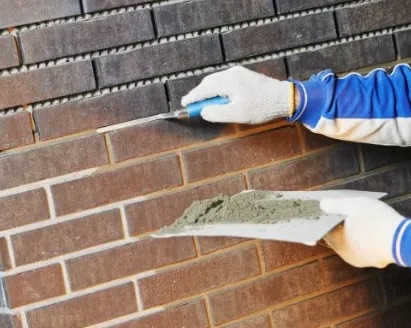
No rate per square metre. Access first: a cottage tight to the road with nowhere to stand a scaffold, a farmhouse set back behind a yard you can get a lorry into and a long flint wall with traffic passing it are three different jobs. How long the platform stands matters as much as its size, and work at height rules are why it is a priced line. Hand raking flint and soft brick is where the hours go. Ask what the mix is and whether the scaffold is in the figure.
If something has moved
Loose brickwork, or a wall that has shifted
Ring rather than use the form. Anything overhead or leaning goes to the front of the queue, and the first visit is about making it safe. We are twenty minutes out along the A31 and the Bere Regis road, so a wall pushed into the carriageway through the village gets looked at quickly. The phone is answered 24 hours for emergencies; scheduled work runs Monday to Friday, 8am to 6pm.
The one local thing
Only one elevation is really taking the weather
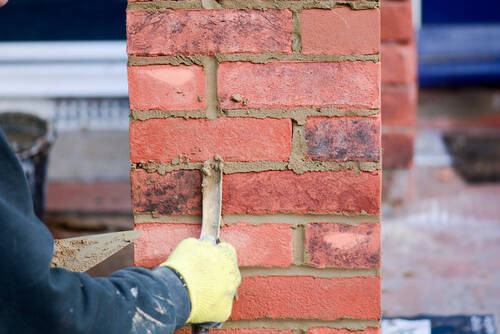
The wind and the rain that damage brickwork here come off the south west and run up the open valley, and there is very little in the way to slow them down. Driven rain does not soak a wall evenly.
It hits the exposed face, works into the joints, saturates the outer few inches and then either dries back out through a soft lime joint or, if somebody has sealed the joints in cement, sits in the brick until the next frost. That is why on a lot of houses in the village the south west gable and the front elevation are eaten back while the sheltered side has joints you could have pointed last year.
What that should change for you is the quote you accept. Ask any bricklayer to price the elevations separately rather than as one figure for the house, walk round with them, and make them justify each one. Doing the weather face properly, in the right mix, and leaving the other three for another day is usually the better use of the money, and it is also less disruption and less scaffold time.
Two details are worth insisting on while you are up there. Get the joint profile right, because a recessed joint on an exposed wall holds water on every ledge, and a slightly weathered or flush joint sheds it. And get the copings, sills and verges looked at at the same time, because on an exposed elevation it is nearly always an edge or an opening that lets the water in, not the middle of the wall.
Who you are dealing with
A local firm you can check
We cover Winterborne Kingston, Bere Regis, Milborne St Andrew, Winterborne Whitechurch, Anderson and the rest of DT11, and the travel is a line in the quote rather than something hidden in the rate. Bournemouth Roofing & Building Ltd, registered in England and Wales, company number 15471719, which you can look up in a minute. Thomas Hannen's business, and he is the one who comes out to price the job, not a salesman. A verified customer's 10 out of 10 on Checkatrade. The visit and the written quote are both free.
Questions
Winterborne Kingston questions we get asked
The lane floods every winter. Does that affect our wall?
Standing water beside a free standing wall is worse for it than rain on the face. Winterborne Kingston carries a high surface water band and sits in flood zones 2 and 3, with the North Winterbourne around seventy metres away, so a boundary wall on a shallow footing spends part of the year with its foundation in soft ground. That is what tips a wall out of plumb, and new top courses will not hold it.
How do you decide between lime and cement here?
By the wall, not by fashion. I look at what is already in the joint, at how hard the brick or stone face is, and at whether there is a cavity behind it or solid masonry. Anything soft faced and solid wants a lime mix so the joint stays the weakest part. Sound modern facing brick with a cavity is fine in a gauged cement mix. Mixed walls get a mixed answer.
Is there a conservation area in Winterborne Kingston?
There is none covering the village, so for most houses here repointing is repair and Dorset Council has no say in it. Seven buildings are listed, the church of St Nicholas among them, and for those the position is completely different. Consent comes first, then the work, with the mortar specification part of what is approved. If you are unsure which of the two applies, the list is public and free.
What does Thomas actually do when he visits?
He walks the whole perimeter rather than just the wall you rang about, and he does it off a ladder so the top courses and the verge get seen properly. He tests joints with a chisel point, checks where the ground and any paving sit against the damp course, and looks at where rainwater ends up. Then a written itemised quote follows, elevation by elevation, and neither the visit nor the quote is charged for.
There is nowhere to park a lorry. Is that a problem?
Not usually. Materials arrive on a pickup and get stacked on boards where you want them rather than tipped on a verge, and mixing happens on a boarded spot set out at the start. Where a lane in Winterborne Kingston is too tight for a lorry, deliveries come in split loads instead of one drop. Nothing is left standing across a gateway or a passing place overnight.
Nearby, and next door
Bricklaying and repointing near Winterborne Kingston
Bricklaying and repointing nearby
Our other trades in Winterborne Kingston
Everything we do in Blandford Forum Bricklaying and repointing, all areas Every area we cover
Free quote
Find out which walls actually need doing
A free site visit, every elevation priced on its own line, and no pressure to do the ones that can wait.