Subsidence cracks: how to tell them from ordinary cracks in walls
Most cracks are the house drying, settling or warming up. A few are the ground moving, and those are a job for your insurer before they are a job for anyone with a trowel.
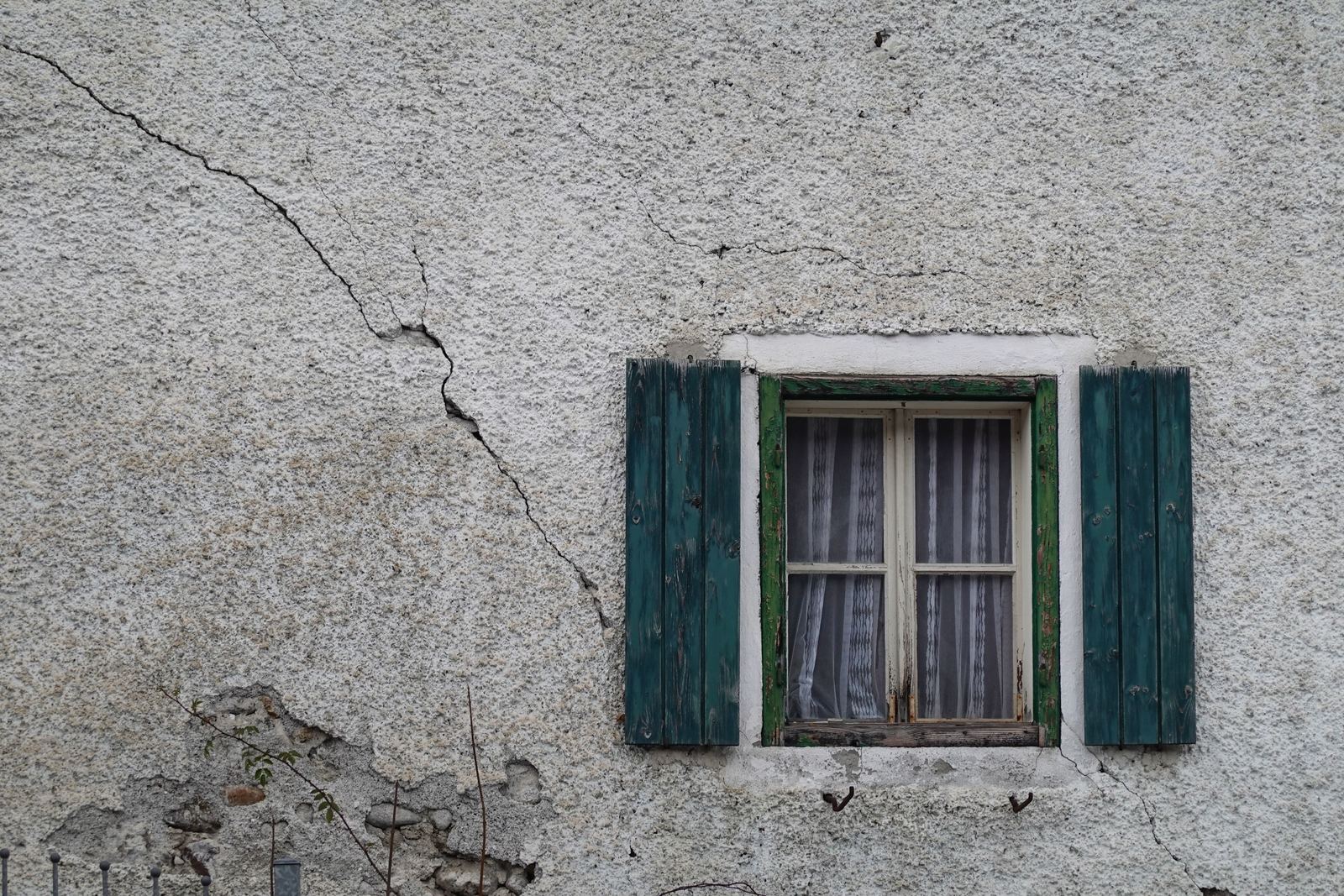
Most cracks in walls are not subsidence. A subsidence crack is usually diagonal, wider at one end, near an opening, shows inside and out, and comes with sticking doors. BRE (the Building Research Establishment) treats cracks up to 5 mm as cosmetic, but whether it is still growing matters more. If you suspect subsidence, ring your insurer before any builder.
The short version
- Fine cracks in plaster, cracks along the ceiling line and cracks in a house under ten years old are usually shrinkage or settlement, and the Ombudsman notes that buildings settle in their first few years. Fill and paint them, but if one tapers or keeps growing, check the new-home warranty before anything else.
- The pattern that points to ground movement is a crack that tapers, runs diagonally from the corner of an opening, goes right through the wall, and arrives with doors or windows binding.
- Width on the day is not the test. Whether the crack is still moving, and whether it opens in summer and closes in winter, is what an engineer or a loss adjuster will want to know.
- Tell your insurer first. Insurers often appoint their own experts at their own cost, and a repair done before they have seen the damage can make the claim harder to assess.
- Do not fill, repoint or redecorate a suspected subsidence crack until the cause is known and the movement has stopped. Filling hides the evidence, and the crack comes back.
Start here
Most cracks in walls are not subsidence
Every house cracks. The Financial Ombudsman, which decides insurance disputes, puts it plainly on its guidance on subsidence and ground movement: all properties suffer from cracking, and cracks do not automatically mean subsidence. It lists the usual alternatives as settlement in the first few years after building, poor design, materials or workmanship, a failed lintel over a window or door, and expansion and contraction with temperature. The Ombudsman adds that your policy might not cover those.
The words matter, because insurers and engineers use them precisely. The Ombudsman defines subsidence as the ground beneath a building sinking and pulling the foundations down with it, heave as the ground moving upwards when the soil expands, and settlement as the building compressing the soil under its own weight within ten years of construction. Settlement is expected. Subsidence is not.
So rule out the ordinary causes first.
| What you see | Usual cause | What to do |
|---|---|---|
| Fine random cracks in plaster, or across a newly plastered wall | The plaster shrinking as it dried. Very common in new and newly renovated houses. | Fill and paint once it has dried out. Nothing structural. |
| A crack along the line where wall meets ceiling | Timber floor and roof structure moving with heat and moisture, while the plaster on the wall stays put. | Cosmetic. A flexible filler lasts longer than a hard one. |
| A straight vertical crack where an extension or bay meets the house | Two parts of the building on different foundations, moving by different amounts. | Monitor it. If it is steady, it can be raked out and made good, or detailed as a movement joint. |
| A horizontal crack in the mortar every few courses on a cavity wall | Often rusting wall ties swelling and lifting the joint above them. | A builder can check the ties. This is not subsidence and is usually not an insurance matter. |
| A crack from the corner of a window, with the brickwork above it dropped | A failed or undersized lintel. | Get it looked at. The lintel usually needs replacing, which is building work but not foundation work. |
| A diagonal crack that tapers, near an opening, through the wall inside and out, with doors sticking | Possibly foundation movement: subsidence or heave. | Tell your insurer, start monitoring, and leave it alone until the cause is known. |
If your crack is in render rather than brick or plaster, the coating has failure patterns of its own, covered in which render cracks matter and which do not.
Reading the crack
The signs that point to subsidence
No single sign settles it. What makes subsidence likely is several signs on the same part of the house. Designing Buildings, the construction industry wiki, lists the typical signs of subsidence as cracks that appear suddenly, especially after a long dry spell; vertical and diagonal cracks that taper between top and bottom; the same crack showing outside and inside; cracks that open and close with the seasons; and cracking around doors and windows.
Where it is
An opening is the weakest line through a wall, so movement shows there first. A crack that starts at the corner of a window or door and runs away from it at an angle is the classic shape. In brickwork it usually steps through the mortar joints, because mortar is weaker than brick.
Which way it tapers
A crack that is wider at the top or the bottom tells you the wall has rotated rather than just shrunk. The Designing Buildings guide to cracking notes that cracks wider at one end may indicate foundation movement, and the direction of the widening gives an indication of the direction of the movement. Wider at the top often goes with a corner or end dropping. Wider at the bottom can mean the middle of the wall has dropped, or the ground under a corner has lifted. That is a clue for whoever investigates, not a diagnosis you can make from the garden.
What else has changed
RICS, the surveyors’ professional body, says in its consumer guide to subsidence that there could be movement in the ground if you find new or expanding cracks in outside brickwork, doors or windows sticking for no particular reason, or new sloping or dipping in solid ground floors. Look for a gap opening above a skirting or wallpaper creasing across a crack line. A door that sticks every winter and frees every summer is usually the timber taking on damp. A door that has started catching this year and is getting worse is the one to note.
RICS also gives the most reassuring line in this whole subject: there is rarely any cause for real concern unless cracks appear suddenly and are more than 3 mm wide. Most cracks people worry over are narrower than that and have been there for years.
RICS’s 3 mm is a warning sign for sudden new cracks. BRE’s 5 mm is about how much repair a crack needs. They measure different things.
Crack width
What the BRE damage categories actually say
The width bands you see quoted come from BRE Digest 251, Assessment of damage in low-rise buildings. BRE assessed 130 properties that had suffered subsidence and produced six damage categories, linking the width and number of cracks to the kind of repair needed.
BRE’s own summary is that categories 0, 1 and 2, with crack widths up to 5 mm, can be regarded as aesthetic issues needing only redecoration; categories 3 and 4 affect weather-tightness and the operation of doors and windows; and category 5 is a stability issue likely to need structural work.
The individual bands, as reproduced in the Designing Buildings summary of the Digest, are below.
| Category | Approximate crack width | Typical damage and repair |
|---|---|---|
| 0, hairline | Less than 0.1 mm | No repair action needed. |
| 1, fine | Up to 1 mm | Generally in internal finishes. Dealt with by normal decoration. |
| 2, easily filled | Up to 5 mm | May not show outside. Doors and windows may need adjusting. |
| 3, need opening up | 5 to 15 mm | Weather-tightness and service pipes may be affected. Brickwork may need repointing or some bricks replacing. |
| 4, extensive | 15 to 25 mm | Door and window frames distort, walls lean or bulge. Sections of wall broken out and replaced. |
| 5, structural | More than 25 mm | Beams lose their bearing, walls need shoring. Major repair. |
Two things the bands do not do. They do not tell you the cause: a 2 mm crack can be subsidence and a 6 mm crack can be an old lintel that stopped moving decades ago. And they are not a pass mark. BRE stresses that its summary is a simplification, that several factors, including whether the widths are increasing with time, can affect the classification, and that a building professional should be consulted where damage is significant.
Measure the widest point with a millimetre ruler and photograph the ruler against the wall, so the reading can be repeated.
The usual cause
Clay, trees and dry summers
Most subsidence in Britain is clay drying out. The Ombudsman explains that clay soil is about 30% to 35% water, that it can dry out because nearby plants absorb the water, particularly in long dry spells, and that as it loses volume the foundations sink. RICS adds that different clays shrink and swell at different rates, and quotes Which?’s estimate that about 70% of subsidence cases are due to tree roots drawing moisture out of shrinkable soil.
That is why subsidence claims track the weather. BRE notes that claims on household policies for subsidence have historically increased after periods of very dry weather. It is also why the season you first see a crack matters. On clay, a crack that opens in late summer and closes again over a wet winter is the ground shrinking and swelling under a shallow foundation. Note when you first saw it.
Do not take the tree down yourself
It sounds like the obvious fix, and it can make things worse. RICS says that very occasionally removing a tree adds to the problem rather than solving it, and Designing Buildings notes that removal may not be desirable because of the potential for heave: the clay takes the water back once the tree has gone, and swells. Whether a tree is removed, reduced or left is for the engineer or arboriculturist on the claim to decide.
There is a legal trap as well. A Tree Preservation Order prohibits cutting down, topping, lopping or uprooting a protected tree without the council’s written consent, and the government’s view is that cutting its roots needs consent too. In a conservation area, unprotected trees still need six weeks’ notice to the council before work on them, unless an exception applies. An application to fell a protected tree because of subsidence has to show that the tree is a material cause and that other causes have been ruled out as far as possible, which is exactly the evidence the insurer’s investigation produces. Check with the council before anyone cuts anything.
If the tree is a neighbour’s, the Ombudsman says the insurer cannot force the neighbour to act without legal action. Let the insurer lead that conversation.
The cause people miss
Leaking drains
The second common cause is water, not drought. RICS describes water leaking into the ground from a broken drain or water main, softening the soil or washing it away from the foundations, and says this usually happens in soil with a high sand or gravel content, or sometimes chalk. The same guide says that where leaking drains are the cause, repairing the pipework is in most cases enough to stabilise the house without underpinning.
Signs that point at a drain rather than a tree: the crack is on a corner near a gully, a soil stack or an inspection chamber; the drain there runs slowly or smells; the paving or a path beside the wall has sunk; or the ground is soft when everywhere else is dry. A sunken patch of driveway or paving close to a wall can be an early sign of a drain washing out the ground under it.
This changes the insurance route too. The Ombudsman notes that a policy may have an escape of water clause, that the insurer may look at the claim under that clause first, and that it usually carries a lower excess than subsidence.
Who owns the drain decides who repairs it. In England, under the 2011 regulations on the adoption of private sewers, private sewers and private lateral drains connected to the public sewer passed to the sewerage companies, with 1 October 2011 as the vesting date. In practice the pipes serving only your house, inside your boundary, are usually yours, while shared runs and the length out to the public sewer are usually the water company’s. Your water company can confirm which is which for your address.
Monitoring
Tell-tales: how movement is measured
The question every investigation has to answer is whether the crack is still moving. RICS says cracks may need to be measured and monitored for as long as 12 months. The Ombudsman expects the insurer to monitor cracks to check whether the building is still moving, how bad the movement is and whether it is seasonal, and says monitoring sometimes runs for a full year so that every season is covered.
The usual tool is a tell-tale: two overlapping plastic plates, one fixed on each side of the crack. One carries a grid in millimetres, the other a cross-hair. If the wall moves, the cross-hair moves across the grid, and you can read how far, and in which direction, to about a millimetre. They are cheap and anyone can read them.
- Fix the tell-tale across the widest part of the crack, square to it, with the cross-hair on zero.
- Write the date on the wall beside it in pencil, and photograph it straight on.
- Read it on the same day each month, and note the weather. A run of readings that creeps open through a dry summer and back in winter is the seasonal pattern of clay.
- Keep the photographs together. A year of dated readings is the most useful thing you can hand an insurer or an engineer.
If the insurer has already appointed someone, they will usually fit their own monitoring. Leave it alone, and do not fit anything to a crack that is already being monitored. For a render crack, the simpler pencil-mark method in the cracked render guide does the same job.
Insurance
Ring your insurer before you ring a builder
If you think the crack is subsidence, the first call is to your buildings insurer, not to a builder, a surveyor or a crack repair company. The Ombudsman notes that most home policies cover subsidence, heave and landslip, so for most owners this is an insurance claim, subject to the subsidence excess shown on your policy schedule. Check your policy wording for how quickly you must tell them.
Calling first gets you three things:
- An investigation you do not pay for. RICS says the insurer will often appoint its own experts, at its own cost, to investigate and design the repair. The Ombudsman describes a thorough investigation as shallow holes to see how deep the foundations are, what they sit on and whether drains nearby are leaking; deeper boreholes to sample the ground; and a video inspection of the drains.
- Repairs that have to last. The Ombudsman expects repairs to be effective and lasting, which means fully putting the damage right. Where the only lasting repair involves work the policy does not strictly cover, it expects the insurer to do that work anyway.
- A record. A claim notified early, with dated photographs, is easier to settle than one patched first and reported later.
Do not fill it yet. Until the cause is known, do not fill the crack, repoint the joints, skim the plaster or redecorate over it. Filled cracks hide the pattern and the width that the investigation needs, and on a wall that is still moving the filler simply cracks again. Take the photographs, start monitoring, and wait.
Three things the Ombudsman sees disputes over
Garden structures. Many policies do not cover subsidence damage to patios, paths and terraces unless the house itself is also affected, and policies differ on whether outbuildings count as part of the house. Read what your policy counts as the main residence.
Changing insurer. If you switched insurer and then found the damage, the Ombudsman explains the Association of British Insurers’ Domestic Subsidence Agreement for insurers that have signed it. Claim within eight weeks of the new policy starting and the previous insurer deals with it. Claim a year or more after and the current insurer does. In between, whichever insurer you told first handles it, and the two share the cost. The same page warns that an insurer may cancel a policy if you knew about subsidence when you took it out and did not say.
Slow claims and disagreements. If you are unhappy with how a claim is handled, make a formal complaint to the insurer first. If you do not get a final response within eight weeks, or you disagree with it, you can take it to the Ombudsman.
The repair
Underpinning is rarer than people fear
The word that frightens people is underpinning: digging under the existing foundations and building new support beneath them. RICS says it is estimated that fewer than 5% of properties suffering from subsidence need it, and that the Institution of Structural Engineers recommends it only as a last resort.
Most cases are settled by dealing with the cause, then repairing the damage once the house has stopped moving. RICS warns that the whole process can take up to two years to investigate fully and put right, so expect monitoring to come before building.
Where underpinning is needed, it is designed by a structural engineer and it is building work in law: regulation 3 of the Building Regulations 2010 lists work involving the underpinning of a building in its definition of building work, so building control has to be involved. If someone offers to underpin without an engineer’s design and building control, do not let them start. The difference between the consents is set out in planning permission, building regulations and listed building consent.
Where a builder fits
What a builder does, and when
A builder does not diagnose subsidence. That is for a structural engineer or a chartered surveyor, usually appointed through the insurer. A builder’s part comes after: once the cause has been dealt with and the monitoring shows the wall has stopped moving, the damage is ordinary brickwork and plastering repair.
The Designing Buildings guidance on repairing cracks makes the same point from the other side: unless the underlying cause has been dealt with, further remedial work is likely to be needed later.
The repairs that usually follow are:
- Raking out and repointing the cracked joints, in a mortar that suits the wall. On an older solid wall that usually means lime, for the reasons set out in lime or cement mortar.
- Crack stitching, where stainless steel bars are bedded into slots cut along the mortar joints across the crack, tying the two sides together. Designing Buildings describes stainless steel reinforcement in the bed joints redistributing stress over a wider area.
- Replacing split bricks and, where a section has rotated, taking it down and rebuilding it. Matching the brick is half the job, covered in reclaimed or new brick.
- Making good inside: cutting out and re-plastering along the crack line, then redecorating.
If the insurer is managing the claim, ask before you commission anything, and get the engineer’s repair specification in writing so every quote prices the same thing.
For a crack that turns out to be shrinkage, a failed lintel or rusting wall ties, there is no insurer and no engineer to wait for. That is straightforward bricklaying and repointing work, or plastering inside, and the repointing page explains how we approach the joints.
Next
What to do next, in order
- Work out which crack you have, using the table at the top. Most will be shrinkage or settlement, and you can fill them and forget them.
- If it matches the subsidence pattern, photograph it with a ruler in shot, note the date, check the same line inside, and test the doors and windows nearby.
- Look at what is near that corner: a large tree, a gully, sunken paving.
- Ring your buildings insurer before anyone else, and keep a note of the call.
- Start monitoring with a tell-tale if the insurer has not fitted one. Do not fill, repoint or decorate over the crack, and do not touch the tree.
- Once the cause is dealt with and the movement has stopped, get the repair priced against the engineer’s specification.
At that last stage, Thomas Hannen comes out to look at the wall himself and puts the repair in a free written itemised quote: the repointing, the brickwork and the making good inside. If you are not sure yet whether your crack is one to worry about, you can send a photograph with a ruler in shot, and if it looks like one for your insurer rather than a builder, he will say so.
Questions
Common questions
How do I tell if a crack is subsidence?
Look for several signs together on the same part of the house: a crack that is diagonal and wider at one end, starting near a door or window, showing inside and outside, and arriving with doors or windows starting to stick. RICS says there is rarely cause for real concern unless cracks appear suddenly and are more than 3 mm wide. Whether the crack is still moving matters more than its width on the day.
Are subsidence cracks vertical or horizontal?
Usually diagonal, often stepping through the mortar joints, and wider at the top or the bottom. Some are near vertical. A long horizontal crack in the mortar every few courses on a cavity wall is more often rusting wall ties than subsidence, and a horizontal crack with a wall bulging needs looking at promptly whatever the cause.
My house has hairline cracks all over it. Is that subsidence?
Almost certainly not. Fine cracks spread across plaster are shrinkage, and BRE treats cracks up to 5 mm as aesthetic, needing only redecoration. Subsidence shows as cracking concentrated on one part of the house, usually around openings, rather than a scatter of hairlines everywhere. Fill and paint them, and keep an eye on any single crack that keeps widening.
Should I fill a subsidence crack?
Not until the cause is known and the movement has stopped. Filling hides the width and pattern that the investigation needs, and on a wall that is still moving the crack reopens. Photograph it, monitor it, and tell your buildings insurer first.
Does home insurance cover subsidence?
The Financial Ombudsman says most home policies cover subsidence, heave and landslip, subject to the subsidence excess on your policy. Many policies exclude damage to patios, paths and terraces unless the house is also affected. Check your own policy wording, and tell your insurer before arranging any repair.
Read next
Related advice
The guides below pick up where this one leaves off, and the bricklaying and repointing page covers the work itself and the places we cover, if you would rather have the job looked at.
- Cracked render: which cracks matter and which do not
- Lime or cement mortar: which your wall actually needs
- A sunken or ponding driveway: base failure or drainage?
- Reclaimed or new brick: which to use for a repair
Bricklaying and repointing, and where we cover All advice articles
Who wrote this
Thomas Hannen
Thomas owns Bournemouth Roofing & Building and prices every job himself instead of sending somebody else. The company is Bournemouth Roofing & Building Ltd, number 15471719, registered in England and Wales. If you want to talk something through before you commit to anything, the site visit and the written itemised quote are both free.
Free quote
Crack stopped moving and ready to repair?
Thomas comes out, looks at the wall and the engineer's specification if there is one, and puts the repointing, brickwork and making good in a free written itemised quote. If the crack looks like one for your insurer first, he will tell you.