Plastering in Poole
Ceilings after a leak, blown walls taken back and replastered, dry lining repairs, lime work in the old town and render across Poole, priced in writing after a free visit.
The site visit is free and so is the written itemised quote. Thomas Hannen prices every job himself.
Who is allowed to order the work decides as much as what is behind the finish, because a third of the homes in Poole are flats or maisonettes and the walls you can see are not always the walls you own. Beyond that it is one or two rooms in an occupied home, and most of it is a skim rather than a strip out.
People ring us about the same handful of things. A ceiling stained and sagging after the flat above let water through. A wall that sounds hollow when you knock it, usually where old plaster has come away from the brick behind. A textured ceiling that has been up since the seventies. And making good after somebody else, a new bathroom, a rewire, or a chimney breast taken out and the scar left across two rooms.
We are five miles up the road, so the visit is easy to arrange. We tap the walls and ceilings, tell you what has actually let go and what only looks tired, and put it in writing line by line. The site visit and the itemised quote are free, and if you are a leaseholder we will send the same quote to whoever manages the building.
The work
A leak upstairs, a bowed ceiling downstairs
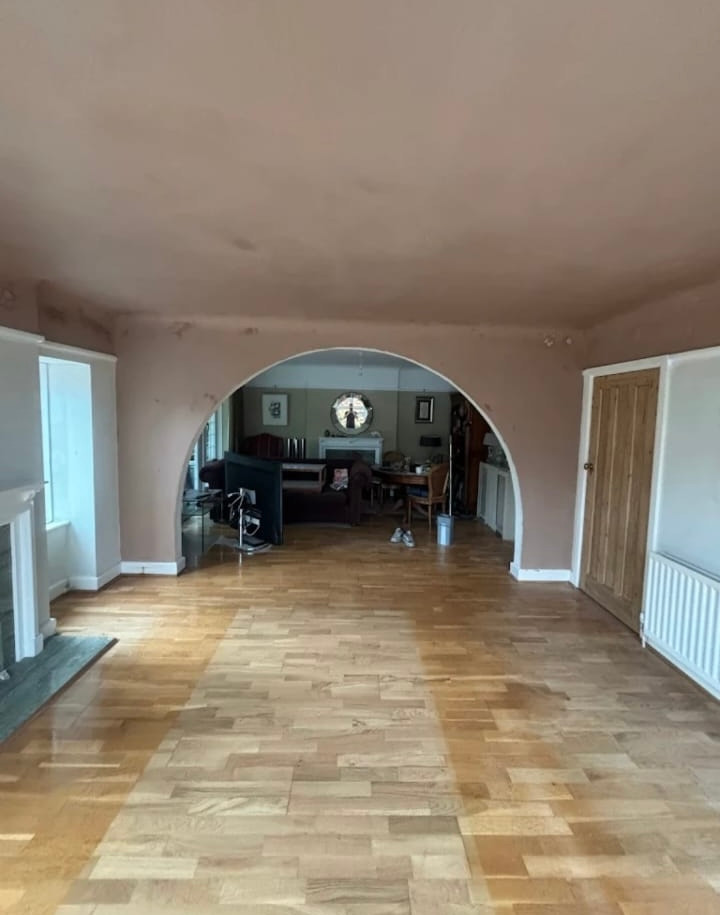
A leak upstairs, a bowed ceiling downstairs. A third of the homes in this town are flats or maisonettes, so this is the biggest single job here. A leak from above soaks a plasterboard ceiling, it stains, then it bows in the middle of a bay. Where the boards are still firm we cut out the damaged section, screw the rest back tight, tape and skim. Where the board has gone soft it comes out, or a fresh layer of plasterboard goes over the lot for a flat finish in a day. Everything comes in and out through a shared stair, so we sheet the landing as well as your hallway and carry the waste down rather than leaving bags on somebody else's doormat.
Behind the paper in the streets around the town is brick with a backing coat of browning or hardwall and a thin finish over the top, most of it inter-war and post-war. Tap along it and the note changes where it has blown off the brick. Sound areas get prepared, sealed and skimmed. Blown areas come off and the backing coat goes back first, bonding where the background is a patchwork of old repairs and chases, floated out and ruled level before the finish coat. Chimney breast removals and old fireplace openings are the usual reason a wall is a patchwork in the first place.
Old Town and the buildings behind the quay are different work: lath ceilings, lime plaster on solid walls that have to stay breathable, and salt that keeps a ground floor wall damp in a building that has stood in sea air for two hundred years. Repairs go back in lime rather than gypsum, patched into what is there, with the cornice line and any run mouldings kept rather than boarded across. On a listed building we check what needs consent before anything comes off.
In the newer blocks and the conversions the walls are plasterboard on dabs or on metal stud, taped and jointed, so they sound hollow and that is normal rather than a fault. What we get asked for there is repair: a hole where a bracket pulled through, a damaged corner in a hallway, a wall skimmed over tired taped joints to take a flat paint finish, and angle bead and stop bead put back at the corners and reveals.
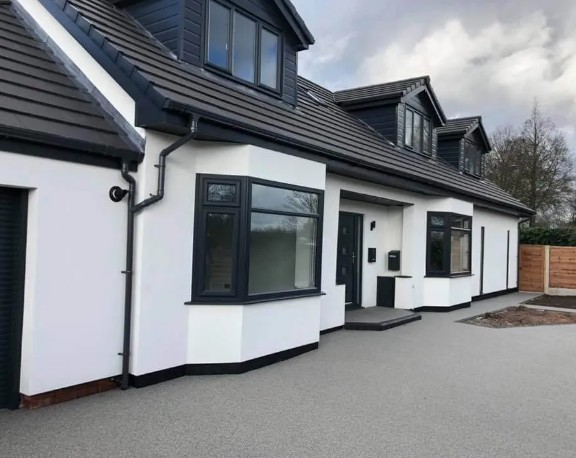
Outside, the rendered and pebbledashed elevations on the thirties houses craze and go hollow, especially where the weather comes off the water. Isolated panels are cut out and patched. A whole elevation comes off and goes back as a thin coat system, primer, a mesh reinforced basecoat and a silicone or monocouche topcoat with a bell cast bead at the base, or as a traditional scratch coat, render coat and float where that suits the building better. On a flat the outside wall is usually the freeholder's rather than yours, so the person who can see the crack is often not the person who can instruct the work.
How it runs
How we work in an occupied flat or house
Same team from the first visit to the last, one number to ring, and none of it sub-contracted out. The quote is itemised: what comes off, how each background is prepared, the beads, the backing coat, the finish coat, the making good and the waste. In an occupied flat the landing is sheeted as well as your hallway and the waste is carried down. Nothing we do inside needs planning permission. Outside is worth a check in the Old Town, where the Town Centre Heritage conservation area and the listed buildings sit close together and appearance is controlled: the council keeps the list of conservation areas, and we look the address up before quoting an external finish.
Cost
What decides the price in Poole
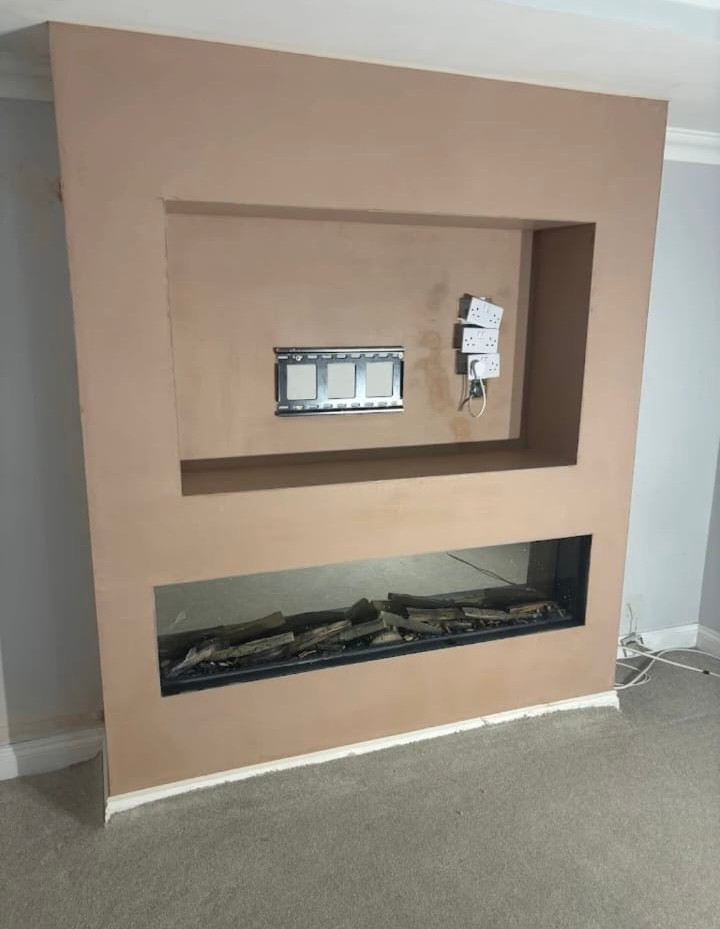
There is no rate per square metre. Old plaster still stuck fast takes a skim; a hollow wall has blown off the brick and has to come off, which brings a backing coat back into the job. A top floor flat with a shared stair and no lift, a terraced house with the van on a permit bay and everything carried through the hall, and a semi with a drive and a side gate are three different jobs. A scaffold is a priced line under the work at height rules, and Approved Document L can ask for the insulation behind a renewed render to be improved.
If it has started to come down
A ceiling down, or water coming through from above
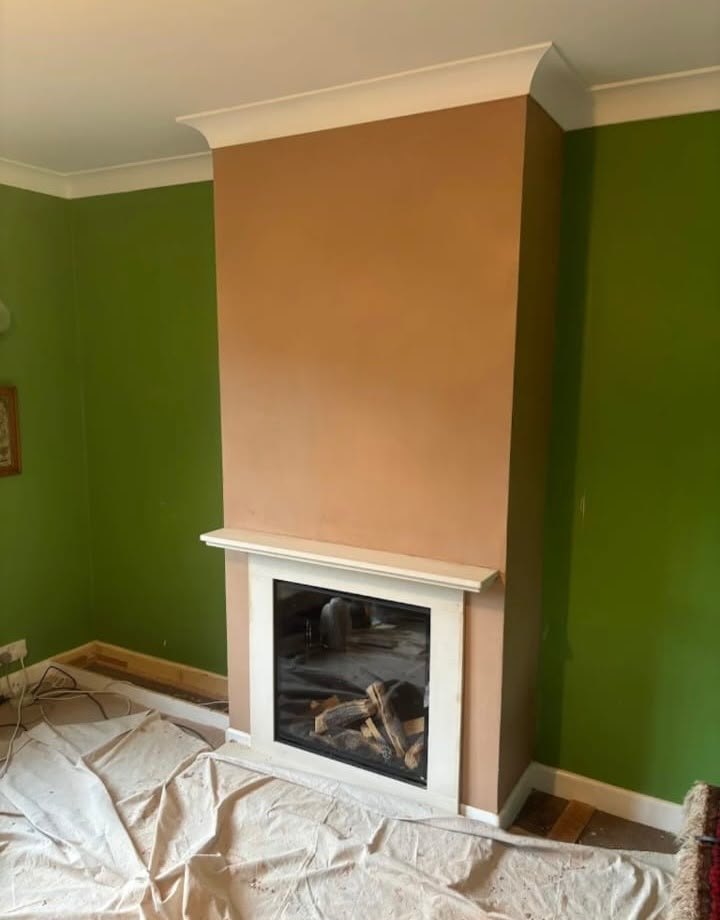
Ring rather than use the form. A ceiling that has begun to bow, or plaster coming off a wall in sheets, goes to the front of the queue. Do not push at a bulging ceiling to see how bad it is. We are five miles away, so a Poole call is normally looked at the same day. If water is still coming through, ring whoever manages the building.
Worth knowing
Who can actually order the work in a flat
A third of the homes in Poole are flats or maisonettes, and in the streets around the town centre it is far more than that. It matters because a leasehold flat is usually a demise of the inside: the plaster surfaces of your walls and ceilings, and everything you have added since. The structure they are fixed to, the outside walls, the roof and the communal stairs normally belong to the freeholder and are looked after through the service charge.
So when a ceiling comes down after a leak from the flat above, the questions are which pipe failed, whether the ceiling is yours or the building's, and whether the managing agent is already dealing with it. Getting that answered first is what stops people paying for a repair somebody else was going to make good.
What that means in practice is simple enough. If you own the flat outright and the damage is inside it, ring us and we get on with it. If you lease, tell the freeholder or the agent in writing before you book anybody, and ask them to confirm in writing who is doing the repair. We are happy to quote to a leaseholder, a landlord or a managing agent, and to send the same written quote to two of them so nobody is guessing.
And if the work is to the block rather than your flat, expect it to take longer than you want: where major works would cost any one leaseholder more than £250, the freeholder has to run a formal consultation under section 20 of the Landlord and Tenant Act 1985 before the money can be recovered. That is why a communal hallway can sit shabby for months while an individual flat is skimmed next week.
Who you are dealing with
A local firm you can check on
We work across Poole, Hamworthy, Parkstone, Broadstone and Upton, and the BH15 addresses around the quay and the old town, with BCP Council for planning and building control. Send the postcode and the floor, and we will tell you what the access needs.
Bournemouth Roofing & Building Ltd, registered in England and Wales, company number 15471719, which you can look up in a minute. Thomas Hannen's business, and he is the one who comes out to price the job, not a salesman. A verified customer's 10 out of 10 on Checkatrade. The site visit and the written itemised quote are both free.
Questions
Poole questions we get asked
A third of Poole town is flats. Who instructs the work?
Whoever holds the freehold, which is rarely the person ringing. A third of the homes in Poole town are flats or maisonettes, and the structure, the external walls and the communal areas belong to the freeholder and are paid for out of the service charge. Where that cost is spread across leaseholders, the managing agent has a consultation process to run before instructing anyone. We are happy to quote for an agent or a residents association.
Our house is in the Town Centre Heritage area. What is restricted?
Appearance. Inside the Town Centre Heritage conservation area a like for like repair counts as maintenance and needs nothing, but changing the render, the colour or the material on a street elevation is a change of appearance and BCP Council will want asking. Painting a frontage that has never been painted is the one that catches people out. Where the address falls outside the boundary, none of that applies to you.
The house is a 1930s semi. What is behind the walls?
Sand and cement backing with a lime or gypsum finish over brick, in most cases. The 1930s is the single biggest decade in the town's housing and those walls were plastered wet, straight onto the brickwork, so there is no cavity behind the plaster and a hollow patch genuinely is a blown one. Bay window returns and chimney breasts let go first, because they are cold on two or three sides at once.
How do materials get up to a third floor flat?
By hand up the stairs, mostly, because the older blocks in the town have no lift that takes a full sheet of board. That means a delivery timed for the day rather than a pallet left on the pavement, and somewhere legal to stand the van while it is carried in. In the residents bays around Poole town that usually needs a permit or a bay suspension arranged with the council, and we sort it before the start date.
The flat above leaked and our ceiling came down. What now?
The leak gets stopped first, then the ceiling gets dealt with, and in a block those are often two different people's responsibility. Damage inside your flat is usually yours; the pipe or the roof it came from usually is not. We can strip the sodden board, prop anything unsafe and leave it to dry, then come back and reboard once the source is fixed. Reboarding over a wet void only repeats the job.
Nearby, and next door
Plastering and rendering near Poole
Plastering and rendering nearby
Our other trades in Poole
Everything we do in Poole Plastering and rendering, all areas Every area we cover
Free quote
Get a written price for your Poole plastering
Send the postcode and the floor, and tell us which rooms. We come out, tap the walls and ceilings, and put the price in writing with the days it will take.