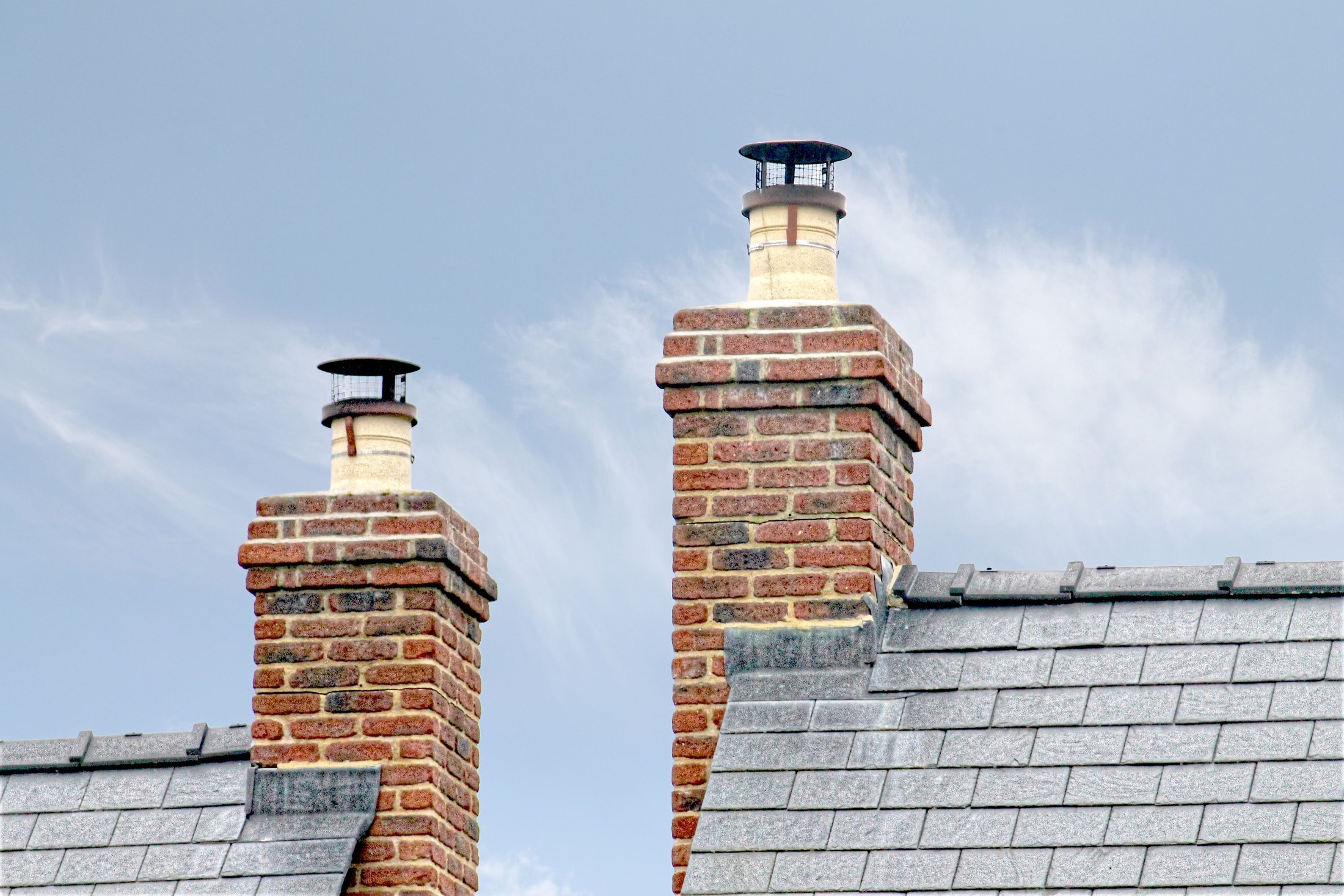
Roofing in Poole
Roof repairs, re-roofs, flat roofs, leadwork and guttering across Poole, from the Old Town and the quay out to Canford Cliffs and Sandbanks.
The site visit is free and so is the written itemised quote. Thomas Hannen prices every job himself.
On a Poole roof the fixings usually fail before the tiles do. Salt off the harbour and the open bay corrodes nail heads, tile clips and steel flashings from the edge inwards, so a covering can look perfectly sound from the pavement while the things holding it down have quietly given up.
That is why a tile slipping on a Lilliput or Hamworthy roof is often not the tile's fault at all, and why we look at the fixings and the flashings as carefully as the covering. We get on the roof, put our head in the loft, and photograph what we find. About six miles from us, and the visit costs you nothing.
The work
Rust stains down the tiles are worth reading
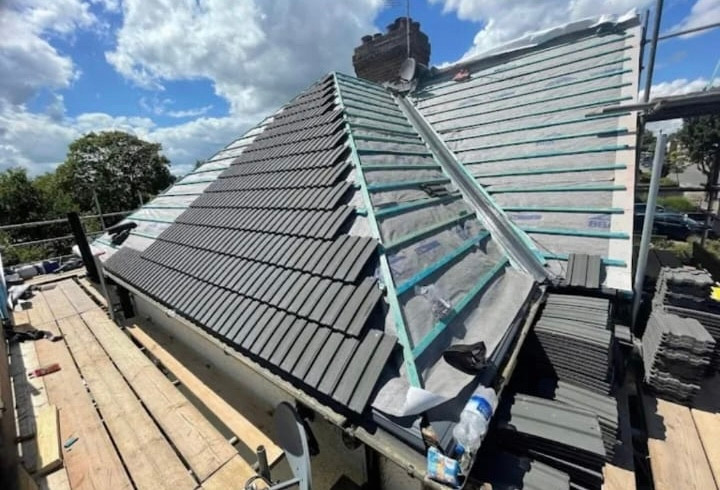
Fixings, first. Anywhere within reach of the water we specify stainless or non-ferrous nails and clips rather than the cheaper galvanised option, and we look hard at existing lead, zinc and steelwork before agreeing any of it goes back on. On the seaward slopes we expect clipped tiles rather than nailed only. BS 5534 sets out how a covering should be mechanically fixed for its exposure, and Poole is about as exposed as this coast gets. It adds a little to the quote and a great deal to how long the roof stays on.
Who can instruct the work. A third of the dwellings here are flats or maisonettes, and the outside of a flat, roof and walls alike, belongs to the freeholder and is managed out of the service charge. The person who can see the stain often cannot authorise the repair, so we settle who holds the building before anybody measures anything.
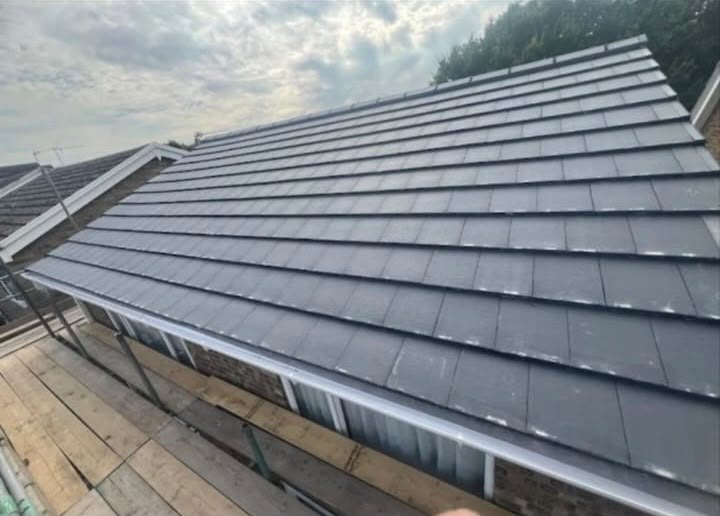
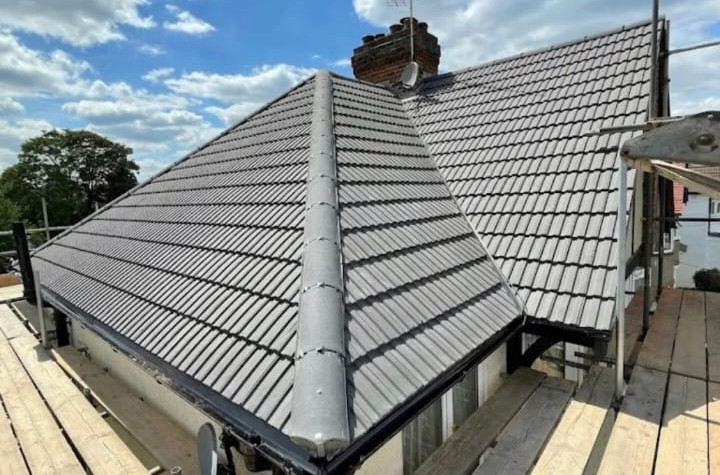
Ridge, hip and verge. Mortar bedded ridge and hip tiles are the usual casualty of a gale off the bay. Once a bed cracks, water gets in behind it, frost opens the crack wider, and the next blow lifts the tile. We convert to a dry fix system screwed onto a ventilated roll, which removes the mortar entirely and ventilates the roof space along the ridge. Repairs and re-covers. Slipped, cracked and missing tiles, storm damage, and leaks traced back to where water genuinely enters. Around the Old Town and older Parkstone that means plain clay tile or natural slate on a steep pitch; through the inter-war suburbs and out to the peninsula it is concrete interlocking tile. Where the nails, battens and underlay have gone together the covering comes off and goes back on breathable membrane and treated battens with a matched tile.
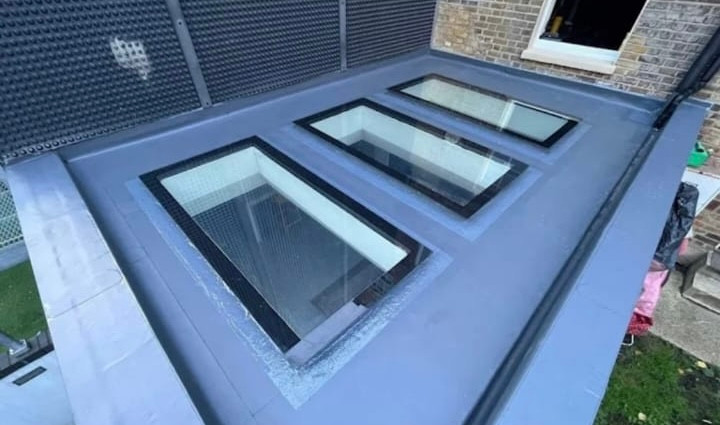
The inter-war flat roof. Close to a fifth of Poole went up between the wars, and the rear extensions, garages, porches and dormers from that period are mostly flat roofed with a lot of them still on felt that has done its time. Blisters, splits at the upstands and standing water in the middle all say the covering has stopped working. Felt, GRP fibreglass and EPDM rubber all last if the deck is sound and the falls and edge details are right. If the deck is soft or the insulation is saturated, an overlay is a waste of money and we will say so.
Leadwork. Chimney flashings, soakers, valleys, box gutters and roof to wall abutments in code rated lead. Salt is hard on thin or tired lead on the seaward face, so we check its condition rather than assuming it goes back. Gutters, downpipes, fascias and soffits: clearing moss and debris, realigning and renewing. Rust staining running down the tiles from corroded fixings is a common sight here and it is worth reading rather than washing off. The loft, while the covering is off. Insulation, eaves ventilation and any condensation problem are far cheaper to sort with the roof open, and Approved Document L sets the standard a renovated roof is expected to reach. On a Parkstone or Branksome villa it is the obvious moment.
How it runs
From your call to a written price
Same team from first visit to last, no sub-contracting, and an itemised quote: scaffold, the strip out, battens and membrane, the covering, each junction and disposal on separate lines, and nothing is left open overnight. Re-covering in the same materials is permitted development, so no application and no building control. Changing the appearance from the street is where that stops, and Planning Portal guidance sets out the line. Parts of the Old Town sit inside the Town Centre Heritage conservation area, where the covering is part of a protected frontage, and the council keeps the list for the whole of BCP. We check the address before anything is ordered.
Cost
What decides the price of a roof
No rate per square metre. A terraced street off the Old Town, a semi with a driveway in Oakdale and a top floor flat at Sandbanks are three different jobs before a tile moves. This is work at height and the work at height rules are why the platform is a priced line rather than an optional extra. Chimneys, valleys and abutments are priced one at a time, because that is where the leadwork hours go. Ask whether the scaffold is in the price, whether battens and membrane are renewed or covered over, and who pays for the skip.
If it is leaking now
Water coming in today
Ring rather than use the form. Anything letting water in goes to the front of the queue, and the first visit makes it safe and watertight while you decide. If you are in a flat, tell the managing agent at the same time as you ring us, because they will have to instruct the permanent repair. The phone is answered 24 hours for emergencies; scheduled work runs Monday to Friday, 8am to 6pm.
Worth knowing
Old Town brick, and why the mortar matters
The oldest streets are solid-wall construction: no cavity, no membrane, and a brick made to breathe. Those walls handle damp by letting it evaporate out through the mortar joints, which only works if the mortar is softer and more permeable than the brick. Point one of them in cement and the moisture leaves through the brick face instead, taking the face with it every time it freezes.
That matters on a roof job more than it sounds, because the chimney is usually the oldest and most weathered masonry on the building and it is where we are working. If we are re-forming a stack flashing on a period house, the pointing above the lead gets the same treatment as the wall would: a lime mix matched to what is there, not whatever is in the mixer.
Who you are dealing with
A local firm you can check
We cover the Old Town and the quay, Hamworthy, Oakdale, Creekmoor, Parkstone, Branksome, Lilliput, Canford Cliffs and Sandbanks, broadly BH12 to BH17, under BCP Council. Bournemouth Roofing & Building Ltd, registered in England and Wales, company number 15471719, which you can look up in a minute. Thomas Hannen's business, and he is the one who comes out to price the job, not a salesman. A verified customer's 10 out of 10 on Checkatrade. The visit and the written quote are both free.
Questions
Poole questions we get asked
Who has to agree before the roof on our block is done?
The freeholder, and where the cost falls on leaseholders they have to be consulted before it is ordered. A third of Poole's homes are flats or maisonettes, and the structure of those belongs to the freeholder and is paid for out of the service charge, so a leaseholder on their own cannot instruct the work. We will survey and quote in enough detail for the managing agent to work from, but the instruction comes from them.
We are in the Town Centre Heritage area. What are the rules?
Appearance is controlled, so putting the same slate back on a roof inside Town Centre Heritage needs nothing from Bournemouth, Christchurch and Poole. Swapping it for a concrete tile because that is easier does need their view first, and they will normally want to see a sample. Five entries in the area are listed, the Church of St Peter among them, and those are stricter again and need consent in their own right.
Ours is a thirties semi. What normally needs doing on those?
The valleys, the verges and the chimney flashings, roughly in that order. Nearly a fifth of Poole is inter war stock and the 1930s is the single biggest decade here, so those roofs are approaching a century old with sand and cement verges and lead that has been patched more than once. The tiles themselves are often still serviceable. Sorting out the lines where two surfaces meet achieves more than a full strip would.
Parking is impossible on our street. Where does the scaffold stand?
On the pavement, which in the town centre means a licence from Bournemouth, Christchurch and Poole and a lit, boarded walkway kept open past the front of the building. We apply for it rather than leaving it to you, and it needs lead time, so it is one of the first things sorted once a job is agreed. On a terrace the scaffold usually oversails next door as well, so we speak to them early.
I am on the top floor. Is it the roof?
Look at where the stain sits. Water appearing at the outside wall near the ceiling is usually the parapet or the gutter behind it, while a stain out in the middle of the room is more likely the covering or a rooflight. Photograph it after each wet spell so you can show the agent that it is getting worse. On a block we survey the whole roof rather than just above the flat that reported it.
Nearby, and next door
Roofing near Poole
Roofing nearby
Our other trades in Poole
Roofing guides
Concrete vs clay roof tiles: which is right? Planning, building regs or listed building consent Storm damage to a roof: the first 24 hoursEverything we do in Poole Roofing, all areas Every area we cover
Free quote
Get a price for your Poole roof
Tell us the address and what you have noticed. We will look at the fixings and the flashings as well as the covering, and put an itemised price in writing.