Roofing in Parkstone
Slate repairs around Ashley Cross, tile re-roofs up the hill in Upper Parkstone, chimney leadwork and flat roofs over the back additions.
The site visit is free and so is the written itemised quote. Thomas Hannen prices every job himself.
Last updated
Roofing in Parkstone
Slate at the bottom of the hill, tile at the top
Most roof problems in Parkstone are a repair, not a new roof. A slipped slate, a cracked ridge or a tired chimney flashing is a day's work once we have found where the water actually gets in, and we tell you if the whole covering has reached the end.
What gets a Parkstone roof looked at? Slates have started turning up on the path of a Victorian house near Ashley Cross. A brown patch has appeared on a bedroom ceiling next to the chimney breast. Or a ridge tile has lifted on a 1930s semi up towards Ashley Road after a windy night. If water is already coming through a ceiling, ring 07435 839745 and tell us which room it is in and whether it sits under the slope or beside the stack.
Thomas comes out, looks at the roof from the street, the garden and the loft, and photographs what he finds so you see it too. The visit is free and the quote comes in writing, line by line.
The work
What we do on Parkstone roofs
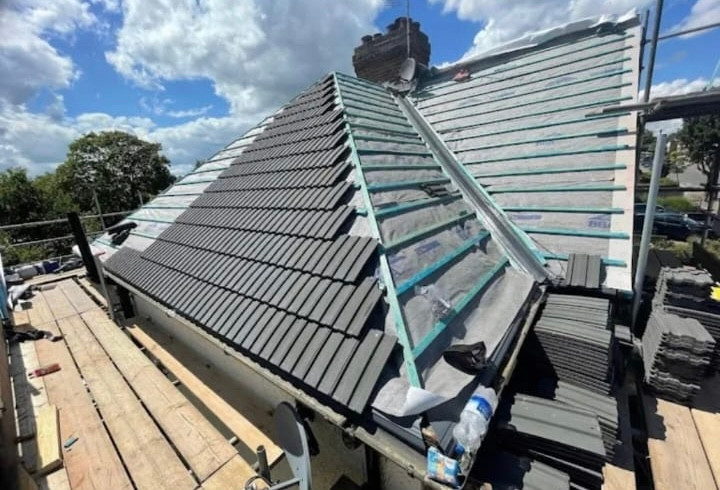
Around Ashley Cross and the older streets of Lower Parkstone the houses are brick with natural slate roofs and big chimneys. Slate itself lasts a very long time. The iron nails holding it usually do not, and when they rust through the slates slide one at a time.
That is nail sickness. A few slipped slates are refixed with copper tingles or clips. When they are going all over the slope, patching is money down the drain, so we strip the slope, fit new treated battens on a breathable membrane, and re-slate with copper nails, reusing the sound slates and matching the rest. BS 5534 sets the fixing for the exposure, and we work to it.
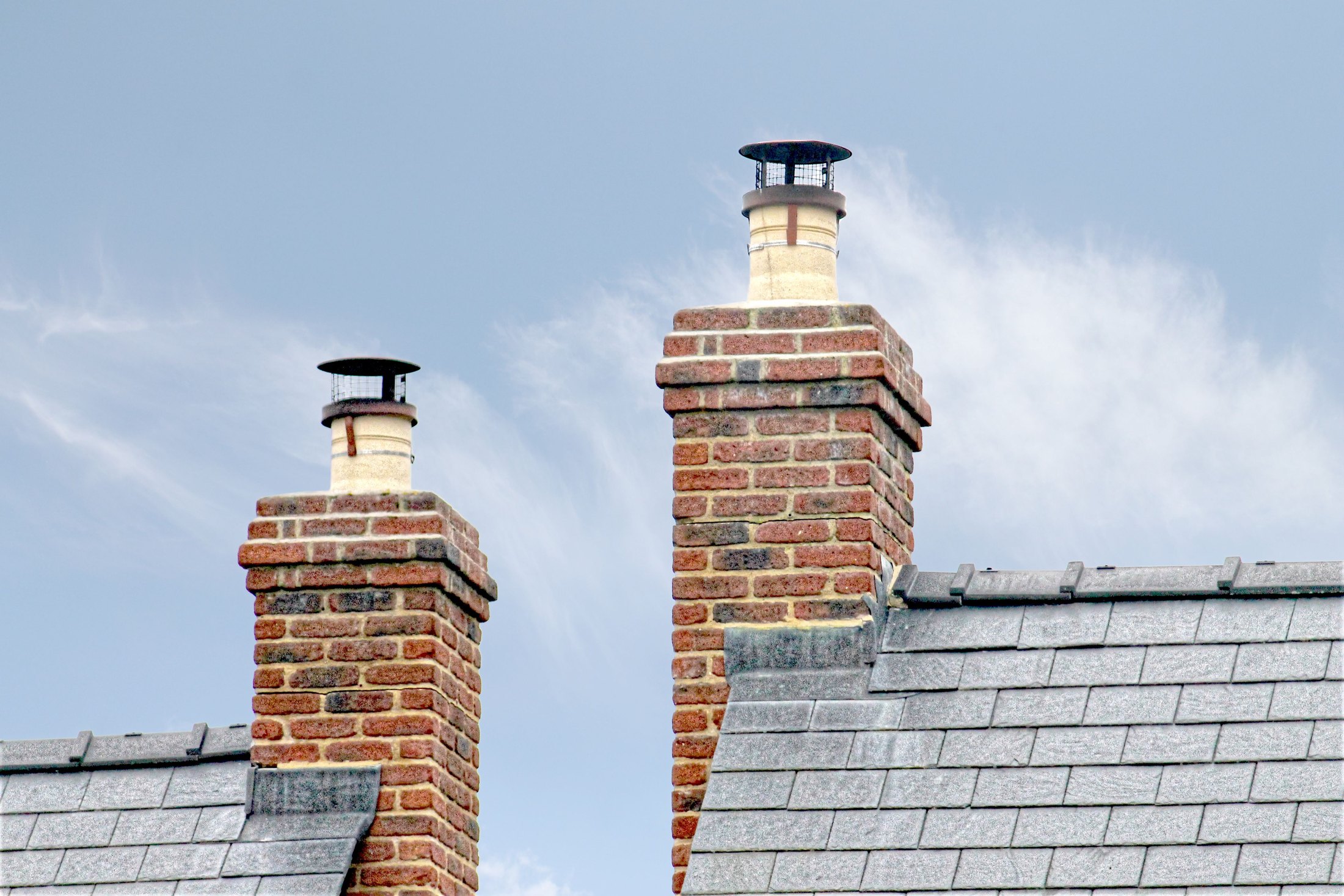
Chimneys and leadwork. Tall stacks are part of how these houses look, and they are where most leaks start. We check the flashings, the soakers down the side, the back gutter behind the stack and the flaunching on top. Lead that has split or been sealed with mastic is replaced in code rated lead and dressed properly. Valleys between two slopes get the same treatment.
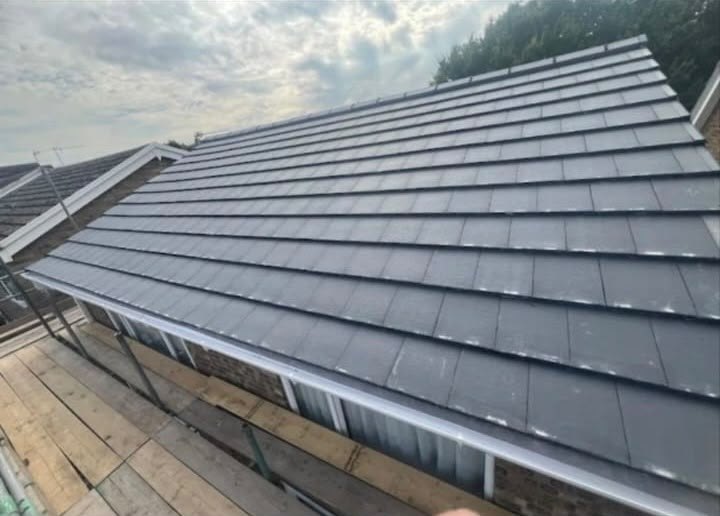
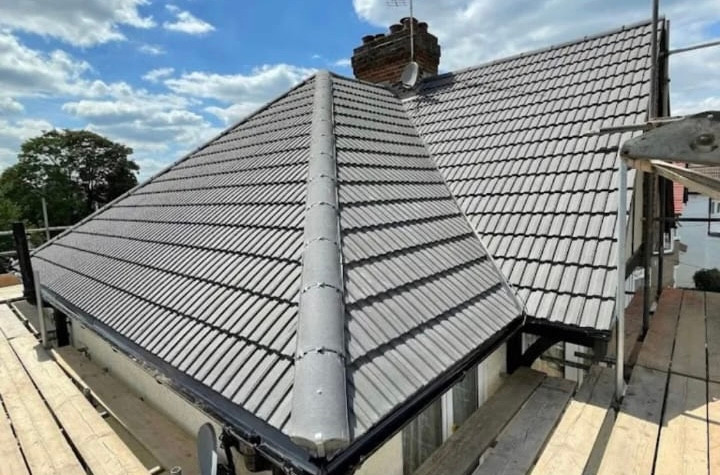
Upper Parkstone terraces and semis. Up the hill the housing is smaller, artisan terraces and inter-war and post-war semis, many of them re-covered years ago in concrete interlocking tile. Some of those went straight onto the old battens with no underlay, and a concrete tile is heavier than the slate or plain clay tile it replaced, so we look at the rafters from the loft before we price a re-roof. Mortar bedded ridges and hips crack and let water in; we rebed them, or swap to a dry fix ridge and dry verge so there is no mortar left to fail.
Small repairs. Cracked or missing tiles, storm damage, moss and debris blocking a valley, a leak we have to trace from the loft. Most of these take hours, not days.
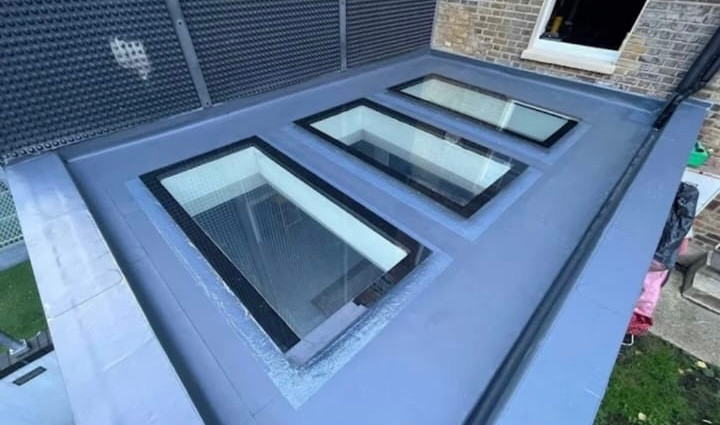
The flat bits. Back additions, bay tops and dormers often carry felt that has had its day. We re-cover them in EPDM rubber, GRP fibreglass or felt once we know the deck and the fall to the outlet are sound; there is more on our flat roofing in Parkstone page. Rotten boards and failed gutters at the eaves are covered on the fascias and guttering page.
The loft, while it is open. With the covering off, loft insulation and eaves ventilation cost far less to sort, and it is the moment to fix any condensation problem.
When would we talk you out of a new roof? When the slates are sound and only the fixings have gone on one slope, or when the leak is a flashing. Then we say so. If all you have is one slipped slate, a cracked flaunching or a single leak to chase down, our page on roof repairs in Parkstone covers that kind of job.
How it runs
From your call to a written price
One person to ring from the first visit to the last. The quote is itemised, not a figure on the back of a card: scaffold, the strip out, battens and membrane, the covering, each junction and disposal on separate lines, so you can compare it properly against anyone else's.
Nothing is left open or unusable overnight. The site is swept at the end of each day rather than the end of the job, and what comes out leaves with us. If something turns up once we start that nobody could have seen, you get a photograph and a price before we carry on.
Re-covering like for like counts as maintenance and needs no application; the Planning Portal guidance sets out where that stops. Ashley Cross is a conservation area and the council keeps the list, so check your address before anything changes how the roof looks. The Church of St Peter and a few other Parkstone buildings are listed, and those need consent for almost any change.
Cost
What decides the price of a roof
No rate per square metre, because the square metres are the easiest thing to measure and the least useful thing to know.
Getting to it. A slate roofed villa near the station, an Upper Parkstone terrace fronting the pavement and a 1930s semi with a side drive are three quite different scaffolds. Some roofs come off a tower, most want a scaffold, and how long it stands matters as much as its size. This is work at height and the work at height rules are why the platform is a priced line rather than an optional extra.
Junctions and substrate. Chimneys, valleys and abutments are priced one at a time, because that is where the leadwork hours go. Battens, membrane and fixings are the part nobody sees and the part that decides what a re-cover costs.
Comparing quotes? Ask whether the scaffold is in the price, whether battens and membrane are renewed or covered over, what grade of lead is going on the chimney, and who pays for the skip.
If it is leaking now
Water coming in today
Ring rather than use the form. Anything letting water in goes to the front of the queue. The first visit is about making it safe and watertight so nothing gets worse while you decide, and we quote the permanent repair once the whole of it can be seen.
On the older Parkstone houses the first place we look is the stack, because the flashing and the back gutter behind it are where water most often finds a way in. Scheduled work runs Monday to Friday, 8am to 6pm. For anything urgent, ring rather than use the form, and if we cannot pick up we ring you back as soon as we can.
Worth knowing
In Ashley Cross, the slate is part of the street
Ashley Cross, the Victorian centre of Lower Parkstone around the station and Ashley Cross Green, has been a conservation area since 1987. Its character is Victorian and Edwardian brick houses with slate roofs, prominent chimneys and shallow front gardens. That changes one decision on a roof job: what goes back on.
Putting natural slate back where there was natural slate is maintenance, and nobody needs to be asked. Swapping it for concrete tile or a cheaper man-made slate because the price is lower, taking a chimney down, or adding rooflights on the front slope changes how the house looks from the street, and inside the boundary that is worth raising with the council before anything is ordered. So get the covering written into the quote by name, not "slate or similar". We put the slate we intend to use on the quote, and if you are not sure whether your address is inside the boundary, we will check it with you at the visit.
Who you are dealing with
A local firm you can check
We cover the whole of Parkstone, from Ashley Road and Heatherlands on the higher ground down to Ashley Cross and Penn Hill, across BH12 and BH14, under BCP Council.
You are dealing with Bournemouth Roofing & Building, the trading name of Bournemouth Roofing & Building Ltd, registered in England and Wales, company number 15471719, which you can look up in a minute. Thomas Hannen's business, and he is the one who comes out to price the job, not a salesman. A verified customer's 10 out of 10 on Checkatrade. The visit and the written quote are both free. Before you book a visit in Parkstone, you can read our customers' Google reviews, word for word, on our reviews page.
Planning at a glance
Do you need planning permission in Parkstone?
Most repairs in Parkstone need no application at all. What decides whether a change to the outside of your house does is who the council is, whether a conservation area or a listing applies, and whether the place sits in a protected landscape.
| Question | In Parkstone |
|---|---|
| Who decides | BCP Council is the planning authority for Parkstone. BCP Council's heritage pages set out what it controls. |
| Conservation area | Yes: Ashley Cross Conservation Area. Check whether your street is inside the boundary before changing anything visible. |
| Listed buildings | Yes, there are listed buildings in and around Parkstone. If yours is one, work can need listed building consent. |
| Protected landscape | No National Park or National Landscape covers Parkstone. |
Questions
Questions about roofing in Parkstone
Can you just replace the slipped slates?
Usually, yes. A handful of slipped slates are refixed with copper tingles or clips in a few hours. If slates are sliding all over one slope, the nails have gone everywhere and the honest answer is to re-slate that slope. We show you photographs so you can see which it is.
How long does a re-roof take on a Parkstone semi?
Once the scaffold is up, stripping, battening, membrane and a new concrete tile covering on an ordinary semi is usually one to two weeks of working days, depending on the weather and how many chimneys and valleys there are. Slate is slower than tile. We give you the length in writing with the quote.
Is the scaffold included in the price?
Yes. It is a line of its own on the written quote, so you can see it and compare it. Nobody is sent up a ladder to do a job that needs a platform.
Will you make a mess of the garden?
We sheet the areas under the work, sweep up at the end of each day and take the old slates, tiles, battens and lead away with us. Shallow front gardens near Ashley Cross leave little room, so we agree where the skip and materials go before we start.
Do I need permission to re-roof in Ashley Cross?
Not to put the same covering back. Changing slate for tile, removing a chimney or adding front rooflights inside the conservation area is a change of appearance, so ask the council first. If the building is listed, consent is needed for almost any change.
Nearby, and next door
Roofing near Parkstone
Nearby places we also cover for roofing, with straight-line distances from Parkstone, and the other trades we offer in Parkstone itself.
Roofing nearby
Our other trades in Parkstone
Roofing guides
Concrete vs clay roof tiles: which is right? Planning, building regs or listed building consent Storm damage to a roof: the first 24 hoursEverything we do in Parkstone Roofing, all areas Every area we cover
Free quote
Get your Parkstone roof looked at
A free visit, photographs of what we find, and a written quote with every part on its own line.