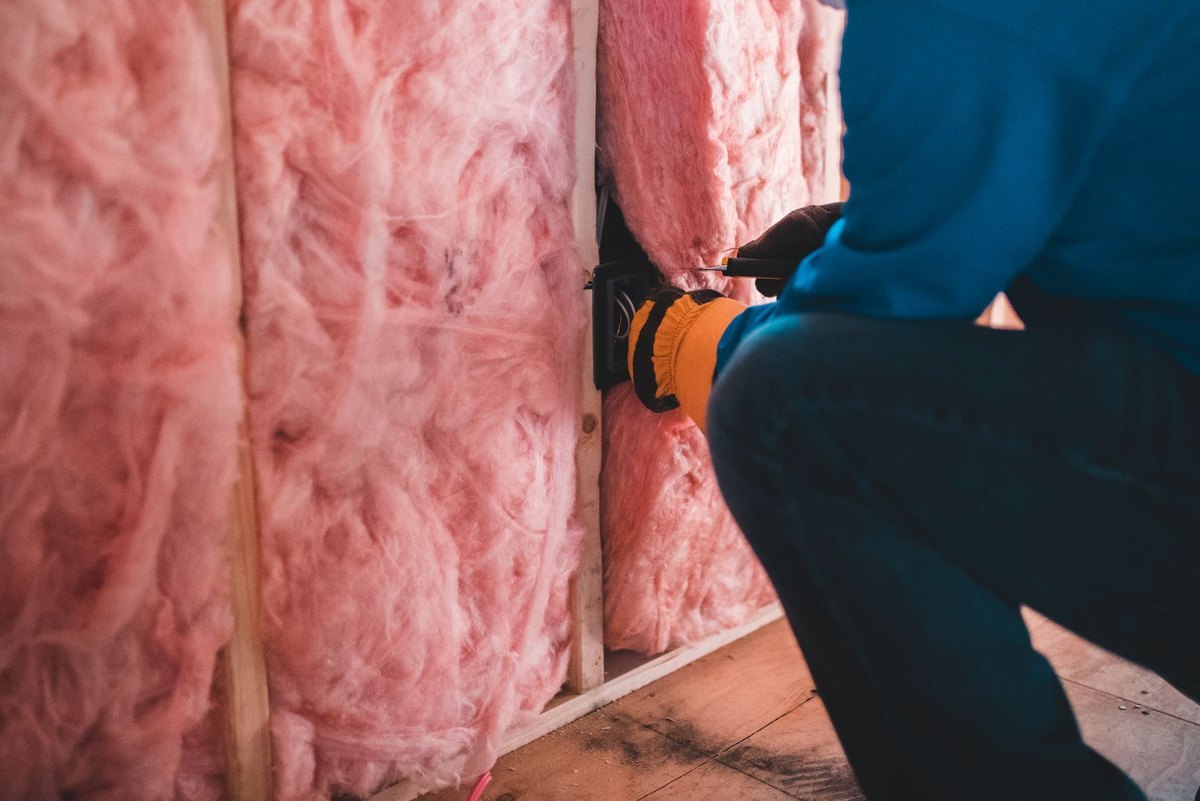
Wall insulation in Parkstone
Borescope surveys, internal lining for the solid brick houses around Ashley Cross, and straight advice on cavity fill up the hill.
The site visit is free and so is the written itemised quote. Thomas Hannen prices every job himself.
Last updated
In Parkstone the answer depends on which end of the hill you live. The Victorian and Edwardian houses around Ashley Cross are mostly solid brick, which cannot be filled and is insulated from the inside or the outside. The inter-war and later houses up towards Ashley Road usually have a cavity, and a borescope through one small hole tells you whether it is worth filling.
A Parkstone house usually comes to wall insulation through a cold back bedroom, an unknown fill or new damp. A bedroom on the back of a Lower Parkstone terrace that stays cold whatever the radiator does, with mould behind the wardrobe by winter. A 1930s semi where nobody knows whether the walls were ever filled. Or a wall that was filled years ago and now has damp patches on the inside that were never there before.
We come out, check what the wall actually is, take moisture readings and walk round the outside to see what state the brick, pointing and render are in. Then you get a written quote with the survey, the system, the junctions and the making good on separate lines. The visit is free, and insulation in Parkstone covers lofts and floors.
The work
Solid walls at the bottom of the hill, cavities at the top
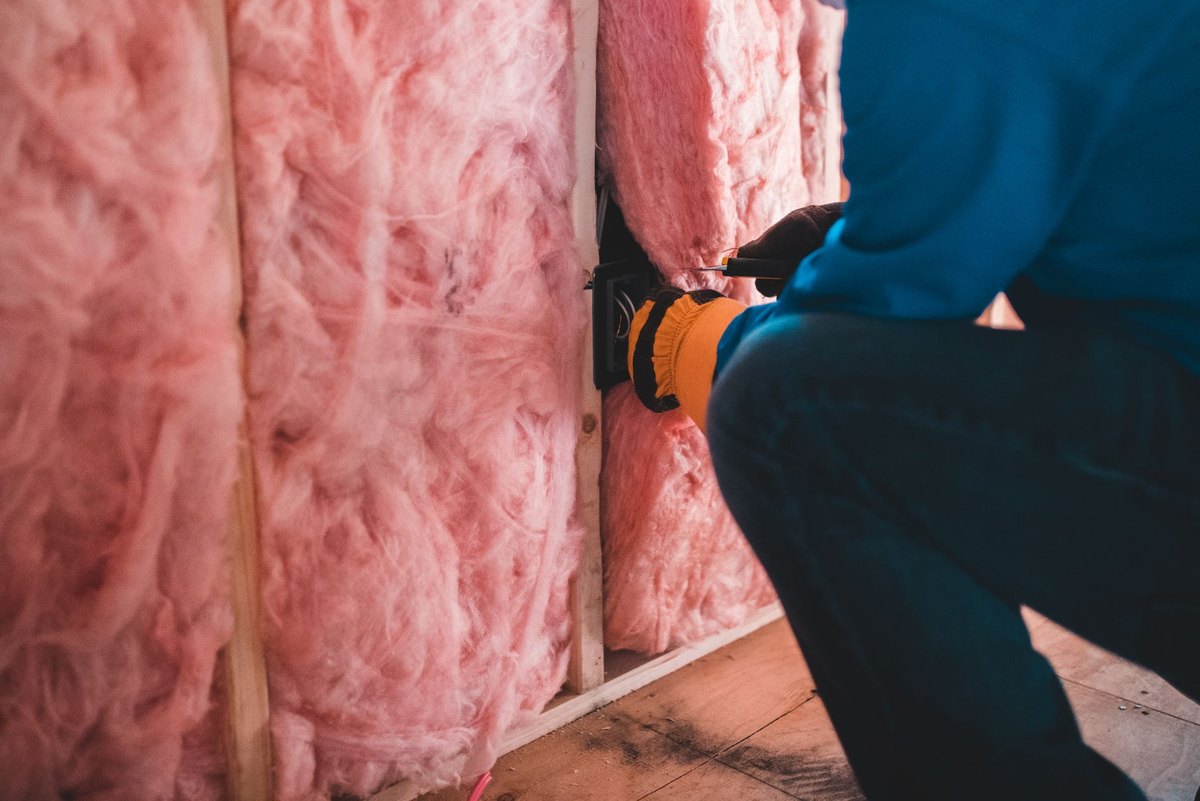
Which wall you have. The age of the house is a clue and no more. A nine inch solid brick wall and a narrow early cavity can look the same once the outside is pebbledashed, and a lot of Upper Parkstone is.
So we drill one small hole in a Parkstone mortar joint and look inside with a borescope: is there a gap, how wide, is it clean, is it dry, and is anything in it already. The hole is filled when we are done.
Cavity fill. Where the cavity is clear and dry, cavity wall insulation is blown in from outside through a pattern of holes drilled in the mortar joints, then the holes are made good to match. Bonded polystyrene bead flows into corners and suits a wall that takes the weather; blown mineral wool is the older option and is fine on a sheltered one. Air bricks that feed a suspended floor or a boiler are sleeved so the fill does not block them. It is specialist work and should be done by a registered installer who issues CIGA paperwork for the fill, which is worth keeping with the deeds. Our part is the survey before it and the repairs it depends on, because a cavity should not be filled behind open joints or cracked render.
Fill that has already failed. Older fill in Parkstone can slump, leaving a cold band at the top of the wall, and a wet cavity lets rain cross on the fill instead of running down the back of the outer leaf. The borescope shows which. A failed fill has to be extracted by specialists before anything new goes in, and the cause, often a leaking gutter or failed pointing, fixed first.
Internal wall insulation on solid brick. On the older Parkstone houses IWI is the usual route: insulated plasterboard bonded to the wall, or battens or a stud frame with PIR or mineral wool between, then boarded and skimmed. Celotex and Kingspan type boards give the most for the depth, and an aerogel lining suits a narrow room or a bay. Most heat loss in a lined room is at the edges, so the window reveals, the floor junction, the joist ends and the party wall return are all wrapped. A back bedroom is a two or three day job with plastering behind it.
External wall insulation. EWI is board fixed to the outside with a render carrier and a thin coat finish. On a pebbledashed Parkstone semi it wraps the whole house at once, keeps every room the size it is, and deals with the thermal bridge at the eaves and corners. It also pushes the wall out, so sills, eaves and downpipes are extended with it, and on a pair of semis the line where it stops at your neighbour's wall is detailed so it does not become a cold bridge.
Ventilation and moisture. Insulating a Parkstone wall moves the dew point and takes away the draughts that were drying the house. So trickle vents, an extract fan that genuinely clears the air, and unblocked air bricks are part of the job, and a taped vapour control layer keeps interstitial condensation out of an internal lining. The heat loss falls and the EPC moves, though you feel the payback in the rooms before it shows on paper.
When we would talk you out of it. If the walls are wet from a leak, fix the leak. If the house faces the full weather and the cavity is narrow, filling it can bring the damp in, and we will tell you that rather than book it.
How it runs
From your call to a written price
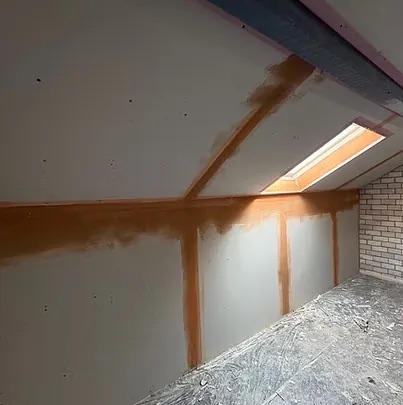
One person to ring from the first visit to the last. The quote is itemised, not a figure on the back of a card: the survey and any borescope check, the system and its thickness, making good around windows and doors, ventilation works, and disposal on separate lines, so you can compare it properly against anyone else's.
Nothing is left open or unusable overnight. The site is swept at the end of each day rather than the end of the job, and what comes out leaves with us. If something turns up once we start that nobody could have seen, you get a photograph and a price before we carry on.
Lining the inside of a wall needs no planning permission, as the Planning Portal guidance on insulation explains. The outside is different: in a conservation area such as Ashley Cross, cladding any part of a house is outside permitted development, so check your street: the council keeps the list. Either way it is building control work, because under regulation 23 a renovated wall has to meet Approved Document L.
Cost
What decides the price of a wall insulation job
No rate per square metre, because the wall area is the easy part; what happens at every window, door and floor junction is not.
Getting to it. A Victorian terrace near Ashley Cross with the front on a shallow garden, a pebbledashed 1930s semi off Ashley Road with a side path, and a flat in a converted house are three different problems, and on the flat the freeholder has a say in anything touching the outer wall. Cavity fill is drilled from outside and a bungalow comes off a tower where a three storey gable wants a scaffold. Internal lining is worked room by room from inside, so it is your rooms rather than a platform that gets disrupted. The work at height rules still set the platform.
Which wall you actually have. A cavity that is clear and dry can be filled in a day. A solid wall cannot be filled at all, and has to be lined inside or insulated outside, which is a different job at a different price. A borescope through one drilled hole settles it, and no honest quote is written before that.
The junctions, not the field of the wall. Reveals at windows and doors, the floor junction, the eaves and any party wall are where heat escapes and where condensation shows up if the detailing is wrong. That work is slow, it is most of the labour, and it is the first thing a cheap quote leaves out.
Comparing quotes? Ask whether the wall has actually been checked with a borescope or just assumed, what system and what thickness is specified, how the reveals and floor junction are being detailed, whether ventilation is being addressed, and who makes good the plaster and decoration afterwards.
If damp has appeared
Damp or mould after a wall was insulated
Ring rather than use the form. Damp patches or black mould appearing on an outside wall after cavity fill or internal lining usually means water is tracking across the cavity, or warm air is reaching a cold surface at a junction.
We look before we take anything out, because the fix depends on which of those it is. On the older Parkstone houses we look at the gutter, the downpipe and the pointing above the patch first, because water getting in from outside is the commonest cause. Scheduled work runs Monday to Friday, 8am to 6pm. For anything urgent, ring rather than use the form, and if we cannot pick up we ring you back as soon as we can.
Worth knowing
External insulation in Ashley Cross needs the council first
Ashley Cross, the Victorian heart of Lower Parkstone around the station, Commercial Road and Church Road, is a conservation area. Much of it is Victorian and Edwardian brick with slate roofs and chimneys that show from the street.
External wall insulation would cover all of that with board and render and push the walls out past the window reveals. Inside a conservation area, cladding a house is not permitted development anywhere on it, front or back, so it needs a planning application, and the council looks hard at anything that changes a front elevation. A handful of buildings nearby are also listed, the Church of St Peter among them, and for those even an internal lining needs consent.
So for a solid walled house inside the boundary the realistic route is internal. Line the coldest rooms first, usually the ones on the north side and the gable, with a breathable build up such as wood fibre in a lime based adhesive, which lets an old brick wall keep drying through the plaster. Fix the pointing and the rainwater goods outside at the same time, because a wet wall insulated from inside only moves the problem. If you are not sure whether your address is inside the boundary, we check it with you at the visit, before anything is drawn up.
Who you are dealing with
A local firm you can check
We cover the whole of Parkstone, from Heatherlands and Ashley Road down through Ashley Cross to Penn Hill and Whitecliff, across BH12 and BH14, with BCP Council for planning and building control. Our Boscombe base is 4.6 miles away.
You are dealing with Bournemouth Roofing & Building, the trading name of Bournemouth Roofing & Building Ltd, registered in England and Wales, company number 15471719, which you can look up in a minute. Thomas Hannen's business, and he is the one who comes out to price the job, not a salesman. A verified customer's 10 out of 10 on Checkatrade. The visit and the written quote are both free. Before you book a visit in Parkstone, you can read our customers' Google reviews, word for word, on our reviews page.
Planning at a glance
Do you need planning permission in Parkstone?
Most repairs in Parkstone need no application at all. What decides whether a change to the outside of your house does is who the council is, whether a conservation area or a listing applies, and whether the place sits in a protected landscape.
| Question | In Parkstone |
|---|---|
| Who decides | BCP Council is the planning authority for Parkstone. BCP Council's heritage pages set out what it controls. |
| Conservation area | Yes: Ashley Cross Conservation Area. Check whether your street is inside the boundary before changing anything visible. |
| Listed buildings | Yes, there are listed buildings in and around Parkstone. If yours is one, work can need listed building consent. |
| Protected landscape | No National Park or National Landscape covers Parkstone. |
Questions
Questions about wall insulation in Parkstone
How do I know if my walls have a cavity?
We drill one small hole in a mortar joint and look through it with a borescope. It shows the width of the gap, whether it is clear and dry, and whether anything is already in it.
Do you fill cavities yourselves?
Cavity fill should be done by a registered installer, and you should get CIGA paperwork for it. We survey the wall first, tell you honestly whether it is suitable, and put right the pointing, render or gutters it depends on.
How much room does internal insulation take?
It depends on the board. A thin aerogel lining takes very little, a battened build up with PIR takes more. We set the thickness against the room, and the reveals and skirtings are refitted.
Can insulating a wall cause damp?
It can, if ventilation is ignored or a wet wall is covered over. Warm moist air still has to leave the house, so trickle vents, extract fans and air bricks are part of the quote.
Our house is in Ashley Cross. Can we have external insulation?
Only with planning permission, because cladding a house in a conservation area is not permitted development. For most houses there, lining the coldest rooms from inside is the practical route.
Nearby, and next door
Wall insulation near Parkstone
Nearby places we also cover for wall insulation, with straight-line distances from Parkstone, and the other trades we offer in Parkstone itself.
Wall insulation nearby
Our other trades in Parkstone
Wall insulation guides
Damp at the bottom of a wall: what it is PIR board vs mineral wool: which insulation? Hollow-sounding wall: blown plaster or dot and dabEverything we do in Parkstone Wall insulation, all areas Every area we cover
Free quote
Find out what is in your Parkstone walls
A free visit, a borescope check, and a written quote with the survey, the system and the making good each on its own line.