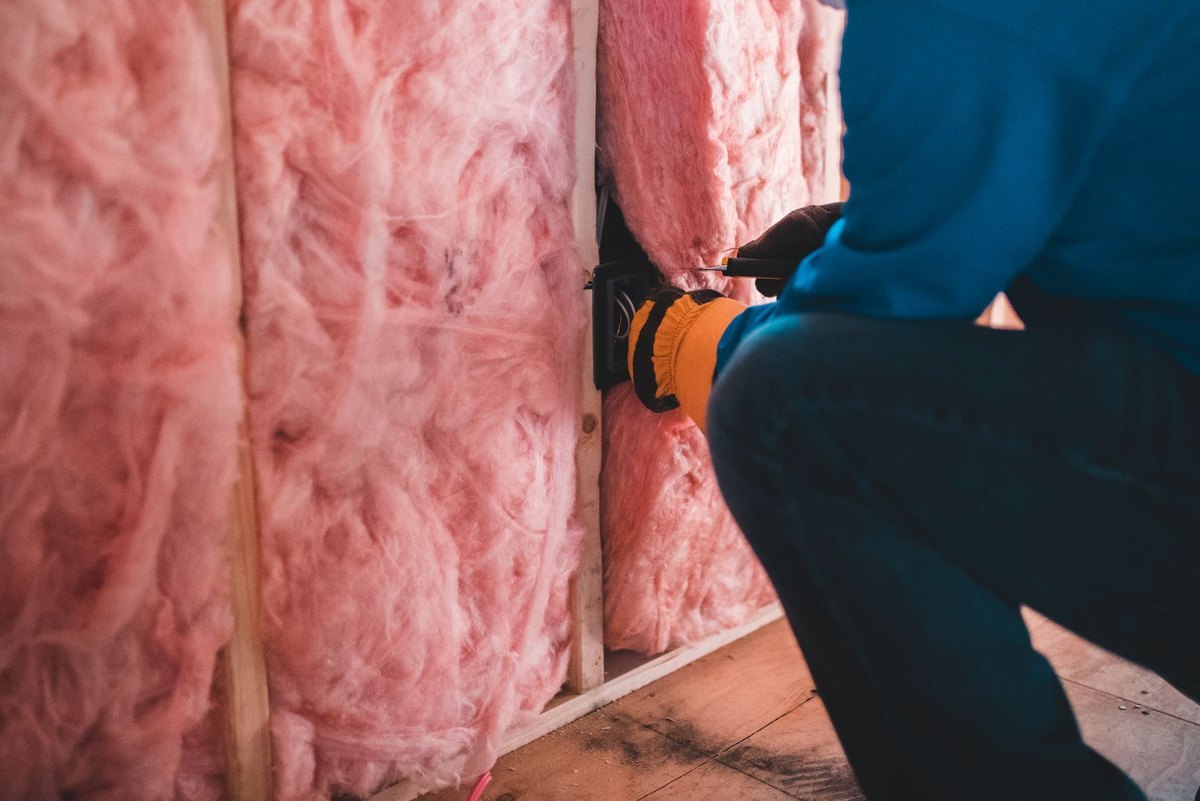
Wall insulation in Westbourne
Internal wall insulation for flats and solid brick villas, borescope surveys, and honest advice on cavity fill for the blocks, across Westbourne and BH4.
The site visit is free and so is the written itemised quote. Thomas Hannen prices every job himself.
Last updated
In Westbourne, where most homes are flats, wall insulation usually means lining the inside of your own rooms, because the outer walls and the cavity belong to the building. A borescope check shows whether a wall is solid brick or has a cavity, and that decides what is possible and who has to agree to it.
Wall insulation in Westbourne usually starts from a few familiar situations. A top floor or corner flat in a converted villa where the gable wall is cold to the touch and black mould comes back every winter. A flat above a shop on Poole Road or Seamoor Road with a solid front wall and heating bills to match. Or a managing agent asking whether a block's cavities were ever filled, and whether filling them now is sensible so close to the sea.
We come out, check the wall with a borescope and a moisture meter, look at the outside for the things that let water in, and put the survey, the system, the junctions and the making good on separate lines of a written quote. The visit is free. Lofts and floors are on the insulation in Westbourne page.
The work
Villa flats, shop flats and blocks: what goes in which wall
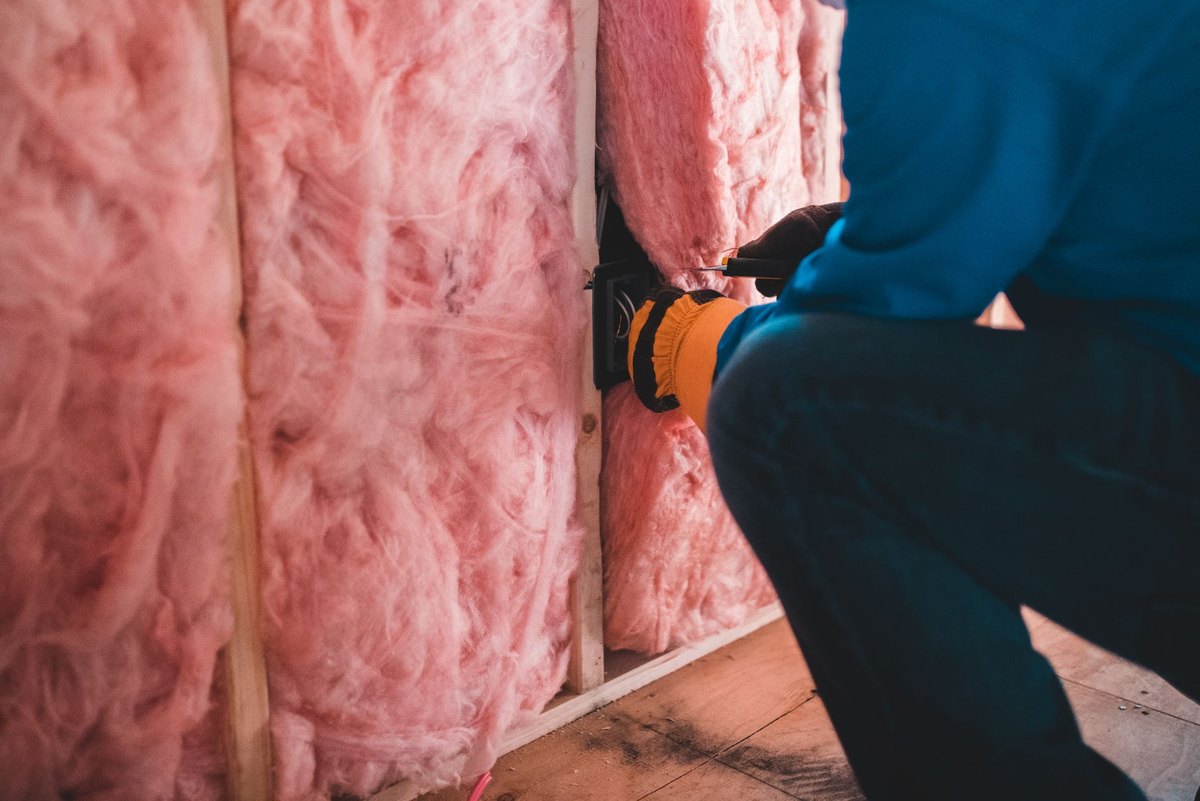
Finding out what the wall is. The late Victorian villas are mostly solid brick, often nine inch, though some later houses have an early narrow cavity, and from the street you cannot tell which. The post-war blocks have cavities, and many built from the 1980s onwards had insulation built into them.
One small hole drilled in a mortar joint and a look through a borescope settles it: whether there is a gap, how wide, whether it is clear and dry, and what is in it already.
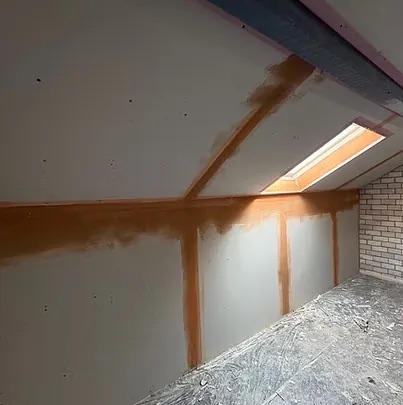
Internal wall insulation in a flat. This is the job most Westbourne leaseholders can actually do. The cold wall is lined from inside: insulated plasterboard bonded to the brick, or battens or a stud frame with PIR or mineral wool between, boarded and skimmed. Celotex and Kingspan type boards give the most for the thickness, which matters in a converted room with cornices and a bay, and an aerogel board suits a wall that cannot lose much depth. The heat goes at the edges, so the window reveals, the floor junction, the ceiling line and the joist ends are wrapped too, and that is where most of the labour sits. A single room is usually two or three days, with plastering and making good after.
Breathable linings on old brick. A solid brick Westbourne villa wall has taken rain in and let it out again for well over a century. Close it with a foil faced board and a sealed membrane and the moisture has nowhere to go but the new plaster and the timber in the wall. On those walls we lean towards wood fibre or a mineral board set in a lime based adhesive, which gives a little less insulation for the thickness and keeps the wall drying, in line with BS 5250 on managing moisture in buildings.
Cavity fill on the blocks. Where a Westbourne block has a clear, dry cavity, cavity wall insulation is blown in from outside through holes drilled in a pattern across the mortar joints, usually bonded bead on a wall that takes the weather, and the holes are then made good. It is specialist work and should be done by a registered installer who issues CIGA paperwork for the fill. What we bring is the survey before it and the repairs it depends on, because filling a cavity behind cracked render or open joints on a seaward face lets driven rain cross to the inside. If an old fill has slumped or got wet, it has to be extracted by specialists before anything else goes in.
External wall insulation. EWI, board with a render carrier and a thin coat finish, wraps a whole building and deals with the thermal bridge at every floor slab, which suits a plain rendered block. It is a whole-building decision taken by the freeholder, it thickens every reveal and moves every downpipe, and on the shopping streets it runs into the conservation area.
Ventilation. Insulating shifts the dew point and stops the draughts that were drying a Westbourne flat, so trickle vents, a working bathroom and kitchen extract and clear air bricks are part of the job, and an internal lining gets a taped vapour control layer so interstitial condensation stays out of it. Heat loss drops, the EPC improves, and the payback shows in how the room feels first.
When we would talk you out of it. If the mould is from drying washing indoors with no extract, a fan fixes it for far less. If the wall is wet from a broken gutter, fix that first.
How it runs
From your call to a written price
One person to ring from the first visit to the last. The quote is itemised, not a figure on the back of a card: the survey and any borescope check, the system and its thickness, making good around windows and doors, ventilation works, and disposal on separate lines, so you can compare it properly against anyone else's.
Nothing is left open or unusable overnight. The site is swept at the end of each day rather than the end of the job, and what comes out leaves with us. If something turns up once we start that nobody could have seen, you get a photograph and a price before we carry on.
Lining the inside of a wall needs no planning permission, as the Planning Portal guidance on insulation says, though your lease may need the freeholder's consent for alterations. Cladding the outside is different, and flats have no permitted development rights for it anywhere. Most of the shopping streets are in the Westbourne Conservation Area and the council keeps the list. Either way the work is building control work: under regulation 23 a renovated wall must meet Approved Document L.
Cost
What decides the price of a wall insulation job
No rate per square metre, because the wall area is the easy part; what happens at every window, door and floor junction is not.
Getting to it. A second floor flat in a converted villa with no lift, a flat above a shop on the Poole Road pavement, and a purpose-built block with a car park round it are three different set ups, and on a pavement frontage a scaffold needs a council licence under section 169 of the Highways Act. Cavity fill is drilled from outside and a bungalow comes off a tower where a three storey gable wants a scaffold. Internal lining is worked room by room from inside, so it is your rooms rather than a platform that gets disrupted. The work at height rules still set the platform.
Which wall you actually have. A cavity that is clear and dry can be filled in a day. A solid wall cannot be filled at all, and has to be lined inside or insulated outside, which is a different job at a different price. A borescope through one drilled hole settles it, and no honest quote is written before that.
The junctions, not the field of the wall. Reveals at windows and doors, the floor junction, the eaves and any party wall are where heat escapes and where condensation shows up if the detailing is wrong. That work is slow, it is most of the labour, and it is the first thing a cheap quote leaves out.
Comparing quotes? Ask whether the wall has actually been checked with a borescope or just assumed, what system and what thickness is specified, how the reveals and floor junction are being detailed, whether ventilation is being addressed, and who makes good the plaster and decoration afterwards.
If damp has appeared
Damp or mould after a wall was insulated
Ring rather than use the form. Damp patches or black mould appearing on an outside wall after cavity fill or internal lining usually means water is tracking across the cavity, or warm air is reaching a cold surface at a junction.
We look before we take anything out, because the fix depends on which of those it is. In a converted villa or a block we check the gutters, parapets and render on the outside above the patch as well, and if they are the cause, we tell the managing agent with photographs. Scheduled work runs Monday to Friday, 8am to 6pm. For anything urgent, ring rather than use the form, and if we cannot pick up we ring you back as soon as we can.
Worth knowing
In a flat, the inside face is yours and the wall is not
Around nine in ten homes in Westbourne are flats, which makes wall insulation here a question of ownership before it is a question of materials. In most leases the structure, meaning the outer walls, the cavity and the render, stays with the freeholder, while the plaster on the inside of your rooms is yours.
So a cavity fill or external insulation is a whole-building decision taken by the freeholder, the managing agent or the residents' company, and if the cost to any one flat passes the threshold in section 20 of the Landlord and Tenant Act, the leaseholders are consulted before it goes ahead.
Internal wall insulation is the route you can usually take on your own, but check the lease first. Many require the freeholder's written consent for alterations, and lining a wall counts. Ask for it in writing before the quote is accepted, and tell the agent what is proposed: the board, the thickness and any new vents. We put that in a short written note they can approve. If you are on the top floor or at the end of a block, the gable is usually the coldest wall, and lining that one room can make more difference than anything else in the flat.
Who you are dealing with
A local firm you can check
We cover Westbourne and the rest of BH4, from County Gates along Poole Road and Seamoor Road towards Alum Chine, with Branksome and Canford Cliffs next door. BCP Council handles planning and building control, and our Boscombe base is under three miles away.
You are dealing with Bournemouth Roofing & Building, the trading name of Bournemouth Roofing & Building Ltd, registered in England and Wales, company number 15471719, which you can look up in a minute. Thomas Hannen's business, and he is the one who comes out to price the job, not a salesman. A verified customer's 10 out of 10 on Checkatrade. The visit and the written quote are both free. Before you book a visit in Westbourne, you can read our customers' Google reviews, word for word, on our reviews page.
Planning at a glance
Do you need planning permission in Westbourne?
Most repairs in Westbourne need no application at all. What decides whether a change to the outside of your house does is who the council is, whether a conservation area or a listing applies, and whether the place sits in a protected landscape.
| Question | In Westbourne |
|---|---|
| Who decides | BCP Council is the planning authority for Westbourne. BCP Council's heritage pages set out what it controls. |
| Conservation area | Yes: Westbourne Conservation Area. Check whether your street is inside the boundary before changing anything visible. |
| Listed buildings | Yes, there are listed buildings in and around Westbourne. If yours is one, work can need listed building consent. |
| Protected landscape | No National Park or National Landscape covers Westbourne. |
Questions
Questions about wall insulation in Westbourne
I own a leasehold flat. Can I insulate my walls?
Usually from the inside, yes, with the freeholder's written consent if your lease asks for it, which many do. The outer wall, the cavity and the render belong to the building, so cavity fill or external insulation has to go through the freeholder or agent.
Do you fill cavities?
Cavity fill should be done by a registered installer who gives you CIGA paperwork for it. We survey the wall first, tell you straight whether it is suitable, and put right the render, pointing or gutters it depends on.
Is cavity fill safe so close to the sea?
It can be, on a sheltered wall in good repair. On an elevation that takes driven rain, with cracked render or open joints, water can cross on the fill. The borescope and a look at the outside decide it.
How much space will internal insulation take?
Anything from very little with an aerogel board to a good deal more with a battened build up. We set it against the room, and cornices, skirtings and sockets are refitted.
How long does it take to line one room?
Usually two or three days including plastering, and the room needs a few more to dry before it is decorated. Furniture is moved and the floor sheeted.
Nearby, and next door
Wall insulation near Westbourne
Nearby places we also cover for wall insulation, with straight-line distances from Westbourne, and the other trades we offer in Westbourne itself.
Wall insulation nearby
Our other trades in Westbourne
Wall insulation guides
Damp at the bottom of a wall: what it is PIR board vs mineral wool: which insulation? Hollow-sounding wall: blown plaster or dot and dabEverything we do in Westbourne Wall insulation, all areas Every area we cover
Free quote
Find out what your Westbourne walls can take
A free visit, a borescope check, and a written quote you can pass to your managing agent, with every item on its own line.