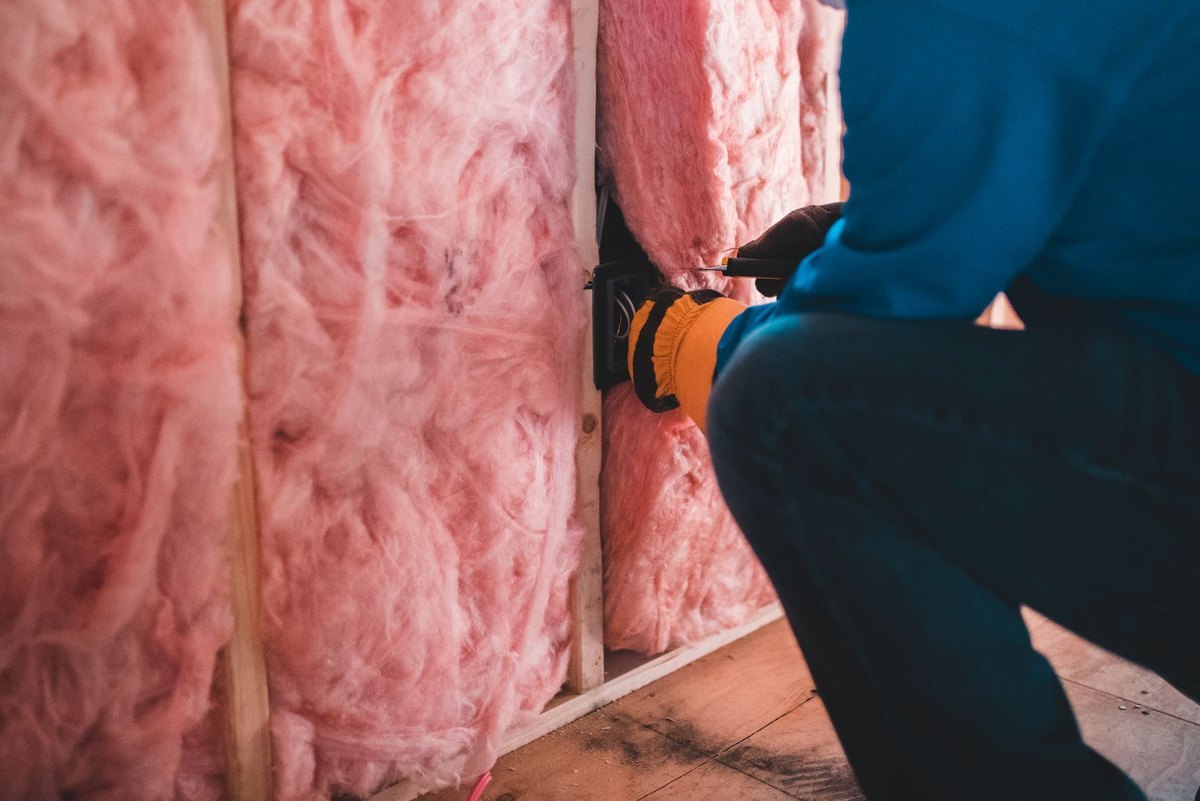
Wall insulation in Moordown
Finding out whether a Moordown wall is solid or cavity, then insulating it the right way.
The site visit is free and so is the written itemised quote. Thomas Hannen prices every job himself.
Last updated
Wall insulation in Moordown starts with finding out what the wall is. The houses here were mostly built in the 1920s and 1930s, when builders were moving from solid nine inch brick to cavity walls, so two houses on the same road can need different answers. We check with a borescope, then advise internal wall insulation, external wall insulation or a cavity fill by a registered installer. For lofts, see insulation in Moordown.
Cold walls in Moordown usually show up in a front bedroom, behind a wardrobe or through a leaflet on the mat. A front bedroom that never warms up, with the wall cold to the touch. Black mould behind the wardrobe on an outside wall every winter. Or a leaflet through the door offering free cavity wall insulation, and no idea whether the house has a cavity at all.
Thomas drills one small hole in a mortar joint and puts a borescope through it, takes a moisture reading on the plaster inside, and notes which side of the house takes the weather. On a painted pebbledash front he taps the dash too. Then you get a free written itemised quote.
The work
Solid brick, early cavities and the rooms that stay cold
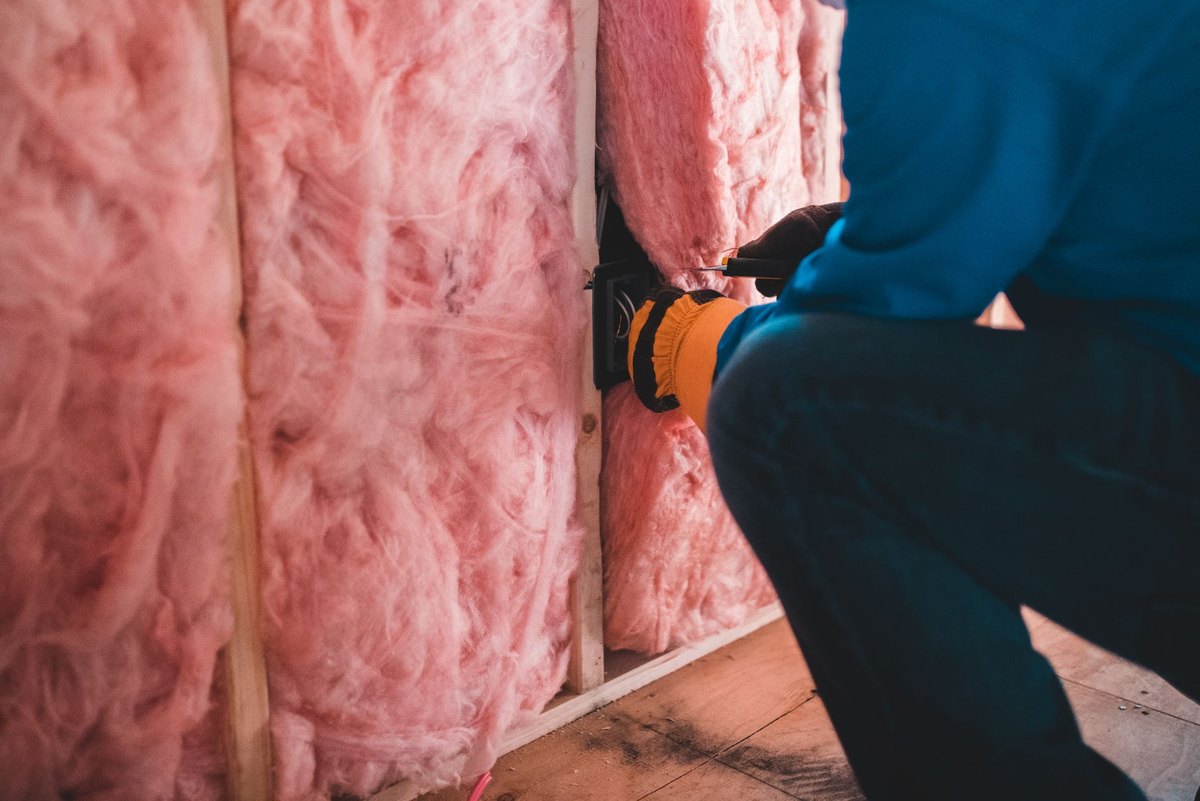
Finding out what you have. From the pavement, a solid wall and a cavity wall can look the same, especially under pebbledash. The borescope settles it: is there a gap, how wide, is it clean, is it dry, and has it already been filled. On a brick face, a pattern with the short ends of bricks showing every few courses usually means solid wall; all long faces usually means cavity.
Internal wall insulation. On a solid Moordown wall this is usually the answer. We line the coldest rooms one at a time with insulated plasterboard, PIR board such as Celotex or Kingspan bonded to board, or a breathable build-up of wood fibre or mineral wool between battens or a stud, then skim. Where a window reveal is too narrow for thick board, a thin aerogel board keeps the cold bridge away. A room typically takes a few days including the plaster.
The junctions. Reveals, the floor junction, the threshold and joist ends built into a Moordown wall are where cold bridges form if they are skipped. Condensation settles in that cold strip and black mould follows. We treat each one as part of the job.
The thirties houses with an early cavity. By the thirties most Moordown houses were built with a cavity, but a narrow one, tied across with iron ties that rust. If the borescope shows that gap clear, dry and wide enough, a cavity fill of bonded bead or mineral wool is usually worth doing, once the ties have been looked at. A separate cavity wall installer does the fill itself, and you keep their paperwork with the deeds. We say whether your wall suits it and handle the inside: ventilation and making good.
Cladding a painted pebbledash front. A lot of the original dash along Coronation Avenue and Queen Mary Avenue has been painted over more than once, and paint that forms a skin traps water behind it. External wall insulation, board with a render carrier and a thin coat finish, deals with cold bridges at floors and corners in one go. But it means taking that dash off or fixing through it, so we tap the whole wall first. It changes the look, needs a scaffold, and is priced with care.
Air, in a house that used to breathe. A twenties or thirties house dried itself through open fires and draughty sash or casement windows. Lining the walls moves the dew point inward and stops much of that air, so trickle vents, a kitchen and bathroom extract fan and any air brick blocked by a later path all get checked. Skip that and interstitial condensation forms behind the new board. Heat loss falls, and the EPC moves with it, which matters to the many landlords letting houses in Moordown.
How it runs
From your call to a written price
One person to ring from the first visit to the last. The quote is itemised, not a figure on the back of a card: the survey and any borescope check, the system and its thickness, making good around windows and doors, ventilation works, and disposal on separate lines, so you can compare it properly against anyone else's.
Nothing is left open or unusable overnight. The site is swept at the end of each day rather than the end of the job, and what comes out leaves with us. If something turns up once we start that nobody could have seen, you get a photograph and a price before we carry on.
Lining a wall inside needs no planning, as the Planning Portal page on insulation says, but it is building control work under regulation 23 and must meet Part L, set out in Approved Document L. External insulation can need planning, as Planning Portal guidance on external walls explains. Moordown has no conservation area; the council keeps the list, and listed buildings need consent.
Cost
What decides the price of a wall insulation job
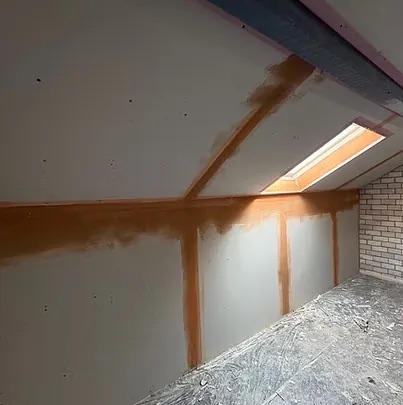
No rate per square metre, because the wall area is the easy part; what happens at every window, door and floor junction is not.
Getting to it. A bungalow with low walls all round, a two storey semi with pebbledash on the front, and a flat above a shop on Wimborne Road where the outside belongs to the freeholder each need their own access plan. The installer drills a cavity fill from outside, and a bungalow comes off a tower where a three storey gable wants a scaffold. Internal lining is worked room by room from inside, so it is your rooms rather than a platform that gets disrupted. The work at height rules still set the platform.
Which wall you actually have. A cavity that is clear and dry can be filled by an installer in a day. A solid wall cannot be filled at all, and has to be lined inside or insulated outside, which is a different job at a different price. A borescope through one drilled hole settles it, and no honest quote is written before that.
The junctions, not the field of the wall. Reveals at windows and doors, the floor junction, the eaves and any party wall are where heat escapes and where condensation shows up if the detailing is wrong. That work is slow, it is most of the labour, and it is the first thing a cheap quote leaves out.
Comparing quotes? Ask whether the wall has actually been checked with a borescope or just assumed, what system and what thickness is specified, how the reveals and floor junction are being detailed, whether ventilation is being addressed, and who makes good the plaster and decoration afterwards.
If damp has appeared
Damp or mould after a wall was insulated
Ring rather than use the form. Damp patches or black mould appearing on an outside wall after cavity fill or internal lining usually means water is tracking across the cavity, or warm air is reaching a cold surface at a junction.
We look before we take anything out, because the fix depends on which of those it is. If mould keeps coming back on an outside wall, pull furniture a hand's width off it and open the trickle vents until we have seen it. Scheduled work runs Monday to Friday, 8am to 6pm. For anything urgent, ring rather than use the form, and if we cannot pick up we ring you back as soon as we can.
Worth knowing
The 1920s house: cavity, or not?
Moordown filled up in the 1920s and 1930s, and that was the period the cavity wall took over from solid brick. Many houses of the early 1920s were still built solid, nine inches of brick with nothing to fill. Many from the 1930s have a cavity, but an early one: often narrow, sometimes with mortar droppings and rubble lying at the bottom, and tied with iron wall ties that can rust.
That is why a doorstep offer of cavity fill for a house here should make you ask questions first. A solid wall cannot be filled at all. A narrow cavity with debris bridging it can let damp across once it is filled, and rusting ties are a repair to deal with before, not after. So have it checked. We use a borescope at more than one point, tell you what the wall actually is, and if it is a cavity that suits a fill, point you to a registered installer. If it is solid, we price internal lining for the rooms that need it most.
Who you are dealing with
A local firm you can check
We are based in Boscombe, about two miles away, and insulate walls across BH9 and BH10, in Moordown, Winton, Redhill and Ensbury Park, with BCP Council as the building control authority.
You are dealing with Bournemouth Roofing & Building, the trading name of Bournemouth Roofing & Building Ltd, registered in England and Wales, company number 15471719, which you can look up in a minute. Thomas Hannen's business, and he is the one who comes out to price the job, not a salesman. A verified customer's 10 out of 10 on Checkatrade. The visit and the written quote are both free. Before you book a visit in Moordown, you can read our customers' Google reviews, word for word, on our reviews page.
Planning at a glance
Do you need planning permission in Moordown?
Most repairs in Moordown need no application at all. What decides whether a change to the outside of your house does is who the council is, whether a conservation area or a listing applies, and whether the place sits in a protected landscape.
| Question | In Moordown |
|---|---|
| Who decides | BCP Council is the planning authority for Moordown. BCP Council's heritage pages set out what it controls. |
| Conservation area | None covers Moordown, so a like-for-like repair is ordinary maintenance. |
| Listed buildings | Yes, there are listed buildings in and around Moordown. If yours is one, work can need listed building consent. |
| Protected landscape | No National Park or National Landscape covers Moordown. |
Questions
Questions about wall insulation in Moordown
How do I know if my Moordown house has a cavity?
Many houses in Moordown from the 1920s are solid, and many from the 1930s have a cavity, but the only sure way is to look. A borescope through one small hole in a mortar joint tells you, and we do that at the free visit.
Do you fill cavities?
No, we check the wall and tell you whether it suits a fill. The fill itself should be done by a registered cavity wall installer. We look after the inside of the house.
How much room does internal insulation take?
Usually a few centimetres off the wall, more for a thicker build-up. Skirtings, sockets and radiators come off and go back, and the reveals are lined too.
Will internal insulation cause damp?
Not if it is designed right, with the vapour control and ventilation matched to the wall. Most problems come from skipped junctions or a blocked air brick, which we deal with as part of the job.
Nearby, and next door
Wall insulation near Moordown
Nearby places we also cover for wall insulation, with straight-line distances from Moordown, and the other trades we offer in Moordown itself.
Wall insulation nearby
Our other trades in Moordown
Wall insulation guides
Damp at the bottom of a wall: what it is PIR board vs mineral wool: which insulation? Hollow-sounding wall: blown plaster or dot and dabEverything we do in Moordown Wall insulation, all areas Every area we cover
Free quote
Find out what your wall is made of
Thomas checks the wall with a borescope and prices the work in writing. The visit and the quote are free.