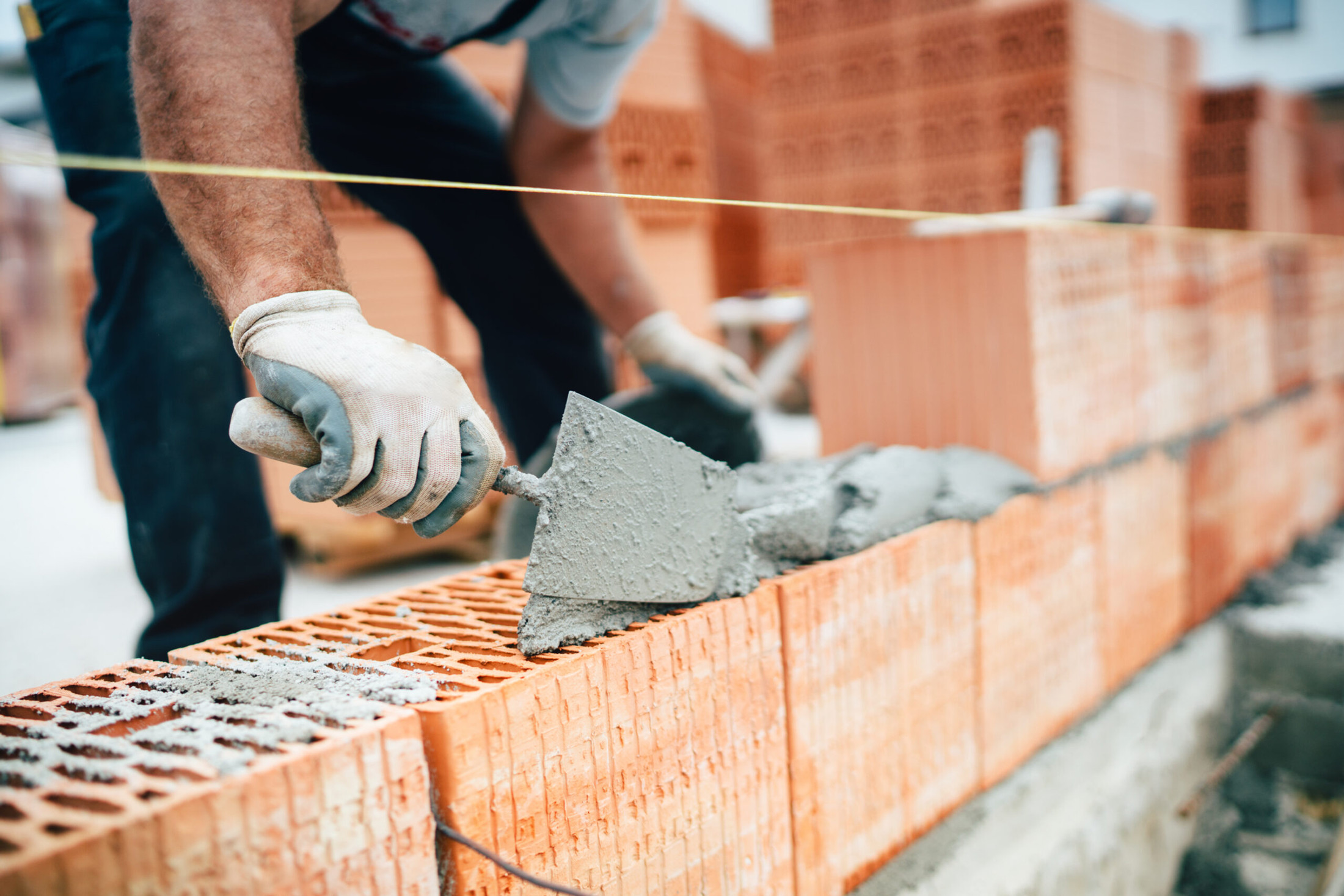
Repointing & Mortar Repairs Bournemouth
Worn joints raked back to sound mortar, refilled in a mix gauged to the wall it is going into, and blown brick faces cut out rather than filled. Brick, flint and stone.
Mortar work
Repointing, Mortar Repairs & Joint Renewal in Bournemouth
Repointing renews the mortar joint and nothing else, and the part that decides whether it lasts happens before any new mortar is mixed. Cutting the dead mortar out and raking back to sound material is the slow half of the job. Filling and striking the joint is the half you can see.
Bournemouth Roofing & Building repoint brick, flint and stone across Bournemouth, Poole and Christchurch, and on the older property inland through Wimborne, Wareham and Blandford. Thomas Hannen prices every job himself, and the site visit and the written itemised quote both cost you nothing.
Most walls do not need doing all the way round. One elevation takes the driven rain and wears out while three sheltered faces are barely touched. So we survey every face, scrape the joints to find where crumbling material stops and sound mortar starts, and tap for the hollow note. What comes back is elevation by elevation, with the faces we would leave for another few winters marked as such. Where the bricks themselves have gone and the wall wants rebuilding rather than pointing, that is bricklaying in Bournemouth and it is priced as such.
The mix matters more than most people are told. A joint is meant to be the sacrificial part of a wall, softer than the masonry around it and the first thing to wear out. Point a soft wall in something harder and the only way water gets back out is through the face of the brick, which the first sharp frost then takes off.
- Full and partial repointing on brick, flint and stone
- Hand raking on soft and period masonry, with a trial panel before we commit
- NHL lime, lime putty and gauged cement mixes matched to the wall
The site visit is free and so is the written itemised quote. Thomas Hannen prices every job himself.
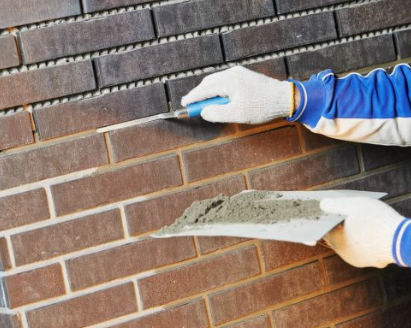
What the job covers
Raking Out, Matching & Repointing
From one weathered gable to a whole frontage, and from Victorian lime to a nineteen seventies cement gauge.
Full & Partial Repointing
A whole property, a single weather face, a parapet, a stack above the flashing, or the bottom four courses where splashback has washed the joints out. Each area is priced on its own line, so you can take the urgent face now and the rest later. Partial work only reads as a repair if the mortar matches in colour, texture and profile.
Raking Out & Joint Preparation
Dead mortar comes out to roughly twice the width of the joint, and to sound material rather than to a number. Perpends, the short vertical joints, are opened as carefully as the beds and are usually the first to fail. The joint is then brushed out and damped down, so the wall does not rob the new mix of its water.
Mortar Matching & Trial Panels
We take a sample of the old mortar off the wall and match the sand first, then the binder, the proportions and the joint finish. A trial panel goes up where you can see it and is left to dry before the rest is committed to, because wet mortar always reads several shades darker than it ends up.
Spalled Faces & Open Perpends
Where a face has blown off, the unit is cut out whole and turned if the back is sound, or replaced against a sample held up on the wall. Filling a hollow with mortar leaves a patch that never matches. Frost damage gathers under sills, beside downpipes and just above the damp proof course.
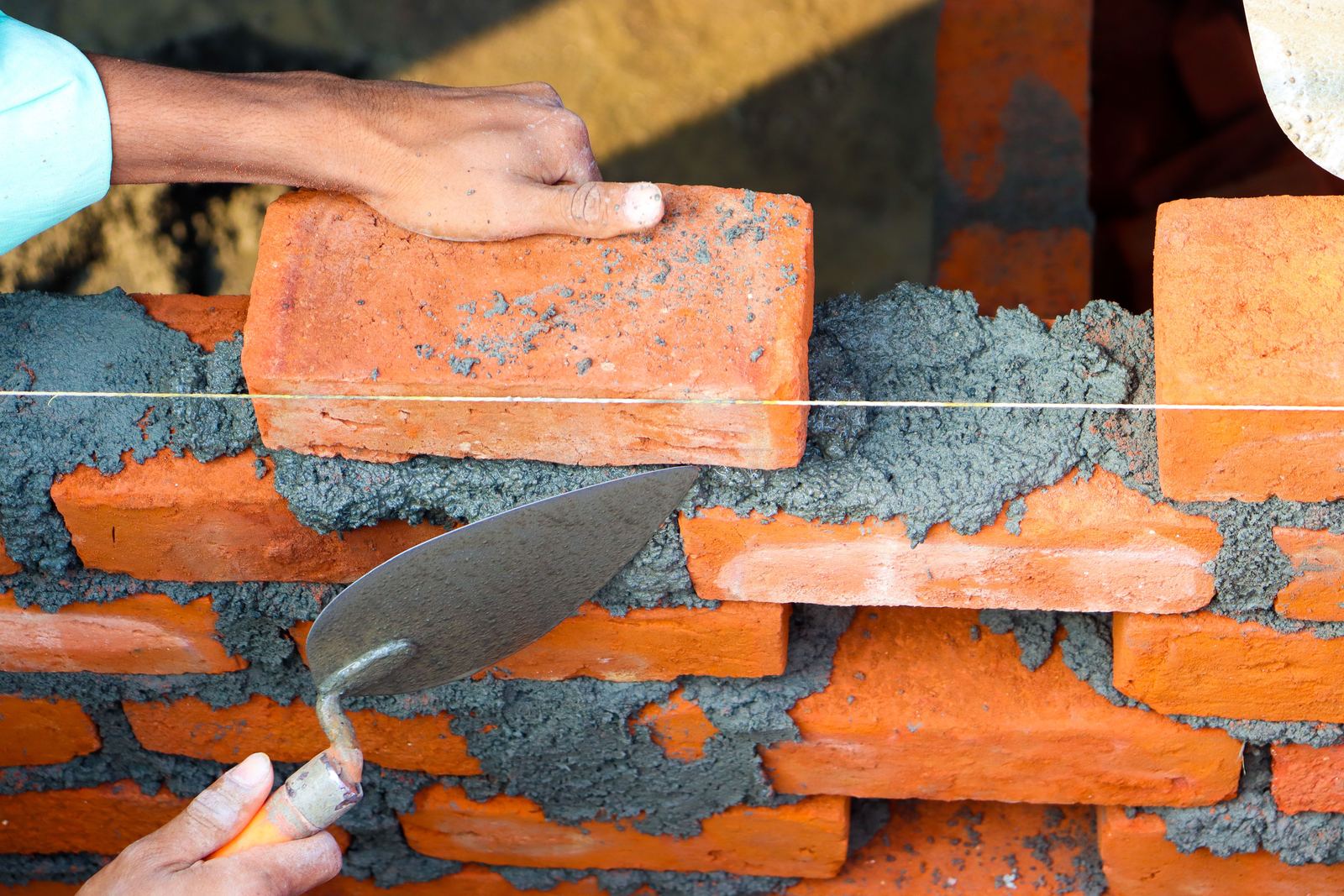
Reading the wall
How to Tell When Your Pointing Has Failed
You do not need a survey to get most of the way to an answer. You need a key and five minutes.
Run a key along a joint. Sound mortar resists it. Failed mortar comes away as powder or soft crumbs, and if the joint has weathered back behind the face of the brick, water now stands in a ledge rather than running off. A drift of sand at the foot of the elevation is the joints above emptying themselves. Then tap along a course: a dull, hollow note means the pointing has parted from the masonry behind it, which is common where a hard mortar has been smeared over an older, softer one.
Inside, watch the timing rather than the patch. Penetrating damp through open joints arrives a day or so after driven rain, sits on the weather face, and dries back between spells. Which face goes first is not random: it is nearly always the one taking the prevailing south westerly, and BS 8104 is the code of practice for assessing wind driven rain exposure. Approved Document C sets out the wider requirement for resistance to moisture.
Two things that look like pointing problems and are not. Cracking that steps diagonally through the joints is movement. Horizontal cracking every fifth or sixth course is corroding wall ties. We will not point over either.
The mix
NHL Lime, Lime Putty & Cement Gauges
Naming the mortar is the most useful thing a repointing quote can do, and it is the line most quotes leave out. There is no standard mortar, only the one that suits the wall in front of you. The sand is most of what your eye reads, so we take a sample to the merchant rather than ordering building sand and hoping.
Natural hydraulic lime
NHL is sold in three strengths and the number on the bag matters. The weakest suits soft handmade brick, the middle grade covers most solid walled housing in this part of Dorset, and the strongest is kept for chimneys, parapets and copings. One grade too strong is a common mistake: the wall looks fine for years before the brick faces start going instead of the joints. BS EN 459 is the standard the binder is bought against.
Lime putty
Putty lime is slaked and matured wet and softer again than NHL. It suits the oldest fabric, the sort of brick you can mark with a thumbnail, and rubble stone bedded close to earth. Historic Environment Scotland publish the guidance on preparing and using lime mortars that most of the trade works to.
Gauged cement mortars
On postwar cavity brickwork a cement based mortar is the correct answer, and the job is to match the gauge rather than to avoid cement. Matching the colour is the easy half; matching the strength decides whether the repair lasts. Historic Environment Scotland set out the case against hard cement on soft masonry, and that is a case about old solid walls. On a modern cavity skin the same mortar is what the wall was designed around.
The lime season
Lime cures slowly, by taking carbon dioxide back out of the air over weeks rather than hours. It has to stay damp while that happens, and a frost on a green joint destroys it. That gives lime repointing a season, roughly spring through to early autumn, and it means the access stands longer than on a cement job.
Joint profiles
Flush, Bucket Handle, Weather Struck & Recessed
The profile is how the face of the finished joint is shaped, and it does two jobs. It decides what water does when it runs down the wall, and it is most of what your eye reads. Put the wrong one on an old frontage and the wall reads as modern from across the road.
| Profile | Where it belongs | What it does with water | What goes wrong |
|---|---|---|---|
| Flush | Period and lime pointed walls, soft brick, rubble stone | Nothing for water to sit in | Unforgiving of a poor sand match |
| Bucket handle | Postwar cavity brickwork, tooled with a rounded iron | Compacts the surface, so it sheds well | Too heavy on a fine period joint |
| Weather struck | Exposed elevations, parapets and stacks | Pressed back at the top, proud at the foot, throwing water clear | The thin lower edge chips off if the mortar is worked dry |
| Recessed | Feature panels, where the brick is meant to lead | Holds a ledge of water, so sheltered faces only | Frost damage, and a shallow one is an unfinished joint |
| Ribbon or strap | Nowhere, on any wall we would work on | Stands proud, so water runs behind it and stays | It hides a joint that was never raked out |
Whichever profile a wall wants, the preparation decides how long it holds. A joint raked to depth and filled in two passes will outlast a beautifully struck skim over failing mortar, and you cannot tell the two apart on the day the platform comes down.
Not only brick
Flint, Rubble Stone & Banded Walls
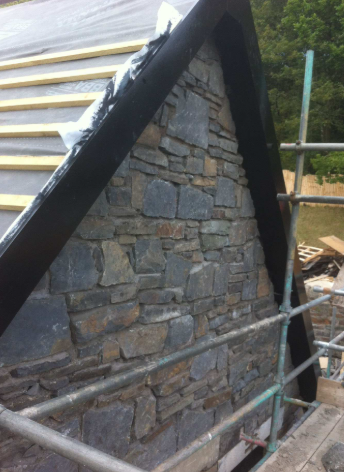
A great deal of Dorset and west Hampshire is not brick at all. Flint on the chalk, banded flint and brick north of Wimborne, Purbeck and Portland limestone from Wareham down through Swanage, and rubble stone garden walls in between.
These walls take longer. The joints are wide and irregular rather than a consistent ten millimetres, so the mortar does far more of the structural work than it does between bricks, and a failed joint on a flint wall is a stability question and not only a weather one. It has to be built up in more than one pass, because a deep wide joint filled in a single go slumps as it shrinks.
Flint has no absorbency to speak of, so all the movement of water happens through the mortar, which puts a lime mix beyond argument. Where the original work was galletted, with small flint chips pressed into the face of the wet joint, we put the galletting back.
Copings get particular attention, because that is where these walls fail. Once the bedding under a coping goes, the top of the wall fills with water and the frost opens it out from the inside.
Consent and appearance
Listed Buildings & Conservation Areas
Repointing like for like is a repair rather than development, so on an ordinary house there is no planning application to make. What changes is appearance, and on this job appearance is the whole product.
On a listed building the mortar mix and the joint profile are part of the protected fabric, so listed building consent has to be in place before a joint is opened. That is not a formality: section 7 of the Planning (Listed Buildings and Conservation Areas) Act 1990 makes unauthorised works an offence. Dorset Council publish their listed building guidance and BCP Council publish their conservation area guidance.
In a conservation area the controls are lighter, but a change of mortar colour or joint profile across a whole frontage is what the council is there to look at.
So where consent may be needed we put the mortar specification in writing: the binder and its grade, the sand, the proportions, the joint profile and how the old mortar comes out. That is a document you can hand to a conservation officer.
Access gets the same treatment. Anything above ground floor is a working platform rather than a ladder, priced on its own line under the HSE rules on work at height, and a scaffold is handed over in line with the HSE guidance on scaffolding.
What it costs
How a Repointing Quote Is Put Together
Repointing is priced on how much dead mortar has to come out, how it has to come out, and how long the access has to stand. The area of the wall matters least. Two elevations of the same size can be a fortnight apart.
We do not publish a rate per square metre, because the figure would be meaningless. These are the things that move it, and each appears as its own line on the quote.
What the survey is measuring
- How deep the decay runs. Joints come out to sound material, not to a number, and that depth is the biggest variable on the quote. Fine joints on gauged brickwork also take longer than wide joints on common brick.
- How the mortar has to come out. Hand raking is slow, and on soft brick, flint or stone it is the only safe method.
- Which binder, and the window it needs. Lime is slower to work, slower to cure and cannot be caught by frost, so it costs more in labour and constrains when the job can run.
- How hard the match is. An unusual local sand, or a wall pointed twice in different mixes, means more trial panels. Faces that have already blown are cut out and replaced as separate, itemised work.
- Access, and how long it stands. A garden wall, an elevation off a tower and a stack above the roof line are three different jobs before a joint is opened. Duration counts as much as height.
- How much of the wall is included. One weather beaten elevation is a different proposition from all four.
What we will ask you before we come out
Roughly when the property was built, and whether the walls are solid or cavity. Whether the mortar comes away when you scratch a joint with a key. Which elevations you are asking about and how high they go. Whether it is listed or in a conservation area. Two photographs will tell us the rest.
Reading two repointing quotes side by side
A finished repoint looks the same on the day the platform comes down whether the joints were raked to depth or skimmed over. That is why two prices for the same wall can be so far apart, and why you compare specifications rather than totals. Does the quote say how deep the joints are raked, name the binder and the proportions, and price the access in?
Questions
Repointing Questions We Get Asked Most
What is the difference between pointing and repointing?
Pointing is the mortar in the face of the joint on a wall that is being built. Repointing is a repair: the old worn mortar is cut and raked out and replaced. The brick, flint or stone stays where it is and nothing is taken down, which is why a repoint can be done one elevation at a time.
Will repointing on its own stop damp showing on the inside wall?
Often, where the damp is arriving through open joints on an exposed face. The tell is timing: it appears a day or so after driving rain rather than during it, and it sits on the weather side rather than at skirting level. Damp in a band along the bottom of a wall is a different problem, and we will say so if the joints are not the cause.
Do you repoint flint and stone walls as well as brick?
Yes. Flint, rubble limestone, banded flint and brick, and the Purbeck and Portland stone you see through Wareham and Swanage are all regular work. They are slower than brick because the joints are wide and have to be built up in more than one pass, and the mix is almost always a lime one.
Is there a time of year when lime repointing cannot be done?
There is a season for it. Lime cures slowly, it needs to stay damp while it does that, and frost on a green joint destroys it, so lime work runs roughly from spring to early autumn. Ring us in November about a lime elevation and we will survey it, price it and book it for spring.
Do you use an angle grinder to rake the joints out?
Not on soft or period masonry. A disc runs straight where the joint does not, so it widens the joint permanently and cuts the arris off the brick. Those come out by hand with a quirk and a plugging chisel. On modern brickwork with hard cement joints a raking attachment is reasonable.
How much mess and disruption does repointing make?
It is outside work, so nobody is in your house and you do not need to be home once the first visit is done. What it produces is dust and old mortar. We sheet the ground, brush down at the end of each day rather than the end of the job, and everything that comes out leaves with us.
Areas covered
Repointing Across Bournemouth, Poole & Dorset
Mortar repairs and joint renewal in these towns, and everywhere between them:
Brickwork that needs building rather than pointing, garden walls, piers, lintels and structural repairs are on our bricklaying page, and a wall that needs rendering afterwards is on our plastering and rendering page.
Repointing by location
Repointing in every town and village we cover
Each page is written around the masonry that is actually standing in that settlement: what the walls are built of, what the mortar in them is likely to be, and what the planning position does to the job. 84 pages covering 115 settlements, grouped here by the part of the coverage they sit in.
Bournemouth, Poole and Christchurch
Wimborne, Ferndown and the east Dorset heaths
- Wimborne Minster
- Corfe Mullen
- Ferndown
- West Moors
- Verwood
- Three Legged Cross
- Furzehill
- Holt (also Chalbury Common, Gaunt's Common and more)
- Woodlands
- Ashley Heath
- Stone (also Sturminster Marshall)
- Alderholt
- Cranborne (also Whitmore)
Purbeck, Wareham and the Frome valley
- Swanage
- Corfe Castle (also Studland)
- Langton Matravers (also Worth Matravers, Harman's Cross)
- Wareham
- Ridge (also Stoborough)
- Sandford
- Holton Heath
- Lytchett Matravers
- Wool
- West Lulworth (also Burngate)
- Winfrith Newburgh (also Briantspuddle)
- Owermoigne
- Crossways
- Bere Regis
Blandford, the Winterbornes and Cranborne Chase
- Blandford Forum
- Bryanston
- Stourpaine (also Durweston, Ash)
- Spetisbury (also Charlton Marshall)
- Tarrant Monkton (also Pimperne)
- Iwerne Minster (also Shroton)
- Winterborne Kingston
- Winterborne Stickland
- Milborne St Andrew (also Winterborne Whitechurch)
- Tolpuddle
- Sixpenny Handley
- Ashmore
Ringwood, Fordingbridge and the Avon valley
- Ringwood
- Hangersley (also Hightown)
- Burley (also Burley Street)
- Bransgore
- Sopley
- Thorney Hill
- Fordingbridge
- Sandleheath
- Rockbourne (also Martin)
- Breamore (also Woodgreen)
- Hyde (also Frogham, North Gorley and more)
- Downton
- Redlynch
- Lover
The New Forest and the Solent shore
- New Milton
- Barton on Sea
- Bashley
- Ashley
- Milford on Sea
- Everton (also Hordle)
- Lymington
- Walhampton and Portmore (also Pilley)
- Boldre (also Sandy Down, Tiptoe and more)
- East Boldre
- Brockenhurst
- Lyndhurst
- Minstead
- Cadnam and Bartley
West Wight, across the Solent
- Yarmouth (also Bouldnor)
- Freshwater and Totland
- Norton
Free quote
Get a Repointing Quote for Your Wall or Chimney
Send a photograph of the elevation and a close one of the joints, and we will come out, scrape a few of them and put a specification and a written price in front of you.