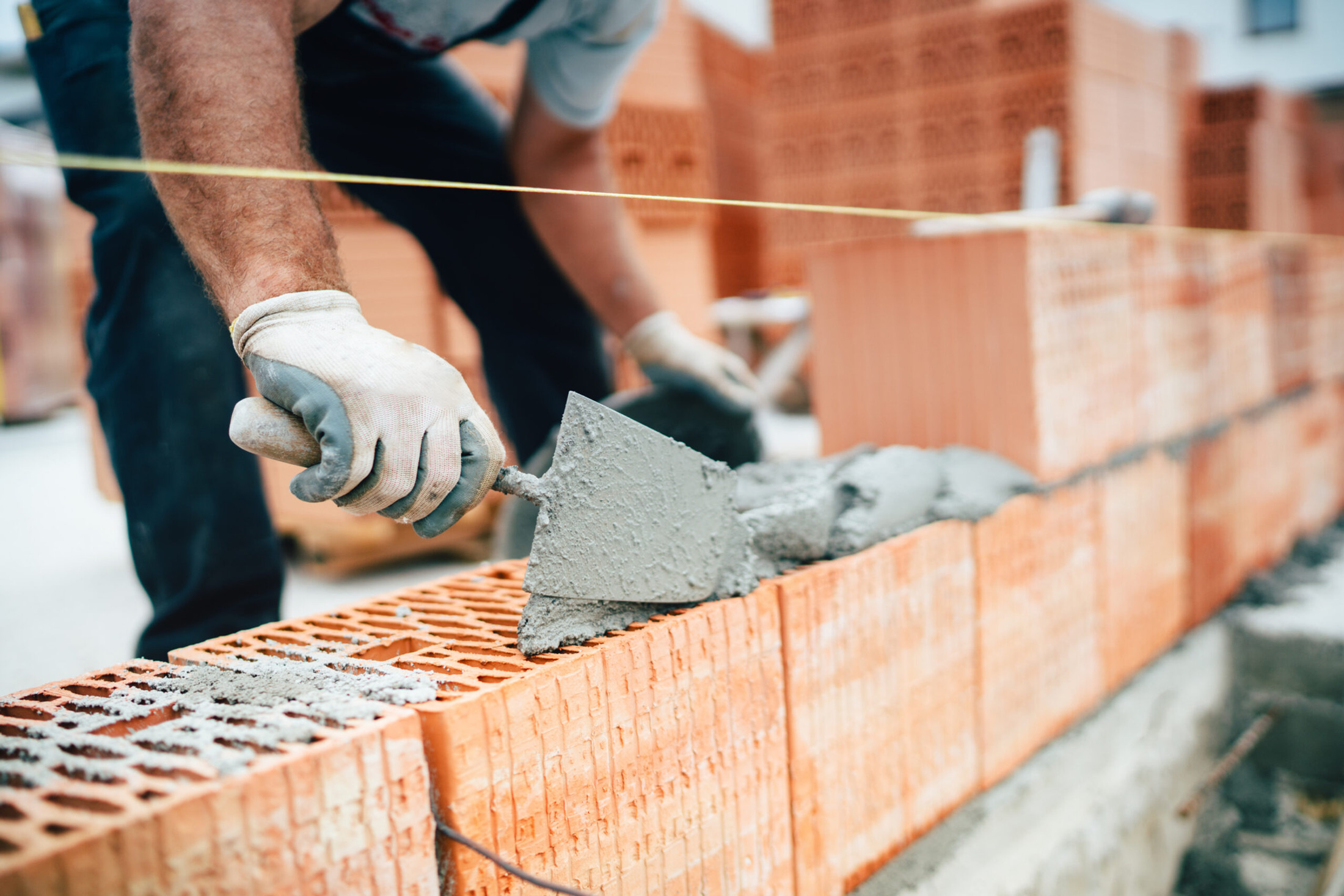
Repointing in Burley, inside the conservation area
Mortar is appearance here as well as repair, so we agree the mix and the joint profile with you, and with the National Park, before anything is opened up.
The site visit is free and so is the written itemised quote. Thomas Hannen prices every job himself.
Last updated
Your joints are due when they have weathered back behind the brick, crumble under a key, or let damp through after driving rain. Burley sits inside the New Forest National Park and the Burley Conservation Area, so the job is raking out by hand and repointing in a mortar and joint profile that match the old wall, cleared with the National Park Authority first wherever the look would change. Cracked or spalled bricks are a bricklaying repair on their own line.
The problems are much the same from one Burley cottage to the next. A cottage frontage where the joints have weathered back behind the face of the brick. A chimney shedding grit into the gutter. Brick faces flaking in thin plates under a sill. And somebody told they need permission who cannot work out who to ask.
None of it means a wall coming down. It is all mortar, and on the older Burley properties the mortar is what keeps the wall dry. The site visit surveys every elevation and not only the one you noticed, scrapes joints to see how deep the decay runs, taps courses for the hollow note that means the pointing has parted from the brick, takes a sample of sound original mortar, and photographs the lot. The written itemised quote comes back elevation by elevation and costs nothing.
The work
What goes wrong on Burley brickwork
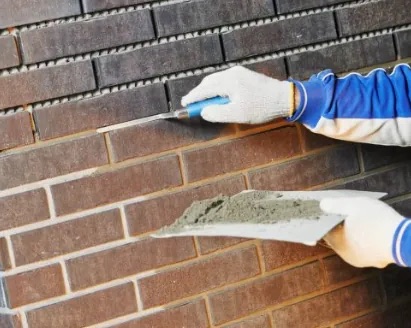
Old solid wall, pointed in lime. The older cottages in Burley are solid wall with no cavity, breathable by design: rain soaks into the outer face and evaporates back out through the joint. That works only while the mortar stays softer than the brick.
We rake those joints by hand to about twice the joint width, perpends included, damp down, and point back in an NHL lime or lime putty mix gauged to the original for sand, colour and texture. The angle grinder stays in the van: a disc cutter widens the joint and takes the arris off a soft brick.
Hard cement pointing on a soft wall. Plenty of period property in Burley was repointed at some stage in sand and cement, because hard sounds like it lasts. It traps water in the wall, so moisture leaves through the brick face and a frost takes the face off in flakes. The giveaway is a wall where the joints look untouched and the bricks are crumbling. Cutting that mortar back out by hand is slow and the only repair that fixes it.
Chimney stacks, flaunching and parapets. Burley sits high and open, and a stack takes weather on four sides with a cold flue up the middle. Its joints go loose and friable years before anything at ground level, and the penetrating damp shows as a patch on a bedroom ceiling rather than a wall. We repoint the stack, cut out the frost damaged bricks and renew the flaunching. That wants a scaffold, not a tower and is priced as its own line.
Later cavity brickwork. The newer properties around Burley are a single skin of fired brick in cement and sand, weather struck or bucket handle. Those erode back at the arris rather than washing out, and frost lifts the surface off. Matching means matching the sand and the gauge as well as the colour, because a lot of the earlier mixes carried lime.
Spalled faces, cut out and replaced. Where a face has blown we cut the brick out whole and turn or replace it against a sample held on the wall, rather than filling the hollow with mortar, which never matches. On a conservation area frontage that sourcing matters, so a trial panel goes up for you to judge in daylight.
Garden and boundary wall joints. A free standing Burley garden wall gets weather on both faces and on the top, and once the coping bed has opened, water gets in, freezes and pushes the wall apart. Repointing it early is small work. What we will not do is point over movement: cracking that steps through the courses cannot be fixed with a mortar joint.
How it runs
Repointing in lime, one elevation at a time
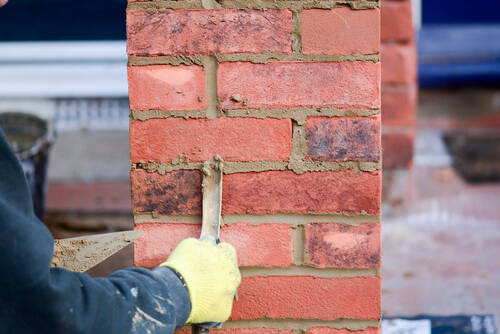
Thomas checks the joints himself, picks some mortar out to see how deep the decay goes, and looks at the brick before he prices it. The quote lists access, raking out, the mix, each elevation's area, replacement bricks and disposal separately.
Soft brick is raked by hand; a disc cutter widens the joint and chips the arris. On older walls the new mortar is lime, matched to the old in colour and texture, and kept damp and shaded while it goes off. A wall under trees dries slowly, so we aim for a drier spell. Scaffold goes up only for a gable or a chimney. We never leave raked joints open overnight in wet weather, dust is swept up daily and spoil leaves with us. A brick face that comes away with the joint is photographed and priced before a replacement goes in.
Like for like repointing is repair, so there is no planning application and building control is not involved. What is controlled is appearance, and the Park Authority publishes its own heritage and conservation guidance. On a listed building the mortar is protected fabric, and listed building consent comes before any joint is opened. We check the address before quoting.
Cost
Hand raking and lime: why repointing takes the time it does
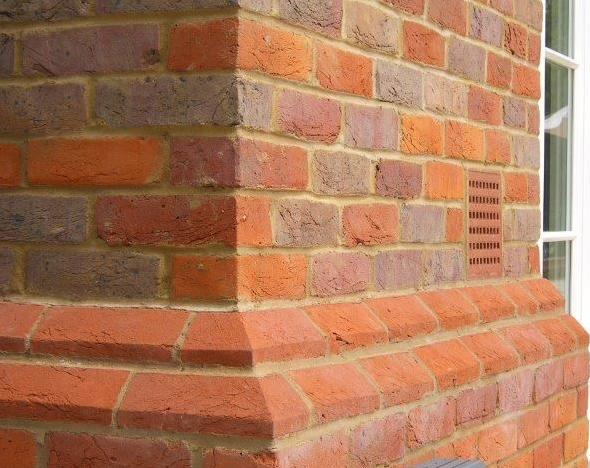
A repointing price does not come from the area of wall. It comes from the joints. The set-up. A cottage with a tall stack, a gable facing open ground and a low garden wall each need something different: a scaffold for the stack or gable, a tower or nothing for the low wall. How long the platform stands matters as much as its size, and the work at height rules make it a priced line.
How deep, and how damaged. On the south west face, where the rain drives, joints are usually washed back furthest. Any brick with a spalled face is cut out and matched one at a time.
Lime. Cement pointing on a soft brick holds water against it, and the face pops off in a hard frost. On most pre-1919 walls lime is right. It is slower to lay and has to be protected while it cures.
Shade. A wall under trees stays damp, so the work may have to wait for suitable weather and needs covering for longer.
From another repointer, find out the rake depth, hand or disc, the mix and whether it was matched, and how many spalled bricks are allowed for.
If water is getting in
Driven rain coming through open joints
If damp is coming through a wall from outside, or round a chimney into the loft, the joints have usually washed out. Phone us instead of filling in the form. Repointing is scheduled Monday to Friday, 8am to 6pm; ring anyway, and if we cannot answer we will return the call as soon as possible.
We sheet the worst or point it temporarily if the weather is set wet, then Thomas prices the elevation when the wall is dry enough to show which joints are sound. In Burley it is most often the south west face or the stack, so say which side is wet.
Worth knowing
Who you actually ask, and what they are looking at
The first thing worth knowing is that the National Park Authority, not New Forest District Council, is the planning authority for Burley. People ring the district, get passed around, and conclude that nobody minds what happens to their wall. What the Authority looks at is appearance.
Repointing a wall exactly as it was, in the same mortar and struck to the same profile, is maintenance and needs nothing. Repointing it in a different colour, a different sand or a different profile changes how the building reads from the road, and inside a conservation area that is not automatically maintenance. On a listed property the mortar itself is protected fabric and consent comes before the work.
The practical steps are short. Check where your address sits using the National Park interactive property map before you agree a specification with anybody. Get the mortar mix and the joint profile written into the quote as their own lines. Ask for a trial panel. We do all three as a matter of course and will make the enquiry for you. If you turn out to be outside the boundary and unlisted, none of that changes: the wall still wants a mortar softer than the brick and a joint struck the way it was built.
Who you are dealing with
A repointer you can look up before you book
We repoint in Burley, Bransgore, Sopley, Ringwood and Hangersley, and across towards Bashley and Christchurch, broadly BH24 and BH23. It is 8.8 miles from Boscombe, where we are based, and planning in the village is the New Forest National Park Authority.
The company is Bournemouth Roofing & Building Ltd, registered in England and Wales, company number 15471719. Owner Thomas Hannen looks at the joints and prices every repointing job himself. A verified customer's 10 out of 10 can be read on Checkatrade. The site visit costs you nothing; nor does the written quote, set out line by line. Before you book a visit in Burley, you can read our customers' Google reviews, word for word, on our reviews page.
Planning at a glance
Do you need planning permission in Burley?
Most repairs in Burley need no application at all. What decides whether a change to the outside of your house does is who the council is, whether a conservation area or a listing applies, and whether the place sits in a protected landscape.
| Question | In Burley |
|---|---|
| Who decides | New Forest National Park Authority is the planning authority for Burley. New Forest National Park Authority's heritage pages set out what it controls. |
| Conservation area | Yes: Burley Conservation Area. Check whether your street is inside the boundary before changing anything visible. |
| Listed buildings | Yes, there are listed buildings in and around Burley. If yours is one, work can need listed building consent. |
| Protected landscape | Inside the New Forest National Park, where design is looked at more closely and permitted development rights are narrower. |
Questions
Questions about repointing in Burley
Does repointing a cottage in Burley need permission?
Not if it goes back the same. Like for like repointing is repair, and repair is not development, so there is nothing to apply for. It changes if the building is listed, where consent comes first, or if the work would alter the look of a visible elevation, which inside the conservation area is a different question.
Why is the National Park involved instead of the district council?
Because the National Park Authority holds the planning function inside the Park boundary, and Burley is inside it. The instinct is to ring the district council, and that wastes more time here than anything else. The Authority publishes a property map you can check an address against.
Our front was pointed in cement years ago. Does it have to come off?
It does not have to, but on a soft old wall it usually should. A hard joint stops the wall breathing, so water leaves through the brick face and frost takes the face with it. If the bricks are flaking, taking the cement out is the repair. If the wall is dry and the faces sound, we leave it.
How do we find out what the original joint profile was?
Look where the weather has not reached. Under a deep eaves, behind a downpipe or inside a porch there is usually a length of joint that has kept its original shape. That is what we match to, and what we photograph and put in the quote.
Is lime pointing worth the extra time it takes?
On a solid wall built in lime, yes, because it is the only mortar that lets the wall do what it was built to do. It is slower to work, slower to cure, and has to be protected from frost and drying sun. What you get is a joint that gives way gently in thirty years rather than a brick face that blows off in three.
Nearby, and next door
Repointing near Burley
Nearby places we also cover for repointing, with straight-line distances from Burley, and the other trades we offer in Burley itself.
Repointing nearby
Our other trades in Burley
Repointing guides
Lime or cement mortar: which do you need? Reading a repointing quote: rake out Listed building consent for repointing and re-renderingEverything we do in Ringwood Repointing, all areas Every area we cover
Free quote
Find out what your wall needs, and what needs asking
Thomas comes out, tests the joints on every elevation, takes a sample to match and puts the price in writing, itemised. The visit and the quote are free.