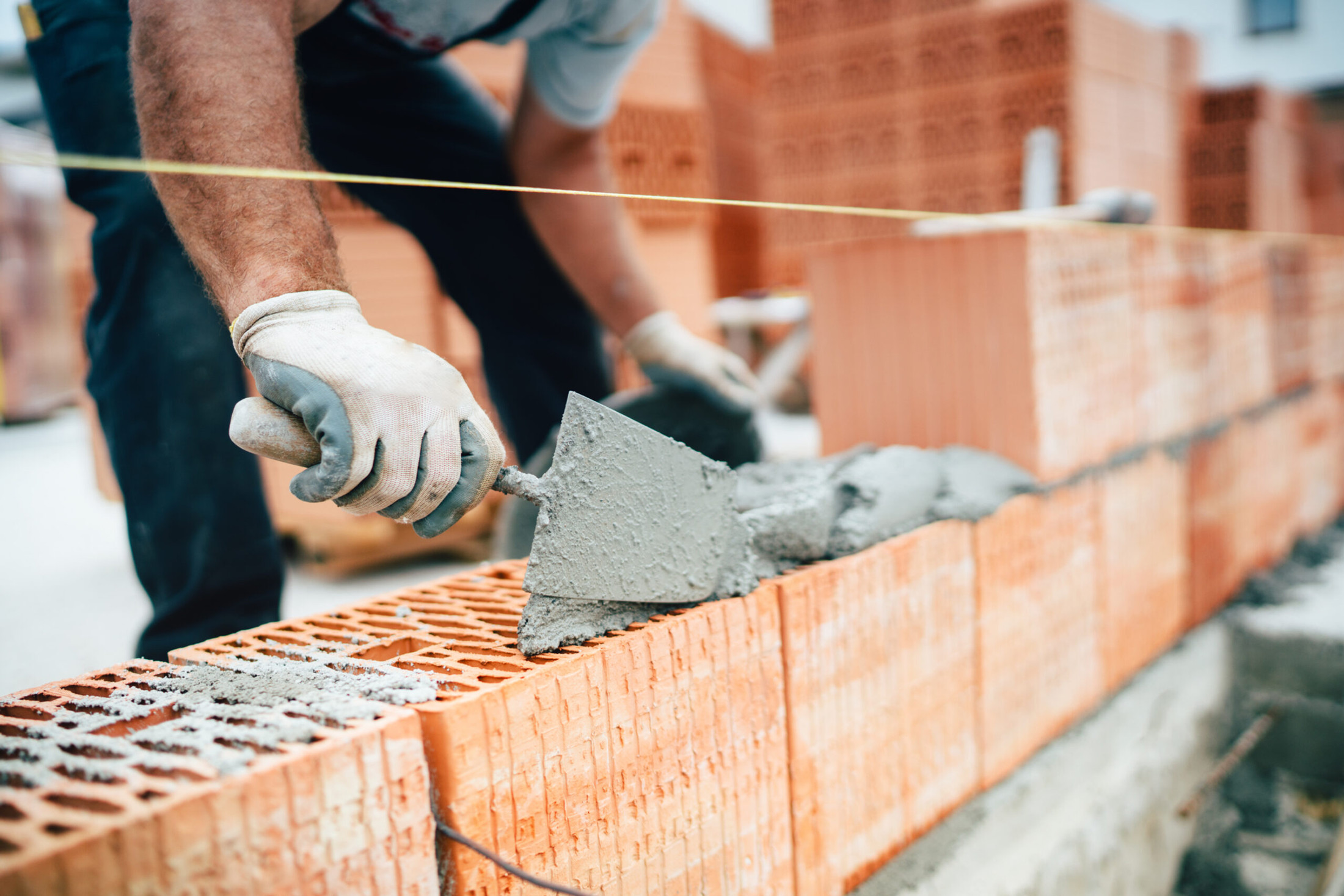
Repointing in Sopley village
Hand raking and lime pointing on the old Avon valley walls, and matched cement gauge work on the village housing behind them.
The site visit is free and so is the written itemised quote. Thomas Hannen prices every job himself.
Repointing in Sopley
Lime or cement is the whole question here
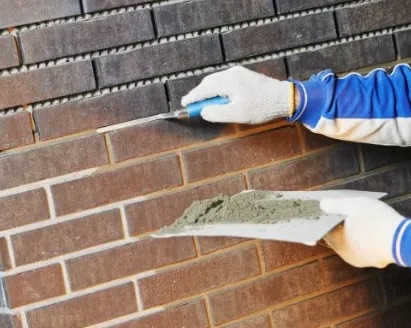
In Sopley the question is nearly always the same one, and on the older village walls the answer is lime. That is not taste. A cement joint on a soft handmade brick pushes the damp out through the brick face instead of the joint, and the frost takes the face off a bit at a time.
The village sits low in the Avon valley and the walls get properly wet. People ring about joints washed out along a road frontage, mortar gone green and friable in the courses nearest the ground, and penetrating damp on an inside face after a week of south westerly weather rather than after a shower.
A second set of calls comes from the post-war terraces and the houses built around the village since: a different wall wanting a different mix. Getting the two the wrong way round is the fault we are most often asked to put right.
So we look at close range, at every elevation, before quoting. The visit and the written itemised quote are free.
The work
Two kinds of wall in one village, and two mortars
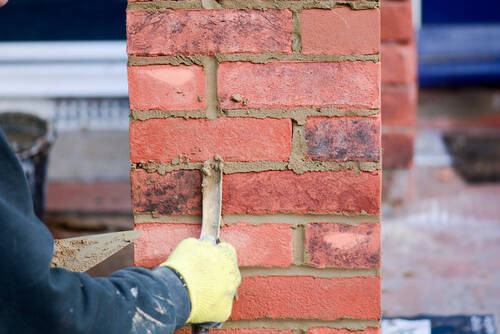
The old village fabric. Soft handmade fired brick laid in lime with a wide, irregular joint, solid wall throughout, breathable by design. Raked by hand only, to about twice the joint width. A disc cutter on a joint that wanders like this takes the arris off every second brick and leaves tramlines nobody can undo. Joints are brushed out and damped down, then filled with an NHL lime, or a lime putty mortar where the wall is old and soft enough to want one, gauged with a well graded sand. Lime cures slowly, so the work is covered, kept damp and protected, and a frost on green mortar undoes the day.
The joint profile on a village frontage. What is usually there is flush, or slightly recessed with the brick edge showing; weather struck and bucket handle joints are later work. On a road frontage we keep the profile the building carries, and leave a sample panel up for you and, where it matters, for the planning officer.
Brick faces that have already gone. Where a previous cement repoint has done its work, the faces spall and the arris crumbles away. Those bricks are cut out and replaced with a reclaimed match rather than filled with mortar, which is the shortcut that shows within a season.
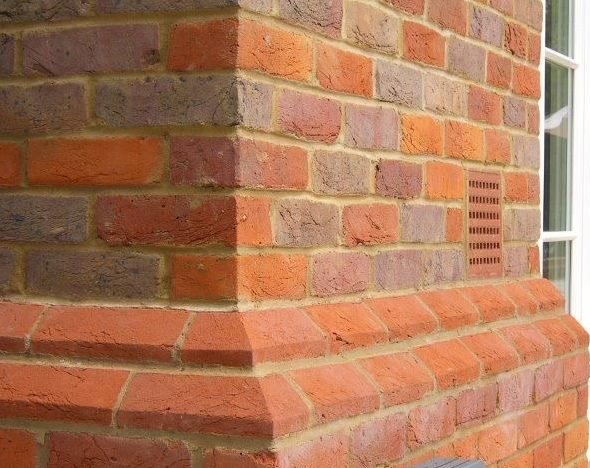
The post-war housing. Terraces are close to half the homes here and most of the village was built between the war and the early 1980s, cavity walls in a cement gauge. Those want matching rather than converting: a cement, lime and sand gauge of the same strength as what came out, usually on the exposed elevation only. Pointing one of them in lime is a job you pay for twice.
Chimneys, boundary walls and outbuildings. Stacks sit above the flashings and are the most weathered masonry on any building here, so an open joint puts water into the roof. Garden and churchyard walls take it from the top and both faces. Older properties come with brick outbuildings that nobody looks at until the mortar is loose. A stack wants a scaffold, a single storey cottage often comes off a tower, and access is priced on its own line.
How it runs
From your call to a written price
Same team from first visit to last, one person to ring, and no sub-contracting. The quote is itemised: access, raking out, the mortar mix, the area of each elevation, brick replacement and disposal on separate lines.
Nothing is left open overnight, the site is swept daily, and what comes out leaves with us. If something turns up that nobody could have seen, you get a photograph and a price before we carry on.
Repointing like for like needs no planning permission and no building control. Sopley is a conservation area in its own right and there are listed entries through the village, so on those the mortar and the joint finish are part of what is protected. Planning here sits with the New Forest authority, and its interactive property map is the quickest way to see what applies to an address. We check it before we quote.
Cost
What decides the price of a repointing job
No rate per square metre. The area tells you almost nothing until somebody has looked at the joints.
Getting to it. A cottage on the lane with no hard standing in front of it, a terrace with a shared boundary and a farm outbuilding you can drive right up to are three different set ups before a joint is touched. The work at height rules are why access is its own priced line.
The joints decide it, not the wall. Raking out by hand is slow, and on soft brick the only safe way: a disc widens the joint and takes the arris off. Depth, and whether faces have already spalled, sets the hours far more than area does.
Matching is the part that shows. Too strong a mix is the classic mistake: cement holds water against a soft brick and the face blows off in the first hard frost. Lime cures slower, and suits most pre-1919 walls here.
Comparing quotes? Ask how deep the joints are raked and by what, what the mix is, how many spalled bricks come out, and whether the scaffold is in the price. Two quotes for the same job are usually two different jobs.
If water is getting in
Open joints, and water coming through the wall
Ring rather than use the form. Washed out joints let driven rain straight through to the inside face, and on a chimney it finds the flashings too. We come and look, sheet or temporarily point the worst, then price the elevation once it has dried enough to show what is sound. In Sopley that is usually a road frontage taking the weather up the valley, or the low courses near the ground where the mortar has gone soft, green and friable. The phone is answered 24 hours for emergencies; scheduled work runs Monday to Friday, 8am to 6pm.
Before you agree a mix
Listed cottages, and what consent actually covers
Sopley has a conservation area of its own and an unusual number of listed entries for a village of its size, the Church of St Michael and All Angels and Sopley Mill among them, with listed cottages along the lanes. Planning sits with the New Forest authority rather than with Dorset or BCP, which catches people out on their first quote.
For mortar the line runs like this. A genuine like for like repair to a listed building, same mix, same sand, same joint profile, is repair. Changing the mortar, or changing how the joints are struck, alters the character of the building and wants listed building consent first. A conservation area is looser and deals with appearance from the street rather than with every joint. Either way the question gets answered before anything is mixed, not after.
In practice that means three things: a sample panel on the wall, the mix and the sand written into the quote by name, and time. Consent takes weeks rather than days, so if you want a listed frontage pointed in the spring, start the enquiry over the winter. We will make it for you.
One more village detail worth planning around. The lanes here are narrow and several of the older properties sit hard on the road with nothing in front of them to stand a platform on, so the access is often the part that has to be solved first, and on a listed frontage it is worth settling alongside the consent. Left until the job is booked it adds a week. Sorted at the quote it adds nothing.
Who you are dealing with
A local firm you can check
We cover Sopley, Winkton, Burton, Bransgore, Hinton and across to Christchurch and Ringwood, broadly BH23 and the lanes around it, under the New Forest planning authority. You are dealing with Bournemouth Roofing & Building, the trading name of Bournemouth Roofing & Building Ltd, registered in England and Wales, company number 15471719. Thomas Hannen prices every job himself. A verified customer's 10 out of 10 on Checkatrade. The visit and the written itemised quote are free.
Questions
Sopley questions we get asked
Do we need consent to repoint a listed cottage?
It depends whether anything changes. Putting the same lime mortar back, with the same sand and the same joint profile, is repair. Changing the mix, the colour or the way the joints are struck affects the character of a listed building and wants listed building consent first. We put the specification in writing so the question can be answered on paper.
Why is lime slower to work with than cement?
Because it sets by carbonating rather than by chemical reaction, so it wants weeks rather than a weekend, and it wants the right weather while it does. It is worked in smaller runs, kept damp and covered, and protected from frost. That is time on the job, and it is the reason a lime frontage and a cement gable are priced very differently.
Ours was pointed in cement in the eighties. What now?
Look at the brick rather than the joint. If the faces are spalling and the joints stand proud, the cement is the cause and taking it out is the repair. It comes out by hand, joint by joint, and lime goes back. If the faces are still sound and the cement is not trapping water, there is an argument for leaving it and watching it, and we will say so.
Can you work on a frontage in the winter?
Cement gauge work, yes, within reason. Lime, not really. Green lime mortar that freezes is ruined and has to come out again, so we will not start a lime elevation into a cold spell. Late spring through to early autumn is the sensible window, which is why the enquiry and the consent are worth sorting over the winter.
How long before new mortar stops looking new?
A season or two on most walls. Fresh lime is pale and the texture is open, and it darkens and settles as it weathers and picks up the dirt of the lane. Choosing the sand for colour does most of the work up front, and a trial panel left up for a few weeks tells you far more than a sample in the hand.
Nearby, and next door
Repointing near Sopley
Repointing nearby
Our other trades in Sopley
Everything we do in Christchurch Repointing, all areas Every area we cover
Free quote
Ask us which mortar your wall wants
A free site visit, a sample of the mix on the wall before we commit, and a written itemised quote you can compare properly.