Reading a repointing quote: what ‘rake out’ should actually specify
Two quotes can carry the same four words and mean completely different work. Here is what turns that phrase into a specification.
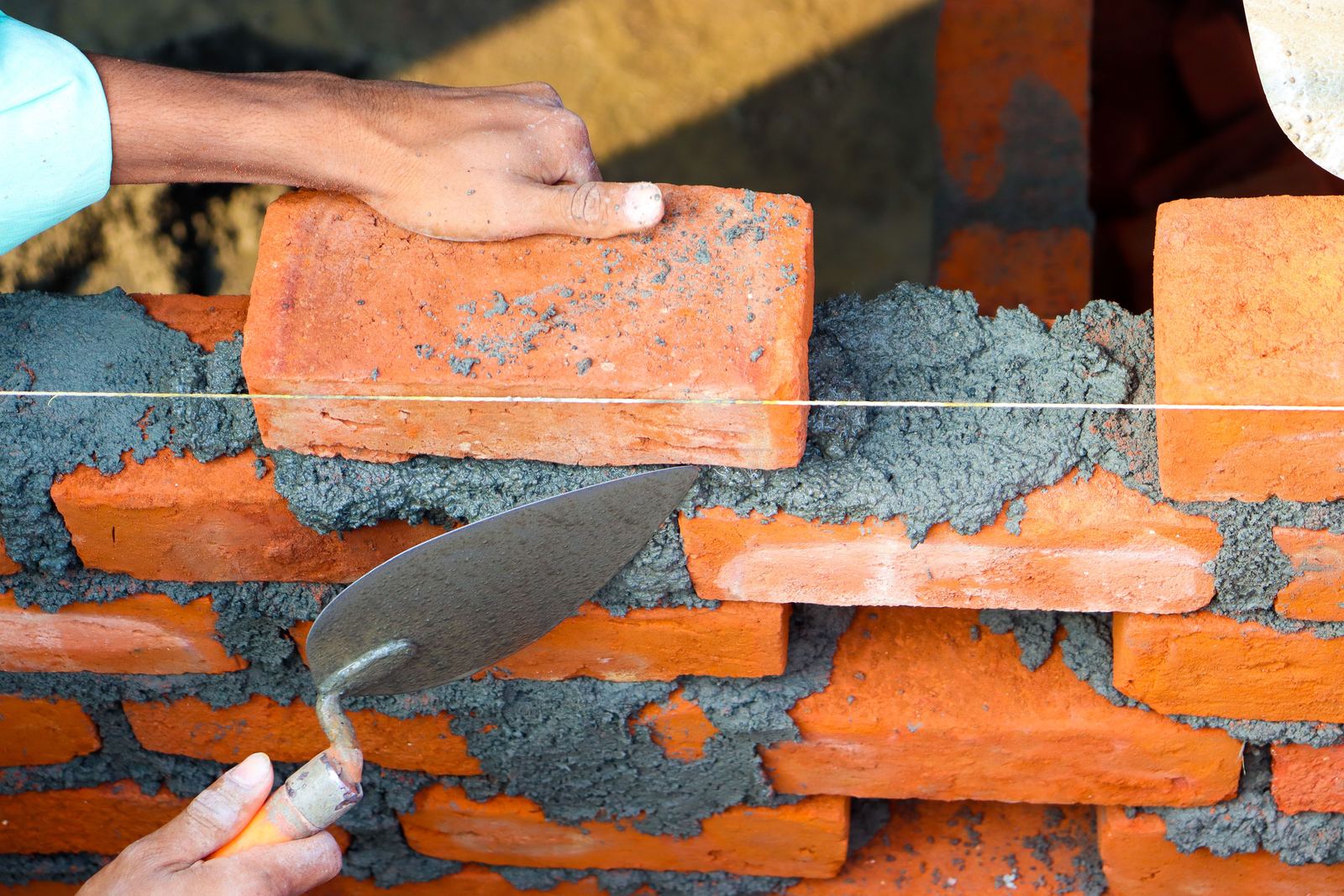
“Rake out and repoint” is not a specification. A repointing quote should say how deep the joints are cut back, whether that is done by hand or with a power tool, what the mortar is made of, what profile the finished joint gets, which areas are included, and whether a sample panel comes first.
The short version
- Depth is the main variable and most quotes are silent on it. The working rule is around twice the joint width, and deep enough to reach sound mortar.
- A shallow scrape over soft material behind looks perfect on the day and still looks fine two years later. That is exactly why it sells.
- A grinder in an old wall widens the joint and cuts the arris off the bricks. On modern hard mortar it can be right, so the quote should say which wall gets which.
- Ask for a sample panel out of sight first. It is the most useful thing a homeowner can ask for.
- Ask how much of the wall is in the price. Very often it should be less than all of it.
The problem
Four words that can describe four different jobs
On most repointing quotes, “rake out and repoint” is the whole description of the work. It is trade shorthand and usually not hiding anything, but it does not specify anything either, and two quotes carrying those four words can be for very different work at very different prices.
Five things separate them: how deep the joints are cut back, what with, what goes into them, what the finished joint looks like, and how much of the wall is touched at all. It is the same problem as two quotes for one roof coming out hundreds apart, with the same fix: match the scopes first. Most contractors will answer readily, having already decided it and simply not written it down. Ask by email, though, because under section 50 of the Consumer Rights Act 2015 what is written or said to you about the service becomes a term of the contract.
Depth
How deep the joints are cut back
Depth is the main variable and the one most often left out. A joint scraped back a few millimetres takes a fraction of the time of one opened up properly, and on completion day the two look the same.
Depth is conventionally expressed as a multiple of the joint width. Historic Scotland’s technical advice note on lime mortars puts it plainly: as a general rule the depth of a joint for repointing should be around twice its width. On a ten millimetre bed joint that is roughly twenty millimetres back. New mortar needs depth to key into, or it is a facing rather than a joint.
The second half of the rule matters as much: raking has to reach sound mortar. The guidance cuts both ways, because only mortar that can be raked out rather than cut out should be removed, and where sound backing mortar is already there, deep cutting may not be needed. The right depth is not one number for the whole house.
The failure case is a five millimetre scrape with fresh mortar pressed over friable material behind. Nothing keys into anything, the joint is sealed at the front, and it looks immaculate the day the scaffold comes down. Historic Scotland is direct about why that is the dangerous outcome: defects from poor site practice may not show themselves for several years, until an apparently sound mortar meets severe frost after heavy rain.
So ask two things. What depth are you raking to, and what do you do where the mortar is still soft behind it.
Method
Hand tools or a grinder, and the damage that does not come back
The choice between hand tools and a grinder is where a wall gets permanently spoiled, and it is often the biggest single reason two prices differ. A grinder is fast, but a disc cannot follow a joint that wanders, and old joints wander.
On a hand-made brick wall it widens the joint and cuts the arris, the square edge, off the bricks either side, leaving nibbled bricks in joints wider than the bricklayer laid them. An arris does not grow back, so no pointing afterwards makes that wall look right again.
Historic Scotland is unambiguous here: power tools should not be used in connection with any historic masonry, and where hard mortar cannot be removed without damaging the masonry, serious consideration should be given to leaving it in place.
It does not follow that a grinder is always wrong. On post-war brickwork with dense facings, regular joints and hard cement mortar, a disc in skilled hands is reasonable, and hand raking there buys slower work and no better wall. The method should follow the wall, and the quote should say which, because otherwise it follows the clock. A good answer sounds like a decision: hand tools on the soft handmade brick at the front, a small disc on the hard mortar of the 1980s extension. A bad answer is “however it comes out”.
Ask about the dust too. Cutting mortar dry throws off fine silica dust, and HSE puts the toll from silica dust across construction at over 500 workers a year. If power tools are coming out, ask how the dust is controlled and what gets covered up.
The specification
The mix, the profile and the sample panel
The mix, in three parts
A mortar is a binder, an aggregate and a ratio, and the quote should name all three. “Lime mortar” is a family, not a product, and “sand and cement” says nothing about strength. Which family your wall needs is settled in lime mortar against cement mortar, along with why the relative hardness of mortar and masonry decides which of them decays.
For reading a quote the point is narrower: with no binder, no sand and no ratio written down, there is nothing to hold anyone to. Ask too that the sand comes from one source, because two deliveries are two colours and the change shows halfway up the elevation.
The joint profile
Struck, weathered, bucket handle, flush or recessed. The profile changes how the wall reads from the pavement and how the joint sheds water, so it belongs in the quote rather than on the scaffold: a weathered joint throws water off the face, a recessed one leaves a ledge on every bed for water to sit on. Historic Scotland says the final finish should be agreed before work starts, and the default is to match what the wall already has.
The sample panel
Ask for a sample panel: a square metre or so somewhere nobody looks, the back of the garage or a return wall behind a downpipe, done and left to dry before the main elevation starts. It is normal practice rather than an imposition. Historic Scotland’s advice is that sample panels will usually be needed to establish the right finishing technique, and that a specification should identify sample areas carried out in advance of the main works.
A panel settles colour, texture, profile and raking depth while all four are still cheap to change. It is the difference between disliking a wall and disliking a square metre of it.
The rest of the job
Extent, access, weather and the mess
How much of the wall
Ask which elevations are in the price, how much of each, and whether the figure assumes the whole wall or only the failed parts. Those are two scopes, not two prices for one job, and the bigger number may be for work nobody needed.
The honest answer is very often less than the whole wall. Sound old mortar should be left alone, and on most houses the pointing has gone on one exposed elevation, around a chimney and under a gutter that has been overflowing for years. Historic Scotland asks for that to be written down: describe, with drawings if necessary, the specific areas to be worked on. Why sound mortar is worth keeping is in the same piece on lime and cement. If the trouble is low down, settle the cause first, because damp at the bottom of a wall is usually drainage or ground levels.
Access, weather and the mess
Anything above step-ladder height needs a tower or a scaffold, and the quote should say which, how many weeks and who provides it. Historic Scotland makes the same point from the trade side: access has to be planned for at the start. Who carries an overrun is in whether scaffolding is included and who is liable if it is not.
Lime work also has a season. Historic Scotland records that carbonation activity is minimised below about 5°C, and that work carried out late in the year may need protecting until the following spring. That figure is Historic Scotland’s and it gets misattributed constantly. So a December quote should say how the work will be protected: at minimum, fine debris netting on the scaffold to break the wind and give shade, since over-rapid drying is a major cause of failure. The guidance asks for that protection to be priced for in the tender.
Then the mess, because mortar droppings set hard and stain. The quote should say what gets sheeted, whether the wall is washed down at the end, who takes the debris away and what happens if a brick face comes off during raking. On an unlisted house work to external walls of this kind does not normally need planning permission; on a listed building or in a conservation area it is its own subject.
Compare them properly
The questions to send back
Standard repointing wording such as rake out and repoint, or match existing, can cover very different jobs. The table sets out what each line can cover and the question that closes it down.
| The line as written | What it can cover | What to ask |
|---|---|---|
| Rake out and repoint | A five millimetre scrape, or full-depth raking | To what depth, against the joint width? |
| Rake out, no method | Hand tools, a grinder, whatever is quickest | Hand or power tools, on which wall? |
| Repoint in lime | Any binder sold as lime, any sand, any ratio | Which binder, which sand, what ratio? |
| Match existing | Colour only, or mix and profile too | Match on what: colour, mix, or profile? |
| Repoint front elevation | The whole wall, or the failed parts of it | Which areas, and how much of each? |
Send the same list to everyone who quoted, and ask for written answers.
- To what depth are the joints raked, and what happens where the mortar is soft behind that?
- Hand tools or power tools, and which on which elevation?
- What is the mix: binder, sand and ratio?
- What joint profile, and are you matching what is there?
- Will you do a sample panel out of sight first?
- Which areas are in the price, and how much of each wall?
- What access is allowed, how many weeks, and who provides it?
- If it turns cold, what protection is allowed and who carries the delay?
- Who cleans down, and where do the droppings go?
Those answers separate the quotes far better than the totals do. One contractor comes back with depths, a mix and a wall-by-wall method; another repeats the four words. The general version of this is what a roofing quote should include, line by line.
Next
What to do next
Before choosing a repointing quote, photograph each elevation and mark where a key goes into the joints, check the gutters and downpipes on the worst side, then send every contractor the same questions. None of it costs anything.
- Photograph each elevation, then push a key into the joints and mark where it goes in. That is the area that needs doing, and on most houses it is a fraction of the wall.
- Check the gutters and downpipes on the worst elevation, because a wall wet from a defect above needs the defect fixed first.
- Send the nine questions to everyone who quoted, and ask each of them for a sample panel. If the house is listed or in a conservation area, speak to the conservation officer first.
If you would rather somebody looked at the wall and said honestly how much of it needs opening up, that is what our bricklaying and repointing work covers. Thomas Hannen comes out and prices the job himself, the site visit costs nothing, and the written itemised quote puts the depth, the mix, the profile and the areas on the page. If the answer is one gable and a chimney with three elevations to leave alone, that is what it will say. Or ask first.
Questions
Common questions
How deep should repointing be raked out?
Historic Scotland's working rule is that the depth of a joint for repointing should be around twice its width, so roughly 20mm on a 10mm joint. The depth also has to reach mortar that is genuinely sound, so it varies across a wall. A quote that gives no depth at all has not specified the main variable.
Is it ever acceptable to use an angle grinder to rake out mortar?
On modern brickwork with dense facings, regular joints and hard cement mortar, a disc used skilfully can be a reasonable choice. On old soft brick or rubble stone it is not. Historic Scotland's advice is that power tools should not be used on historic masonry, because the disc widens the joint and cuts the arris off the bricks.
Should I ask for a sample panel before repointing?
Yes, and very few people do. Ask for a square metre or so somewhere inconspicuous, finished and left to dry before the main elevation starts. It settles colour, texture, joint profile and raking depth while all of them are still cheap to change, and it is normal professional practice rather than an imposition.
Does the whole wall need repointing?
Usually not, sound old mortar should be left undisturbed, and on most houses the pointing has genuinely failed on one exposed elevation, around a chimney, or under a gutter that has been overflowing. Ask which areas are in the price and how much of each, because a whole-wall quote and a failed-areas quote are different scopes.
Can repointing be done in winter?
Cement mortar has a wider window than lime but still stops at frost. For lime, Historic Scotland records that carbonation activity is minimised below about 5°C and that work done late in the year may need protecting until spring. A quote for lime repointing in December should say what protection is allowed and priced.
Read next
Related advice
The guides below pick up where this one leaves off, and the bricklaying and repointing page covers the work itself and the places we cover, if you would rather have the job looked at.
- Lime or cement mortar: which your wall actually needs
- What a roofing quote should include: the line items to look for
- Why two quotes for the same roof come out so different
- Damp at the bottom of a wall
Bricklaying and repointing, and where we cover All advice articles
Who wrote this
Thomas Hannen
Thomas owns Bournemouth Roofing & Building and prices every job himself instead of sending somebody else. The company is Bournemouth Roofing & Building Ltd, number 15471719, registered in England and Wales. If you want to talk something through before you commit to anything, the site visit and the written itemised quote are both free.
Free quote
Want a repointing quote that says what the work actually is?
Thomas comes out, looks at every elevation and puts the depth, the mix, the joint profile and the areas in writing, along with which parts of the wall should be left alone.