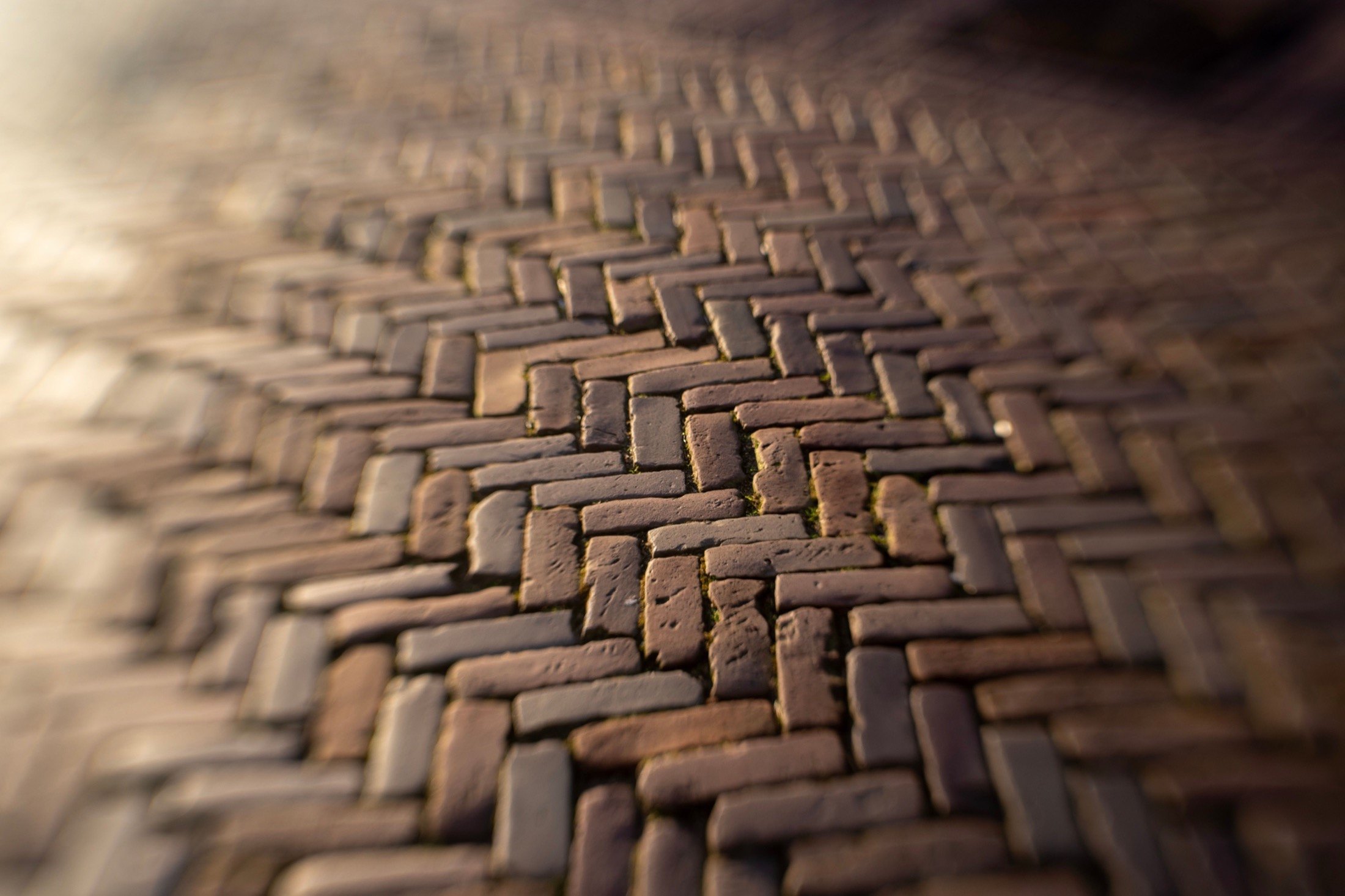
Driveways & Block Paving Bournemouth
Block paving, resin-bound, tarmac and patio installations for homes and commercial property across Bournemouth, Poole and Christchurch. Dug out properly, based properly, drained properly.
Driveways & patios
Block Paving, Resin, Tarmac & Patio Installations in Bournemouth
In England a new or replacement driveway at the front of a house normally needs no planning permission, provided the surface water does not run off onto the public road. Build it in a permeable construction, or take the run-off to a soakaway, a border or a lawn inside your own boundary, and you are within permitted development. What decides the price is the ground underneath, not the surface on top.
Bournemouth Roofing & Building provide professional driveway and patio services across Bournemouth, Poole, and Christchurch. We specialise in block paving, resin, tarmac, and patio installations for residential and commercial properties. Our experienced team delivers high-quality workmanship using durable materials to create attractive, long-lasting outdoor spaces that enhance the appearance and value of your property. Whether you're looking for a new driveway, a patio installation, or a full garden transformation, we offer the same team from first visit to last, an itemised written price, and work throughout the Bournemouth, Poole, and Christchurch area.
The bit you see is the last thing we lay
A driveway that sinks, ruts or ponds has almost never failed at the surface. It has failed underneath it.
So that is where the work goes. We dig out to a firm formation, put a membrane down, build and compact a proper sub-base for the loading it will take, set the levels so water runs where it is supposed to, and hold the edges with restraints that will not move. Only then does the surface go on. It is the least interesting part of the quote and the part that decides whether the drive still looks right in ten years.
- Excavation, muck-away and disposal included and itemised
- Falls and drainage designed in, not left to chance
- Domestic and commercial, new installs and replacements
The site visit is free and so is the written itemised quote. Thomas Hannen prices every job himself.
What we do
Driveway and Patio Services in Bournemouth, Poole & Christchurch
New installations, replacements, resurfacing and repairs, for houses, flats and commercial premises across Dorset.
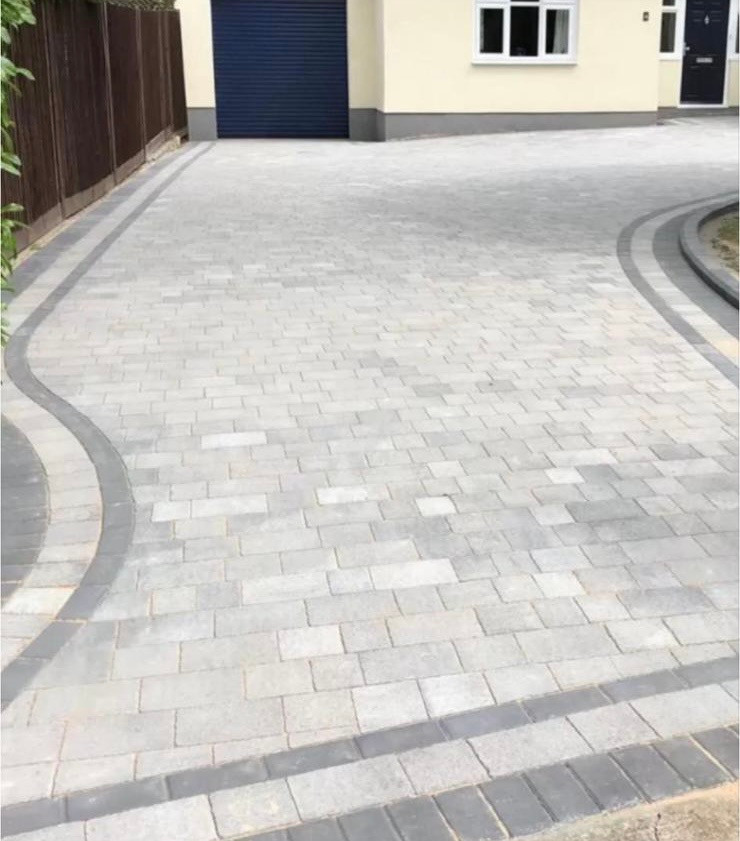
Block Paving
We install high-quality block paving for driveways and outdoor spaces, creating durable and attractive surfaces in a range of colours and patterns. This includes new driveway installations, replacements, and repairs, all finished to a high standard using carefully selected materials.
A wide range of block colours, sizes and laying patterns, with contrast borders and curved edges where the shape of the drive calls for it. New installs, full replacements and repairs to sunken or stained areas. Permeable blocks are available where the drainage needs to go straight down through the surface.
Resin Driveways
We provide professional resin driveway installations that deliver a smooth, seamless, and low-maintenance finish. This includes full resin-bound surfaces for driveways and paths, using high-quality aggregates and materials to ensure a long-lasting and visually appealing result.
Smooth, seamless resin-bound surfacing for driveways, paths and parking areas. Stone and resin are mixed and trowelled out over a solid base to give a continuous finish with no joints, in a range of aggregate colours. Low maintenance and easy to keep clean, and it can be laid to a permeable build-up.
Tarmac Driveways
We carry out tarmac driveway installations and resurfacing for residential and commercial properties. This includes new driveways, repairs, and full replacements, providing a strong, cost-effective surface designed for long-term durability and everyday use.
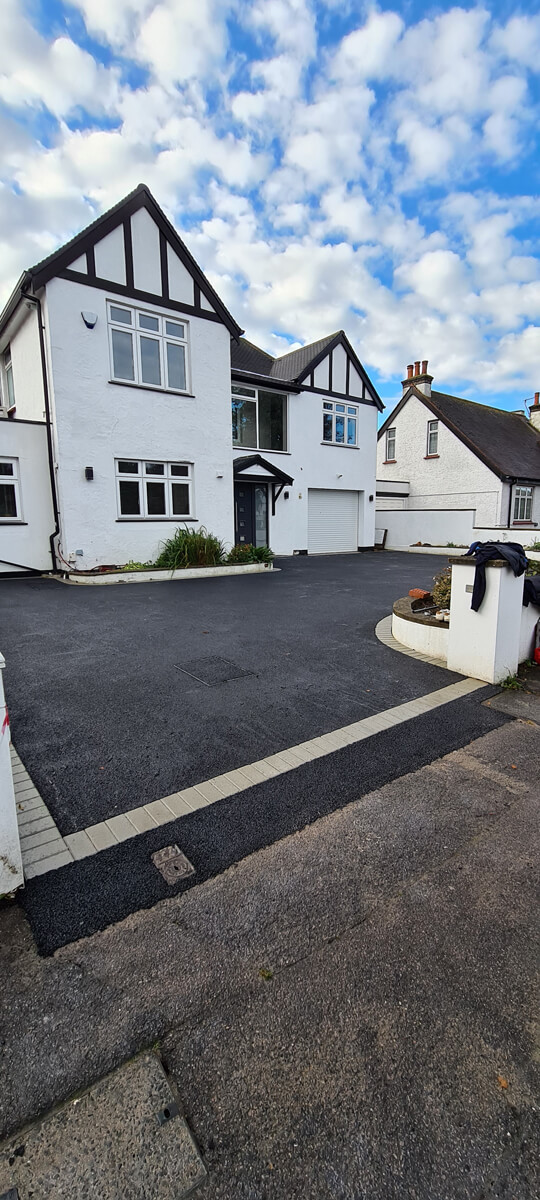
New tarmac drives, repairs, resurfacing and full replacements. Strong, quick to lay and cost-effective over larger areas, which is why it suits long drives, parking areas and commercial yards. Usually finished with a block or kerb edge to hold the tarmac and give it a tidy line.
Patio Installations
We install a wide range of patio solutions to create functional and attractive outdoor living spaces. This includes new patio installations, replacements, and upgrades using quality materials to ensure a durable, stylish finish suited to your garden and property.
New patios, replacements and upgrades in porcelain, natural stone or concrete paving, with steps, edging and level changes as needed. Laid on a full mortar bed with the falls set away from the house, and jointed to suit the material so the surface stays sound.
Honest comparison
Block Paving, Resin, Tarmac or Patio Paving: Which Surface Suits You?
Each of these has something it is genuinely better at, and something it is worse at. Here is the version we would give you standing on your drive.
Block paving
Look. The most choice. Colours, sizes, laying patterns, borders and curves, and it suits traditional and modern houses alike.
Durability. Very good, and it flexes with small ground movement instead of cracking. Individual blocks can be lifted and swapped if one sinks or gets oil-stained.
Maintenance. The most of the four. Jointing sand needs topping up, and joints will grow weeds and moss if the surface is left dirty.
Drainage. Permeable block systems are the easiest way to build a driveway that drains through the surface into the ground.
Resin bound
Look. Clean and modern. A continuous surface with no joints and no pattern lines, in whatever aggregate colour you pick.
Durability. Good on a sound base, and it does not rut like tarmac in hot weather. It is only ever as strong as what it is laid on, so the base is everything.
Maintenance. The lowest day to day. Nothing for weeds to root into. Repairs are a patch rather than a swap, and a patch can show.
Drainage. Resin bound can be laid as a permeable surface, so water passes through it rather than running off.
Tarmac
Look. Plain black, and it works best when it is edged with block or kerb. Not a decorative finish, but a very tidy one.
Durability. Tough and well suited to larger areas and heavier use. It can soften in real heat and it will scuff where a car turns on the spot.
Maintenance. Low. No joints to weed. It can be resurfaced later rather than fully rebuilt if the base is still sound.
Drainage. Standard tarmac is sealed, so run-off has to be taken to a soakaway or a soft area within your own boundary. Porous asphalt is an option where a permeable surface is needed.
Patio paving
Look. The widest range of finishes. Porcelain gives a crisp, uniform look, natural stone gives variation and character.
Durability. Porcelain is dense, frost-resistant and does not really stain. Natural stone is hard-wearing but more porous, so it weathers and can mark.
Maintenance. Sweeping and an occasional wash. Porcelain stays looking new with very little effort. Pointing needs to be kept sound on any slab patio.
Drainage. Slabs are laid to a fall away from the house, with the surface water taken to a border, a drain or a channel. Patios are not usually caught by the driveway run-off rules.
| Surface | Block paving | Resin bound | Tarmac | Patio paving |
|---|---|---|---|---|
| Look | Widest choice of colour, size, pattern and border | Continuous, no joints, no pattern lines | Plain black, best when edged in block or kerb | Porcelain for a crisp uniform look, stone for character |
| Joints | Sand-filled joints throughout | None | None | Pointed or jointed to suit the material |
| Upkeep | The most. Top up the jointing sand and keep it swept | The least. Nothing for weeds to root into | Low. No joints to weed | Sweep and wash. Keep the pointing sound |
| Repairs | Lift and replace individual blocks | Patched, and a patch can show | Resurface if the base is still sound | Lift and relay individual slabs |
| Permeable option | Yes, permeable block systems | Yes, laid as a permeable build-up | Standard tarmac is sealed. Porous asphalt is available | Usually laid to a fall rather than made permeable |
| Weak point | Joints grow weeds if the surface is neglected | Only ever as good as the base under it | Softens in real heat, scuffs where a car turns on the spot | Natural stone is porous, so it weathers and can mark |
| Best suited to | Drives where repairability and pattern matter | A crisp modern look with minimal upkeep | Long drives, parking areas and commercial yards | Sitting areas, steps and level changes in a garden |
What we can put on the page is the reasoning. What drives the cost of a driveway or a patio is set out further down, so you can read two quotes against each other and see exactly where they differ.
Drainage & permissions
Driveway Drainage & Planning Permission in Bournemouth
Where the water goes matters more than people expect
In England, a new or replacement driveway at the front of a house normally does not need planning permission, as long as the surface water does not run off onto the public road. That is the condition the rules hang on, and it is why drainage is a design decision rather than an afterthought.
There are two ways to satisfy it. Build the drive in a permeable construction, so rain soaks down through the surface and into the ground beneath. Gravel, permeable block paving and porous surfaces all do this, and it is the simplest route. Or lay a sealed surface such as standard tarmac and direct the run-off into a soakaway, a channel drain, a border or a lawn inside your own boundary, so it never reaches the road. Lay a large sealed area that drains straight out of the gate and you are into needing permission.
There is a wider point behind it. Every sealed front garden pushes more water into the street drains at once, and that is what floods roads in heavy rain. Building drives to drain on the plot, in line with sustainable drainage principles, is the reason the rule exists.
The rule itself is set out in the Planning Portal's guidance on paving your front garden, which is worth reading before you commit to a sealed surface. Where the water goes once it leaves the drive is a building regulations question rather than a planning one, and Approved Document H covers surface water drainage, soakaways and the order in which you are expected to try each option.
- Permeable build-ups available in block paving, resin and porous surfacing
- Soakaways, channel drains and falls set out at the survey
- Dropped kerbs and any council approvals flagged before we start
Listed buildings, conservation areas and properties whose permitted development rights have been removed are treated differently, so check with your local council if any of those apply. If you need a dropped kerb to get onto the drive, that is a separate highways application and we will tell you at the survey. The Planning Portal's guidance on dropped kerbs explains what that application involves and why it is decided by the highway authority rather than the planning department.
Which authority you apply to depends on where you live. Bournemouth, Poole and Christchurch sit under the same council, while Wimborne and the villages north of the conurbation come under Dorset Council. We will point you at the right one when we survey the drive.
How it works
How a Driveway Installation Runs, Start to Finish
You will know the sequence, the duration and where the skip or the muck-away lorry is going before we turn up.
Survey and levels
We measure up, check the ground, look at where water currently goes, and talk through surfaces, colours and access during the works.
Written quote
Itemised: excavation and disposal, sub-base, drainage, edgings and the surface itself, with a start date and a working duration.
Dig out and base
Old surface out and away, membrane down, sub-base laid and compacted in layers, edge restraints set, falls checked.
Surface and finish
The finish laid, jointed or sealed as the material requires, drainage tested, and the site swept and cleared before we leave.
Patios
Patio Installations & Garden Paving in Bournemouth
Do the patio while the machinery is here
If you are having the drive done and the back is on the list too, it is worth doing both at once. The excavation, the muck-away and the deliveries are already covered, the levels and drainage can be planned as one scheme, and you get the mess over with in one go instead of twice.
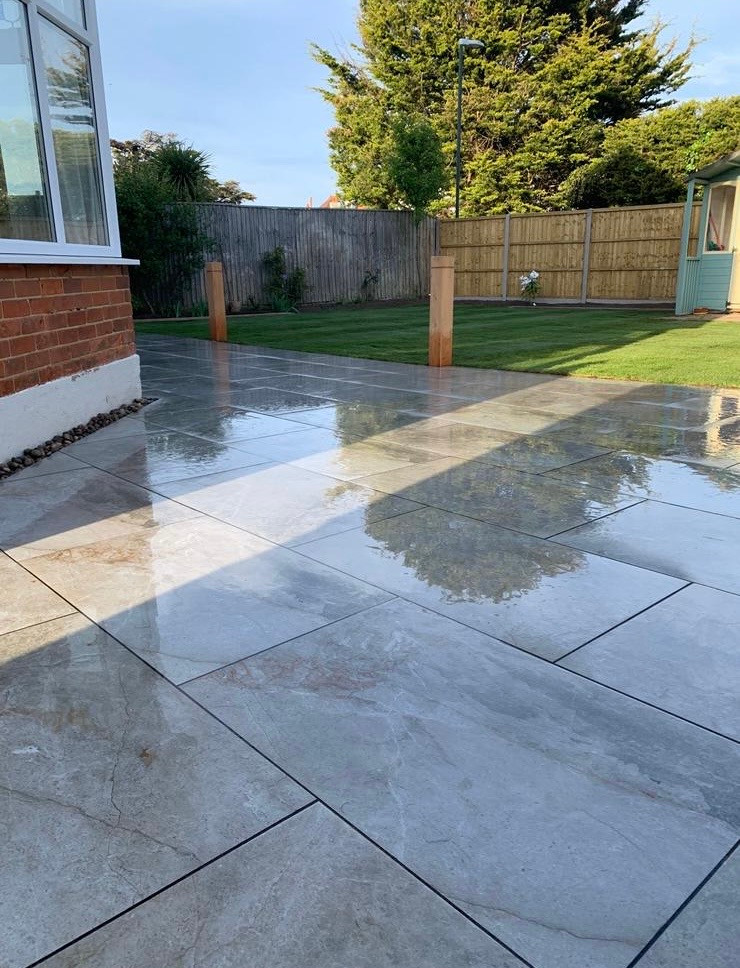
Patios are laid on a full mortar bed with the falls running away from the house, jointed to suit the material, and finished with the steps, edging and level changes the garden needs. Porcelain, natural stone or concrete paving, whichever suits the house and how much upkeep you want to do. If the back garden is the whole job rather than half of it, go straight to patio laying, where the slabs, the falls and the jointing are covered properly.
The bigger gardens tend to be out of town, so we are on patios in Ferndown and Verwood as often as we are laying block paving on a town driveway.
What it costs
What Drives the Cost of a Driveway or a Patio
Most of a driveway quote is spent below the surface you will actually see. Excavation, disposal, sub-base depth, edge restraints and drainage are the majority of the job. That is why a quote based on area alone tells you very little, and why the cheapest quote is usually the one that has dug out the least.
We hold to the position further up this page: no figure before we have seen the ground. What we can do is set out every variable behind the number, so you can compare two quotes on something more useful than the total at the bottom.
What moves the number
- What has to come out first. Breaking out an old concrete slab is a different job from lifting block paving, which is different again from digging up a lawn. How deep you have to go to reach a firm formation is the variable nobody quotes on the phone and everybody meets on site.
- Disposal. Spoil is heavy and it goes by volume, not by area. Whether a grab lorry can reach the drive, how far the barrow run is, and how much comes out are all real money. Anyone carting it away should be a registered waste carrier, and the public register on GOV.UK lets you check that in about a minute.
- Sub-base depth. A drive that takes a small car and a drive that takes a van or a caravan want different build-ups over different ground. This is the line that separates a drive still flat in ten years from one that ruts in two.
- Drainage. A permeable build-up, a soakaway, a channel drain across the threshold or a linear drain to a border are all different costs, and which one you need is set by the ground, the levels and where the water is allowed to go.
- Levels and edges. A sloping plot, a threshold that has to meet the front door, steps, retaining edges and a boundary that is not square all add setting-out time and material. Edge restraints hold the whole surface together and are never optional.
- The surface itself. Block, resin, tarmac and paving differ per square metre, and within each of those the material choice moves the price again. It is the last decision on the quote and rarely the biggest one.
- Access during the works. A drive a machine can reach costs less than one where everything is barrowed through a side gate. If the patio is on the list as well, doing both while the machinery, muck-away and deliveries are already covered is the single largest saving available on this page.
- Anything outside your boundary. A dropped kerb is a separate highways application with its own cost and its own timescale, and it is not part of the driveway price.
What we will ask you
Rough dimensions, and what is there now. Whether it ponds anywhere after heavy rain. What the drive has to carry, and whether anything heavier than a car parks on it. Whether the ground falls towards the house or towards the road. Whether a machine and a lorry can get to it. Whether you already have a dropped kerb. And whether the back garden is on the list too, because that answer changes the price of both.
Why two driveway quotes differ
Because you cannot see the difference once the surface is on. One quote digs out to a firm formation, the other digs just deep enough to fit the new surface over the old one. One lays a membrane and compacts the sub-base in layers, the other tips it in and runs a plate over the top. One prices the drainage properly, the other lets the water find its own way. All four of those look identical on the day the job is finished.
So ask each quote what depth they are digging to, what the sub-base is and how it is compacted, what happens to the surface water, whether edge restraints are included, and whether excavation and disposal are itemised or buried in the rate. Those five questions will explain the gap between the two prices.
Questions
Driveways and patios, answered
How long does a driveway take?
Most domestic driveways are a matter of days rather than weeks, but the honest answer is that it depends on the size, what is coming out first, and what we find underneath. Digging out and carting away the old surface, then getting a proper sub-base in and compacted, usually takes as long as laying the new surface does. Ground conditions, drainage work and the weather all move the timescale, so we give you a start date and a working duration with the quote rather than a guess on the phone.
Do I need planning permission for a driveway?
In England you usually do not need planning permission for a new or replacement driveway at the front of a house, provided the surface water does not run off onto the public road. In practice that means either building it in a permeable material such as gravel, permeable block paving or a porous surface, or laying a sealed surface and directing the run-off to a soakaway, a border or a lawn within your own garden. If you lay a large sealed area that drains straight onto the road, permission is generally required. Back gardens and patios are treated differently and are not usually affected. We design the drainage into the job so this is not left to chance, and if your property is listed, in a conservation area or has had permitted development rights removed, you should check with your local council before work starts.
Block paving or resin, which is better?
Neither is better outright, they fail in different ways. Block paving is laid as individual units, so if something sinks, cracks or gets stained you lift those blocks and replace them, and it is easy to make permeable. The trade-off is the joints, which need the sand kept topped up and will grow weeds if they are neglected. Resin is a continuous surface with no joints, so it looks cleaner and there is nothing for weeds to root in, and it is very low maintenance day to day. The trade-off is that a repair is a patch rather than a swap, and the finished surface is only ever as good as the base underneath it. If you want a crisp modern look and minimal upkeep, resin. If you want repairability and pattern, block paving.
Will weeds come through?
Weeds in a driveway almost always grow from seed that has landed on top and rooted in the joints, not from something pushing up from below. A membrane under the sub-base and a properly compacted base stop growth from underneath. After that it is about the surface itself. Block paving and patio slabs have joints, so they need the jointing sand or mortar kept sound and the surface kept clear, and a build-up of moss and grit is what gives seeds somewhere to sit. Resin and tarmac have no joints, so they are much less prone to it, though weeds can still take hold along the edges if debris is left to gather. Regular sweeping does more than anything else.
Do you remove the old driveway?
Yes. Excavation, removal and disposal of the existing surface is part of the job and it is itemised in the quote so you can see what it costs. We dig down to a firm formation, not just deep enough to fit the new surface on top, because laying over a tired or unstable base is the most common reason a new driveway sinks and cracks. Where an existing tarmac base is sound and level, it can sometimes be kept and overlaid, and we will tell you at the survey if that applies to you.
Can you do the patio and driveway together?
Yes, and it usually works out better. The same machinery, muck-away and materials deliveries cover both, the levels and drainage can be planned as one scheme rather than two, and you get the disruption over with once. It also lets us tie the two areas together visually, for example carrying a border or a colour from the drive through to the patio. Tell us about both when you enquire and we will price them as a single job as well as separately so you can compare.
Where we work
Driveways & Patios Across Bournemouth, Poole and Dorset
We serve these areas for block paving, resin, tarmac and patio work, and the same team lays the job wherever it is.
Driveways and patios by location
Driveways and patios in every town and village we cover
Each page is written from the ground, the housing stock and the planning position of that settlement, using Environment Agency, British Geological Survey, Valuation Office Agency and Census records. 84 pages covering 115 settlements.
Within 8 miles
8 to 14 miles
- Stone (also Sturminster Marshall)
- Furzehill
- Ashley Heath
- Beacon Hill
- Swanage
- Holt (also Chalbury Common, Gaunt's Common and more)
- Holton Heath
- Thorney Hill
- Three Legged Cross
- Lytchett Matravers
- Langton Matravers (also Worth Matravers, Harman's Cross)
- Barton on Sea
- Corfe Castle (also Studland)
- Sandford
- Ridge (also Stoborough)
- Ringwood
- New Milton
- Wareham
- Bashley
- Burley (also Burley Street)
- Verwood
- Hangersley (also Hightown)
- Ashley
- Milford on Sea
- Everton (also Hordle)
- Spetisbury (also Charlton Marshall)
- Alderholt
- Cranborne (also Whitmore)
14 to 20 miles
- Tarrant Monkton (also Pimperne)
- Hyde (also Frogham, North Gorley and more)
- Winterborne Kingston
- Lymington
- Brockenhurst
- Boldre (also Sandy Down, Tiptoe and more)
- Sandleheath
- Bere Regis
- Fordingbridge
- Blandford Forum
- Freshwater and Totland
- Walhampton and Portmore (also Pilley)
- Wool
- Norton
- Bryanston
- Yarmouth (also Bouldnor)
- Rockbourne (also Martin)
- Lyndhurst
- Sixpenny Handley
- West Lulworth (also Burngate)
- Breamore (also Woodgreen)
- Minstead
- Winterborne Stickland
- Winfrith Newburgh (also Briantspuddle)
- Milborne St Andrew (also Winterborne Whitechurch)
- Stourpaine (also Durweston, Ash)
- Tolpuddle
- East Boldre
- Cadnam and Bartley
- Lover
- Redlynch
- Downton
- Ashmore
- Woodlands
- Crossways
- Iwerne Minster (also Shroton)
- Owermoigne
Free quote
Get a price for your drive or patio
We will come out, measure up, check where the water needs to go, and put a clear itemised quote in front of you. No obligation.