
Driveways and patios in Holton Heath
Drives, patios and paths across Holton Heath and BH16, rebuilt from the bottom of the hole up on ground that stays wet.
The site visit is free and so is the written itemised quote. Thomas Hannen prices every job himself.
Forty years is about the age at which the base under a drive gives out rather than the blocks, and most of the block paving around Holton Heath went down in the nineteen eighties. That is why so many of these drives can be lifted, rebuilt underneath and relaid with the paving you already own.
The three calls we get here are much the same house to house. There is a hollow where the car parks and it has started to hold water. The joints have gone grey and green and weeds are coming through them. Or the back terrace has dropped at one corner, rocks when you stand on it, and has crept up the wall behind it over three separate relayings.
None of those tell you anything on their own. We open a trial hole at the site visit, because the difference between a two day repair and a full rebuild is six inches down and nobody can see it from the pavement. Whatever the hole says, you get it in writing with the options priced apart.
The work
Eighties drives, and what forty winters have done underneath
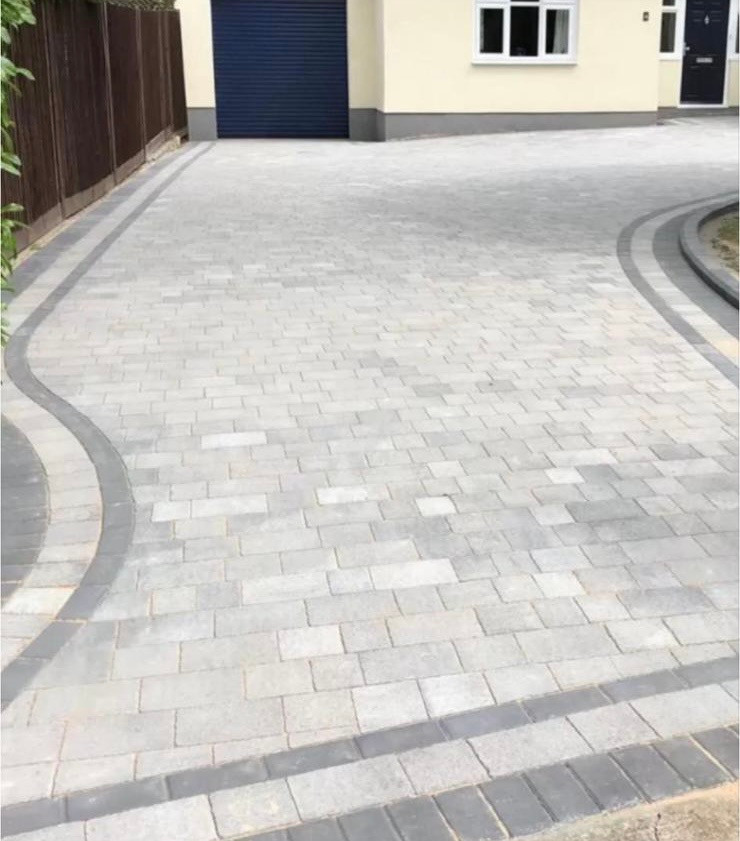
Lift and relay of eighties block paving. A third of the housing here went up between the early eighties and the late two thousands, with the peak in the eighties, and block paving was the fashion of the moment. The typical build of that period is thin: a shallow sub-base, a sand bed laid a little too generously, and an edge restraint along the house wall but nothing at all where the drive meets the lawn. The blocks themselves are usually perfect. We lift them, take the base back to a firm formation, put in a geotextile membrane, compact a proper sub-base in layers, then relay your own blocks with a haunched kerb round the whole perimeter and a full re-sand with kiln dried sand.
One hollow in a wheel track is a base failure in that spot, not a failure of the drive, and it gets opened up, the soft material out and the depth made good with compacted stone. Left alone it spreads, because the ground here is naturally wet and once water stands in a dip it softens everything around it. Weeds do not push blocks up either. They arrive because the jointing sand has washed out and left somewhere for seed to sit. Where a drive has both problems we say clearly which one you have and price them apart.
Concrete flags and tarmac of the same age. The paths and terraces that came with those houses are pressed concrete slabs on spots of mortar. They rock, they pond in the middle, and each time somebody has relaid over the top the level has climbed another course up the wall. We take them out, reset the level clear of the damp proof course, and relay on a full mortar bed over a compacted sub-base. Older tarmac ripples and ruts where the car turns, and planing off and overlaying works only if the base beneath is sound.
How it runs
From your call to a written price
One person to ring, and an itemised quote: excavation, muck away, sub base, edgings, the surface and the drainage on separate lines. Paving a front garden stays permitted development for as long as the water is dealt with on your own land, and going over five square metres of new hard surface that drains to the road needs planning permission. The Planning Portal guidance on paving a front garden sets out where that line falls. On wet ground that means a permeable build up or a real outfall rather than an assumed soakaway. Widening the opening is a dropped kerb application to Dorset Council, and where a forecourt or boundary structure belongs to a listed building you need listed building consent first.
Cost
What decides the price of a driveway
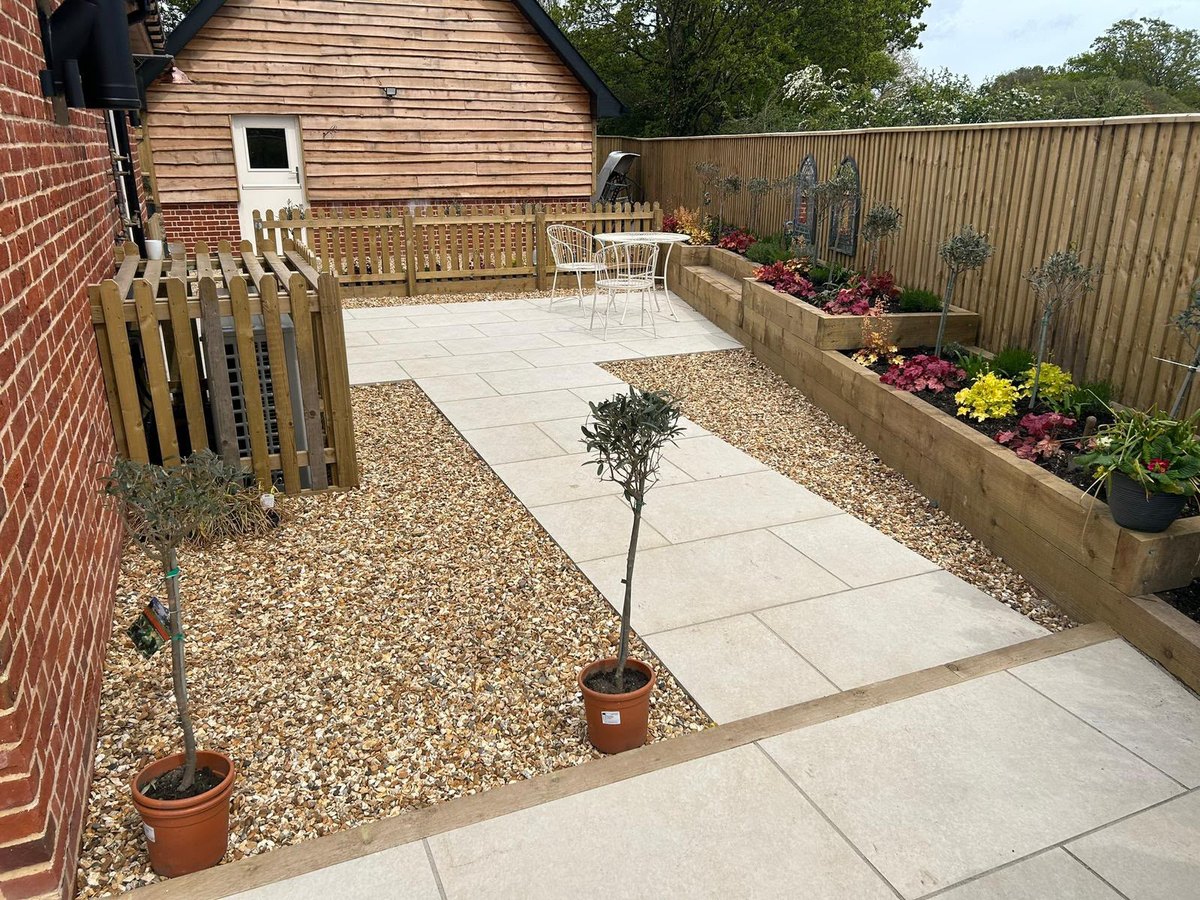
No rate per square metre. What is under it decides more of the cost than what goes on top. A bungalow with a single width drive to a garage, a detached house on an eighties close with a turning area, and a semi where the only route to the back garden is a shared side path. Those are three different jobs. The ground here stays wet, so somewhere lawful for the water to go is priced from the start. Ask how deep the dig is, what sub base goes in, where the water goes and whether the edgings are haunched.
If it is urgent
A trip hazard, or a drive that floods
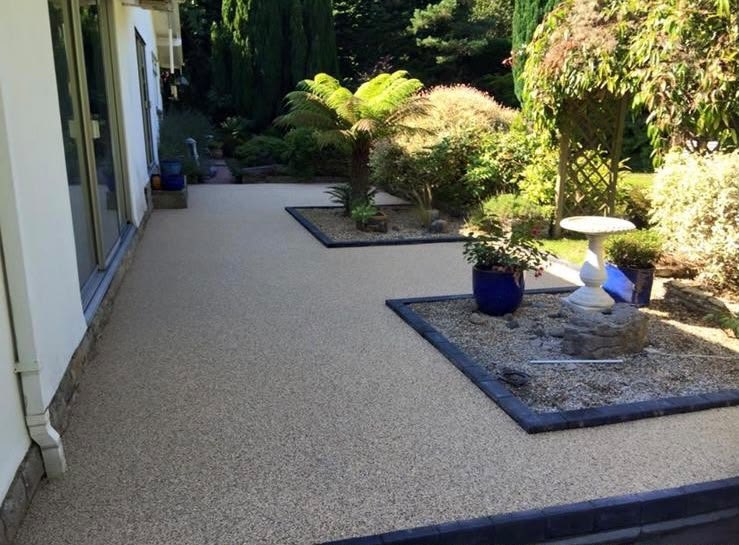
Ring rather than use the form. A lifted slab, a sunken bay by a doorway or a gully that has stopped taking water will not wait. The first visit is about making it safe and getting the water going somewhere. A hollow next to the door, or a drive now sending water back at the house, gets worse quickly here. The phone is answered 24 hours for emergencies; scheduled work runs Monday to Friday, 8am to 6pm.
The one local thing
Wet ground changes the build, not just the drainage
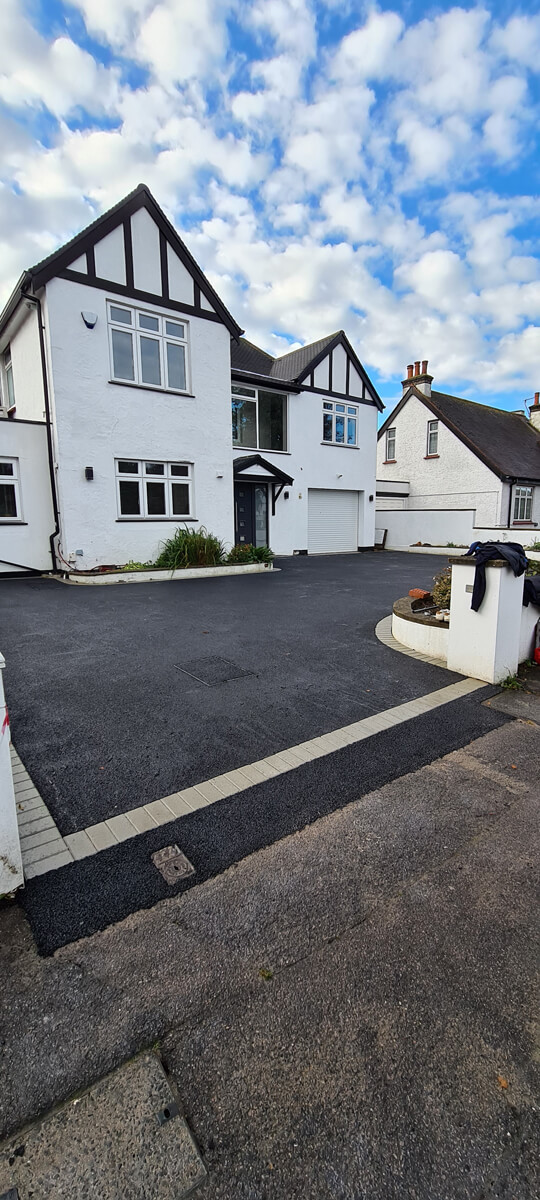
The ground here holds water. Open a hole in February and there will be water sitting in the bottom of it by the afternoon, and that fact changes the construction long before it changes the drainage design. You cannot compact stone onto a formation that is turning to soup.
Do it anyway and the sub-base pumps down into the subgrade over the first wet winter, which is exactly the drive you are ringing us about. So the geotextile separator is not optional here, it goes down first to keep the two apart, and where the bottom of the dig is genuinely soft the excavation goes deeper and a coarser capping layer goes in below the sub-base to bridge it.
It changes the water too. A soakaway needs somewhere for the water to soak to, and on wet ground it has least capacity in the month you need it most, so it wants a percolation test rather than an assumption. Approved Document H sets out how surface water should be dealt with.
Where the test fails, the honest answers are a positive outfall to a ditch or a surface water drain, or a permeable surface with a deeper open graded storage layer under it and a designed overflow route. A channel drain across the entrance keeps your run off out of the road, and keeping the water and the silt inside your own boundary is what SuDS actually means on a domestic drive.
Who you are dealing with
A local firm you can check
We cover Holton Heath and the rest of BH16, out through Sandford and Organford to Wareham, Upton and Lytchett Matravers. Bournemouth Roofing & Building Ltd, registered in England and Wales, company number 15471719, which you can look up in a minute. Thomas Hannen's business, and he is the one who comes out to price the job, not a salesman. A verified customer's 10 out of 10 on Checkatrade. The visit and the written quote are both free.
Questions
Holton Heath questions we get asked
Can you lift and relay the blocks that are already down?
If they are a standard size and not spalled, yes. Most of Holton Heath went up in the 1980s and block paving from then is usually still sound. It is the base and the edge restraint underneath that have given up. We lift the blocks by hand, stack them, rebuild the sub base and the laying course, then relay the sound ones across the open areas and keep any spares for the edges.
The ground stays wet all year. Will a soakaway cope?
Probably not on its own. Holton Heath sits on naturally wet ground, so the pit can be standing in water before a drop of rain lands on the drive. We test it rather than guess. Where the pit stays full we design for a controlled outlet instead, or a stone reservoir under permeable blocks that releases slowly, which stops the whole thing depending on the ground swallowing anything at all.
How do you get materials round to the back garden?
Down the side on boards, or over the lawn with a tracked barrow, which spreads its weight better than a wheel. On the flat plots around Wareham St Martin there is often side access wide enough for a small dumper, and where there is not, everything goes by hand and we allow for that in the quote rather than discovering it on day one. The grass gets covered before anything crosses it.
Is permeable paving actually necessary on this plot?
On wet ground it is less about the paving and more about where the water finally ends up. Permeable blocks over an open stone layer buy you storage, which matters when the ground itself is slow to take anything. The catch is that a reservoir with no outlet simply fills, so we either give it a slow release outfall or go for a conventional surface falling to a linear drain.
Who prices the job, and does the visit cost anything?
Thomas Hannen comes out himself, walks the plot with you and prices what he measures, and both the visit and the written quote are free. He owns the firm, so the person handing you the figure is the one accountable for it. The quote itemises excavation, base, edgings, drainage and disposal on separate lines, which lets you compare it properly against anything else you have been given.
Nearby, and next door
Driveways and patios near Holton Heath
Driveways and patios nearby
Our other trades in Holton Heath
Everything we do in Wareham Driveways and patios, all areas Every area we cover
Free quote
Wondering if your blocks can be reused?
Tell us the address and what you have noticed. We open a trial hole and leave you with an itemised written quote showing repair and rebuild apart. Both are free.