
Driveways and patios in Sandford
Worn out estate drives, shared accesses and patios that hold water, priced in writing after a free visit.
The site visit is free and so is the written itemised quote. Thomas Hannen prices every job himself.
Shared access, worn out original surfaces and where the water is meant to go once you widen something are the questions that come up on a Sandford drive. Nearly all of it is estate housing of one age. We lay drives, parking and patios here and across the BH20 roads around it.
Three jobs make up most of the work. Widening a narrow strip drive so two cars fit without one blocking the other in. Replacing an original surface that has cracked along the wheel tracks and broken up at the garage threshold. And a back patio that has settled at one corner, holds water and has turned slippery in the shade.
We dig a trial hole, take levels off the house and off the boundary, and see what water does before pricing anything. The quote is written and itemised, and if the right answer is a repair and a re-level rather than a new drive, that is the one you will get.
The work
Strip drives, shared accesses and garage blocks
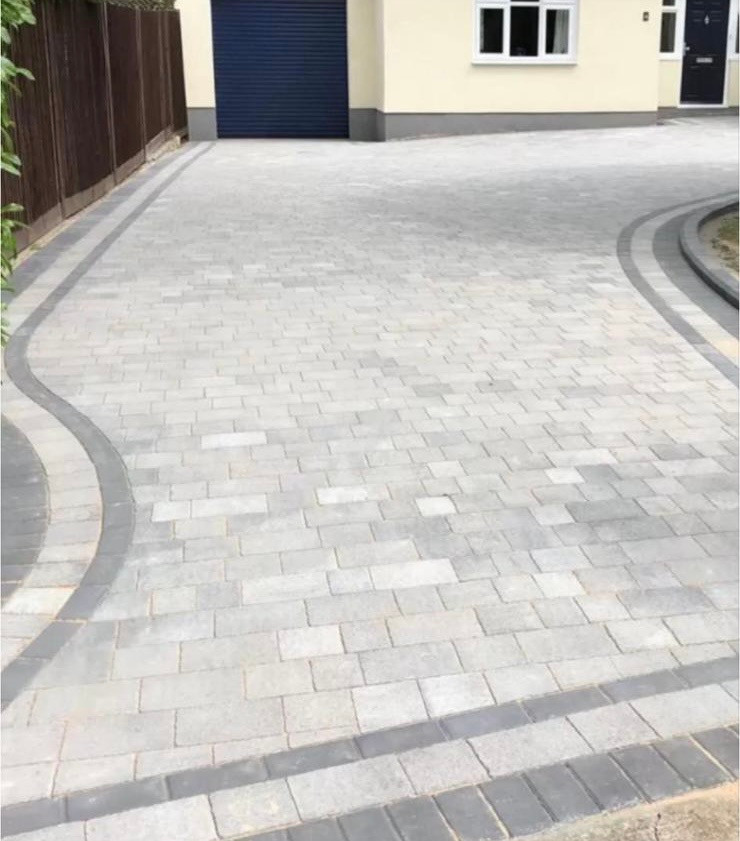
The strip between two houses. The standard layout here runs a narrow drive down the side of a pair to a garage at the back, and half the time the strip is shared or the boundary falls down the middle of it. That changes the work before it changes the price. The finished level has to suit both houses, the fall has to run away from both walls, and where only one side is being done we build a proper edge restraint on the line rather than butting new paving against old and hoping. If a fence, gate or wall is coming out to widen it, boundary walls and gates is worth two minutes first, because height and position on a boundary have their own rules.
Garage blocks and the access ways behind. Plenty of the garages here sit in a block up a communal way that has never been touched, and they fail at the entrance and in the middle: potholes, rutting where everyone turns, and no fall at all so water stands. Done properly it is one exercise, not six patches. The whole area comes to a single fall, a channel drain goes across the entrance, and the sub-base is rebuilt on a geotextile membrane where the ground has gone soft. Worth agreeing with the other owners first, because one visit with a machine and a grab lorry beats the same machine back three times.
Six in ten homes here went up between 1945 and 1982, most around the turn of the 1970s, and under most of those drives is bay laid concrete or a thin tarmac skim on the subsoil. If the concrete is flat and does not rock, resin bound goes over it with no dig and no muck away. If it moves, it comes out, we excavate to a firm formation and rebuild the sub-base in compacted layers. Widening always needs the dig, because the new half has to carry the same weight as the old. This ground is naturally wet, so a soakaway is a percolation test rather than an assumption and sometimes a positive outfall instead.
Patios, paths and small repairs. Stone or porcelain on a full mortar bed with a jointing mortar that stays in, steps with risers that match, and paving that finishes clear of the damp proof course. On their own we will do the small things: a sunken bay lifted and re-laid, a cracked slab swapped, or a silted gully cleared and given somewhere to discharge.
How it runs
From your call to a written price
One person to ring, and the quote itemised: excavation, muck away, sub base, edgings, surface and drainage on separate lines. Dorset Council is the planning authority for Sandford. Hard surfacing at the front is permitted development while the water stays on your own ground, and it is over five square metres of sealed surface draining onto the road that needs planning permission, which is all the front garden rules really says. If the access has to be formed or widened, a dropped kerb is a separate highway application and the part that takes weeks rather than days, so it starts first. There are four listed entries here, and listed building consent applies to those.
Cost
What decides the price of a driveway
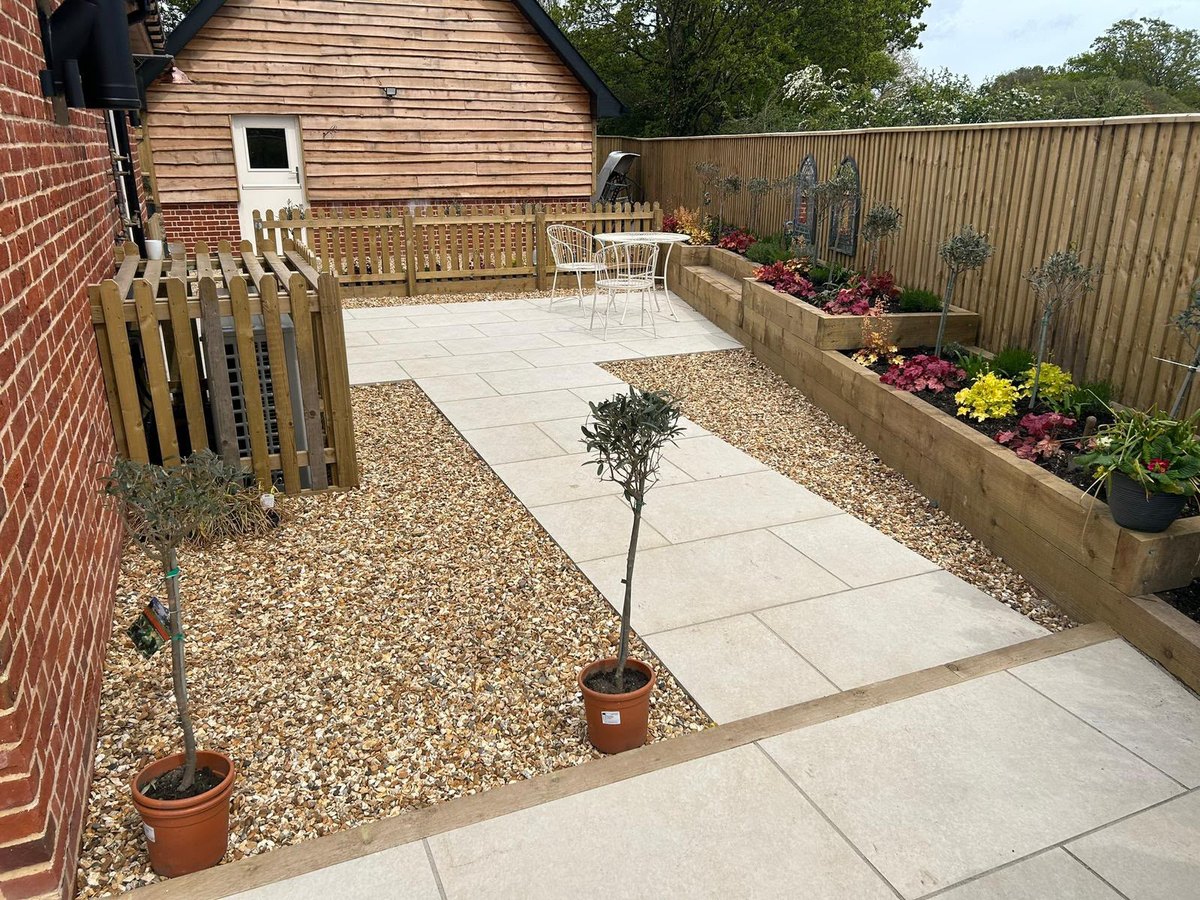
No rate per square metre, because what is under it decides more than what goes on top. A semi with a shared strip down the side, a bungalow with an open frontage and a house up a communal way behind a garage block are three different jobs before a machine turns a wheel. Ground conditions, the depth of the dig and how much muck goes away are the real variables. On ground that holds water, where you send it is a design decision with a cost. Ask the depth of dig, the sub base, the drainage and who takes the spoil away.
If it is urgent
A trip hazard, or a drive that floods
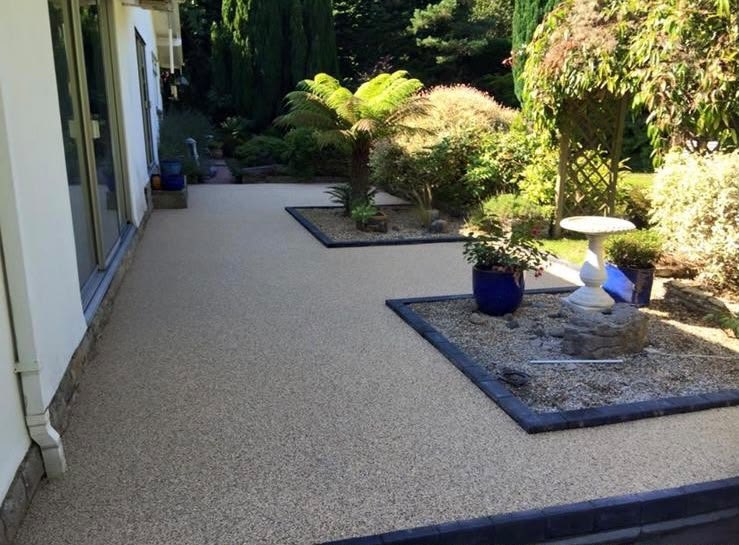
Ring rather than use the form. A lifted slab, a sunken bay by a doorway or a gully that has stopped taking water will not wait, because somebody falls or water ends up against the house. A pothole at the entrance to a shared access is everybody's problem and nobody's job, so ring and we will make it safe first. The phone is answered 24 hours for emergencies; scheduled work runs Monday to Friday, 8am to 6pm.
The one local thing
When the whole street's drives give up in the same year
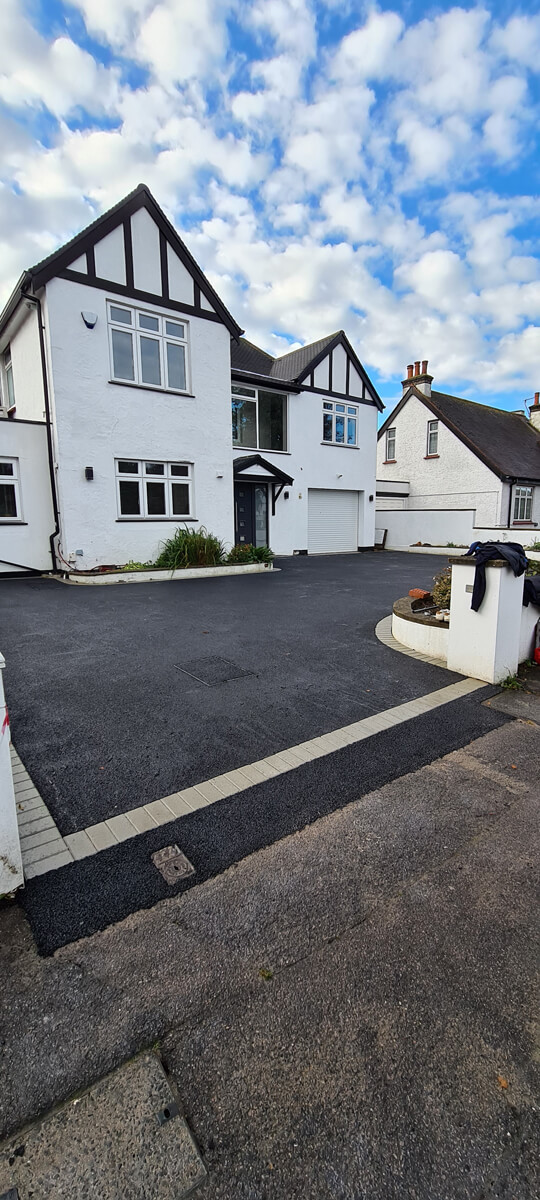
Sandford was built in a rush. Most of the housing went up between the mid 1960s and the early 1980s, a big slice of it inside a few years, and the drives went down with the houses. Surfaces age by time and weather as much as by use, so they do not fail one at a time up a street.
They fail together. That is why you will see three drives on a road broken up in the same winter, and it is why your neighbour probably has the same crack in the same place as you.
Two useful things follow. The first is that if a neighbour is thinking about it too, say so when we come out. Getting the machine, the muck away and the deliveries in once, for two drives that share a boundary, takes real money off both. It also means the falls, the levels and the joint on the line get built as one thing rather than negotiated afterwards. The second is a warning.
A street full of failing drives attracts callers at the door offering a quick tarmac job with material left over from somewhere else. There is no such thing as spare tarmac, that work goes down on no base at all, and it is back to bare ground in two winters. Anyone worth having will look under your surface, put the dig depth and the sub-base in writing, and be happy to wait while you compare it with someone else's price.
Who you are dealing with
A local firm you can check
We cover Sandford, Holton Heath, Organford, Stoborough and Wareham itself, ten miles from us across BH20. Bournemouth Roofing & Building Ltd, registered in England and Wales, company number 15471719, which you can look up in a minute. Thomas Hannen's business, and he is the one who comes out to price the job, not a salesman. A verified customer's 10 out of 10 on Checkatrade. The visit and the written quote are both free.
Questions
Sandford questions we get asked
Why is every drive on the street failing at once?
Because they were built at once. Six in ten homes in Sandford went up between the mid forties and the early eighties, the biggest cluster of them in the late sixties and early seventies, so the concrete and tarmac laid with those houses is the same age and reaches the end together. It is worth asking two or three neighbours whether they are thinking about it, because one machine visit can cover more than one plot.
Where does the surface water go on ground this wet?
Not into a hole in the ground on trust. Sandford sits on naturally wet ground, so a soakaway is only the right answer if a percolation test says the soil will take water at the rate it arrives. Where it will not, the drive is fallen to a channel and piped to a positive outfall instead. Digging the soakaway first and testing it afterwards is how people end up with a pond at the bottom of the drive.
The bungalow door sits level with the path. What now?
That sets the finished height of everything else. Nearly a quarter of Sandford is bungalows, and on a single storey build of that period the threshold often sits barely above the outside ground, so there is no room to lay a new surface over the old one. The old path comes out, the level drops, and the paving finishes clear of the door with a channel across it. Building up instead is what puts water inside.
Can the drive be widened to take a second car?
Usually, and the constraint is the crossing rather than the slab. Widening inside your own boundary is straightforward, but where the extra width crosses the footway the highway authority at Dorset has to approve and inspect it before anything is laid. We build the new strip on the same depth of sub-base as the original, because a shallow section beside a deep one is what makes the join open up within a winter.
What should I look at before deciding to redo it?
Stand at the top on a wet day and watch the water. If it collects against the garage or the house wall instead of reaching the road, the falls are the problem and a fresh surface at the same levels repeats it. Then look at the edges, because a drive that has spread sideways has lost its restraint and that is an edging job. Sandford has more semis than anything else, so check it is not running onto next door.
Nearby, and next door
Driveways and patios near Sandford
Driveways and patios nearby
Our other trades in Sandford
Everything we do in Wareham Driveways and patios, all areas Every area we cover
Free quote
Want a proper price for the drive?
Tell us what your surface is doing and we will come and dig a hole in it. Free visit, free itemised written quote, no salesman.