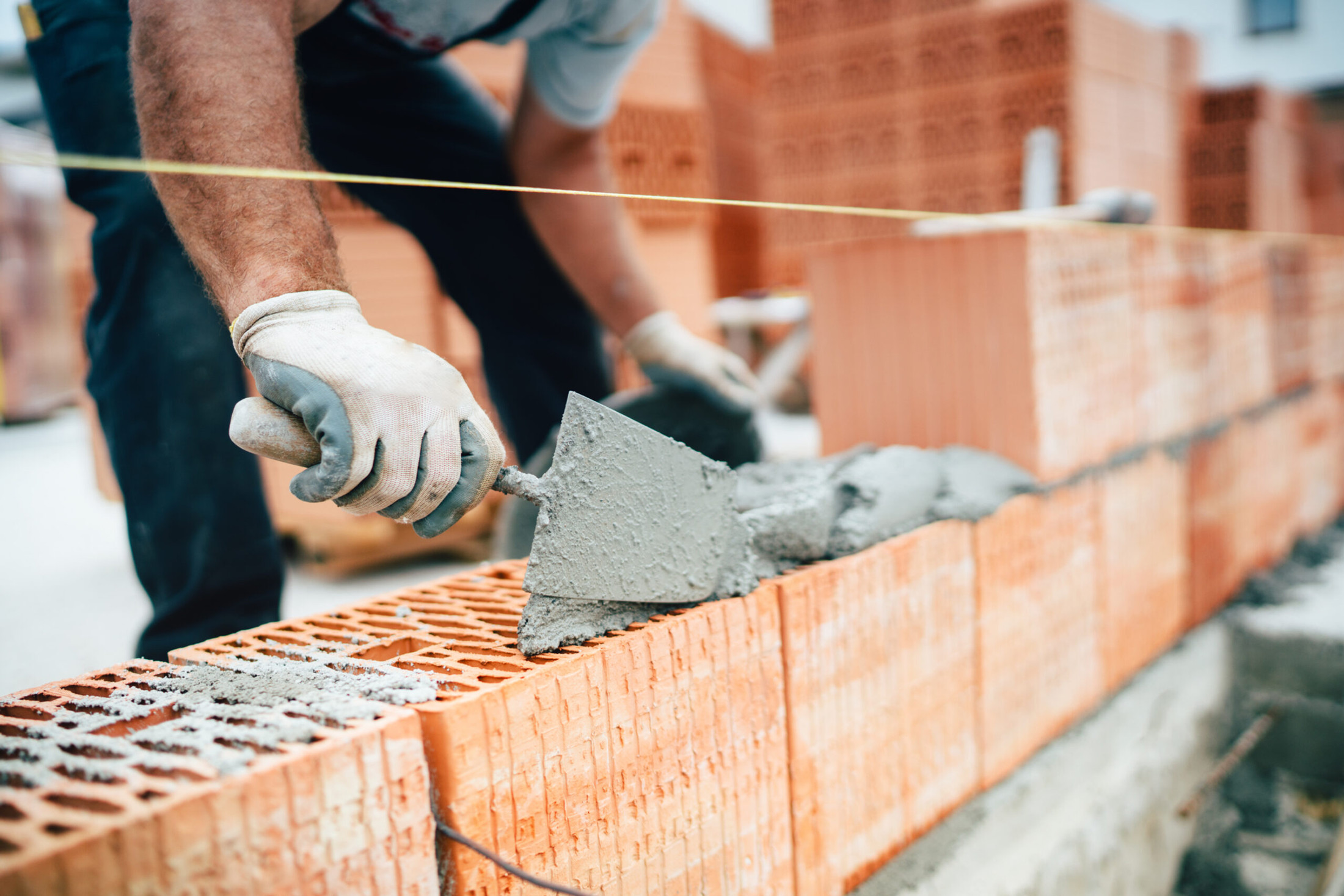
Bricklaying and repointing in Sandford
Repointing, brick repairs, chimney stacks and boundary walls across Sandford and the Wareham villages.
The site visit is free and so is the written itemised quote. Thomas Hannen prices every job himself.
Bricklaying and repointing
Repointing in Sandford: what we do, and what can wait
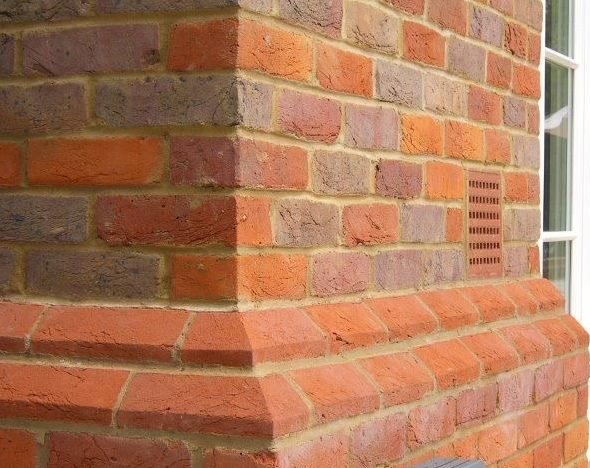
Nearly all of Sandford was built in one long stretch either side of 1970, and on brickwork of that age the mortar joint is what gives way first. Raking out a weather-facing elevation and repointing it in a matched mix is a few days of work, and on most houses here it is all the wall actually needs.
Three things bring people to the phone in the village. Joints on the south west elevation that have washed back until the edge of every brick stands proud of them. A crack running dead level along one bed joint, in the same line right across a wall. And a garden wall or a gate pier that has been shoved out by a car, a root or thirty winters of a loose coping.
We come and look at the wall rather than at a photograph of it, because a crack has three or four possible causes and only one of them is the pointing. You get a plain survey of what needs doing now, what will keep for a few years, and an itemised written price for the part that will not. The site visit and the quote are both free.
The work
The brickwork jobs we do in Sandford
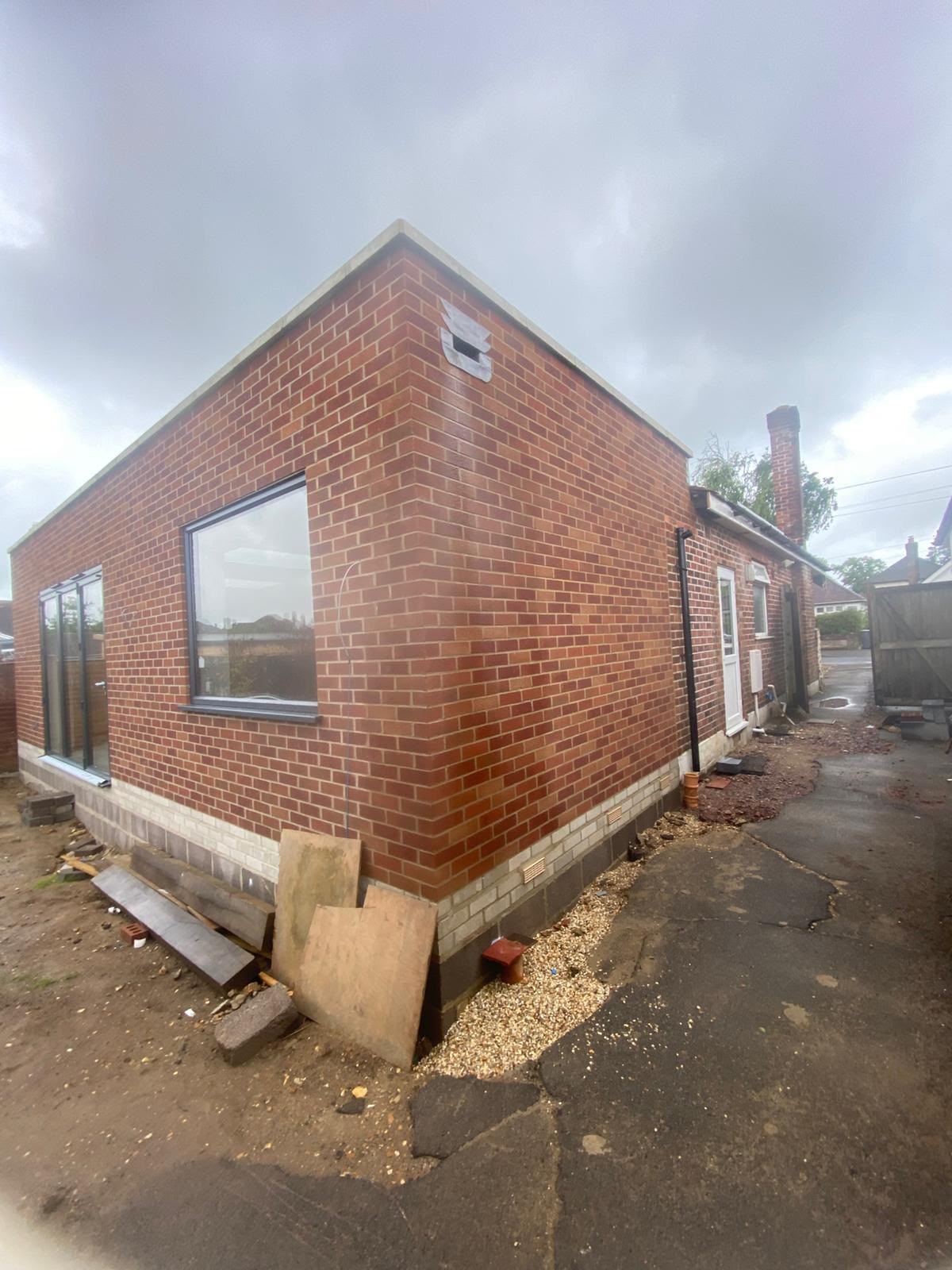
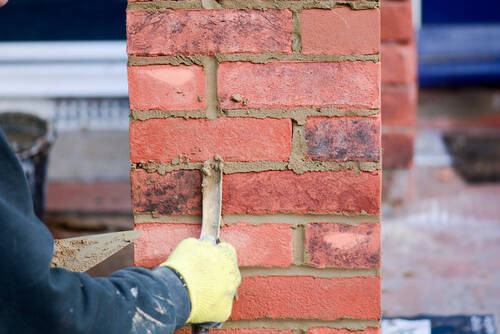
Repointing cavity-built elevations. Most of the village is cavity work in a hard facing brick, bedded in a sand and cement mortar that was mixed strong and has still lost its face on the weather side. You can spot it from the pavement: the joints on one elevation sit well back and every brick edge stands proud. We rake those joints out by hand to a depth the new mortar can hold in, damp the wall down, and repoint in a mix matched on sand and colour to what survives on the sheltered elevations. On stock of this age the profile is nearly always a bucket handle joint and it goes back that way.
Wall ties, and one cohort ageing together. Three fifths of the houses here went up between 1945 and 1982, peaking in the late sixties and early seventies, so they arrive at the same faults within a few years of each other. That level crack along one course is not settlement and it is not the pointing: it is the wall ties across the cavity rusting and swelling, and on brickwork of that generation it is the most common structural fault we find in the village. It is not a rebuild. We drill and fit replacement ties on a set pattern, make the holes good so they do not show, and repoint the courses that have cracked.
Where frost has got into a wet brick the face pops off, so we cut it out and replace it matched on size, colour and texture. A lot of stacks here now do nothing but stand in the weather: they go soft in the top courses, crack their flaunching and start to lean. We rebuild them course for course, reuse the sound brick, and cap a redundant flue with a vented cap so the stack stays dry inside. That is work at height off a tower or a scaffold under work at height rules, and the platform is its own line in the quote.
The boundary walls went up with the houses, usually a single skin with no pier to stiffen them and a coping loose for years. We rebuild bowed lengths, put a proper coping back on, rebuild gate piers, and set a damp proof course in at the base; where a raised border has buried the DPC we take the level back down. The handful of period buildings here, the pottery kiln among the four listed entries, are solid wall and want an NHL lime mix rather than cement.
How it runs
From your call to a written price
The quote is itemised by elevation: access, raking out, the mix, brick replacement and disposal on separate lines. Sandford is Dorset Council and no conservation area covers the village, so repointing and brick repair is maintenance and needs no planning permission. Four entries here are listed, and on a listed building or its garden wall repointing counts as alteration and needs listed building consent before a joint is opened. A new or raised boundary wall has height limits set out in Planning Portal guidance on garden walls, anything structural goes through building control, and work on a shared boundary brings in the Party Wall etc. Act 1996. We sort all of that out at the survey.
Cost
What decides the price of a brickwork job
No rate per square metre: the metre of wall tells you nothing until you know what the joints are like. A seventies semi with a driveway down one side, a bungalow with a fence tight against the wall and a terrace where every barrow goes through the house are three different set ups. How long a platform stands matters as much as its size, and the work at height rules are why it is a priced line rather than an optional extra. How deep the joints come out decides the hours more than the area does. Ask the depth, hand or disc, and how many bricks.
If something has moved
Loose brickwork, or a wall that has shifted
Ring rather than use the form. Anything overhead or leaning goes to the front of the queue: the first visit makes it safe, and we price the permanent repair once we can see how far the movement goes. Around Sandford it is most often a boundary wall clipped by a vehicle or pushed by a root. The phone is answered 24 hours for emergencies; scheduled work runs Monday to Friday, 8am to 6pm.
The one local thing
The village is all one age, so the brickwork fails together
Roughly six in ten homes in Sandford went up between 1945 and 1982, and the biggest single block of them arrived in the late sixties and early seventies. That is worth knowing because it means the walls were built by the same trades, to the same detail, within a few years of each other, and they are reaching the same point at the same time.
When the weather elevation on one house has had enough, the two either side usually have as well. When we find corroded ties in one, we are rarely surprised next door.
Two practical things follow. Do not let anybody sell you a patch: if the joints have gone across a whole elevation, pointing the worst two square metres leaves a line you can see from the road and the rest follows within a couple of winters, so price the elevation.
And talk to a neighbour who has had it done, because for once the comparison is a fair one. If two of you go at the same time on a semi, the scaffold and the setting up are shared rather than paid for twice, and that is a real saving on a wall that runs across both houses anyway.
Who you are dealing with
A local firm you can check
We cover Sandford, Wareham, Holton Heath, Ridge and the rest of BH20, and we are under ten miles out, so coming to look at a wall is a morning rather than an expedition. Bournemouth Roofing & Building Ltd, registered in England and Wales, company number 15471719, which you can look up in a minute. Thomas Hannen's business, and he is the one who comes out to price the job, not a salesman. A verified customer's 10 out of 10 on Checkatrade. The visit and the written quote are both free.
Questions
Sandford questions we get asked
What tends to fail on the post-war houses here?
The edges and the ties, not the brick. 60.7% of Sandford went up between 1945 and 1982, peaking in the late 1960s and early 1970s at 24.0%, which means cavity walls with galvanised ties and a mortar never meant to outlast the brick. Ties rust, expand and lift the bed joint, so you get a horizontal crack repeating at regular height up the elevation. That is a tie job with local rebuilding, not a repoint.
Sandford has almost no listed buildings. Do I need consent?
For a repoint on an ordinary house, none. There are four listed entries here and no conservation area, so Dorset Council has no interest in the colour of your mortar or the profile of your joint. Building regulations are a separate thing and they do apply where structure moves: a new lintel, an opening formed or widened, a wall rebuilt off its footing. We say at the visit which side of that line the work sits.
Our bungalow wall is damp low down. What causes that?
Ground level, nine times in ten. Bungalows are 22.7% of the housing in Sandford and a bungalow puts a long low wall very close to the soil, so a raised border, a path laid over the original one or a patio built up against the brick will bridge the damp course. Water rises into the wall above it and the pointing gets the blame. Dig the ground back below the course and the wall usually dries out on its own.
Does the Poole Harbour designation apply to a garden wall?
Not a garden wall, no. Nutrient neutrality for Poole Harbour engages only where a scheme adds overnight accommodation, which means bedrooms and foul drainage, so a rebuilt boundary wall, a new pier or a repoint in Sandford falls outside it entirely. The rules would come into a garage conversion or an annexe with a bedroom in it. For brickwork repairs there is no application to make and no calculation to do.
Will a patch of new brickwork stand out on our house?
At first, yes, and much less so after a couple of winters. Most of Sandford is machine made brick from the late 1960s and early 1970s, which is easier to match than a handmade stock because the colour runs consistently through the batch. We work from reclaimed brick of the same era where we can, and take replacements from an inconspicuous elevation where we cannot. The mortar matters more than the brick for how a patch reads from the road.
Nearby, and next door
Bricklaying and repointing near Sandford
Bricklaying and repointing nearby
Our other trades in Sandford
Everything we do in Wareham Bricklaying and repointing, all areas Every area we cover
Free quote
Get a written price for your brickwork in Sandford
Tell us what the wall is doing and we will come and look at it. Free visit, itemised written quote, no pressure afterwards.