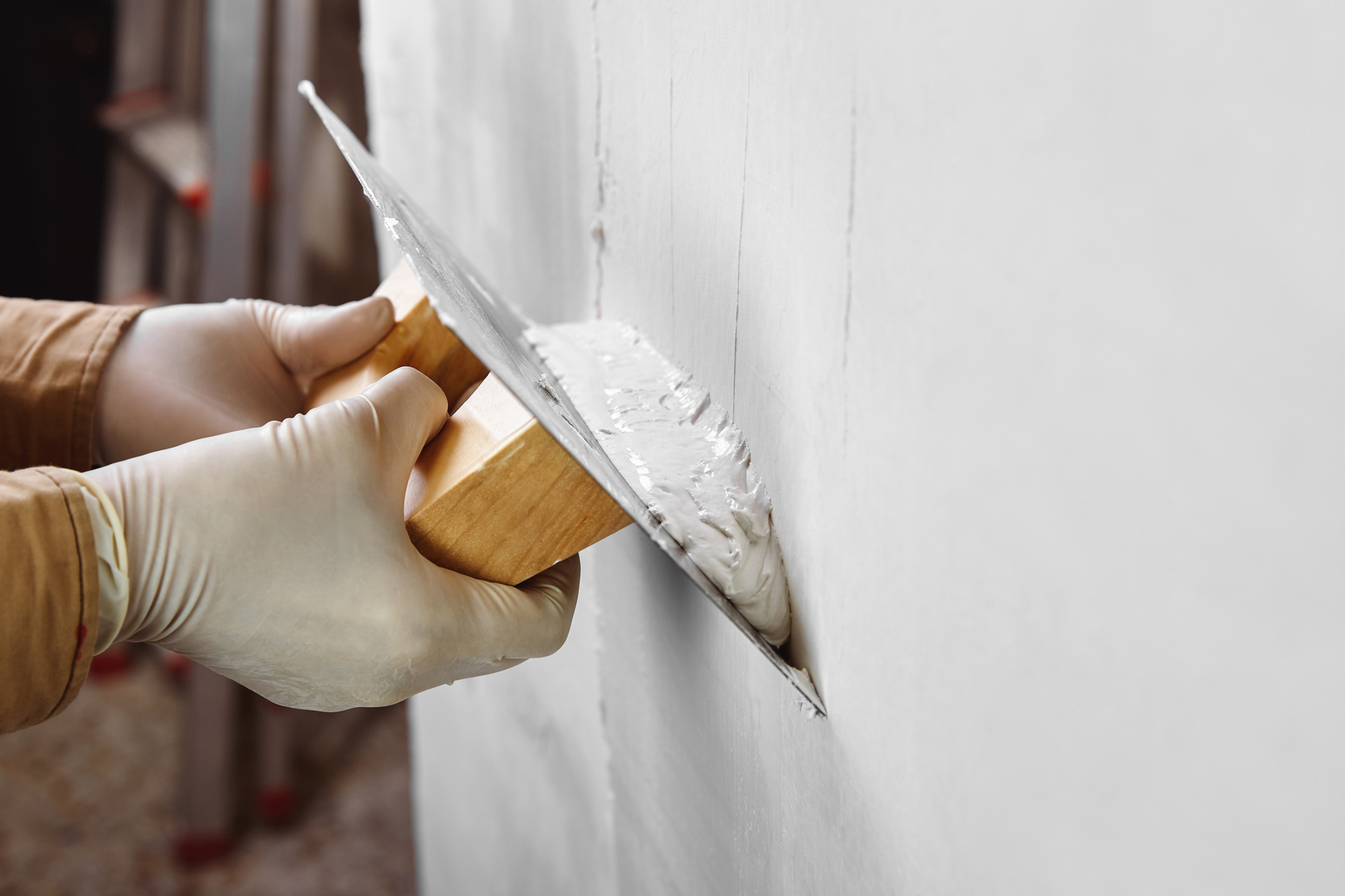
Plastering in Sandford
Ceilings, skimming, corner repairs and external render for the post-war houses between Wareham and Holton Heath.
The site visit is free and so is the written itemised quote. Thomas Hannen prices every job himself.
Most walls in Sandford do not need replastering. Three houses in five here went up between the war and the early eighties, and that means solid plastered blockwork that is usually still stuck fast. Knock it: a dull, solid note means a skim over the top will give you flat, paintable walls for a fraction of a strip out. A hollow drumming note over one area means the plaster has let go there, and that patch has to come off.
Three jobs bring most of the calls out of the village. A textured ceiling, put on when the house was fairly new, that has started to crack in a straight line along the board joints. An external corner where the plaster has burst and there is a rusty metal edge showing through. And a wall gone soft and blown after a leak, or dark and patchy with mould in a cold corner behind the furniture.
All of it is our work, inside and out, and the making good comes with the job. The site visit is free, the written quote is itemised, and if half a day of patching will do we will say so rather than price a room.
The work
The cold corner behind the wardrobe is condensation
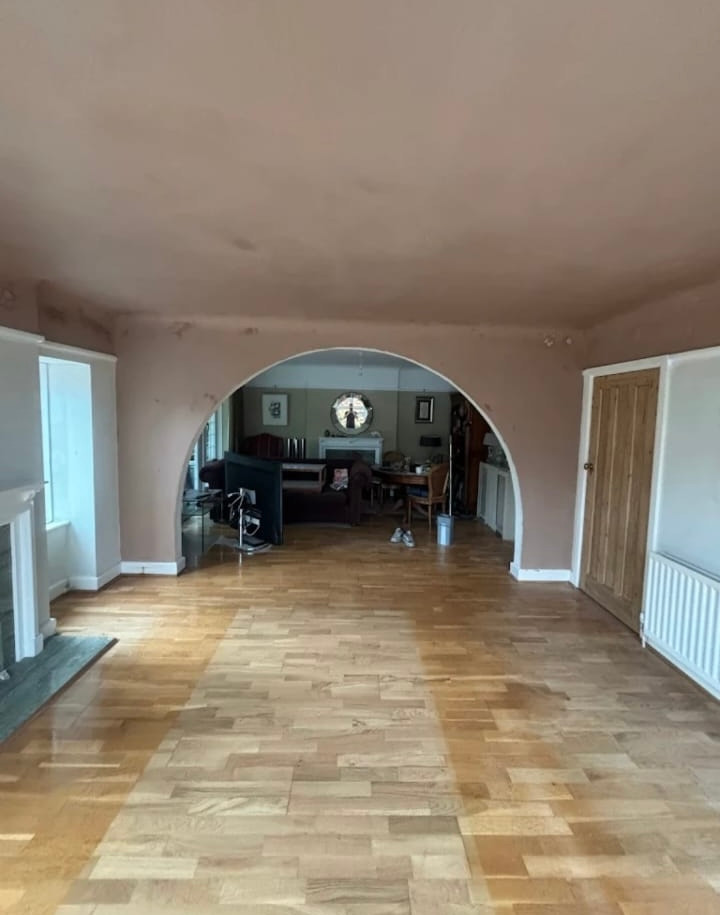
Ceilings, which is the commonest job here. Six houses in ten in Sandford went up between 1945 and 1982, peaking in the late sixties and early seventies, so the ceilings are plasterboard with scrimmed joints and a great many had Artex rolled over the top a decade later. The joints move and the crack telegraphs through in a dead straight line. Where the coating is shallow and stuck fast we prepare it and skim straight over. Where it is heavy swirl, or somebody has patched round a light fitting, over-boarding and taping the joints gives a flatter ceiling for very little more. Anything textured from before 2000 can hold a trace of asbestos, so it is sampled rather than sanded.
The walls are solid plaster on blockwork, not dry lining, so one here behaves differently from a wall in a newer house. Sound walls get sealed and two coats of finish laid on with a trowel. Once it has gone off and dried right through, the wall takes a thinned mist coat before you decorate, because fresh plaster drinks the first coat of emulsion and shows every roller mark otherwise. Where the plaster has blown it comes off back to the block and a backing coat goes on first, browning or hardwall on solid work and bonding where the background is a patchwork, floated out and ruled straight.
Corners that have burst. Very common in stock of this age. The external corners and window reveals were formed with a galvanised angle bead buried in the plaster. Where damp has reached it the metal corrodes, swells and pushes the plaster off the arris, so you get a line of cracking down a corner with a rusty edge behind it. Filling does nothing. The bead is cut out, a new one fixed, and the corner made good and run in, which is an afternoon rather than a project.
A wall that is dark, spotted and cold in one corner behind a wardrobe is usually condensation rather than a plastering fault. The fabric of this era is not generous with insulation and the ground round here is wet heathland sand, so warm damp air finds the coldest surface. We say when the answer is ventilation and heat rather than plaster, and Approved Document F sets out what a room is meant to have. Outside, the rendered gables and panels of pebbledash and Tyrolean are nearly all sand and cement: local damage is cut out square and patched in a matching mix, and a failed elevation is stripped and put back as a silicone thin coat or a monocouche, which is coloured through rather than painted, off a bell cast bead at the base. On the handful of older cottages in the parish a solid wall wants lime inside and a soft render outside.
How it runs
From your call to a written price
Same team from the first visit to the last, one person to ring, and none of it sub-contracted. We survey the room rather than a photograph, because a ceiling that only needs skimming and one that wants over-boarding look identical in a picture. Sandford is straightforward on permissions, which is worth saying because a lot of this patch is not: no conservation area covers the village and there are only four listed entries in the parish, so for most houses here the external finish is your own choice. Planning Portal guidance on external walls sets out where that stops, and on one of the four, listed building consent reaches the inside as well as the elevation.
Cost
What decides the price of a plastering job
There is no rate per square metre, because what is behind the finish decides it. A wall that has blown comes off, which brings a backing coat and a float back into the job. Over-boarding a ceiling costs more than skimming it but takes the old textured coating out of the argument. Outside, a full gable wants a scaffold, which is why work at height rules make access its own line, and re-rendering an elevation counts as renovating a thermal element, so Approved Document L can ask for the insulation behind it to be improved. Ask whether the ceiling is being skimmed or boarded.
If it has started to come down
A ceiling sagging, or plaster blown off a wall
Ring rather than use the form. A ceiling that has begun to bow, one soaked by a burst pipe or a leaking tank in the loft, or plaster coming off a wall in sheets goes to the front of the queue. Do not sleep under it and do not push at it. Sandford is under ten miles from us on the Wareham road, so ring and tell us what has come down.
Worth knowing
The whole village was plastered in the same few years
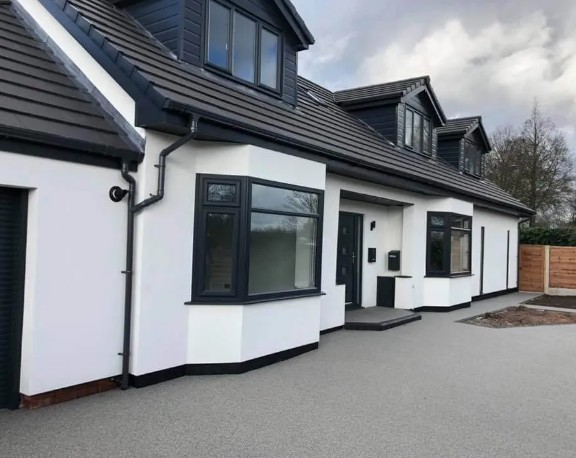
Three houses in five in Sandford were built between the war and the early eighties, most of them in a tight run either side of 1970. That is unusual, and it is the one local thing that genuinely changes what you should expect. It means the interiors are all the same age: the same plasterboard ceilings with the same scrimmed joints, the same solid backing coat on blockwork, the same galvanised beads on the corners, and, in a great many of them, the same textured coating applied at roughly the same time.
Materials fail on a timetable, so the faults arrive together. When one house on a street has a crack running dead straight across the ceiling, the neighbours usually do too, and it is not subsidence, it is the board joints doing what board joints do.
The useful part is that it makes the job predictable and it makes prices comparable. If your neighbour has had a ceiling over-boarded and skimmed, yours is very likely the same piece of work, and their experience is worth more to you than a general enquiry online. It also means doing the whole ceiling is often better value than chasing one crack, because the next joint will go the same way inside a year or two.
Where it cuts the other way is the corner beads and the cold corners: a house that has been re-rendered or had the cavity filled will behave differently from the one next door that has not, so we still look before we price rather than assuming your house is a copy of the last one we did.
Who you are dealing with
A local firm you can check
We cover Sandford, Holton Heath, Wareham and Stoborough across the BH20 postcode, and work right across Purbeck, Poole and east Dorset from a base near Bournemouth. Bournemouth Roofing & Building Ltd, registered in England and Wales, company number 15471719, which you can look up in a minute. Thomas Hannen's business, and he is the one who comes out to price the job, not a salesman. A verified customer's 10 out of 10 on Checkatrade. The visit and the written quote are both free.
Questions
Sandford questions we get asked
Why do the same cracks show up in every house here?
Because the street went up together. Six in ten Sandford homes were built between 1945 and 1982, with the biggest single run in the late 1960s and early 1970s, so the ceilings, the partitions and the plasterboard behind them are all the same age and reach the same point at once. Joint tape lifting at the same height in three houses along a row is that, not subsidence.
Is a 1970s Sandford ceiling likely to be lath or board?
Board, on almost all of it. Only about one home in twenty here predates 1919, so lath and horsehair is rare in Sandford and what you have is plasterboard on joists with a skim or a textured finish over the top. That matters to the price and the programme, because a boarded ceiling can usually be over-boarded and skimmed rather than stripped, and the joists rarely need the extra fixing an old lath ceiling wants.
Does the Poole Harbour nutrient rule stop us adding a bedroom?
It does not stop it, it adds a step. Sandford drains to Poole Harbour, which is protected for nutrients, and the rule bites where a scheme creates new overnight accommodation. Turning the garage into a bedroom engages it. Replastering the bedroom you already have does not. Get that settled with Dorset Council before the studwork goes up, because the wet trades come last and are the cheapest part of the job to delay.
What do you actually check before quoting a re-skim?
I tap the whole wall, not one corner of it. On the post-war Sandford stock the failures run to a pattern: blown patches around a blocked-up fireplace opening, tape lifting where a 1970s partition meets the ceiling, and a soft band low down on any wall that has had a leaking waste pipe behind it. I mark those on the sketch and price the make-good as its own line rather than burying it.
Can I tell from inside whether the plaster has blown?
Knuckle down the wall and listen to it. A sound backing coat gives a dull thud, a blown one rings and sometimes shifts slightly under your hand. The usual pattern in Sandford is a hollow band about a metre up on an external wall, which is a plaster problem, as against a ceiling that drums right across, which is more often the board fixings letting go. Mark what you find in pencil and I will check it against the meter.
Nearby, and next door
Plastering and rendering near Sandford
Plastering and rendering nearby
Our other trades in Sandford
Everything we do in Wareham Plastering and rendering, all areas Every area we cover
Free quote
Get a price for your plastering in Sandford
Tell us which room, or send a photo of the ceiling, and we will book a look. The visit and the written quote cost nothing.