
Plastering in Post Green
Textured ceilings taken back, dry lining and skimming, blown walls replastered, garage conversions and render around Post Green, priced in writing after a free visit.
The site visit is free and so is the written itemised quote. Thomas Hannen prices every job himself.
Most of the plastering we do around Post Green is a ceiling. The houses along this stretch of the Dorchester road went up between the late sixties and the early eighties, so the ceilings are plasterboard fixed to the joists and a great many of them are textured. Screw the boards back tight, tape the joints, skim it in two coats, and a tired ceiling is a flat one inside a day or two.
Four things bring people to the phone here. A textured ceiling that has been up since the house was built and that everybody has had enough of. Nail heads pushing small domes through the paint, with a hairline crack running dead straight where two boards meet. A garage or a conservatory being turned into a proper room. And a wall that sounds hollow when you knock it, which around here is usually normal rather than a fault.
We are under eight miles away, so coming out to look is easy. We tap the walls and ceilings, tell you what is genuinely loose and what only looks tired, and put the price in writing with the days it takes. Both the visit and the itemised quote are free, and if the answer is that a room needs decorating rather than plastering, that is what you will be told.
The work
Bungalows, so it is mostly ceiling work
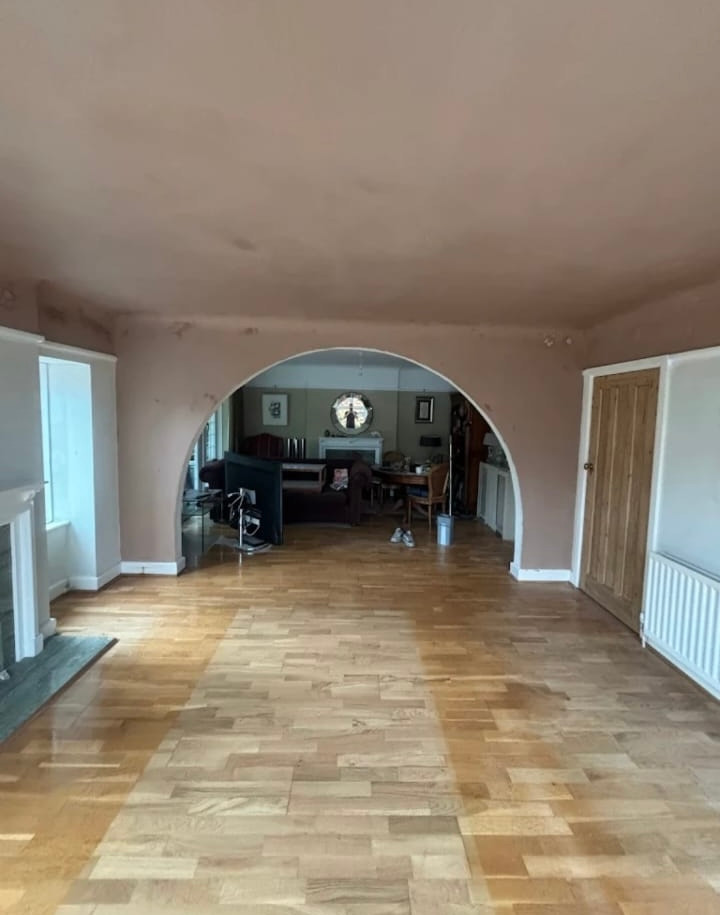
Bungalows, so it is mostly ceiling work. Getting on for a third of the homes around Post Green and Lytchett Minster are bungalows, so the ceiling is the largest single surface in the house and there is no floor above to work from. On stock of this age the boards were nailed rather than screwed, the fixings work loose, and the joints open in a straight line. Skimming over that buries the problem for a year. The boards go back tight with screws, the joints are taped, then two coats of finish plaster go on with a trowel. Where a board is soft or stained from a leak in a cold loft, a fresh layer of plasterboard over the top is quicker and far less mess than dropping the old ceiling into a furnished room.
The seventies and early eighties are the peak years for textured coatings, which is exactly this stock. A shallow pattern stuck fast can be skimmed straight over; heavy swirls get knocked back first, and a ceiling patched around a light fitting is better over-boarded. Anything textured from before 2000 can hold a small amount of asbestos, so it is sampled rather than sanded.
Walls here are a mixture, so we test before we quote. A dry lined wall can be filled, taped and skimmed as it stands. A solid plastered wall is a backing coat of browning or hardwall on brick or block, and where it has blown it comes off and the backing coat goes back first, or bonding where the background is a patchwork of chases and old repairs. The older cottages nearer the village are different again, solid walls that want to breathe, where lime rather than gypsum is the right answer. Whatever goes on, it is left to dry and given a thinned mist coat before you decorate.
Garage conversions and loft rooms are common here, because the plots are wide and the garages integral, and the insulation behind the board has to be seen by building control before it disappears, with an angle bead on every external corner and a stop bead at each reveal. Outside it is gables, chimneys and porches, much of it sand and cement and some of it pebbledash, which crazes with age and rings hollow once water gets behind a panel. A failed elevation comes off and goes back as a silicone thin coat or a monocouche off a bell cast bead. The exception is park homes, and we get asked: those are thin board on a timber frame and not a plastering job, so we say so rather than take the work.
How it runs
How we work, from first visit to final coat
Same team from the first visit to the last, one number to ring, and none of it sub-contracted out. The quote is itemised: what comes off, how each background is prepared, the beads, the backing coat, the finish coat, the making good and the waste, and the old plaster leaves with us. Dorset Council is the planning authority and building control here. Nothing we do inside needs planning permission. Outside is worth one check, because the Lytchett Minster conservation area covers part of the village and there are listed buildings along the Dorchester road, where a change of external finish is controlled and listed building consent can reach internal plaster as well.
Cost
What it costs, and what changes it
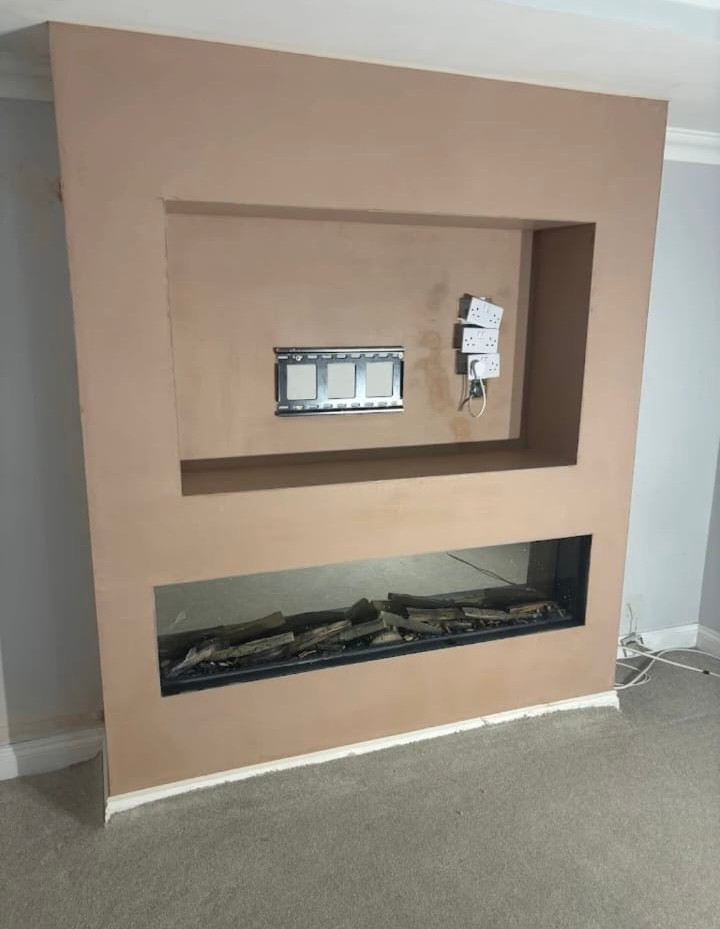
There is no rate per square metre. Old plaster still stuck fast takes a skim; a hollow wall comes off and brings a backing coat back into the job. In a bungalow the ceilings are most of the job and every trowel stroke is overhead. A detached bungalow with a drive and a side gate, a semi on one of the closes with the van out on the road, and a rear extension reached only through the kitchen are three different jobs. A tower does for a bungalow gable and a scaffold is a priced line under the work at height rules, and Approved Document L can ask for the insulation behind a renewed render to be improved.
If it has started to come down
A ceiling that has blown, or damp coming through
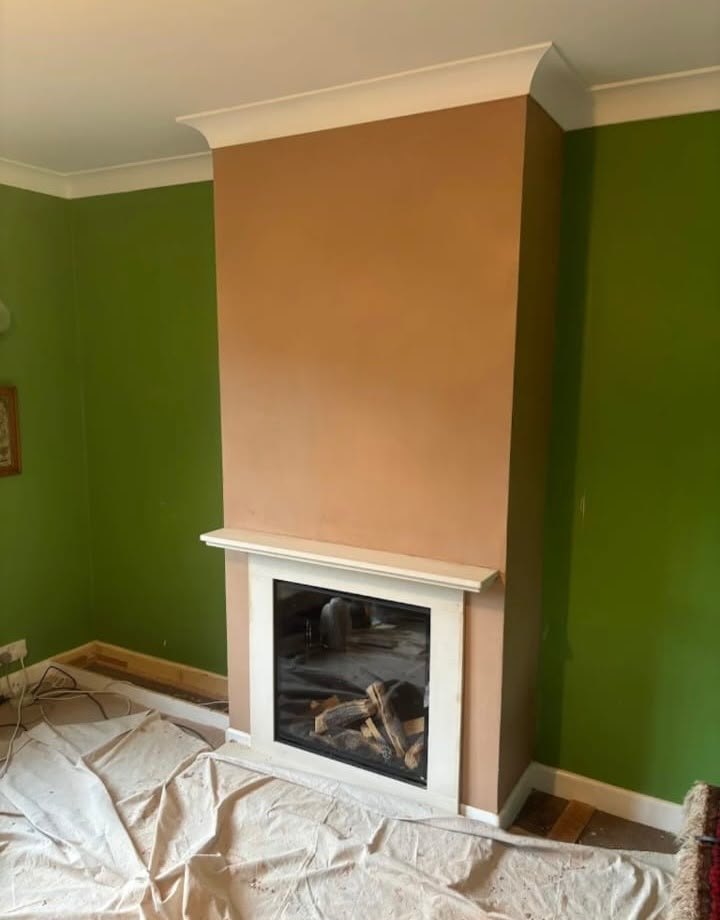
Ring rather than use the form. A ceiling that has begun to bow, or plaster coming off a wall in sheets, goes to the front of the queue. We are under eight miles away, so a Post Green call is normally looked at the same day or the next. If the ceiling is under a cold loft, put a light on up there and find the wet patch above first.
Worth knowing
Why so many walls here sound hollow
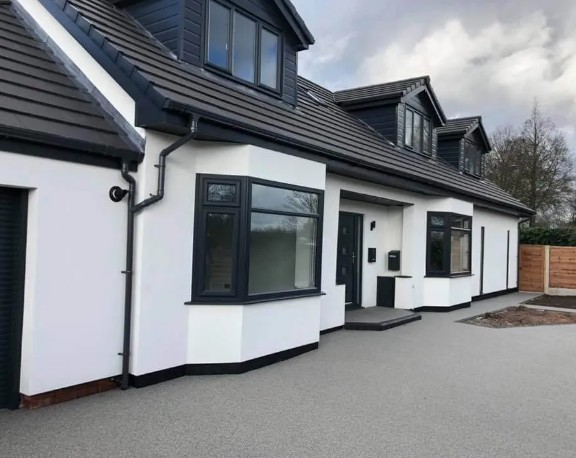
Knock on a wall in a house built from the late sixties onwards and it very often sounds hollow all the way along. That is not plaster coming away from the brick. It is dry lining: plasterboard stuck to the blockwork on dabs of adhesive with a gap behind it, or fixed to a timber stud, then either taped and jointed or skimmed. On an older solid plastered wall, hollow means trouble, because the plaster has lost its grip and has to come off.
On a dabbed wall, hollow is just how it was built. The way to tell them apart is the pattern of the sound: dry lining is hollow evenly, with a firmer note every few hundred millimetres where a dab or a stud sits, while blown plaster is hollow in patches with sound plaster either side, and it sounds gritty when you tap the edge of it.
Three things follow, and they are worth knowing before you take a quote. First, nobody should be pricing to hack a dry lined wall off and replaster it; it takes a fill, a tape and a skim, and a quote that says otherwise has misread the wall. Second, fixings behave differently: a heavy mirror, a radiator or a run of kitchen units needs a proper plasterboard fixing or a screw into the block behind, and pulling a bracket out of a dabbed wall takes a fist sized piece of board with it.
Third, that gap behind the board is why a north facing corner can go mouldy without the wall being wet at all; that is condensation on a cold surface and replastering does not touch it. We will tell you which of those you have got at the visit, because two of them are our work and one of them is not.
Who you are dealing with
The local firm you would be dealing with
We cover Post Green, Lytchett Minster, Lytchett Matravers, Upton, Holton Heath and Sandford, and the BH16 addresses along the Dorchester road, with Dorset Council for planning and building control. Send the postcode if you want to be sure it is us and not somebody two counties away.
Bournemouth Roofing & Building Ltd, registered in England and Wales, company number 15471719, which you can look up in a minute. Thomas Hannen's business, and he is the one who comes out to price the job, not a salesman. A verified customer's 10 out of 10 on Checkatrade. The site visit and the written itemised quote are both free.
Questions
Post Green questions we get asked
Does the Lytchett Minster conservation area cover our house?
It covers part of the settlement rather than all of it, so the first job is checking the boundary with Dorset Council. Inside it, putting render back like for like is maintenance and needs nothing. A different material, a different texture or a noticeably different colour on a visible elevation is a change, and that gets asked about beforehand. Internal plastering sits outside all of it, wherever the boundary happens to run.
Nearly a third of Post Green is bungalows. Does that help?
It helps on ceilings. Around thirty per cent of the housing here is single storey and over half of it went up between 1945 and 1982, so we are usually working under a low ceiling with the loft directly above rather than a bedroom floor. Boards go up faster, there is somewhere to stand, and where a ceiling is coming down the loft insulation can be lifted out and put back rather than ruined.
Are the older properties around Post Green House listed?
Several are. Eighteen listed entries sit in this area, Post Green House among them, and listing catches farm buildings and estate cottages as readily as it catches a principal house. That consent covers what is inside as much as the elevation, so an old lath ceiling or a lime plastered wall in a listed cottage cannot simply be stripped out and boarded. Dorset Council confirms status by address if you are unsure.
We want to render a new garden room. Any planning issue?
The render is not the issue, the building is. Post Green falls in Green Belt, which says nothing about recoating a wall that already exists but does bear on a new outbuilding or an extension, so the structure needs settling with Dorset Council before we are anywhere near it. Once it is up, watertight and dry, we can render it or board and skim it like anything else. Get the shell signed off first.
What do you look at before pricing a whole house?
Every ceiling gets tapped and every external wall gets checked at the corners and behind the furniture. We note which rooms have been done already, because in the seventies housing around here one or two rooms have usually been reskimmed and the rest never touched. Then openings, coving, sockets and anything that must come off get counted. Thomas Hannen prices it, and the written quote lists each room on its own line.
Nearby, and next door
Plastering and rendering near Post Green
Plastering and rendering nearby
Our other trades in Post Green
Everything we do in Corfe Mullen Plastering and rendering, all areas Every area we cover
Free quote
Get a written price for plastering in Post Green
Send the postcode and tell us which rooms. We come out, knock the walls and ceilings, and put the price in writing with the days it will take.