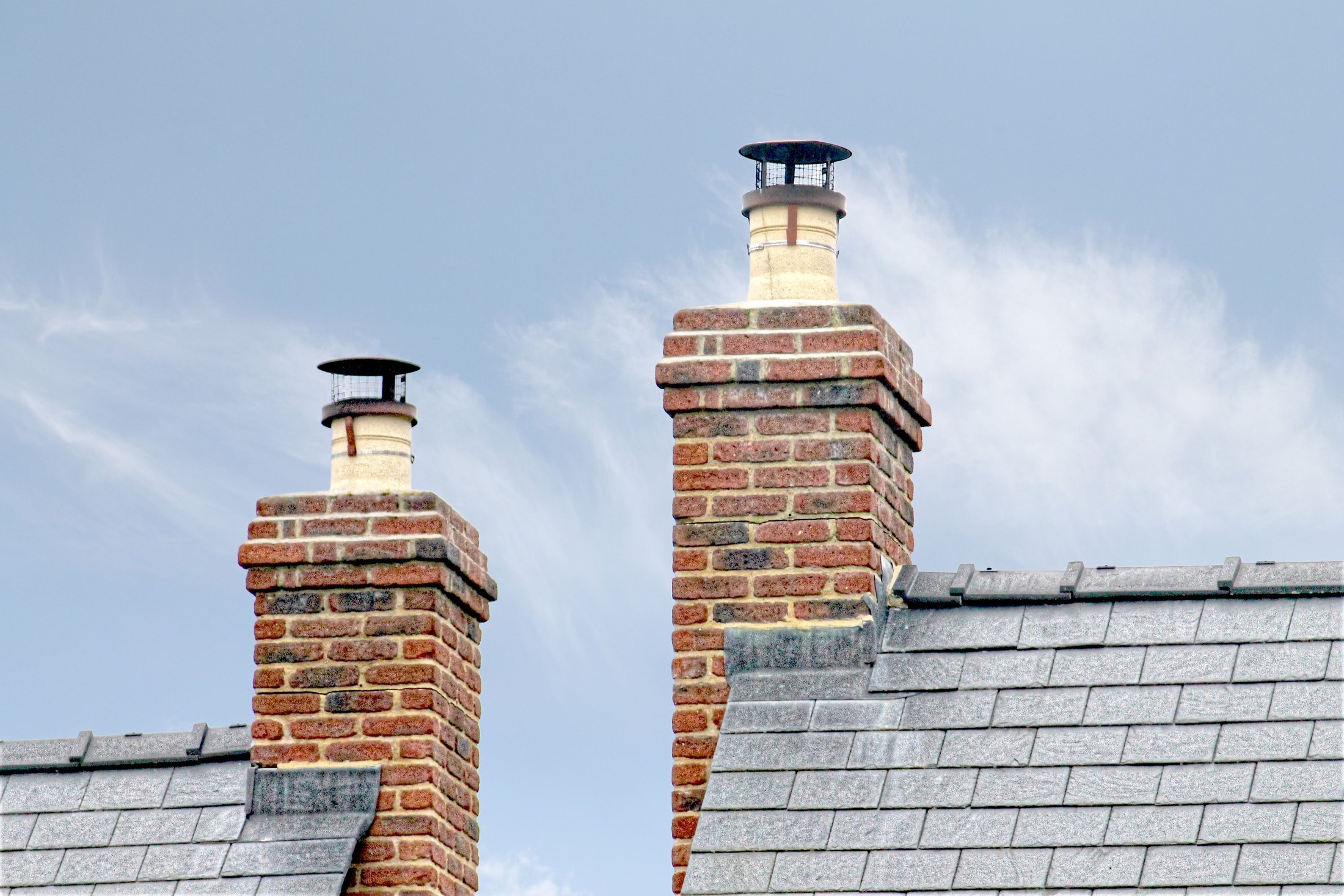
Roofing in Post Green
Matched tile and slate repair, leadwork, re-covers, flat roofs and guttering around Post Green, Lytchett Minster and Upton.
The site visit is free and so is the written itemised quote. Thomas Hannen prices every job himself.
Post Green is inside a conservation area with listed fabric in it, so the first question is what the finished roof has to look like. Repairing or re-covering in the same materials is maintenance and needs no application. Changing the covering is where consent comes in.
People ring for the usual reasons, plus one particular to older buildings: somebody has already patched it badly and it has started letting water in again. We come out, get on the roof, put our head in the roof space and photograph what we find. About eight miles away, and the visit costs you nothing.
The work
The sound tiles go back on the side facing the road
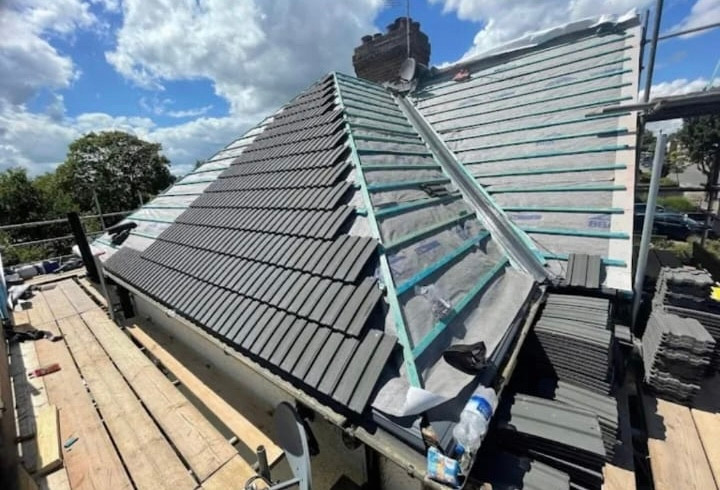
Matched repairs on older roofs. Plain clay tile and natural slate, with slipped and broken units replaced in matching material rather than whatever is nearest on the merchant's shelf. Inside the Lytchett Minster Conservation Area the match is most of the job: we strip carefully, sort what comes off, and relay the sound units on the elevation facing the road, with new stock going where the weathering difference will not show. Eighteen entries around here are listed, Post Green House among them, and on those the covering is not a free choice at all, so the address is checked before anything is ordered.
Leadwork. Chimney flashings, soakers, valleys and the abutments where the roof meets a wall, renewed in code rated lead and cut so it can move without splitting. On older buildings this is where most leaks start, and usually a better spend than anything done to the open field of the roof.
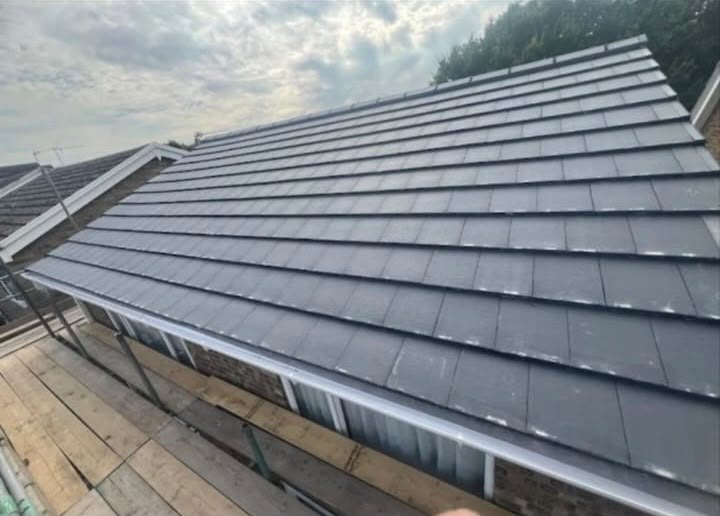
Not everything here is old. More than half the housing went up between 1945 and 1982, with concrete interlocking tile where the covering is sound and the ridge bedding, verge and underlay are not. Those get screwed down under BS 5534 rather than re-bedded in mortar. Around three in ten homes are bungalows, so there is more ridge and verge for the size of house, and edge work is a bigger share of what we do here than it would be along a street of two storey semis.
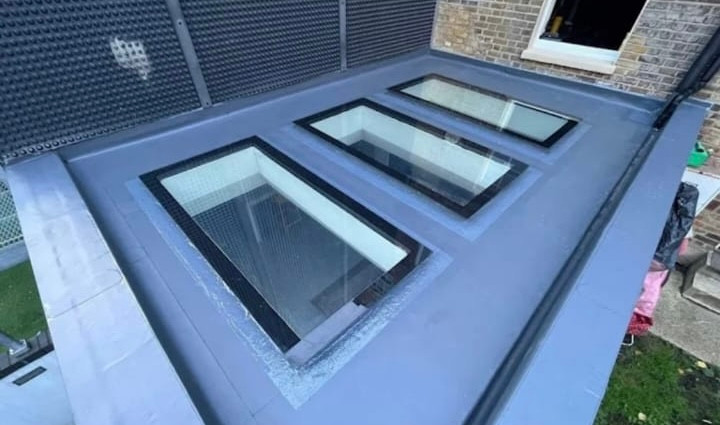
Under any covering sit the battens, underlay and rafter feet, and on an older roof those are usually what has gone. Perished felt, soft batten ends and a wet rafter foot at the eaves are what we look for from inside, before anyone talks about a covering coming off. Rear additions, garages and porches in felt, GRP fibreglass or EPDM rubber, deck first, then the falls, the upstands and the outlet. Gutters, downpipes, fascias and soffits: clearing moss and debris, re-fixing and renewing. Cast iron is common on the older buildings and often worth repairing rather than replacing. The ground here shrinks and swells, so a downpipe emptying beside a wall is worth putting right rather than living with. The loft, while the covering is off. Insulation, eaves ventilation and any condensation problem are far cheaper to sort with the roof open, and Approved Document L sets the standard a renovated roof is expected to reach.
How it runs
From your call to a written price
Same team throughout, no sub-contracting. The quote is itemised: access, the strip, the covering, each junction and disposal on separate lines. On protected fabric we also price the like for like option alongside anything else you are considering, so you can see what the compliant route costs before you decide. Repairing or re-covering in the same material and appearance is maintenance and is permitted development, with no application and no building control. Changing the appearance is where it bites, and inside the conservation area that includes swapping natural slate for a lookalike or plain clay tile for concrete. On a listed building, listed building consent is a separate matter and normally needed inside as well as out. Planning Portal guidance sets out the general position.
Cost
What decides the price around Post Green
No rate per square metre. On protected fabric the covering is rarely the biggest line. Matching takes longer than tearing off and re-covering, and it is what makes the finished roof look right from the road. Access on tight frontages means the scaffold position and skip are agreed before anything is ordered, and this is work at height, so the work at height rules are why the platform is a priced line. Junctions are priced one at a time, because that is where the leadwork hours go. Consent changes the timetable rather than the roof.
If it is leaking now
Water coming in today
Ring rather than emailing. Water gets into an older building faster and does more damage, because the plaster and the timber both hold it. Anything active goes to the front of the queue and is made safe before it is priced. If the building is listed, emergency making safe is still the right first move and we keep it reversible, so nothing needs consent afterwards.
Worth knowing
Two designations that catch people out
The Green Belt is largely irrelevant to a roof repair and very relevant the moment anyone mentions an extension or outbuilding. The second matters more than people expect: Post Green is inside the Poole Harbour nutrient neutrality catchment, which only engages where a scheme creates additional overnight accommodation.
It does not touch a re-roof, repointing, render or insulation. It does engage on a loft conversion that adds a bedroom, an annexe, or a garage conversion into habitable rooms. If your roof job is really the first step of a loft conversion, say so at the survey.
Who you are dealing with
A local firm you can check
About eight miles from us, covering Post Green, Lytchett Minster, Upton and the surrounding BH16 addresses. Dorset Council for planning and building control. Bournemouth Roofing & Building Ltd, registered in England and Wales, company number 15471719. Thomas Hannen's business, and he comes out to price the job. A verified customer's 10 out of 10 on Checkatrade. Visit and written quote both free.
Questions
Post Green questions we get asked
Are we inside the Lytchett Minster conservation area?
Post Green is, and that decides what can go back on. Inside the Lytchett Minster Conservation Area appearance is controlled, so replacing a covering with the same thing is maintenance while changing the material or the colour is not. Eighteen entries here are listed, Post Green House among them. Even on an unlisted house we put the exact tile or slate into the quote by name, because that is what Dorset Council will ask about.
Can the verges be sorted without re-covering the whole roof?
On most houses here, yes. More than half of Post Green went up between 1945 and 1982 with sand and cement verges, and those crack, drop out and let the wind under the edge tile long before the field of the roof has worn out. Taking the old mortar off and fitting a dry verge along that edge is a contained job that leaves the rest of the covering alone.
A tile came off overnight. What happens first?
It gets covered before anything else. Post Green is under eight miles from us, so for something left open we can usually be there the same day with sheeting and battens to hold it until the weather passes over. Then we look properly. A tile that comes off on its own has generally taken its nib or its nail with it, so we check the courses either side before deciding whether it is one tile or a slope.
Where should the downpipe be discharging on this ground?
Away from the wall, and into something that will genuinely take it. The ground through Post Green is cohesive and moves with the seasons, so a soakaway set too close to a footing keeps that spot wet all winter and then lets it dry back hard. Where the fall allows we would rather connect to a proper drain than dig a soakaway against the house. Where each pipe ends up goes on the quote.
Do you need to come inside the house at all?
For a leak, yes, because the inside tells you where the water lands and the outside tells you where it got in. We want to see the loft, the ceiling stain and, on the older properties near Post Green House, the top of the wall where the roof sits down on it. For a straight re-cover quote the outside and the loft hatch are usually enough. We say which when we book.
Nearby, and next door
Roofing near Post Green
Roofing nearby
Our other trades in Post Green
Roofing guides
Concrete vs clay roof tiles: which is right? Planning, building regs or listed building consent Storm damage to a roof: the first 24 hoursEverything we do in Corfe Mullen Roofing, all areas Every area we cover
Free quote
Get a price for your Post Green roof
Tell us the address and whether the building is listed or in the conservation area, and we will price the matched option properly.