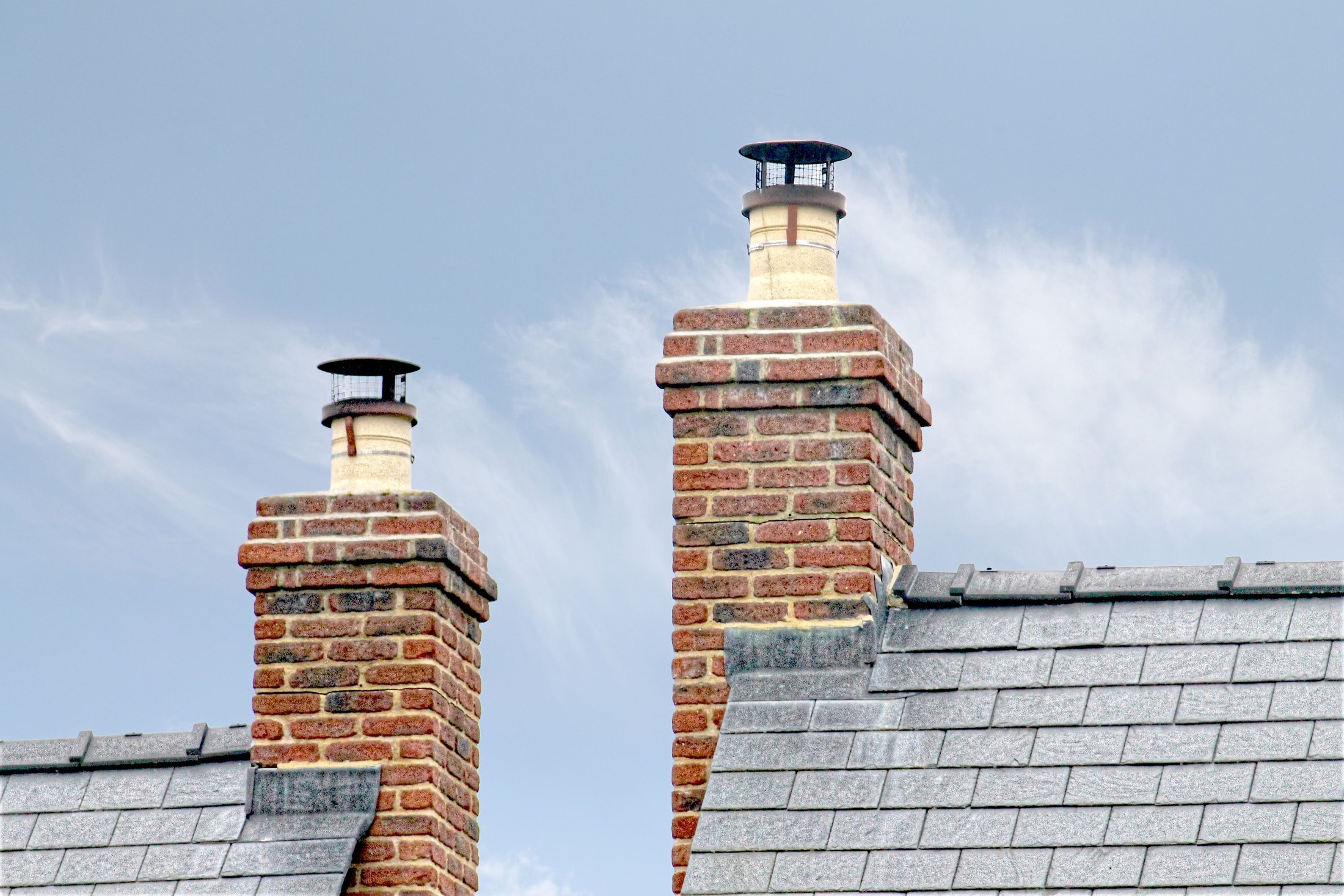
Roofing in Lytchett Matravers
Roof repairs, failed dry verge, re-covering, leadwork and flat roofs across Lytchett Matravers and Lytchett Minster. Same team throughout and an itemised written quote.
The site visit is free and so is the written itemised quote. Thomas Hannen prices every job himself.
If somebody comes round Lytchett Matravers offering to spray a coating over your concrete tiles to make the roof look new, say no. It seals the tile laps, traps moisture underneath and makes the covering harder to strip later. There is no coating that adds life to a worn tile.
Lytchett Matravers is really two roof conversations on the same road. There is the old core, where the coverings are plain clay tile and natural slate over soft timber, and there are the estates that went up either side of it, where everything is concrete tile on trussed rafters. What is wrong, and what it is worth doing about it, is completely different between the two.
We come out for a free site visit, get on the roof rather than looking from the drive, put our head into the loft and photograph what we find. The survey is what settles whether you are buying a repair, an edge job, or a covering that has genuinely run out.
The work
A job that did not exist here ten years ago
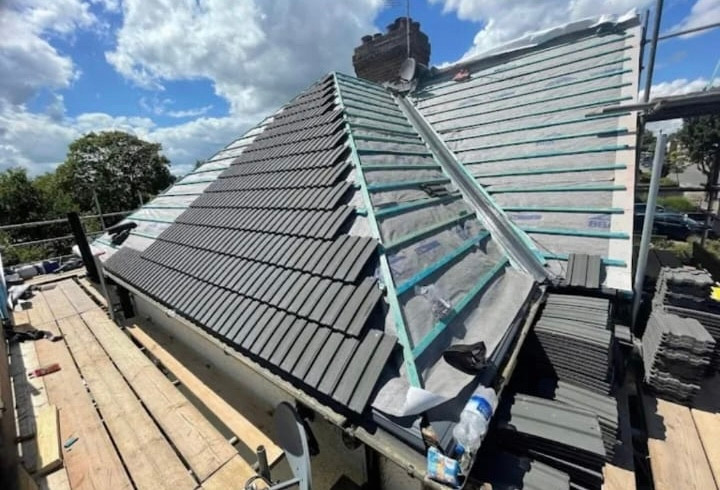
Failed plastic dry verge on the newer estates. The three in ten houses here that went up between 1983 and 2008 got the first generation of plastic dry verge and ridge units, and that early plastic has gone brittle and chalky in the sun. Clips snap, a unit lifts in a gale, and the run unzips itself down the gable. It is replaced with current dry fix components screwed onto a ventilated roll, the mechanical fixing BS 5534 expects.
Mortar ridge and verge on the older estates. Over four in ten houses in the village date from 1945 to 1982 and none of them got dry fix at all. Ridge tiles bedded in sand and cement crack along the joint, the verge undercloak drops away, and the tiles start to rock. Strip the mortar, screw the ridge and verge down dry, and vent the roof space along the ridge while the fittings are off.
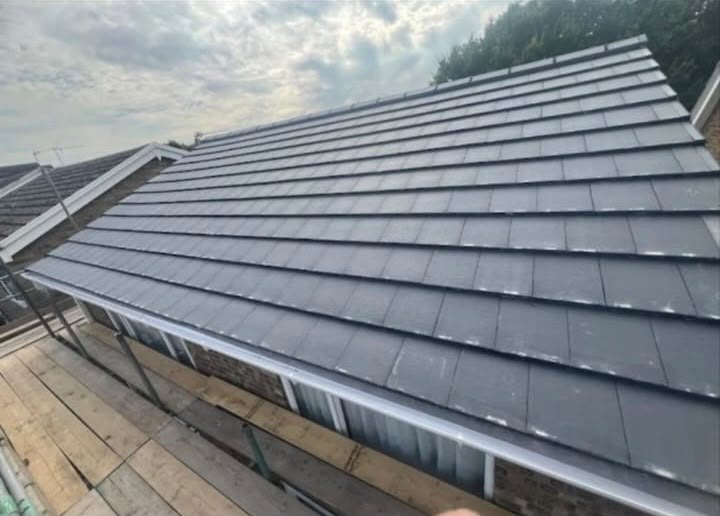
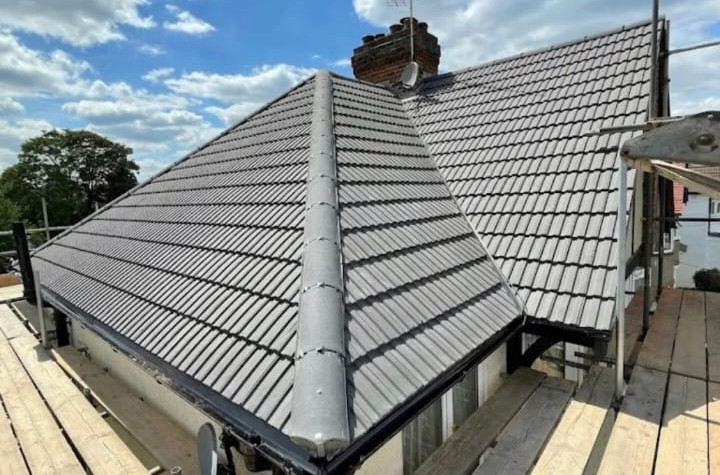
Concrete tile, mostly interlocking, covers most of the village. The cottages and older houses in the middle carry plain tile, clay tile and natural slate on battens with no sarking board behind them, so a slate roof there hangs on its nails alone.
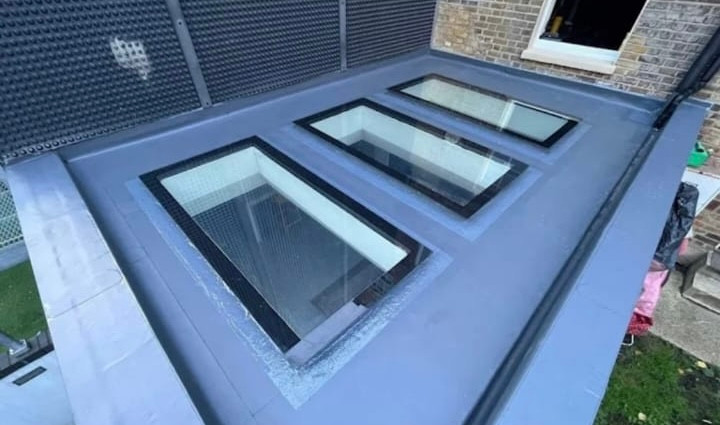
A lot of the eighties and nineties houses had a rooflight or a loft conversion put in later, and the old flashing kit perishes at the apron and the side soakers. Where the nails, battens and underlay have gone together the covering comes off, soft rafter feet are cut out, and a new roof goes back on breathable membrane and treated battens. Garages and rear extensions in felt, GRP fibreglass or EPDM rubber, deck first. Chimney flashings, soakers and abutments in code rated lead, and the mortar fillets common on the older cottages crack every time. With the covering off, insulation and eaves ventilation are cheap to sort, and Approved Document L sets the standard a renovated roof is expected to reach.
How it runs
From your call to a written price
Same team throughout, no sub-contracting, and an itemised quote: scaffold, the strip out, battens and membrane, the covering, each junction and disposal on separate lines. Nothing left open overnight and the old material goes with us. There is no conservation area in the village, so on an unlisted house a repair, a like for like re-cover, new rainwater goods and rooflights all fall under householder permitted development, as long as nothing stands more than 150mm above the roof plane, and Planning Portal sets out the limits. Fifteen entries in the parish are listed, including the church, and a listed building needs consent whatever the work, so we check the address before we price. Dorset Council.
Cost
What decides the price of a roof
No rate per square metre. Getting to it is most of it. Most of the village has a drive and a verge, so a scaffold and a lorry can usually get close, and the older lanes in the middle are the exception. The ground is cohesive and holds water through the winter, so a platform wants sole boards rather than standing on a soaked lawn. This is work at height and the work at height rules are why the platform is a priced line. Comparing quotes, ask whether the scaffold is in and who pays for the skip.
If it is leaking now
Water coming in today
Ring rather than use the form. Anything letting water in goes to the front of the queue, and the first visit makes it safe and watertight. If it has been blowing, check the gable ends from the ground first, because a lifted verge unit or a cracked ridge starts most calls here. Do not go up a ladder. The phone is answered 24 hours for emergencies; scheduled work runs Monday to Friday, 8am to 6pm.
Worth knowing
Ground that moves, and what it does to mortar
The village sits on cohesive ground with a real shrink and swell rating, which means it takes up water in winter and gives it back in summer, and the buildings on it move a little with the seasons. That is normal and it is not usually a defect. What it does change is which parts of a roof age fastest.
Rigid, bedded details are the ones that feel it: the mortar joint along the ridge, the flaunching around a chimney pot, the cement fillet where a lean-to meets a wall. They crack sooner here than on free draining ground, which is a straightforward argument for screwing the ridge and verge down dry instead of bedding them back in the same mortar for the third time.
It also changes where roof water is allowed to go. Repeatedly soaking cohesive ground beside a foundation is worth avoiding, so a downpipe wants to discharge into a proper gully and a drain, and not onto a border against the wall. If there are mature trees close to the house, get the rainwater run right before you worry about the roof covering. Approved Document H covers where the water is allowed to end up.
Who you are dealing with
A local firm you can check
About nine miles from us, covering the village, Upton, Lytchett Minster and the BH16 addresses around them, with Dorset Council for planning and building control. Bournemouth Roofing & Building Ltd, registered in England and Wales, company number 15471719, which you can look up in a minute. Thomas Hannen's business, and he comes out to price the job himself. A verified customer's 10 out of 10 on Checkatrade. Site visit and written itemised quote both free.
Questions
Lytchett Matravers questions we get asked
Why does it matter where the downpipe puts its water?
Because the ground under Lytchett Matravers shrinks and swells with the seasons, so where a downpipe ends is a structural question here rather than just a damp one. A blocked gully or a cracked shoe soaks one corner of the ground while the rest dries out, and the building moves with it. When we survey a roof we follow the water all the way to the gully and price the gutter work alongside the covering.
There are a lot of bungalows here. Do they fail differently?
They do, mostly because you can see less of what is happening. A quarter of Lytchett Matravers is bungalows, and on a single storey roof the gutter line sits low and out of sight, so moss and leaf litter build up unnoticed and water backs up under the first course of tiles instead of spilling somewhere obvious. The damage shows on the ceiling before it shows outside. We check the eaves course on these as standard.
The village has listed buildings. Does that affect an ordinary house?
Only if yours is on the list, or attached to something that is. Fifteen entries are listed in Lytchett Matravers, the Parish Church of St Mary the Virgin among them, and there is no conservation area over the village at all. So for most houses here a like for like re-cover is permitted development and Dorset Council never need to see it. We check the address against the list before quoting anything.
A firm offered to spray coat our tiles. Any good?
We will not do it and would talk you out of it. Roofs of the age that dominates Lytchett Matravers, the 42.5 per cent built between 1945 and 1982, fail at the fixings, the ridge bedding and the verges first, and a coating touches none of that. It seals the top face and hides the very things you needed to look at, and it can bridge the laps so water sits where it used to run off. Put the work into the edges instead.
What should I look for from the garden before I ring?
Stand at the gable end and sight along the ridge line. A dip in it, a gap under a ridge tile, or lumps of mortar sitting in the gutter all say the bedding has gone. Then look along the verge for daylight at the edge of the tiles. Photograph anything odd on your phone and send it over. Thomas comes out and prices the job himself, and the visit and the written itemised quote are free.
Nearby, and next door
Roofing near Lytchett Matravers
Roofing nearby
Our other trades in Lytchett Matravers
Roofing guides
Concrete vs clay roof tiles: which is right? Planning, building regs or listed building consent Storm damage to a roof: the first 24 hoursEverything we do in Corfe Mullen Roofing, all areas Every area we cover
Free quote
Get your roof looked at properly
A free site visit, a look in the loft as well as on the roof, and an itemised written quote you can compare line by line.