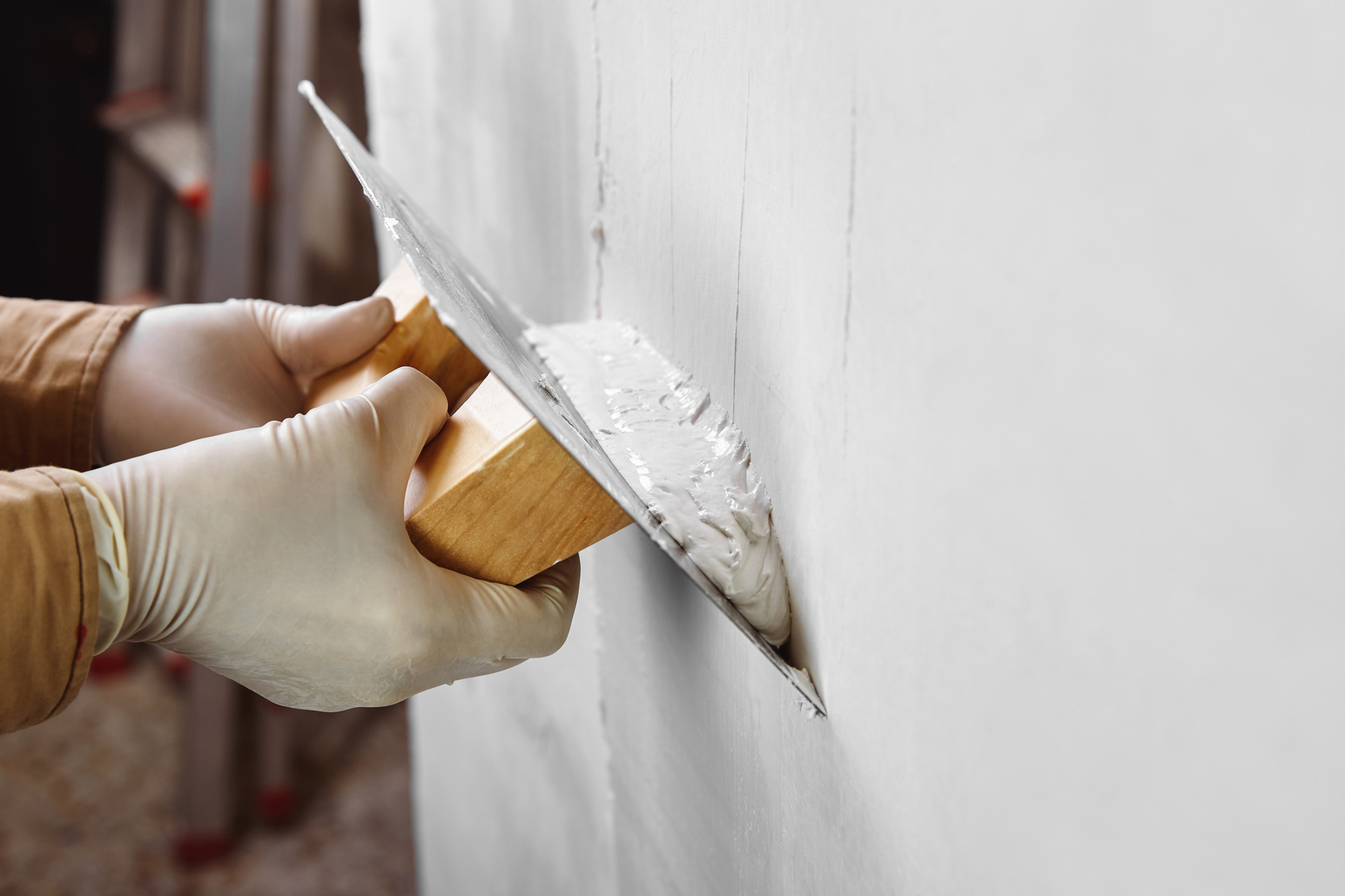
Plastering in Lytchett Matravers
Skimming, replastering, ceiling repairs and external render across Lytchett Matravers and BH16, priced in writing before anything comes off a wall.
The site visit is free and so is the written itemised quote. Thomas Hannen prices every job himself.
Knock a wall in Lytchett Matravers and the sound tells you which half of the village you are standing in before it tells you anything is wrong. The newer houses are dry lined, where a hollow sound is how the wall was built. The older ones were floated in wet plaster, where the same sound means it has let go. We sound it before we price it.
Three things bring people here to the phone. A ceiling has cracked along its board joints or started to bow. A patch of wall has blown behind the wallpaper, usually in a back bedroom or a cold corner. Or the house is going to be decorated, the walls have had one coat of paint too many, and somebody has said it wants a proper skim rather than more filler.
So the survey comes first. We knock every wall and ceiling in the room, separate what only needs a finish coat from what has to come off, and put both on the same written price. The site visit and the quote are free, and we are nine miles up the road.
The work
You cannot hack a dab-lined wall like a floated one
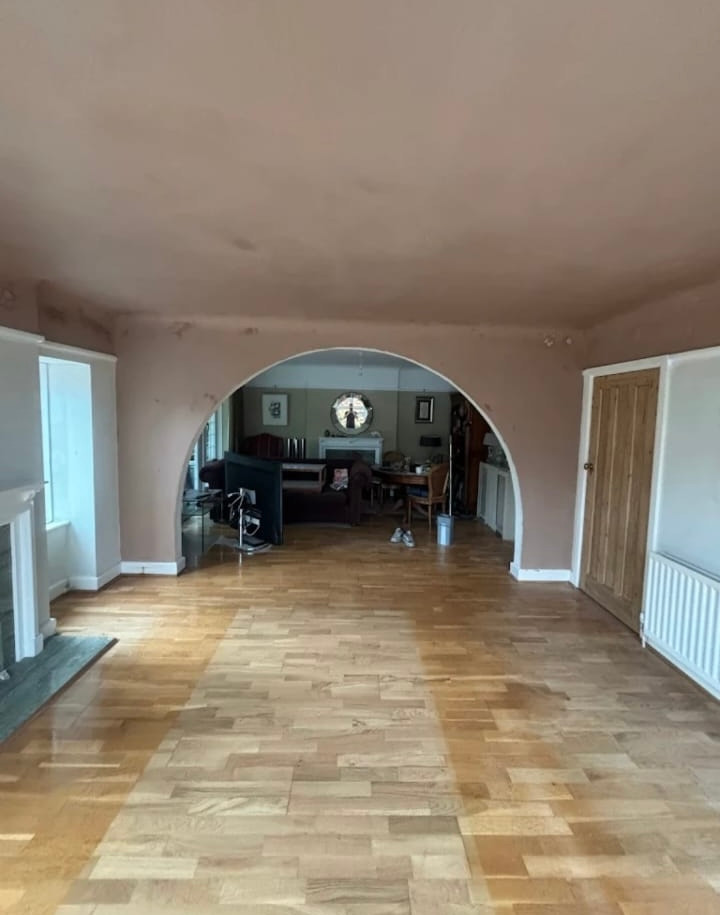
Skim it, or hack it off. The longest run of work here is the 1970s and early 1980s stock, nearly all built the same way: a block inner leaf, a float coat straightened onto it, a gypsum finish over the top. Fifty years on that plaster is usually still stuck and what has failed is the surface, under gloss, woodchip and paint rolled on until the wall lost its line. The wall is prepared, PVA'd where it is thirsty, then two passes of finish coat, trowelled flat, a room at a time. If a wall answers dead when we knock it we will talk you out of stripping it. Where it does drum it comes off back to the block and takes bonding on a dense face, browning or hardwall on something more absorbent.
From the early eighties on, walls in this village stopped being floated and started being dry lined, and close to a third of the stock went up in that period. Repairs there are a different movement: cut the damaged board back to a sound line or a stud, fit a new piece the same thickness, tape the joint and skim it out wide enough that daylight across the wall does not find the edge. A knocked corner takes a fresh angle bead rather than filler. Hacking at a dot and dab wall the way you would at a floated one only makes the hole bigger.
A quarter of the homes here are bungalows, so the ceiling sits under a cold loft rather than another heated room, which is where staining and cracked joints turn up first, and overboarding usually beats pulling it down. One house in nine predates 1919, solid walls in lime where gypsum traps the water that used to leave through the surface and blows above the skirting within two winters. Fifteen entries in the parish are listed, which decides the material as well as the paperwork. Outside it is mostly sand and cement on gables and porch cheeks with the odd pebbledash panel; a whole elevation that has let go comes off and goes back under a silicone thin coat.
How it runs
From your call to a written price
The quote is itemised rather than one figure on the back of a card, and anything uncovered behind the old finish stops the job for a photograph and a price. There is no conservation area over Lytchett Matravers, so on an unlisted house re-rendering an elevation in a similar material is maintenance rather than development, and Planning Portal guidance on external walls sets out where that stops. Fifteen entries in the parish are listed, and a listed building needs listed building consent for a change of plaster however ordinary it looks from the pavement. Renewing render across most of an elevation is where Approved Document L asks whether the wall should be insulated while it is open. Dorset Council handles both.
Cost
What decides the price
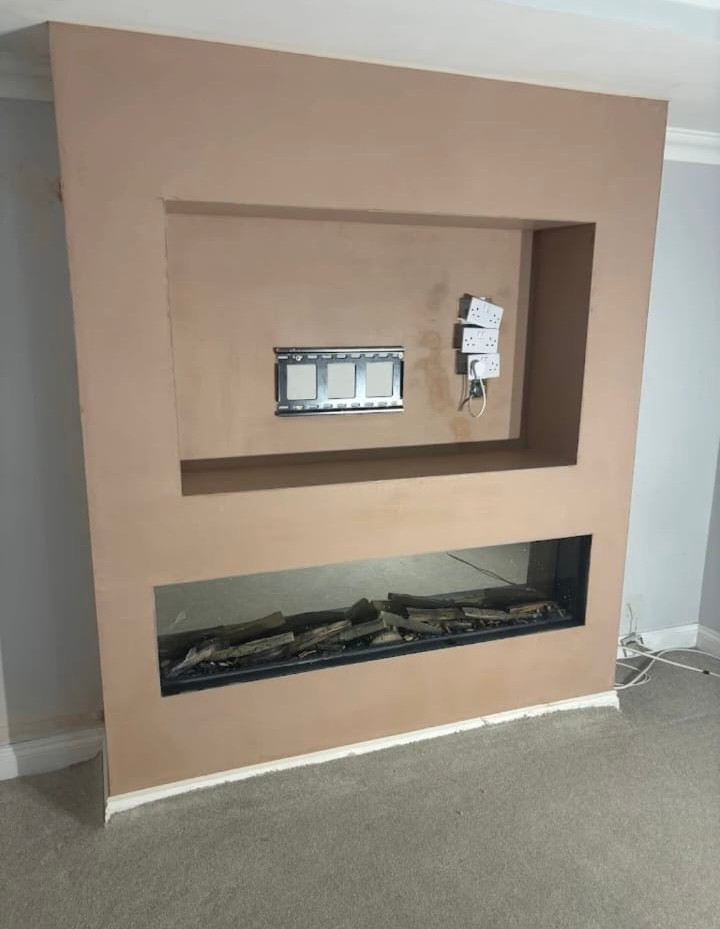
No rate per square metre. What is behind the finish decides it: a sound wall wants a skim, a blown one comes off back to the masonry and brings a backing coat into the job. Round here access is usually a bungalow on one level with a drive to stand a mixer on, or a cottage on the old street where every bag comes out through the front because there is no side gate. Outside, a tower or a scaffold is its own line. Comparing quotes, ask whether it is a skim or a full replaster, whether beads and making good are in the figure, and who takes the waste away.
If it has come down
A ceiling down, or plaster coming off the wall
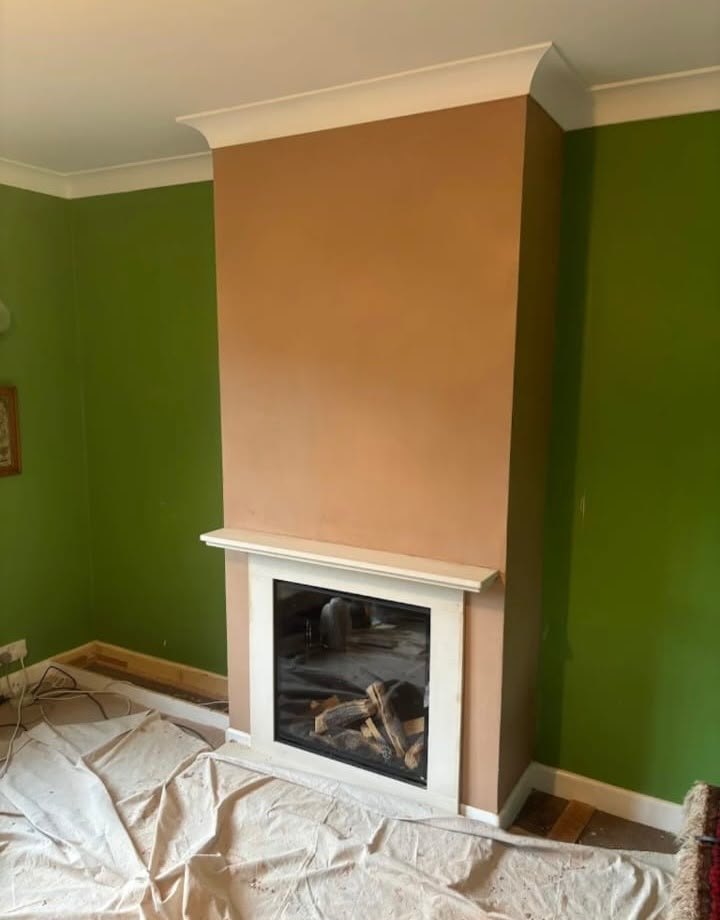
Ring rather than use the form. A ceiling that has cracked and dropped, plaster coming off in sheets, or a wet patch spreading across a wall goes to the front of the queue. We are about nine miles out on the Poole side, so a same-day look is usually possible, and there is normally somewhere to put a van here without blocking a neighbour in.
Worth knowing
A hollow wall here is not always a failed wall
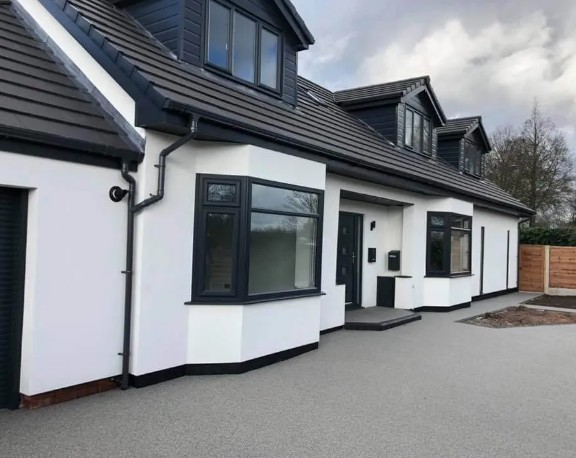
This is the thing worth knowing before you ring anybody in this village, because it decides whether you are being quoted for a skim or a strip out. On everything built from roughly the early eighties onwards the plasterboard is stuck to blockwork on dabs of adhesive with an air gap behind it.
Tap it and it drums, all the way across, and that drumming is the construction rather than a defect. On the older houses, where plaster was floated on wet and bonded to the block, the same sound means it has parted from the background and very little is holding it up.
You can tell them apart once you know what to listen for. A dab wall drums evenly and rings back solid in vertical bands where the adhesive is. A blown floated wall is solid across most of its area and hollow in one patch with a definite edge.
It changes practical things too: damp low down on a dab wall wicks into the bottom of the board, so the cure is to take the board off rather than skim over it, and a shelf or a television bracket has to reach the block through the void instead of gripping the board. When a quote comes in, ask whoever wrote it which of the two he thinks he is looking at. If he cannot say, he has not knocked the wall.
Who you are dealing with
A local firm you can check
About nine miles from us, covering Lytchett Matravers, Lytchett Minster, Upton and the BH16 addresses either side of the Dorchester road, with Dorset Council for planning and building control. Bournemouth Roofing & Building Ltd, registered in England and Wales, company number 15471719, which you can look up in a minute. Thomas Hannen's business, and he is the one who comes out to price the job, not a salesman. A verified customer's 10 out of 10 on Checkatrade. The visit and the written quote are both free.
Questions
Lytchett Matravers questions we get asked
Our house is 1980s. Why do the walls sound hollow?
Because it is dry lining, not plaster on brick. Just over thirty per cent of homes in Lytchett Matravers went up between 1983 and 2008, and boards bedded on adhesive dabs became the standard on that generation. The gap behind the board is meant to be there. What matters is whether the board still holds on its dabs and whether the taped joints have opened up. A tap test and a look along the joint lines tells us which.
Is there a conservation area in Lytchett Matravers to worry about?
There is no conservation area over the village, so on an ordinary house the outside finish is your choice and re-rendering falls under permitted development. The exception is the fifteen listed entries in the parish, the Parish Church of St Mary the Virgin among them. If your house is one of those, or attached to one, the finish needs consent from Dorset Council before anything comes off the wall.
We are converting the loft. Does plastering carry any planning strings?
The plastering does not, but the conversion might. Lytchett Matravers drains to the Poole Harbour catchment, and Dorset Council only engages nutrient neutrality where a scheme adds a bedroom or other overnight space. Reskimming an existing room, patching a ceiling or rendering a gable adds nothing, so none of that is caught. Where the conversion creates a new bedroom, get the planning side settled before we book in the boarding and skimming.
What do you actually check before pricing a reskim?
We tap the whole wall first, because in the dry lined houses here a hollow note is normal and a soft crumbly note is not. Then we look along the joint lines, into the internal corners, and at the back of every external wall for damp. The room gets measured, the openings counted, and anything that has to come off and go back gets listed. Thomas Hannen does that visit himself and neither it nor the written quote costs anything.
Will there be a skip on the verge while you work?
No, it goes out in bags in the van the same day. On a bungalow or a detached house with its own drive we can normally stand the van alongside and carry straight out, which is most of what we work on in Lytchett Matravers. Old plaster is heavy and releases dust every time it is moved, so the route out gets sheeted and it leaves in loads a man can lift.
Nearby, and next door
Plastering and rendering near Lytchett Matravers
Plastering and rendering nearby
Our other trades in Lytchett Matravers
Everything we do in Corfe Mullen Plastering and rendering, all areas Every area we cover
Free quote
Get your Lytchett Matravers walls sounded properly
A free site visit, every wall and ceiling knocked rather than glanced at, and an itemised written quote that keeps a skim and a strip out apart.