
Bricklaying and repointing in Lytchett Matravers
Repointing, brick repair, chimney stacks and the garden walls that move with the clay, across Lytchett Matravers and the lanes around it.
The site visit is free and so is the written itemised quote. Thomas Hannen prices every job himself.
Bricklaying and repointing
Repointing in Lytchett Matravers: what we do, and what we look at first
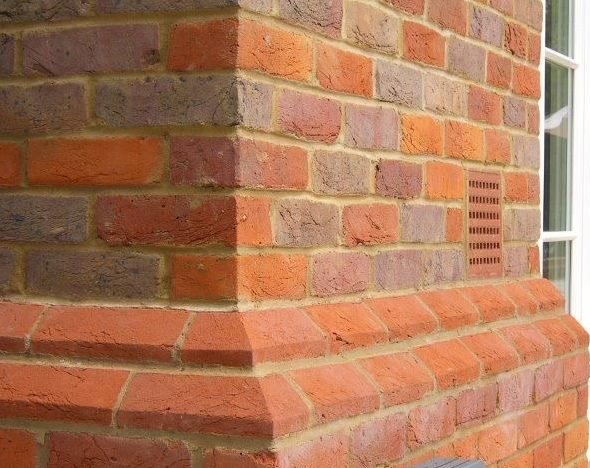
Two jobs make up most of our brickwork in Lytchett Matravers. Joints weathered back on the face of a post-war house that takes the wind, and a garden wall or a porch that has cracked because the clay underneath it moves. The first is repointing. The second is ground, and repointing it on its own is money spent twice.
People here usually ring about one of three things. Open joints on one elevation, where you can put a screwdriver in past the mortar. Brick faces that have blown and gone sandy after a hard frost, so the wall looks pitted from the path. Or a crack: stepping up out of a window head, running down the join between the house and the garage, or opening along a boundary wall that was fine last winter.
We come and look at the wall rather than at a photograph on a phone, because in this village a fair share of what people call a pointing job is a rainwater job or a footing job showing up in the brickwork. You get a straight answer about whether it needs doing this year, which elevation to start with, and an itemised written price if you want one. The site visit and the quote are both free.
The work
The brickwork jobs we do in Lytchett Matravers
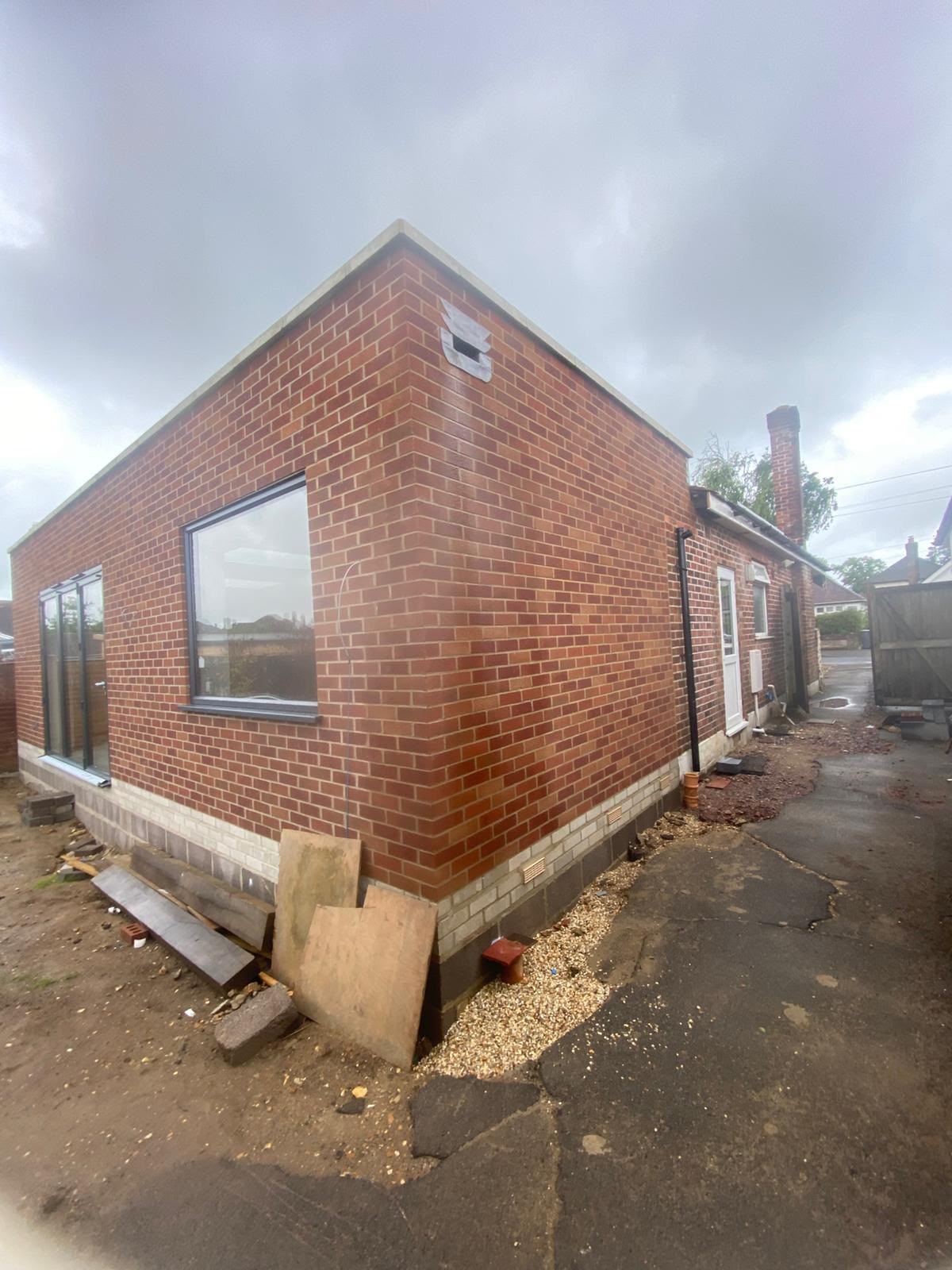
Repointing post-war and 1970s brickwork. Most of the village went up between the 1950s and the mid 1980s, cavity built, in a hard cement mortar with a thin tidy joint. Weather rakes that joint back on the elevation facing the wind, and once water stands in an open joint a frost lifts the face off the brick beside it. We cut out to sound mortar, match the mix and the sand for colour, and put back the profile the wall has, nearly always bucket handle at that age. A quarter of the housing here is bungalows, where one exposed elevation is less work than people expect.
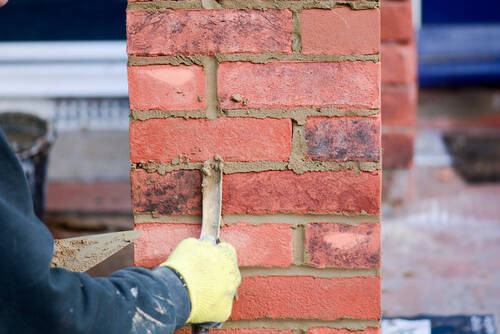
Older cottages, walls and stacks. The houses along the old lanes and around the church are a different animal: solid wall, soft period brick, mortar never meant to be harder than the brick it holds. Those are raked by hand, never with a disc cutter near a soft arris, and repointed in an NHL lime mix, with a sample panel to look at in daylight first. Plots are generous here and a lot of them are walled, mostly with no damp proof course, so the bottom courses go soft first. We rebuild bowed lengths, reset coping and bond gate piers into the wall instead of sitting them on the end of it. Plenty of stacks no longer have a fire under them and still take weather from four sides, so we rebuild from below the damage, off a tower on a low bungalow stack or a scaffold where there is height to it. A crack over an opening usually means the lintel; one running level along a course can mean the ties have rusted and jacked the outer leaf. We say which it is before we quote.
How it runs
From your call to a written price
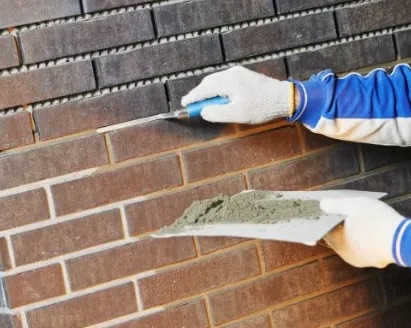
One team from first visit to last, and the price broken out by elevation so you can compare it line by line. No conservation area covers Lytchett Matravers itself, so on an ordinary house repointing and brick repair are repair and need no application, though Planning Portal guidance on external walls matters if you are changing how a wall looks rather than putting it back. Fifteen entries in the parish are listed and some are walls rather than houses, including the churchyard boundary and the old walled garden, so we check the address first: on a listed wall repointing is alteration and needs listed building consent from Dorset Council before a joint is opened. Structural work goes through building control, and a shared wall brings in Party Wall etc. Act 1996.
Cost
What decides the price of a brickwork job
No rate per square metre: the joints decide the job, not the area. A bungalow you can walk right round, a cottage fronting a narrow lane and a detached house behind its own boundary wall are three different set ups before anyone lifts a trowel. A stack or a gable wants a scaffold and a garden wall wants nothing, and work at height rules make the platform a priced line. Raking by hand on soft brick is slow, so joint depth and blown faces set the hours. Ask how deep the joints come out, hand or disc, and whether the mortar has been matched.
If something has moved
Loose brickwork, or a wall that has shifted
Ring rather than use the form. Anything overhead or leaning jumps the queue. The first visit is about making it safe and stable, and we price the permanent repair once we can see how far the movement goes. Around here that is usually a garden wall pushed out by roots or a stack moved in a gale. The phone is answered 24 hours for emergencies; scheduled work runs Monday to Friday, 8am to 6pm.
The one local thing
The clay moves, and the walls show it before the house does
The ground under the village is a clay that swells when it is wet and shrinks back when it dries out. A house on a proper deep foundation rides that out. What does not ride it out is everything built shallow and built later: garden walls, porches, a conservatory base, a garage added on the side, gate piers.
That is why so many cracks in Lytchett Matravers are in a boundary wall, or exactly on the join between the house and something bolted onto it, rather than in the middle of a main elevation. A crack that opens through a dry summer and closes again by February is the ground talking, not the mortar, and repointing it in July means doing it again.
What that changes for you is the order of the work. Where rainwater lands matters more here than it does on free draining sand: a downpipe emptying onto a border beside a wall, a gully that has stopped taking water, or a soakaway sat too close to a footing keeps one patch of clay wet all year while the rest of it dries and shrinks. Approved Document H sets out where surface water is allowed to go.
Sort that first, watch the crack through one full season, and then repoint. The same goes for a mature tree within its own height of a shallow wall. When a wall has genuinely gone we rebuild it on a deeper footing with piers at intervals and a movement joint where the run is long, which costs more on the day and stops you paying for the same crack every few years.
Who you are dealing with
A local firm you can check
Lytchett Matravers is about nine miles from the yard and we are through the BH16 lanes most weeks, out to Upton, Lytchett Minster and Organford and on to Corfe Mullen, Wareham and Poole. Bournemouth Roofing & Building Ltd, registered in England and Wales, company number 15471719, which you can look up in a minute. Thomas Hannen's business, and he is the one who comes out to price the job, not a salesman. A verified customer's 10 out of 10 on Checkatrade. The visit and the written quote are both free.
Questions
Lytchett Matravers questions we get asked
Why does our garden wall crack open every summer?
The ground under Lytchett Matravers is cohesive and rated significant for shrink and swell, so it swells through a wet winter and drops again in a dry summer. A garden wall usually sits on a shallow footing and follows that movement, while the house on deeper foundations does not. Rebuilding the top few courses will not stop it. We dig a trial hole at one end before quoting anything.
Should the downpipe be discharging that close to the wall?
Almost certainly not. Water landing beside a footing changes the moisture in cohesive ground far more than rainfall spread across a garden does, and on the shrink swell soil under Lytchett Matravers that is a structural question rather than a damp one. We track where every gully, soakaway and gutter overflow ends up before touching the brickwork. Moving one outlet clear of the wall is often the useful half of the repair.
What fails on the seventies houses in the village?
The perp joints and the bed under the cill, not the whole face. 42.5% of the housing here went up between 1945 and 1982, so these are cavity walls pointed in cement rather than solid walls built in lime. Thin cement joints have nothing in reserve and go back fast once frost gets into them. We cut out what has failed to a proper depth and leave the sound joints alone.
Fifteen buildings are listed here. What does that mean?
It means the rules run address by address rather than village wide. Lytchett Matravers has 15 listed entries, the Parish Church of St Mary the Virgin among them, and no conservation area of its own, so most houses face no control at all on a repair. If your address is one of the 15, consent from Dorset Council comes before a joint is opened and the mortar mix forms part of it.
Can you get scaffold down the side of a bungalow?
On most of them, yes. Bungalows are 24.9% of the stock here, and on a single storey elevation a mobile tower usually does the job without standing anything on the neighbour's ground. Where the gap is genuinely too tight we work the front and rear and carry the muck through rather than barrowing it round. Thomas Hannen measures the access at the visit so the quote carries the right lift.
Nearby, and next door
Bricklaying and repointing near Lytchett Matravers
Bricklaying and repointing nearby
Our other trades in Lytchett Matravers
Everything we do in Corfe Mullen Bricklaying and repointing, all areas Every area we cover
Free quote
Get an honest look at the wall
Tell us which elevation is bothering you. We will come out, look at the whole building and the ground it sits on, and put a written itemised price in your hand.