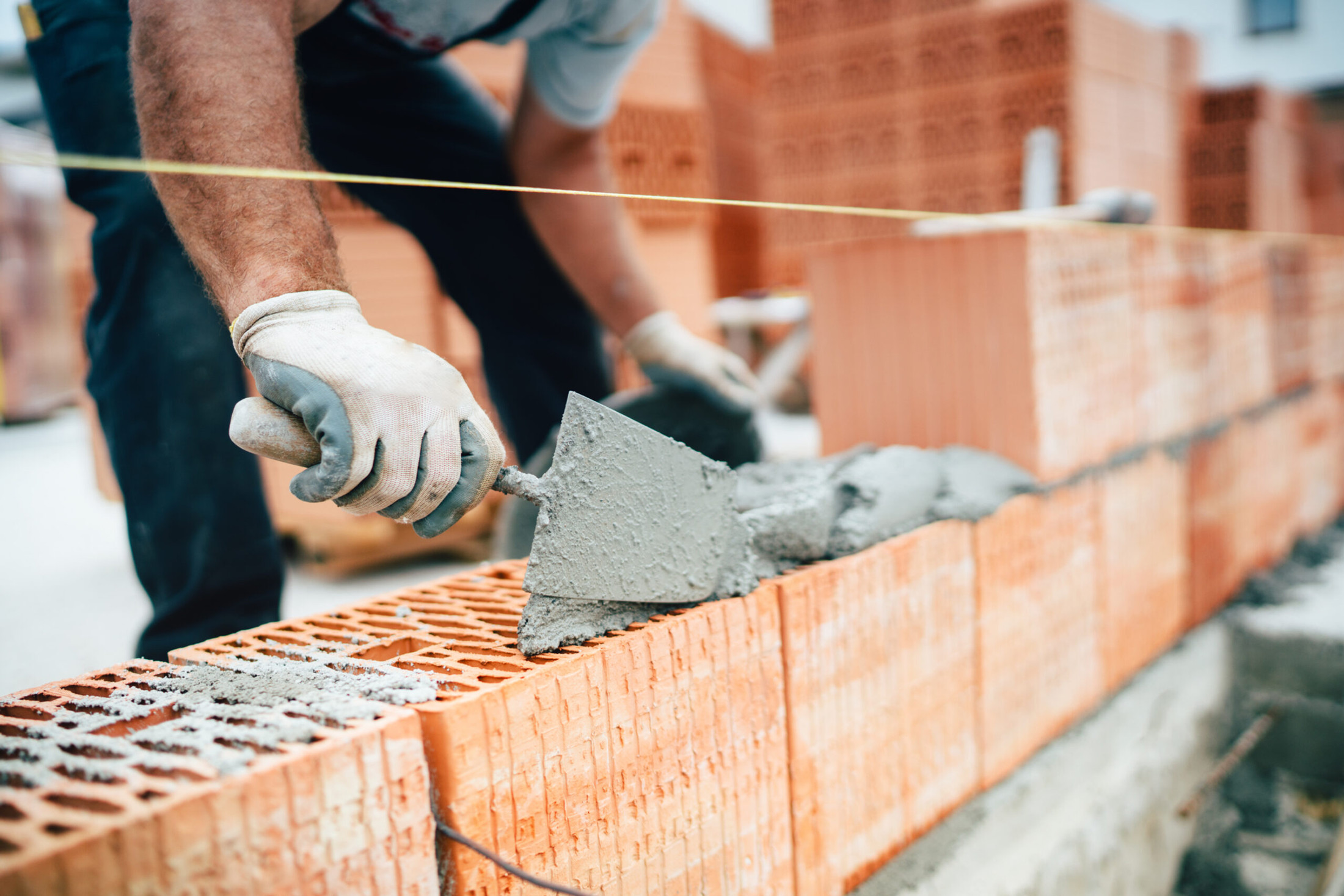
Bricklaying and repointing in Wareham
Repointing, brick repairs, chimneys, garden and retaining walls across the old town and out to Stoborough, Sandford and Ridge.
The site visit is free and so is the written itemised quote. Thomas Hannen prices every job himself.
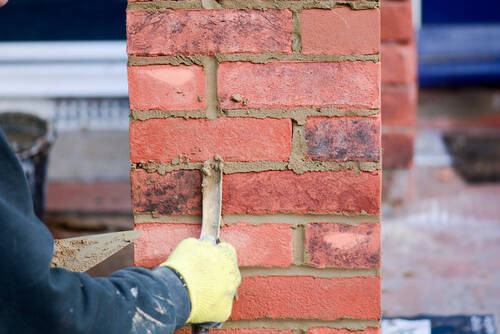
Most Wareham brickwork we are called to needs repointing rather than rebuilding. If the bricks themselves are sound and only the mortar has washed back, raking the joints out and pointing them again in a matched mix puts decades back on the wall for a fraction of what a rebuild costs.
Three things bring people to the phone here. The mortar has gone sandy and you can pull it out of a joint with a screwdriver. Brick faces have started flaking off, usually low down on the elevation that gets the weather. Or a crack has opened over a window or at a corner and nobody has told you straight whether it matters.
All three want looking at from close up rather than from the pavement. We get to the wall, tap the bricks, scrape a joint to see what the old mortar actually is, and photograph what we find so you are looking at the same thing we are. Then you get a straight answer: whether it is movement or just weathering, what has to be done now, and what can wait a couple of years without getting worse.
The work
The jobs we do most on Wareham brickwork
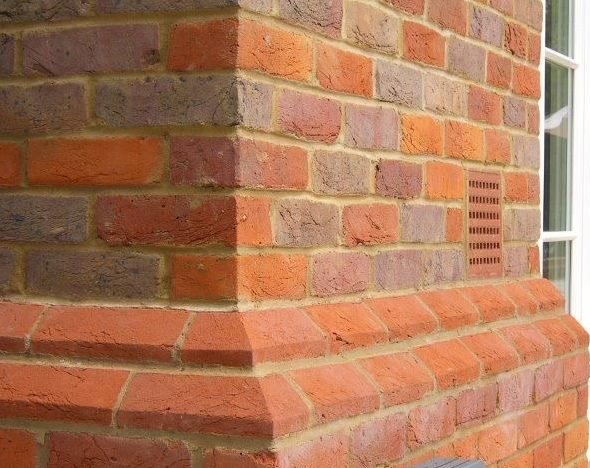
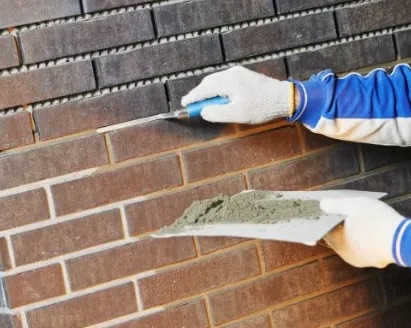
Repointing. The older walls in the middle of town, and 15.1 per cent of Wareham predates 1919, are soft brick laid in lime, and that mortar was always meant to be the part that gives way rather than the brick. Once the joints have washed back behind the face, water sits on the brick edge and frost does the rest. We rake out by hand, back to at least twice the width of the joint, and we do not run a disc cutter across soft brick because it takes the arris off every brick it touches. It goes back in a mix matched for colour, texture and strength, which on North Street and West Street usually means a natural hydraulic lime rather than a cement mortar. The joint profile is not decoration either: a flush or slightly recessed joint suits old brick, weather struck or bucket handle suits later work, and the profile decides how the wall sheds water. Where a face has blown, the brick is cut out whole and replaced rather than filled, and in the old town that means a reclaimed or handmade brick rather than anything off a modern pallet.
Boundary, garden and retaining walls. Wareham is full of them, including the walls holding ground back where the streets drop away towards the water. A retaining wall is a different animal from a garden wall: it is holding wet ground, so it wants weep holes and a drained backing or it will bow and eventually go over. The town sits in flood zones 2 and 3 with the Piddle a hundred and fifty metres off, and ground that stays saturated is ground that moves, so the footing under a leaning wall is the first thing we look at. We rebuild leaning sections off a proper footing, re-bed coping that has lifted, and put gate piers back where a car has caught them.
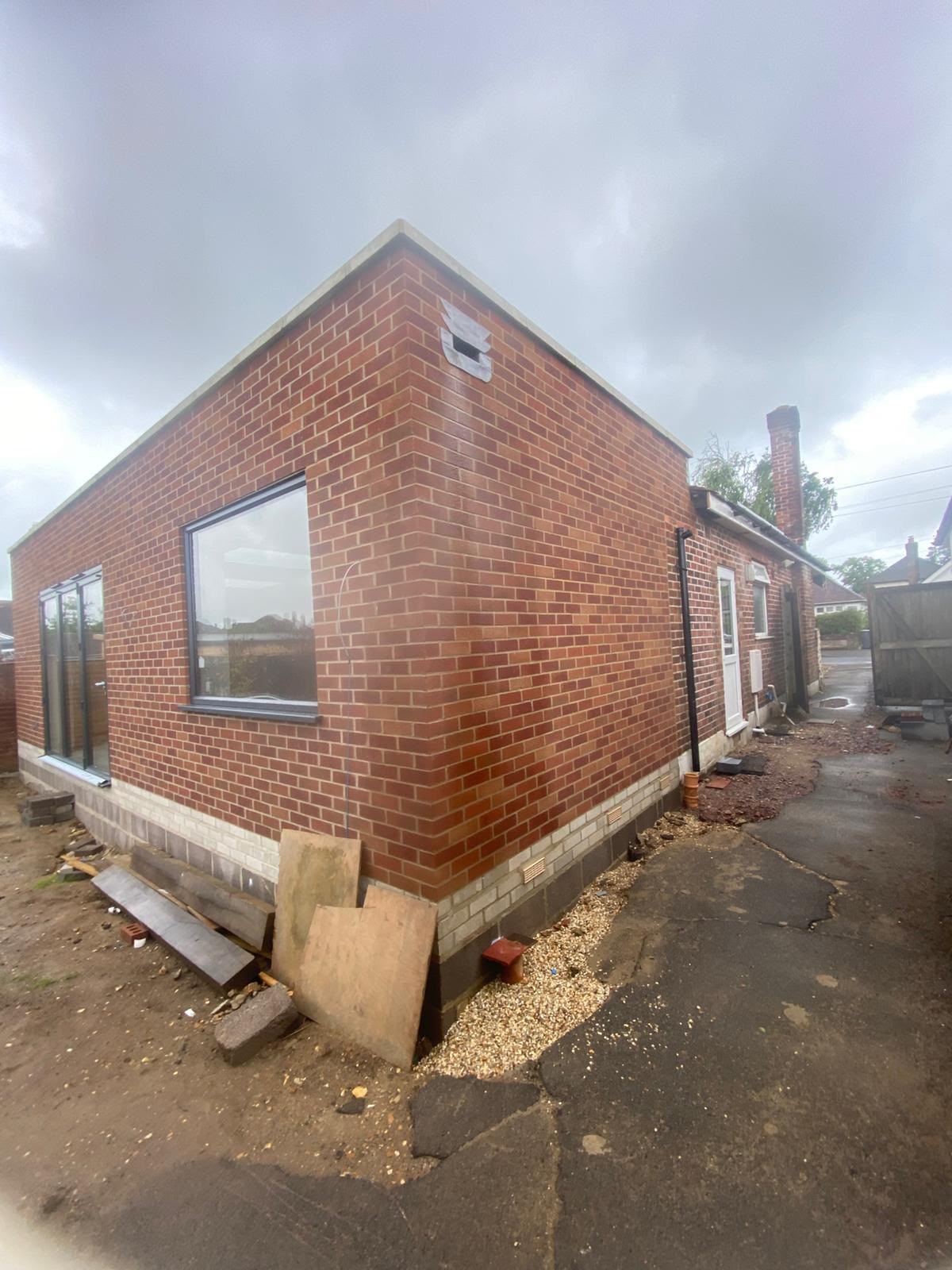
A stack takes weather from every side and is normally the worst brickwork on the house: repointing above the roof line, renewing the flaunching around the pots, and rebuilding the top courses where the mortar has gone to nothing. That is scaffold work, not a ladder job. Out on the post-war housing round the edge of the town, and 52.0 per cent of the stock is 1945 to 1982, the walls are cavity work and they fail differently. A rusting lintel over a window lifts the courses above it. Wall ties corrode and push the outer leaf out, which shows as a horizontal crack every few courses. A bowed panel gets cut out and rebuilt in stretcher bond rather than patched, and we tell you which cracks are movement and which are the wall doing what it has always done. New work is the rest: extensions, garden rooms and porches, with a blockwork inner leaf, a damp proof course at the right height and a facing brick chosen to sit with the house rather than shout at it.
How it runs
From your call to a written price
Repointing and repairing like for like is maintenance, so for most addresses there is nothing to apply for. It changes on a listed building, and there are 196 listed entries in and around the old town, where listed building consent is needed before the mortar mix or the joint profile changes. A new wall needs planning permission above a metre where it fronts a road or above two metres anywhere else, and a new opening or an extension brings Dorset building control in. If a wall you are rebuilding sits on the line with next door, the Party Wall etc. Act 1996 gives your neighbour a formal notice period, so tell us early and it costs you nothing but a fortnight.
Cost
What decides the price of a brickwork job
No rate per square metre. Access first: a terraced house straight onto the street, a semi with a side path and a three storey town house are three different jobs, and terraces are 29.5 per cent of Wareham. How long a platform stands matters as much as its size, and work at height rules are why it is a priced line. Then the joints, and whether a lime mix and a handmade brick have to be matched and sourced. Ask how deep the raking goes, and whether it is by hand or by disc.
If something has moved
Loose brickwork, or a wall that has shifted
Ring rather than use the form. Anything overhead or leaning goes to the front of the queue, and the first visit is about making it safe. A garden or retaining wall that has leaned out towards a pavement wants propping or taking down before somebody puts a hand on it. The phone is answered 24 hours for emergencies; scheduled work runs Monday to Friday, 8am to 6pm.
Worth knowing
Wareham brickwork gets wet from below, not just above
The town sits between the Frome and the Piddle and a good deal of it is inside flood zone 3, which you can check for any address on the government flood risk service. That matters to a bricklayer more than people expect. Most of the older houses here are solid wall with no cavity, so a wall that has stood in wet ground takes water up and then has to give it back.
It can only do that through the joints. Point that wall in a hard cement mortar and the water leaves through the brick faces instead, which is exactly how you get spalling a couple of winters later. A breathable lime mix is not nostalgia here, it is the thing that keeps the salts and the moisture moving out through the mortar where they do no harm.
The second half of it is what happens at ground level. Anything that has been built up against a wall since it went up, a raised border, a patio laid over the old level, a new path, can bridge the damp proof course and keep the bottom three or four courses permanently damp.
If your ground floor brickwork is green, crumbling at the joints or blowing its faces within a metre of the ground, that is usually the cause rather than the wall itself. It is worth saying before anyone quotes you for repointing a whole elevation: dropping the ground back and getting rainwater away from the foundation often does more for that wall than the pointing will, and we would rather price both and let you choose.
Who you are dealing with
A local firm you can check
We cover Wareham, Stoborough, Sandford, Ridge and Wool, and out across BH20. The free site visit is where the survey actually happens: we walk the elevation with you rather than pricing off a photograph you sent. Bournemouth Roofing & Building Ltd, registered in England and Wales, company number 15471719, which you can look up in a minute. Thomas Hannen's business, and he is the one who comes out to price the job, not a salesman. A verified customer's 10 out of 10 on Checkatrade. The visit and the written quote are both free.
Questions
Wareham questions we get asked
The Piddle is close by. Does flooding damage brickwork?
It does, and Wareham sits in flood zones 2 and 3 with the Lower Piddle around 150 metres off, so this is a live question here rather than a theoretical one. Standing water carries salts into the bottom courses, and as the wall dries out those salts crystallise behind the face and push it off. The repair is the low courses and their joints, done once the wall has properly dried.
Wareham has 196 listed entries. Is my house one?
Only the statutory list can tell you, and in the older streets it is likelier than people expect. There are 196 listed entries in the town, including 12 West Street and St Michaels House at number 22, and plenty of them are ordinary houses rather than landmarks. Where a house is listed, consent from Dorset Council comes first and the mortar specification is part of what gets approved.
Can you repoint just my half of a terrace?
That is a good part of what I do here, with terraced houses making up 29.5% of Wareham. The joint line runs straight through to next door, so I stop at the party line and cut a clean vertical rather than feathering new mortar into old. It shows for a season and then weathers in. If your neighbour wants theirs done at the same time, one lot of access equipment covers both.
Why does the pointing fail around the windows first?
Driven rain does its work at edges and openings rather than in the middle of a wall, and the exposed faces here look south west. Water runs off a cill, sits in the joint beneath it and freezes, so the mortar under the cill and up the reveal goes well ahead of the field of the wall. A fair number of Wareham jobs are the openings and the verge alone, with the main brickwork untouched.
Where does the scaffold stand in a narrow street?
If any part of it stands on the footway or the road it needs a licence from Dorset Council, applied for before the job is booked rather than on the morning. In the older parts of Wareham there is often not enough pavement for a standard base, so it becomes a tower inside the front garden, or a licensed gantry with a walkway kept open underneath so people can still get past.
Nearby, and next door
Bricklaying and repointing near Wareham
Bricklaying and repointing nearby
Our other trades in Wareham
Everything we do in Wareham Bricklaying and repointing, all areas Every area we cover
Free quote
Get a written price for your Wareham brickwork
Free site visit, free itemised quote, and a straight answer on whether it is repointing or a rebuild.