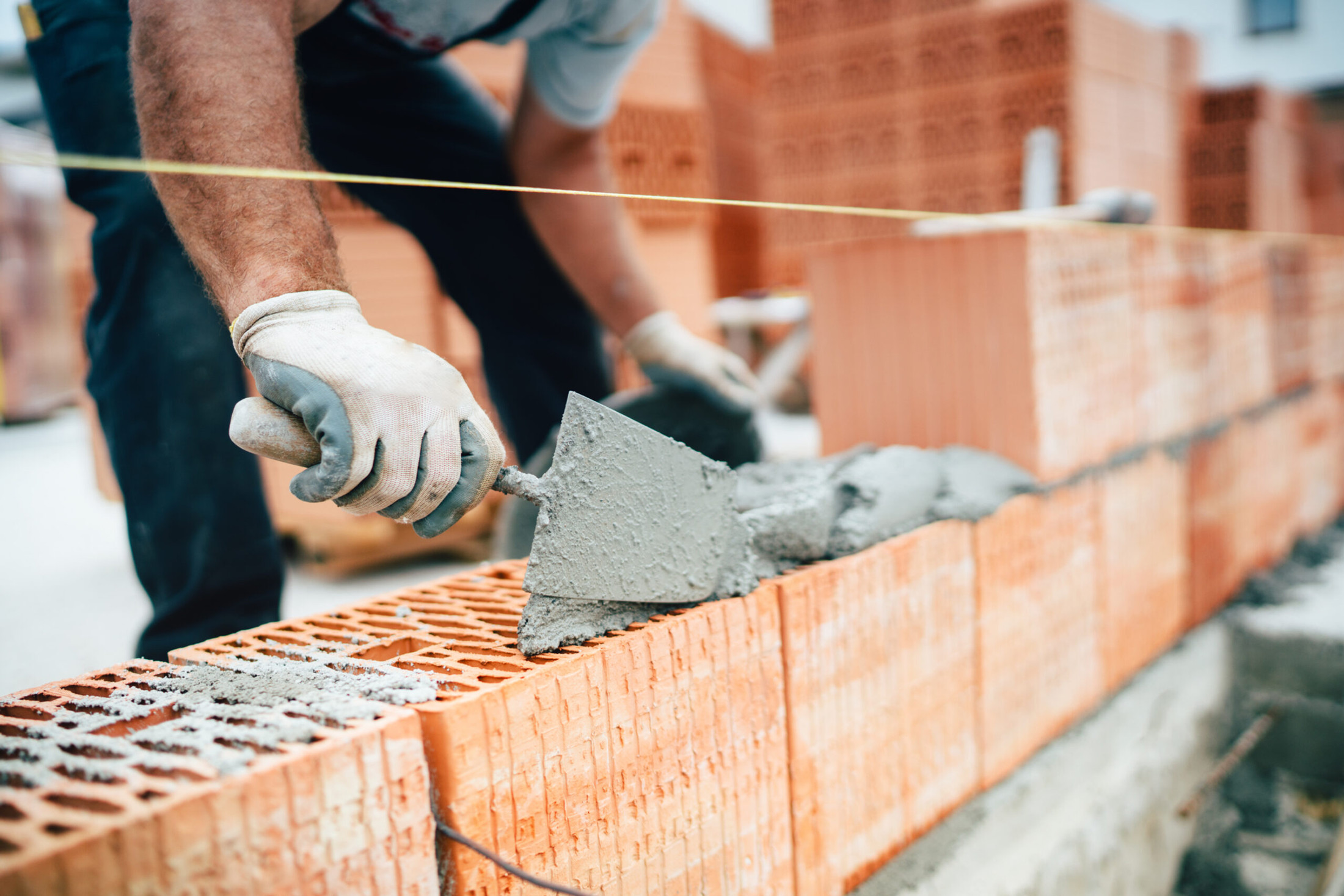
Bricklaying and repointing in Corfe Castle
Lime repointing, brick and stone repair, chimney stacks and boundary walls in Corfe Castle and the Purbeck villages around it.
The site visit is free and so is the written itemised quote. Thomas Hannen prices every job himself.
Bricklaying and repointing
Repointing in Corfe Castle: what we do, and what we leave alone
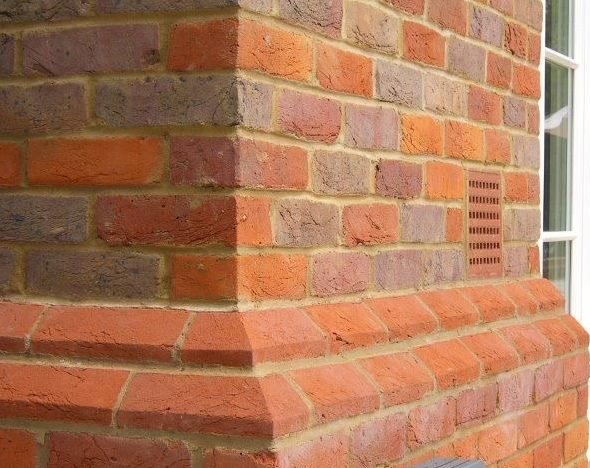
Almost everything old in Corfe Castle was bedded in lime, and the single most useful thing we do here is take failed cement pointing back out of walls that were never meant to have it. Put lime back and the wall dries out through the joint again. Leave the cement in and the brick or stone face keeps taking the damage instead.
People usually ring for one of three things. Joints that have washed out on the elevation that takes the weather, so you can see straight through into the wall. Hard grey ridges of old cement pointing standing proud while the brick behind them crumbles away. Or a wall that has moved: a bulge in a boundary wall, a stack that is no longer plumb, a crack stepping up out of a window head.
We come and look at the wall itself rather than at a photograph, because in this village a fair amount of what looks like a brickwork job turns out to be a rainwater job or a ground job wearing brickwork as a symptom. You get an honest view of whether it needs doing this year, and an itemised written price if it does. The visit and the quote are both free.
The work
The brickwork jobs we do in Corfe Castle
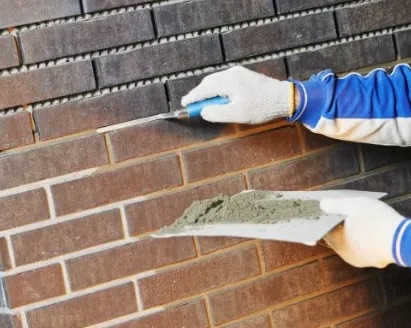
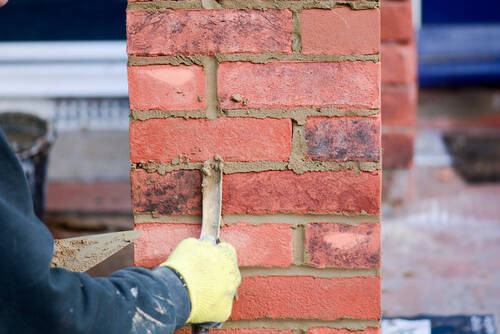
Lime repointing. This is the bulk of what we do in the village. Joints are raked out by hand to about twice their width, with no disc cutter near a soft old arris, and repointed in an NHL lime mortar with a sand matched to what came out. You get a trial panel in daylight before we commit an elevation, and the profile goes back as the building has it, bucket handle, weather struck or cut flush. With 134 listed entries in the parish, from the castle and the Old Town Hall down to ordinary houses and walls, that is the standard the work gets judged by.
Stacks and roadside walls. In a village of long low cottages the stack is often the only brickwork on the building, and it is the part that takes weather from every side. Flaunching cracks and lets water into the head, the top few courses lose their pointing, and eventually a stack starts to lean. We rebuild stacks course for course where they have gone, reusing the original brick where it is sound. It is work at height, off a scaffold or a tower, and the platform is priced openly under the same HSE guidance on work at height that governs any roof job. On the ground, roadside walls through the village take punishment from vehicles wider than the street was built for, and garden walls on the slopes act as low retaining walls whether they were designed to or not. Most have no damp proof course, so they draw water up and the bottom courses go soft first. We rebuild bowed lengths, reset coping, put in a DPC where the wall will accept one, and bond gate piers in rather than sat on the end of a wall.
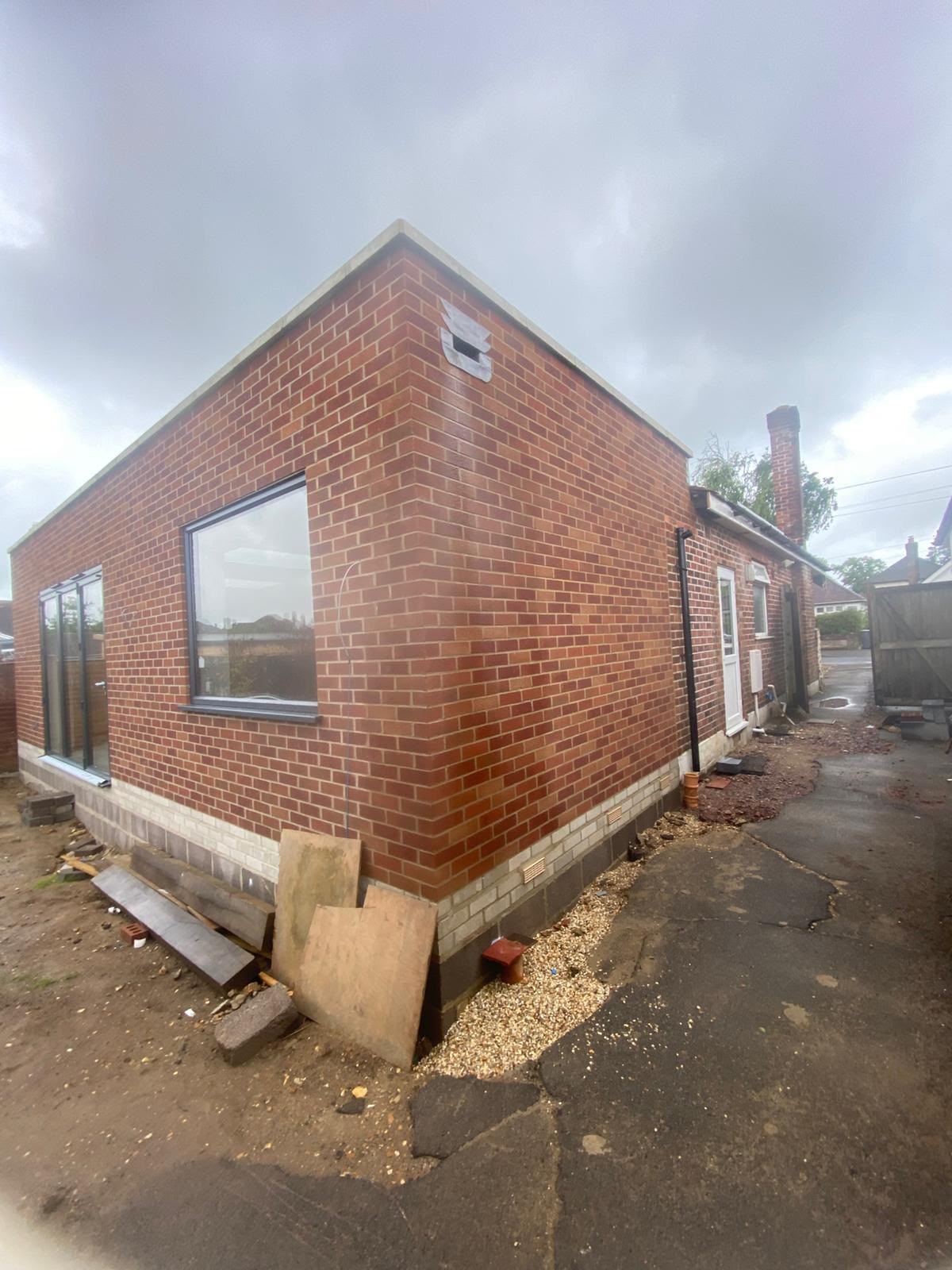
Where faces have blown, pointing round them just tidies the damage, so failed bricks are cut out and replaced with reclaimed or handmade stock matched on size, colour and texture. Sourcing is the slow part on a period building, and we say so at the quote rather than with the scaffold up. A cracked head over a window usually means the lintel or the timber behind it, and a wall that has spread at the base usually means the footing, so we say which before quoting: repointing a crack that is still moving is money spent twice. New brickwork has to fit in: extension skins, new openings and garden walls built to sit alongside what is there, where the brick and the mortar colour matter as much as the setting out.
How it runs
From your call to a written price
Thomas prices it himself, and the quote itemises access, raking out, the mix, each elevation and any brick replacement. Corfe Castle is a conservation area and the parish carries 134 listed entries, a very high count for a village of this size. On a listed building repointing is alteration in its own right and needs Planning Portal guidance on external walls from Dorset Council before a joint is opened. Inside the conservation area but not listed, repair like for like is fine, while a change of appearance can need planning permission, as listed building consent explains. A wall shared with a neighbour brings in the Party Wall etc. Act 1996.
Cost
What decides the price of a brickwork job
We do not price brickwork by the square metre. The joints decide it, not the area. A cottage fronting straight onto the pavement, an outbuilding with room all round it and a house set back behind its own wall are three different set ups. The platform is a priced line rather than a favour, under work at height rules. Raking out by hand is slow, and the depth of the rake decides the hours more than the area. Two quotes for the same wall are usually two different jobs, so ask what is in each.
If something has moved
Loose brickwork, or a wall that has shifted
Ring rather than use the form. Anything overhead or leaning jumps the queue: a chimney that has moved, a parapet, a garden wall pushed out by roots or a vehicle. Here it is usually a stack moved in a gale, or a roadside wall caught by something wider than the street allows. The phone is answered 24 hours for emergencies; scheduled work runs Monday to Friday, 8am to 6pm.
The one local thing
The south west elevation takes everything, and it fails first
Corfe Castle sits in the gap in the ridge, and the weather comes through it. The most exposed face of nearly every building here looks south west, and driven rain does not attack the middle of a wall.
It works at the edges and the openings: the arris of every corner, the joints under a coping, the reveals around windows and doors, and the top courses of a gable or a stack. That is why a wall can look perfectly sound from the garden and be open to the weather on two square metres you never walk past.
The practical consequence is that you should price this by elevation and not by house. On a lot of Corfe Castle properties the sheltered side will do another ten or fifteen years untouched while the south west face needs work now, and any quote that treats all four walls the same has not been round the building. Two other things follow from it.
The profile matters more here than it does on a sheltered wall, because a weather struck or bucket handle joint sheds water where a hollow, recessed one holds it. And it is exactly the wall where people are tempted to use a hard cement mix on the grounds that it will stand up to more. It will not. On soft old brick a hard mix forces the water out through the face instead of the joint, and one bad frost later you have spalling across the elevation you were trying to protect.
Who you are dealing with
A local firm you can check
Corfe Castle is about ten miles from the yard and we are through Purbeck most weeks, covering the BH20 villages around it, Church Knowle, Kingston and Ridge, and on to Wareham and Swanage. Bournemouth Roofing & Building Ltd, registered in England and Wales, company number 15471719, which you can look up in a minute. Thomas Hannen's business, and he is the one who comes out to price the job, not a salesman. A verified customer's 10 out of 10 on Checkatrade. The visit and the written quote are both free.
Questions
Corfe Castle questions we get asked
There are 134 listed entries here. Are we likely one?
More likely than almost anywhere we work. Corfe Castle carries 134 listed entries for a village of its size, and listing covers the whole building plus walls and outbuildings inside its curtilage, not only the elevation you see from the road. The national list is public and searchable by address. We check it before quoting, because on a listed building the mortar specification forms part of the consent rather than being a site decision.
Does the conservation area reach a boundary wall on the lane?
It generally does. The Corfe Castle Conservation Area controls appearance, and a wall on a lane is part of what people see, so a change of mortar colour or joint profile there is treated much as work on the house would be. Where the wall stands within the curtilage of a listed building it needs consent in its own right. Dorset Council is the authority. Repair in matching materials is normally maintenance.
Why is the old pointing standing proud of the face?
Because it was done in cement over something softer. The mortar ended up harder than the material either side, so the weather took the face of the brick or stone instead of the joint, and what is left stands out as a raised grid. It also holds water against what remains. That has to come out by hand rather than with a grinder, and the elevation goes back in a mix that will wear before the wall does.
Which part of a wall goes first in Corfe Castle?
The top, then the south west side. The most exposed elevation here faces south west, so wind driven rain works at the wall head, the copings, the reveals and the corners rather than the middle of a panel. Water getting in from above washes joints out from the inside, where nobody can see it happening. On a free standing wall the coping is the thing to put right before anything else is touched.
Where do matching bricks or stones come from?
Reclamation yards first, then the wall itself. On a listed building or an old boundary wall in Corfe Castle nothing modern matches straight off a pallet, so we take down carefully, keep everything sound and put it back on the face where it will be seen. Anything new goes on a rear elevation or is buried in the backing. If a yard has the right size and colour we bring a sample to hold against the wall before ordering.
Nearby, and next door
Bricklaying and repointing near Corfe Castle
Bricklaying and repointing nearby
Our other trades in Corfe Castle
Everything we do in Swanage Bricklaying and repointing, all areas Every area we cover
Free quote
Get an honest look at the wall
Tell us which elevation is bothering you. We will come out, look at the whole building, and give you a written itemised price with nothing hidden in it.