Exterior cleaning in Corfe Castle
Roof moss, green stonework, cast iron gutters and slippery paving cleaned across Corfe Castle, at a pressure the building can take.
The site visit is free and so is the written itemised quote. Thomas Hannen prices every job himself.
On a stone building in Corfe Castle the right amount of pressure is usually none. Stone, lime mortar and a stone slate roof are all softer than the growth sitting on them, so the work is a low pressure soft wash and a biocide treatment, done slowly, rather than a jet wash that takes the face off the wall.
Most of what we are asked to do here falls into three jobs. Gutters and valleys packed solid, usually on a building where the run has not been touched in years and the water is now going down the wall instead. Moss and lichen thick enough on a roof to hold water against the tiles. And paving, steps and a path by a door that have turned green and slippery, which on a sloping site is the one that actually hurts somebody.
The first thing we do is work out what each surface is made of, because that decides everything else. There are well over a hundred listed entries in this parish and a great deal of old stonework that is not listed at all, and neither can be treated like a modern brick wall. The site visit is free, the written quote is itemised surface by surface, and if a surface is better left alone we will tell you that too.
The work
Cleaning old buildings without wrecking them
Stone walls, and knowing when to stop. Where a wall is local stone bedded in lime mortar, force is the enemy. A lance takes the joint out before it takes the algae off, and repointing a raked out wall costs many times what the cleaning did. So it is a wide nozzle, low pressure, a biocide left to work, and patience. Lichen on old stone is a different question again. It is slow growing, it is doing the wall no harm, and on plenty of buildings here the honest advice is to clear the green and leave the lichen where it is.
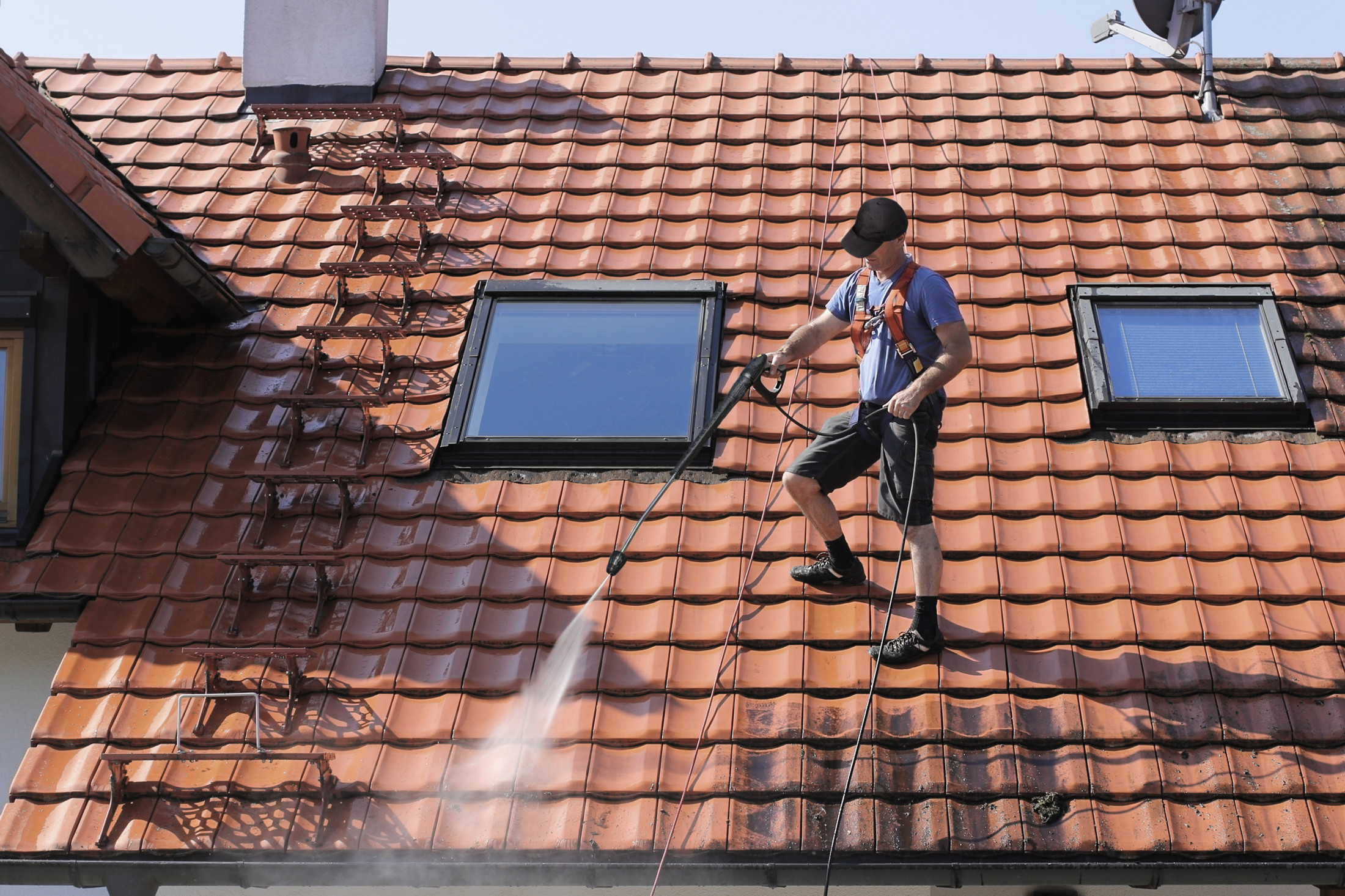
Roofs. Stone slate and clay tile on the older buildings, concrete tile on the newer ones round the edge of the village. Moss comes off dry, by hand and by scrape, working down the slope so nothing is driven up under the laps, and the ridge and the valleys are cleared out properly because that is where the weight of it collects. Then a biocide, so the spores die back and regrowth is slow. A stone slate roof is never pressure washed: the slates are held on pegs or nails at the head, the mortar bedding at ridge and verge is old, and water forced up the roof finds all of it.
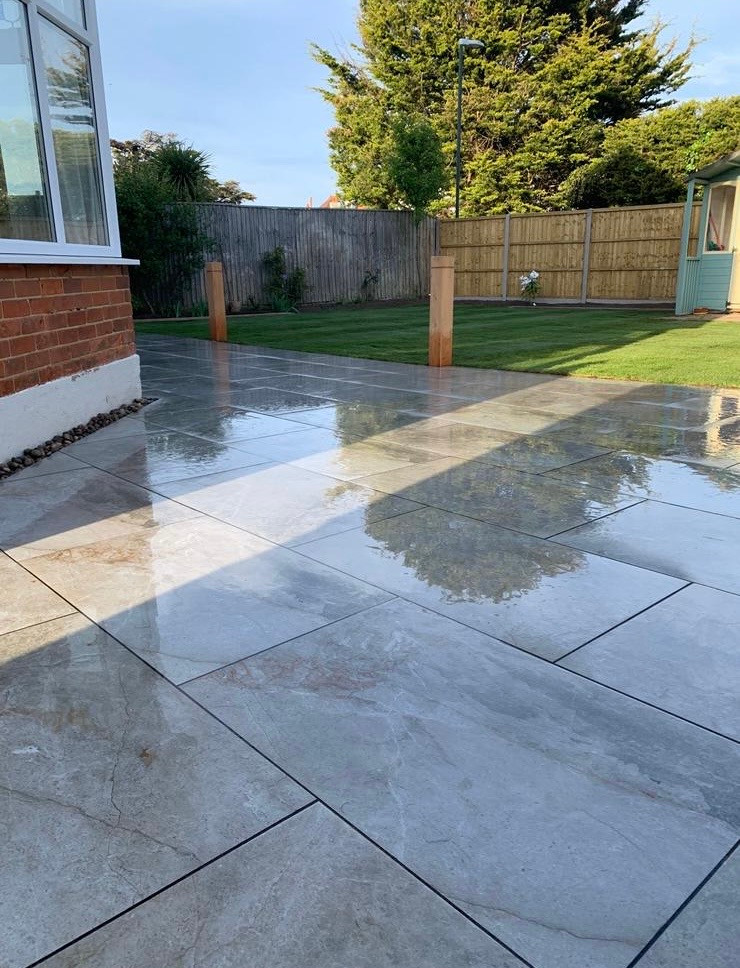
A lot of the rainwater goods on the older buildings are cast iron, and a cast iron gutter that has been full for a season rots from the inside. We clear the runs, the outlets and the valleys, flush them through and watch where the water actually goes, then tell you if a joint is leaking rather than blocked. Painted render and limewashed walls come up well on a soft wash and come to pieces under a lance, especially where the paint is already flaking. Stone flags and steps go green and slippery on a slope, so they are done first. Planting is wetted and sheeted, every drain and gully in the run of the water is covered, and what comes off leaves with us instead of washing into the nearest ditch heading for Poole Harbour.
How it runs
From your call to a written price
The quote is itemised: method for each surface, protection, access, and where the water and residue go on separate lines. Thomas Hannen comes out and prices the job himself, and the visit and the quote are free. Cleaning a building is maintenance and needs nobody's permission. Changing how it looks does. With a conservation area over the village and a hundred and thirty-four listed entries in the parish, from the castle itself down to the old town hall, anything that would coat, paint or seal a surface is a conversation with Dorset Council first, and on a listed building even the method can need listed building consent. We check the address before we quote, every time.
Cost
What decides the price of a clean
The measurement is the least useful number on a cleaning quote. What is on the surface sets the time. A stone cottage tight against the pavement on the village street, a bungalow on one of the closes at the edge, and a farm building up a track are three different jobs before anything is switched on, and work at height rules settle whether that is a pole or a tower. Lime-jointed stone wants almost no pressure at all, and old cast iron wants none. Ask what goes on each surface, whether the price includes a return visit, and where the water ends up.
If there is a date
A viewing, a visit or a deadline
Ring rather than use the form. If the date is a changeover, a viewing or a booking, say so. Corfe Castle is under half an hour from us, so a look is easy to arrange, and the honest answer on a stone building is often that the treatment needs weeks to work rather than a single day's wash. The phone is answered 24 hours for emergencies; scheduled work runs Monday to Friday, 8am to 6pm.
Worth knowing
Cleaning is allowed. Changing the look of it is the bit to check
The whole village sits in the Corfe Castle Conservation Area, and there are well over a hundred listed entries across the parish, which is a very high number for a place this size. What that controls is appearance and fabric, not maintenance. Washing a wall, clearing a gutter or taking moss off a roof puts back the surface that was already there, so none of it needs an application. That is worth saying plainly, because people here often assume they have to ask before anybody so much as touches the building.
Where it does bite is the step after the clean. Masonry paint, a coloured sealer, a water repellent coating or swapping a natural stone surface for something easier to look after all change how the building reads, and on a listed building work to the fabric can need consent in its own right.
There is a practical version of the same point: on old stone and lime mortar, an aggressive clean is itself an alteration, because once the face of the stone or the surface of a joint has gone, it does not come back. So we clean conservatively, we tell you what we are not going to do, and where a coating is being considered afterwards we say check with the council before you order the material rather than after.
Who you are dealing with
A local firm you can check
We cover Corfe Castle and the BH20 postcodes across Purbeck, from Kingston and Church Knowle over to Wareham, Ridge, Langton Matravers and Swanage. Bournemouth Roofing & Building Ltd, registered in England and Wales, company number 15471719, which you can look up in a minute. Thomas Hannen's business, and he is the one who comes out to price the job, not a salesman. A verified customer's 10 out of 10 on Checkatrade. The visit and the written quote are both free.
Questions
Corfe Castle questions we get asked
Does a listed cottage in Corfe Castle need consent to clean?
Cleaning is not usually an alteration, so ordinarily no. Corfe Castle carries 134 listed entries though, and on old fabric it is the method that decides the answer. Anything abrasive that takes the face off stone or strips a weathered surface does alter the building. We keep to hand work and low pressure, and where an elevation is listed we ask Dorset Council before doing more than washing it down.
Would sealing the roof afterwards be a problem here?
It would be looked at. The Corfe Castle Conservation Area governs how buildings appear, and a sealer changes the colour and the sheen of a covering in a way anyone can see from the street. Washing it and then leaving it alone is maintenance and needs nobody's approval. We do not sell coatings in any case, because on an old covering they trap moisture in material that needs to dry out.
Is lichen on old stone worth taking off at all?
Often it is not. Lichen grows slowly, sits on the surface and does not hold water against a wall the way a bed of moss does, and lifting it with pressure takes a layer of the stone with it. On a roof the answer flips, because lichen and moss together bridge the laps and hold water where the covering overlaps. We deal with what causes a problem and leave what merely offends the eye.
The ground stays wet all winter. Does that change things?
It changes the timing more than the method. Ground around Corfe Castle does not drain freely, so a heavy wash in February leaves standing water and mud tracked across paths that are slippery enough already. We save hard surfaces for a spell with dry days behind it and keep everything off the beds. On the roof it makes little difference, except that saturated moss comes away in heavy sheets.
Do you come out to Corfe Castle to look first?
Always. It is under ten miles from base, so getting there is no trouble, and there is no charge for the visit or the written quote that follows. Thomas Hannen prices it himself after walking the property, and the quote is itemised, so roof, walls, outbuildings and paths each get their own line. Bournemouth Roofing and Building Ltd is registered in England and Wales, company number 15471719.
Nearby, and next door
Exterior cleaning near Corfe Castle
Exterior cleaning nearby
Our other trades in Corfe Castle
Everything we do in Swanage Exterior cleaning, all areas Every area we cover
Free quote
Get a written price for your Corfe Castle clean
Send the postcode and tell us what has gone green. We come out, work out what each surface is made of, and put the price in writing.