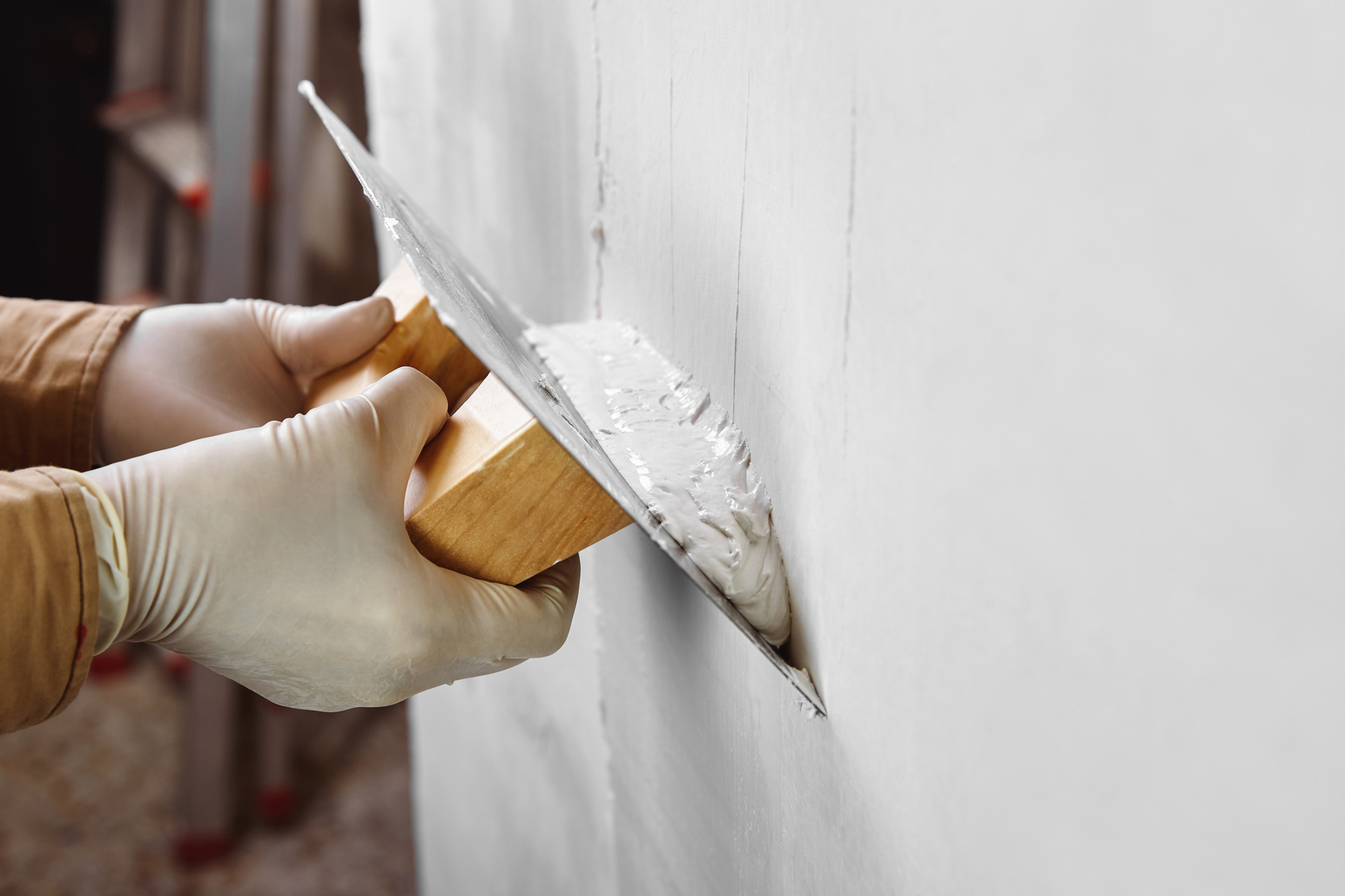
Plastering in Corfe Castle
Lime plaster on stone walls, lath ceilings, blown plaster put right, and ordinary skimming and rendering on the newer houses, priced in writing after a free visit.
The site visit is free and so is the written itemised quote. Thomas Hannen prices every job himself.
On an old wall in Corfe Castle the material matters more than the finish. The stone walls in the village are solid, with no cavity and nothing stopping moisture moving through them, so they need a breathable lime plaster. A gypsum skim traps the water behind it and blows off again within a couple of winters, which is why so much of the replastering here is somebody else's repair being taken back off.
Two calls come out of this village more than any other. Plaster lifting off a wall low down, usually along one elevation, where damp has been working behind a modern finish that will not let the wall dry. And a ceiling between the beams that has started to sag, because the lime has lost its grip on the laths above it.
Both are our work, and both are worth looking at before they get any further. The newer houses round the edge of the village are ordinary gypsum work and we do plenty of that too. The site visit is free and so is the written itemised quote, and we will tell you when patching is the better answer than a new ceiling.
The work
You cannot rule a Purbeck rubble wall straight
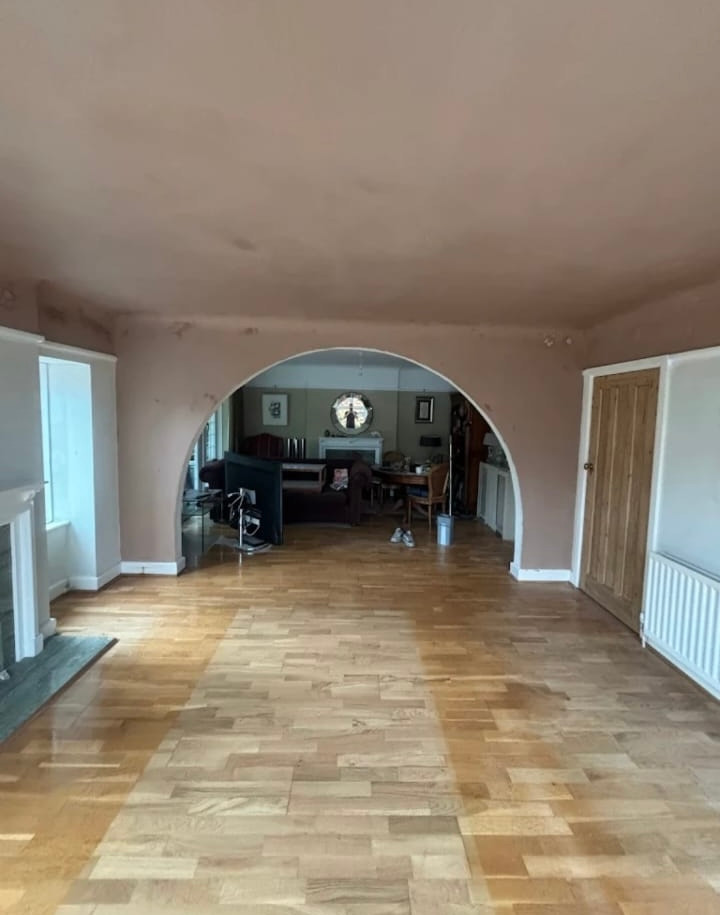
Lime plaster on stone. The older walls here are limestone rubble, thick, uneven and built without a cavity. You cannot rule a wall like that straight in one pass, so the work starts by dubbing out the hollows in successive coats of haired lime mortar, each one allowed to firm up before the next, and only then a floated backing coat and a fine finish. It is slower than gypsum and it is the reason a room here takes longer than the same room in a newer house, and it wants leaving to dry before a mist coat and any decorating.
Ceilings, laths and the beams. Between the beams you will usually find riven lath with haired lime pushed through it. Those nibs of plaster over the back of the lath are all that holds the ceiling up, and once enough of them have snapped the whole panel sags and comes down in one go rather than gradually. Where most of the keys are gone the ceiling comes down and is re-lathed. Where it is sound and only tired it can be washed off and finished again. We will tell you which, and we will talk you out of boarding over a ceiling that is still moving.
Blown plaster at skirting level is the commonest complaint in an old cottage here and it is rarely solved by plaster alone. A solid wall with no damp proof course carries moisture up and lets it evaporate off the face, and the moment somebody covers that face with cement render, gypsum or a plastic paint the water has nowhere to go and takes the finish off with it. The fix is to strip the offending material, let the wall dry, and put back something breathable.
The newer houses on the edge get ordinary work: a skim over a sound wall, a bonding, browning or hardwall backing coat where a patch has blown, board on dot and dab where there is blockwork to fix to and on stud where there is not, finished in tape and joint or a full skim, artex taken back or overboarded, and bead on every corner and reveal. A hollow sounding wall in one of those is dry lining doing its job, not a fault.
The exposed elevations face the weather coming up the gap. On stone the render should be lime, softer than what it covers, in a scratch coat, a render coat and a float, left able to breathe; sand and cement or pebbledash on the same wall traps water, freezes and pushes the face off the stone. On modern blockwork a thin coat silicone system is the right answer instead, or a monocouche where the colour is wanted through the material, with a bell cast bead at the base.
How it runs
From your call to a written price
The quote is itemised rather than one figure: what comes off, how each background is prepared, the beads, the backing coat, the finish coat, the making good and the waste on separate lines. Inside an unlisted house nothing we do needs planning permission. Outside, the whole village sits in a conservation area, so appearance is controlled and a change of external finish is a change rather than maintenance. The bigger point is that there are 134 listed entries in one village, and listed building consent works differently from conservation area control. Dorset Council for both, and we check the address before anything is ordered.
Cost
What decides the price of a plastering job
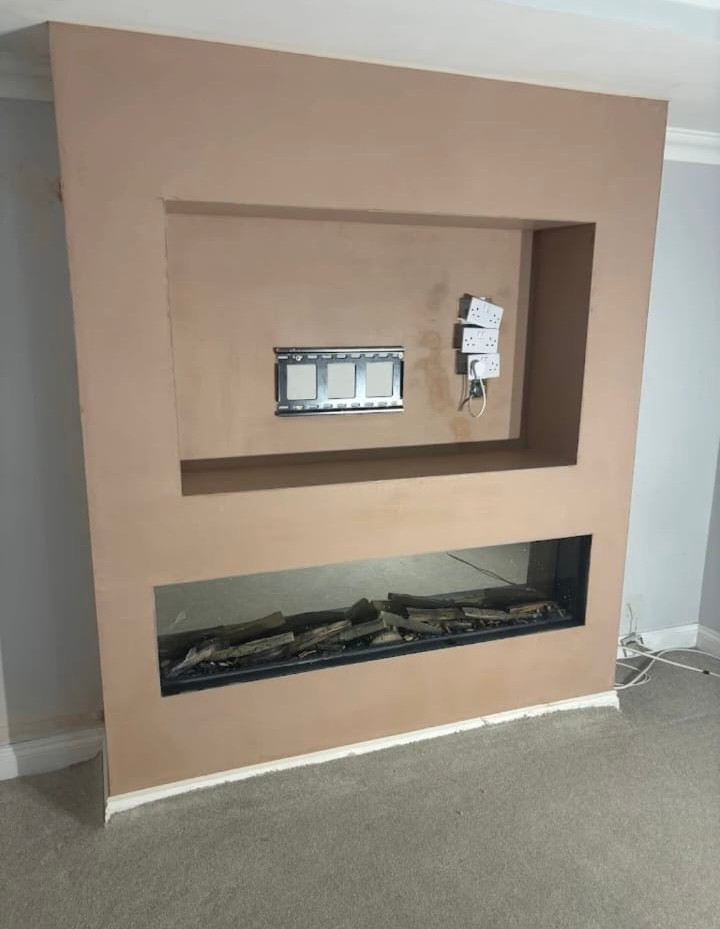
No rate per square metre. What sits behind the finish decides it: sound plaster takes a skim, a hollow wall comes off and brings a backing coat with it. A stone cottage with its door straight onto the pavement, a house on the lanes behind with a yard, and a newer place on the edge with a drive are three different jobs. Outside, render brings a tower or a full scaffold into the price, and the work at height rules are why that is its own line. A full re-render counts as renovating a thermal element, so Approved Document L and building control take an interest.
If it has started to come down
A sagging ceiling, or plaster off the wall
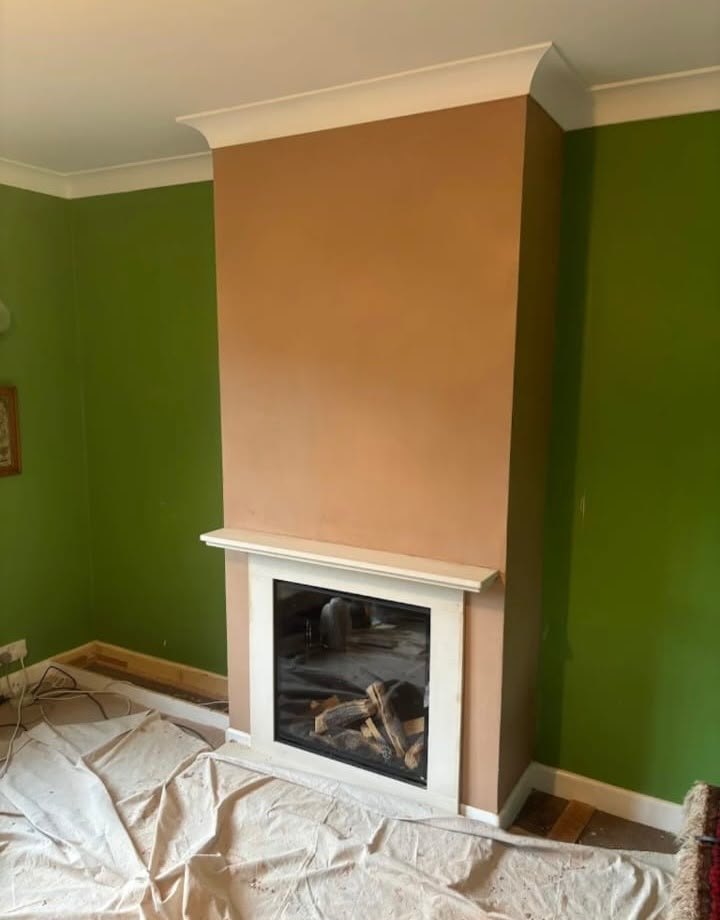
Ring rather than use the form. A lath ceiling pulling away from the joists, or plaster coming off a wall in sheets, goes to the front of the queue. We are about ten miles round the Purbeck road, so say how much has already come down; a lath ceiling that has lost its keys lets go all at once, so clear the room underneath today.
Worth knowing
Listed building consent reaches inside the house
Everyone here knows the village is a conservation area. The thing that catches people out is the difference between that and listing. Conservation area control is about what can be seen: the street, the elevations, the materials on the outside. Listing is not limited that way.
It covers the whole building, inside and out, and a village this size carries well over a hundred listed entries. Taking down a lime ceiling, stripping a wall back to the stone, boarding over beams or skimming a historic wall in gypsum are all works to a listed building even though nobody walking past will ever see them.
So do one thing before you book anybody: have the address checked against the list. If it is listed, an application takes weeks and there is no retrospective shortcut worth having, and an officer will expect lime rather than gypsum on a historic wall in any case. Listed building consent explains how consent works and who to ask.
We quote the lime specification either way, because on a solid stone wall it is the right material whether or not the paperwork requires it. If your house is one of the newer ones on the edge of the village, none of this touches you and it is a normal skim.
Who you are dealing with
A local firm you can check
We cover Corfe Castle, Church Knowle, Kingston, Ridge and the BH20 addresses across Purbeck, with Dorset Council for planning and building control. Send the postcode if you are not sure whether we come out that far. Bournemouth Roofing & Building Ltd, registered in England and Wales, company number 15471719, which you can look up in a minute. Thomas Hannen's business, and he is the one who comes out to price the job, not a salesman. A verified customer's 10 out of 10 on Checkatrade. The visit and the written quote are both free.
Questions
Corfe Castle questions we get asked
So many buildings here are listed. Is ours likely one?
The odds are higher in Corfe Castle than almost anywhere else we work, with 134 listed entries covering the castle, the Old Town Hall and a great many ordinary cottages in the street. Before pricing anything we check the address on the national list. If it is listed, consent covers the inside as well as the outside, and a gypsum skim over historic fabric is not a decision you or we can make alone.
Should the old lime come off and be replaced entirely?
On a listed building in Corfe Castle that is rarely allowed and rarely right. Lime plaster that has lost its key can often be grouted back and repaired in patches, keeping the original surface and its slight unevenness. Stripping a wall wholesale loses the fabric that consent exists to protect. We would rather cut out the failed areas, build back in lime and let old and new knit together than go back to bare stone.
The whole village is a conservation area. Does that cover repairs?
Repairs in the same material are maintenance, so a like for like patch to a render is not a planning matter. Changing the finish, the texture or the colour is, and within the Corfe Castle Conservation Area Dorset Council will look at anything visible from the road. The wider Dorset landscape designation adds to that. The practical rule is to match what is already there and the paperwork disappears.
Which side of the house needs doing first here?
Start with the south west face. That is the exposed elevation at Corfe Castle, 5.4km in from the coast with little in the way to slow the weather down, so it takes driven rain while the sheltered side stays dry for a long time. Failure begins at the arrises, the reveals and the head of the wall rather than in the middle. Doing that face and its edges is usually the whole job.
Will lime work go on in the middle of winter?
Not in a frost, and not with one forecast within a few days of a coat going on. Lime sets slowly and carries on hardening for weeks afterwards, so it wants mild, damp, still weather and protection while it does. Around Corfe Castle we sheet the scaffold and work the sheltered elevations through the cold months, saving the south west face for the spring. Booking in autumn usually means starting in March.
Nearby, and next door
Plastering and rendering near Corfe Castle
Plastering and rendering nearby
Our other trades in Corfe Castle
Everything we do in Swanage Plastering and rendering, all areas Every area we cover
Free quote
Get a written price for your Corfe Castle plastering
Send the postcode and tell us which wall or ceiling. We come out, look at what is behind the finish, and put the specification and the price in writing.