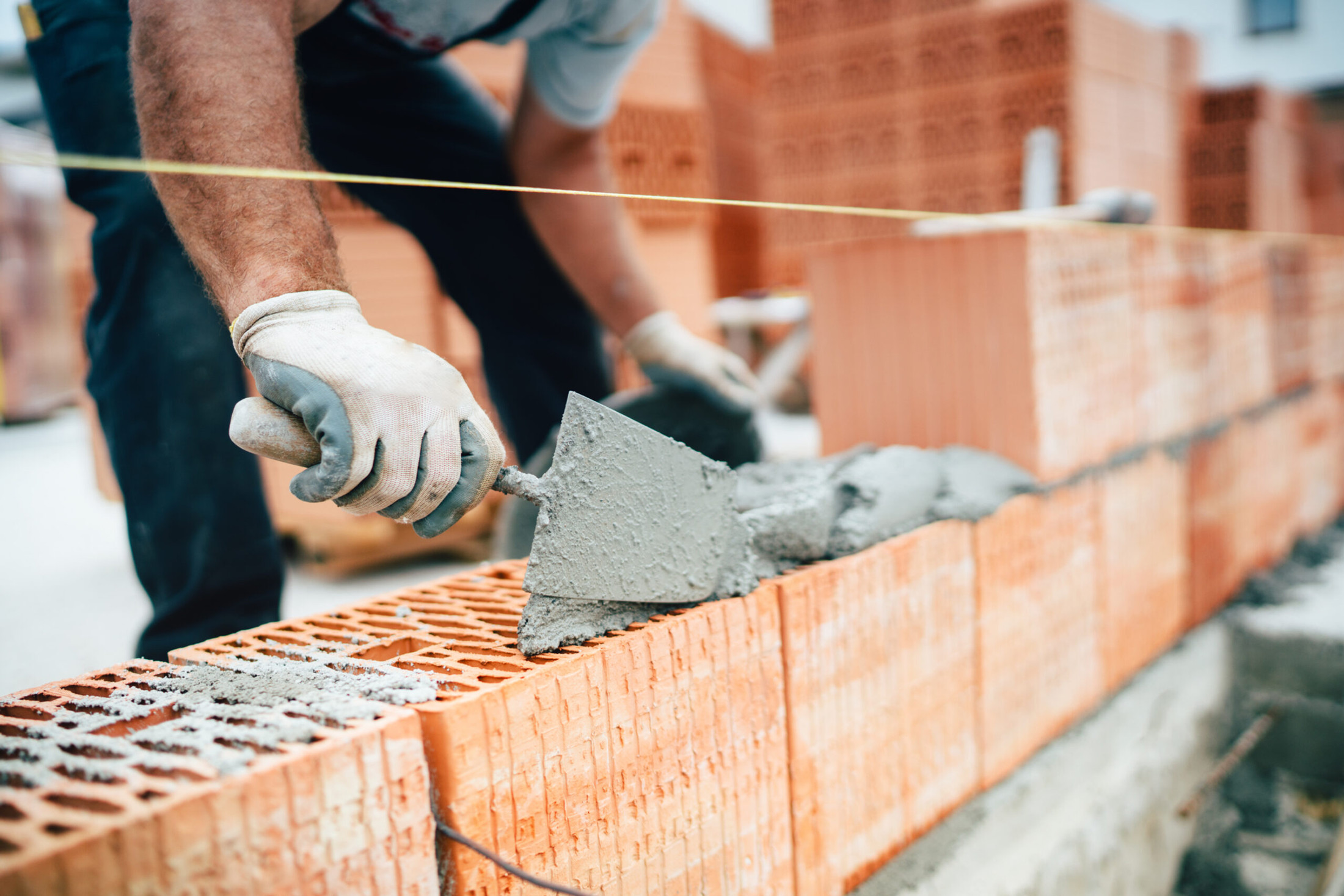
Repointing and lime mortar in Corfe Castle
Purbeck stone bedded in lime, a village where most of the buildings are listed, and paperwork before anybody opens a joint.
The site visit is free and so is the written itemised quote. Thomas Hannen prices every job himself.
In Corfe Castle the first question is not what mix goes back but whether your building is listed. There are 134 listed entries in the parish, so the odds are good that yours is one of them, and on a listed building the mortar counts as part of the protected fabric. Consent comes before a joint is opened rather than after.
The wall tells you first. Mortar dropping out of a rubble elevation in crumbling lumps. A cottage that goes dark through one whole gable after a wet week and takes too long to come back. A grey cement repair from decades ago, cracked away from the stone and looser than what it replaced. Grit off the stack in the gutter every time it blows.
So the visit is half survey and half paperwork. We walk every elevation, test the joints to find whether it is original lime or a later cement, and photograph all of it. Then we check the address against the register, because on most of this village that determines what can be specified at all. Back comes a written itemised quote, elevation by elevation, with the mix and the joint finish written into it. The site visit and the quote are free.
The work
Stone, lime, and the joints that keep a Corfe wall dry
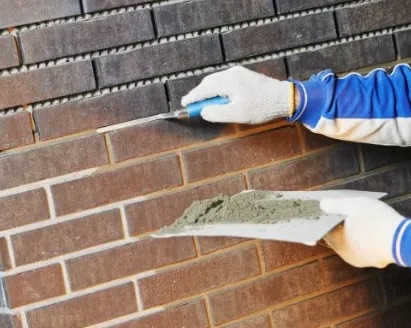
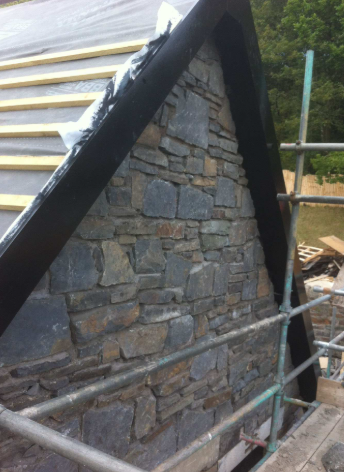
Rubble walls and the wide joint. The bulk of the village is local Purbeck limestone laid in thin, roughly coursed beds with a good deal of mortar between and behind the stones, so a fixed raking depth is meaningless here. We take out what is loose, friable or crumbling, follow it back to sound material, and fill deep voids in stages. Hand tools only: an angle grinder on soft limestone leaves a sawn line down a wall that was never straight.
Ashlar and dressed work, which is a different job. Window and door surrounds, quoins and the better frontages use dressed stone with joints a couple of millimetres wide, and a rubble mix will not go into those. They want a fine lime putty mortar with a finer sand, worked in with a thin blade. Treating an ashlar joint like a rubble one is how a good frontage ends up coarse.
The mix. Purbeck limestone is soft and permeable and these are solid walls with no cavity, so the wall sheds water by evaporating it back out through the joint and has to stay breathable. That means an NHL lime or lime putty mortar gauged to the original sand for colour and texture, kept back a few millimetres off the face and brushed once it has taken up, so the stone reads as the surface of the wall. A weather struck or bucket handle profile belongs on brickwork; on stone the finish is flush or recessed.
Taking cement back off. Much of what we do in the village is undoing hard sand and cement pointing applied in the last fifty years. It comes off slowly with hand tools, because the cement is stronger than the stone and will lift a face away. Where a face has spalled we cut it back or piece in a matching stone against a sample, then point the surround softer so the repair is not the hardest thing on the elevation.
Brick stacks, and the Victorian additions. Even where everything below is stone, the chimney above the roof line is often fired brick. A stack takes weather on four sides with nothing warming it, so its joints wash out first and the penetrating damp lands on a ceiling below. We repoint the stack, renew the flaunching round the pots and make good the junctions. A low stack sometimes comes off a tower; anything on a main ridge is a scaffold, priced as its own line.
Garden and boundary walls. Many of the stone walls along the lanes were built with very little mortar and meant to let water through, so pointing one up solid takes that drainage away. Where a wall is shedding stones we bed and pin them back in a soft mix. Past that, we say so rather than sell you pointing that will not hold.
How it runs
From your call to a written price
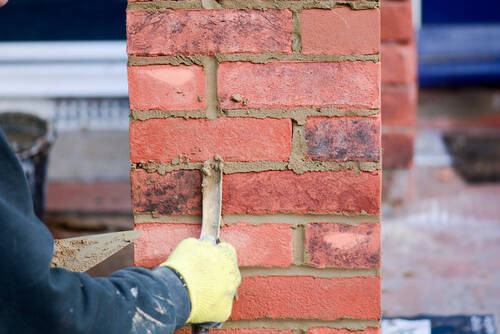
Same team from first visit to last, one person to ring, and no sub-contracting. The quote is itemised rather than a figure on the back of a card: access, raking out, the mortar mix, the area of each elevation, brick replacement and disposal all on separate lines.
Nothing is left open overnight. The site is swept at the end of each day rather than the end of the job, and what comes out leaves with us. If something turns up that nobody could have seen, you get a photograph and a price first.
Repointing like for like needs no planning application and nothing goes to building control. Listing is what governs work here. Corfe Castle Conservation Area covers the village, so a repair in the same material is maintenance while a change of mortar colour or joint profile is a change of appearance. On top of that sit 134 listed entries, and on a listed building any work affecting its character needs listed building consent first, under section 7 of the Planning (Listed Buildings and Conservation Areas) Act 1990. We check the address, make the enquiry for you, and do not open a joint on a listed wall until the consent is in hand.
Cost
What decides the price of a repointing job
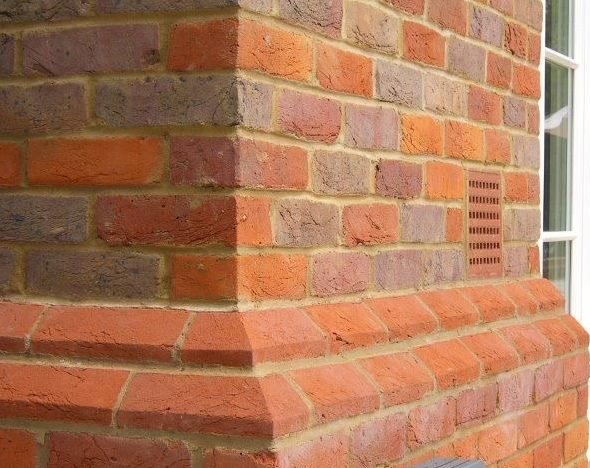
No rate per square metre: the square metres tell you almost nothing until somebody has looked at the joints.
Getting to it. A cottage straight on the village street with no pavement to stand a platform on, a stone gable set back off a lane and a boundary wall along a track are three different set ups. A chimney or gable wants a scaffold, a low wall a tower or nothing at all. How long the platform stands matters as much as how big it is, and the work at height rules make it a priced line.
The joints decide it, not the wall. Raking out by hand is slow, and on soft brick the only safe way, because a disc cutter widens the joint and takes the arris off. How deep the joints come back, and whether faces have already spalled, sets the hours far more than the area does. The mix matters as much: cement holds water against a soft brick and the face blows off in the first frost, while lime is the right answer on most pre-1919 walls here.
Comparing quotes? Ask how deep the joints are raked, by hand or by disc, what the mix is and whether it was matched, how many spalled bricks are cut out, and whether the scaffold is in. Two quotes for the same job are usually two different jobs.
If water is getting in
Open joints, and water coming through the wall
Ring rather than use the form. Joints washed out let driven rain straight through to the inside face, and penetrating damp on a chimney finds the flashings too. We look, sheet or temporarily point the worst if the weather is against us, and price the elevation once it has dried enough to see what is sound. Here that is usually the stack or a south west gable. If the building is listed we make it safe and sheet it, then hold the permanent repair until the consent is through. The phone is answered 24 hours for emergencies; scheduled work runs Monday to Friday, 8am to 6pm.
Worth knowing
Consent comes before the mortar in a village like this one
Most villages have a handful of listed buildings. Corfe Castle has 134 entries, which changes the running order of a repointing job. On a listed building the mortar is not a finish applied to the fabric, it is part of the fabric, and replacing it in a different material or profile alters the character of the building. Doing that without consent is not a paperwork slip. It is an offence, and the owner carries it.
So the specification comes first and the trowel second. An application will want the binder named, the sand identified, the gauge stated and the joint finish described, and often a sample panel built on the wall first. None of that is quick, so allow for it. It also means a quote saying only that the wall will be repointed is no use here, because it does not say the one thing the council will ask about.
If your building is not listed you are still inside the conservation area, where appearance is controlled even though the fabric is not. Either way: get the mix and the finish written down before you agree a price, so what is quoted, what is applied for and what goes on the wall are the same thing.
Who you are dealing with
A local firm you can check
We cover Corfe Castle, Church Knowle, Kingston, Harmans Cross and out to Wareham and Swanage, broadly BH20 and BH19, all of it under Dorset Council. You are dealing with Bournemouth Roofing & Building, the trading name of Bournemouth Roofing & Building Ltd, registered in England and Wales, company number 15471719, which you can look up in a minute. Thomas Hannen's business, and he prices every job himself. A verified customer's 10 out of 10 on Checkatrade. The site visit and the written quote are free.
Questions
Corfe Castle questions we get asked
How do we find out whether our house is one of the listed ones?
The register is public and the council keeps it, and we check it as part of the free visit. A listing can cover more than the front of the house: outbuildings, boundary walls and railings within the curtilage are often caught by the same entry.
Does consent really cover the mortar mix itself?
It covers anything affecting the character of the building, and on a stone wall the mortar is a large part of that. An application asks what binder, what sand, what gauge and what finish, with a sample panel often wanted first. That is why we write the mix into the quote.
Can stone be pointed in something other than lime?
It can be, and around the village you can see what happens when it is. Cement is harder and less permeable than Purbeck limestone, so it stops the wall drying through the joint and pushes moisture out through the stone face, which then delaminates. On an unlisted modern garden wall a cement mix is fine; on an old stone building it is the wrong answer.
How much time does the consent side add?
Enough that it should be started well before you want the work done. We lodge the enquiry, provide the specification and photographs, and keep the quote open while it runs. Anything that cannot wait, such as an open stack letting water in, is made safe meanwhile.
Our cottage is stone but the chimney above the roof is brick. Same mix for both?
No. The stack is fired brick and takes weather on four sides, so it wants a mortar with more hydraulic set than the sheltered rubble walls below. The colour and sand are still matched to what is up there. The two specifications go separately on the quote.
Nearby, and next door
Repointing near Corfe Castle
Repointing nearby
Our other trades in Corfe Castle
Everything we do in Swanage Repointing, all areas Every area we cover
Free quote
Find out what your wall is before you agree a mix
Thomas surveys every elevation, tests what is in the joints, checks the listing and sends a written itemised quote with the specification on it. Free.