Block Paving in Bournemouth
Block paved driveways, paths and parking bays across Bournemouth, dug out and built from the ground up, plus relays of drives that have sunk or spread.
The site visit is free and so is the written itemised quote. Thomas Hannen prices every job himself.
Last updated
Block paved drives and paths
Block paving that stays flat starts underneath
Bournemouth Roofing & Building lays new block paved driveways, paths and parking areas in Bournemouth: dig-out, a compacted Type 1 sub-base, kerbs set in concrete, a screeded sand bed, then the blocks, compacted and jointed. We also lift and relay block paving that has sunk, rutted or spread. The site visit is free, and so is the written itemised quote.
Maybe the drive has dipped in the wheel tracks and holds a puddle. Maybe the blocks along one side have crept out and the edge has opened. Or the front lawn has to become parking, done once and done legally.
Good and bad block paving look the same on day one. The difference is in the layers you never see.
So we start with the ground, the drainage and the dropped kerb. If blocks are wrong for your drive, we price resin or tarmac instead.
The work
New block paved drives, layer by layer
Dig out to firm ground
Every layer of a block paved drive is there to stop a particular fault. First we take out the old surface and the soft topsoil down to firm ground, the formation. A path only carries feet, so it needs less depth than a drive. The spoil leaves in a skip or on a grab lorry.
On soft or clay ground a geotextile membrane goes down first, so the stone is not pressed into the soil and the drive does not slowly sink.
The Type 1 sub-base
Next comes MOT Type 1, crushed stone that locks together when compacted. It goes in layers, each run over with a plate compactor before the next. This is what carries the car. Too little of it, or all of it tipped in one go, and the drive ruts in the wheel tracks. The falls are shaped here too.
Edges held before a block goes down
Block paving stays put because it is boxed in. Along every open side we set a kerb or edging blocks on a mortar bed, haunched in concrete. Leave an edge free and the blocks creep outwards and the side drops.
The sand bed, the blocks and the joints
On the sub-base goes a laying course of sharp sand, screeded to level with rails. Nobody walks on it after that, because every footprint becomes a dip. The blocks are laid hand tight, then cut to the edges and around manholes. An inspection chamber gets a recessed cover, so the pattern runs across it and you can still lift it.
A plate compactor with a rubber mat beds the blocks without scuffing them. Kiln dried sand is brushed into the joints, compacted again and topped up. Full joints lock the blocks together. Empty ones let them rock and give weeds a home.
A typical front drive takes several working days. Block paving has no curing time, so once compacted and jointed it can normally take a car. The joint sand settles, so the joints want topping up after a few weeks.
Relaying sunken or spread block paving
A dip in one place has a cause underneath: an old drain or service trench never properly backfilled, a soft spot, or roots. We lift the blocks in and around it, find the fault, rebuild the sub-base and relay the same blocks on fresh sand. Cracked or stained blocks are swapped for the closest match.
If the whole drive ruts or shows ponding because the sub-base was never deep enough, patching just chases the problem around, and we will talk you out of it.
Blocks and patterns
Choosing the blocks and the pattern
Most drives are laid in concrete block paving, which has the widest range of colours, sizes and finishes. Clay pavers are fired like bricks, so the colour goes right through and fades less. Natural stone setts suit an older house or a feature border. Tumbled blocks have rounded edges for a settled look, standard blocks give crisp lines.
On a drive, thickness matters. A 50mm block is made for paths and patios. A drive for cars wants 60mm, and 80mm where vans or a motorhome turn. Colour varies from batch to batch, so we draw from several packs at once.
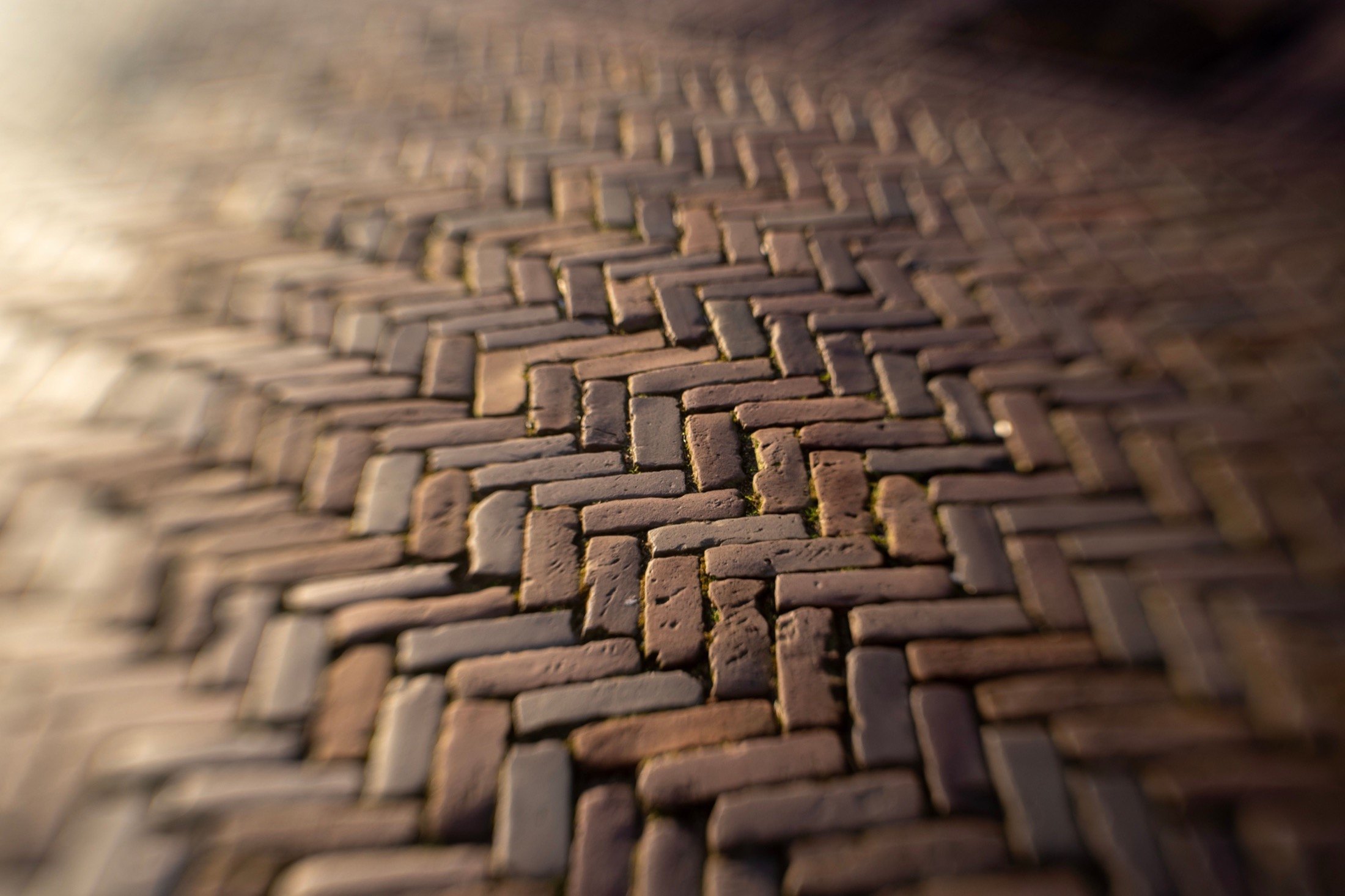
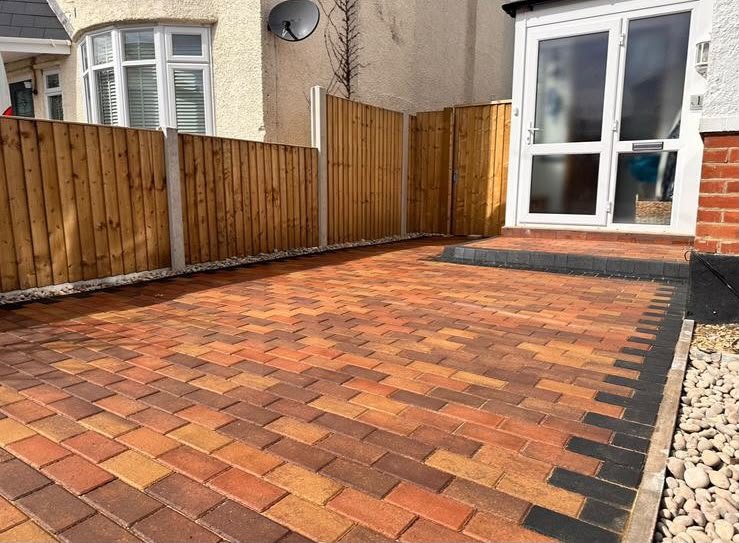
The pattern does structural work. Herringbone, at 45 or 90 degrees, locks the blocks in both directions and resists turning tyres, so it is the pattern for a drive. Stretcher bond and basketweave suit paths and patios. A border or soldier course, blocks laid end on, frames the drive and gives the herringbone a firm line to cut against.
Water and planning
Permeable or standard, and where the water goes
Standard block paving sheds most of its rain off the surface, so the drive has to fall to somewhere that can take it. We lay it falling away from the house, at least two brick courses below the damp proof course. At a garage or front door, a channel drain across the threshold catches the water for a soakaway or a gully. Simplest of all is a fall onto a lawn or border.
Permeable block paving has wider joints filled with fine grit, laid on open graded crushed stone with no fines. Rain goes through, is held in the stone and soaks away, or is piped to an outfall. It is a different build-up, laid to the British Standard guide for permeable paving, and as a sustainable drainage (SuDS) surface it settles the planning question.
On a house, a drive needs no planning permission if it is permeable or drains to a lawn or border. Cover more than five square metres of front garden with standard blocks draining to the road and it does. That is the rule in the Planning Portal guidance on paving your front garden, explained in the government guidance on permeable front gardens. Flats and maisonettes need permission regardless. In a conservation area, check the council list before taking out a front wall or hedge.
The honest downsides
What block paving does badly, and the alternatives
Block paving has more joints than any other drive surface, and most of its downsides come from that. Moss and weeds root in joints that have lost their sand. Oil soaks into concrete blocks, leaving staining. Rain and pressure washing take joint sand out. On a skimped base it sinks.
What it does well is repair: a dip or a stained block can be lifted and relaid, and nobody can tell.
| Point | Block paving | Slabs | Resin bound | Tarmac |
|---|---|---|---|---|
| Carries cars | Yes, 60mm or 80mm in herringbone | Only vehicle rated slabs on a rigid bed | Yes, on a sound base | Yes |
| Joints to keep full | Sand in every joint | Pointing | None | None |
| Mending one spot | Relay the same blocks | Relay the slabs | A patch can show | Cut out and patch |
| Lets rain through | Permeable blocks only | No | Yes, on a permeable base | Porous asphalt only |
| Use after laying | Once compacted and jointed | Once the bed has set | Once cured | Once cool, gently |
We lay all four, so we have no reason to push one surface.
How we work
From the site visit to the last brush of sand
One person handles your drive from the first call to the finish, and Thomas Hannen prices the job himself. At the free site visit we check the levels, the damp proof course, where the water can go, the manholes, and whether a mini digger can get in or it is barrow work through a side gate. The written itemised quote then sets out:
- the dig-out depth, and how the spoil leaves
- any membrane, and the depth of the Type 1 sub-base
- the block, its thickness and colour, and the pattern
- the kerbs, edging and borders on every side
- where the water goes: falls, channel drain, gully or soakaway
- manhole covers, steps and walls, each on its own line
If the dig turns up something nobody could see, we stop that part, photograph it and price it, and it goes ahead only when you say yes.
Each evening the site is swept, the pavement clear, and you have a safe way to your door. The waste leaves with us. At the end we walk the drive with you and show you how to top up the joints. Scheduled work Mon to Fri, 8am to 6pm.
The price
What decides the price of block paving
Prices are not published, because two drives of the same size can cost very different amounts once you know what is under them. These are what move it:
- the area, and how much of it is cuts
- the dig-out depth, muck away, and any old concrete to break out
- access: a narrow side gate means barrows, not a digger
- the block: concrete, clay or stone, and its thickness
- the pattern: herringbone takes more cutting than stretcher bond
- kerbs, borders and soldier courses
- drainage: a fall to a border, or a channel drain and soakaway
- steps, levels and manhole covers
Comparing quotes? Ask each firm how deep the sub-base is, what holds the edges, what thickness of block, and where the water goes.
A contract agreed on your doorstep carries a legal right to cancel.
Before it gets worse
Sinking, rocking or weedy block paving
Block paving rarely fails overnight, but it goes faster once water gets into the base. Watch for a puddle in the same place, blocks that rock, a spreading edge, and empty green joints.
For now, keep cars off a spreading edge and brush kiln dried sand into empty joints. A sealer is optional: it binds the joint sand and slows oil soaking in, but it wears, and it will not hold a sinking drive together. A small dip relaid now is a far smaller job than a soft base later. Something urgent? Ring, and if we miss you we call back.
Bournemouth dropped kerbs
Check the dropped kerb with BCP before you pave
A car cannot legally cross a pavement that has not been dropped, and in Bournemouth the crossing goes through BCP Council. The council quotes for it and builds it, or a street works contractor with a section 171 licence to work on the highway can. The council controls crossings under the Highways Act. A drive with no legal way onto the road is wasted, so apply before we dig.
BCP's dropped kerbs page sets rules that shape the drive. The parking space must be at least 5.5 by 2.6 metres with the car facing the road, or 2.8 by 6.5 metres side on, and the kerb cannot be dropped within 1 metre of a street light, sign or tree, or 10 metres of a junction or crossing, so measure first. BCP treats standard, non-permeable block paving as a surface that does not drain, and wants a drain on your property for it. Permeable blocks avoid that. Planning permission for the kerb is usually needed on a classified road, where the parking area does not drain, or for a flat, maisonette or listed building.
A gravel drive in BCP needs a retaining strip of at least 1 metre across the full width of the entrance, and block paving is one of the options the council names. The Planning Portal guidance on dropped kerbs covers the national side. If you rent, get the landlord's consent first.
Who you are dealing with
Bournemouth Roofing & Building Ltd
Bournemouth Roofing & Building Ltd, company number 15471719, registered in England and Wales, 80a Wolverton Road, Boscombe, BH7 6HX. The owner is Thomas Hannen. We have one verified Checkatrade review, scored 10 out of 10. The site visit is free and so is the written itemised quote.
We work across Bournemouth and the BCP area, and Poole has its own page. Ring 07435 839745 or send the details online.
Questions
Block paving questions
Do I need planning permission to block pave my driveway?
Not on a house, if you use permeable blocks or the drive falls to a lawn or border. Standard blocks over more than five square metres of front garden, draining to the road, do need it. Flats and maisonettes need it either way.
Do I need a membrane under block paving?
Under the sub-base on soft ground, yes, a geotextile. Under the sand, no: the sand slides on it, and weeds grow from seeds landing in the joints from above.
Should you jet wash block paving?
Gently, with the nozzle low and angled, never straight down the joints. Then re-sand once dry.
How long will a block paved driveway last?
There is no honest single figure. It depends on the depth of the sub-base, held edges and full joints. Built properly it stays flat for a very long time, and a dip can be relaid. Laid on sand over soil, it ruts early whatever the blocks.
Is it cheaper to have block paving or slabs?
On a patio or path, slabs usually go down quicker. On a drive, slabs need a vehicle rated product and a rigid bed, which narrows the gap. We can price both on one itemised quote.
Can you relay my existing blocks?
Usually, yes, with fresh sand and the base put right underneath, and cracked blocks swapped for the closest match. If the whole drive ruts because the base was never deep enough, a relay will not hold, and we say so.
Related work
Other driveway work and next steps
- Driveways and patios: every drive surface we lay
- Resin driveways: smooth, and lets water through
- Tarmac driveways: no joints to weed
- Patios: porcelain and stone
- Driveways in Bournemouth: local points in the town
- Block paving in Poole: the same work in Poole
- Project gallery: photos of finished work
Free site visit
Send us a photo of the drive you have now
Roughly how big it is, what is on it now, and whether the kerb is already dropped. We will come and look, and put a written itemised quote in front of you.