External Rendering & Render Repairs Bournemouth
Silicone thin coat, monocouche, sand and cement and lime. Every elevation tapped over before a price is written, so you pay for the wall you have rather than the one it looks like from the pavement.
External walls
Rendering, Render Repair & Recoating Across Bournemouth and Poole
A render job is decided by what is already stuck to the wall, not by the colour you pick. An elevation gets tapped over with a mallet and chalked before anybody writes a figure, because the coat that looks perfect from the road is often the one that comes off in sheets when the breaker touches it.
Bournemouth Roofing & Building render, repair and recoat external walls across Bournemouth, Poole and Christchurch, and inland through Wimborne, Wareham, Ringwood and Blandford. Thomas Hannen prices the work himself, and the visit and the written itemised quote both cost you nothing.
Most people arrive here with one of three things. A patch below a window that sounds hollow when you knock it. A crack stepping down from a corner that you can get a coin into. Or a wall gone tired: green on the shaded side, chalky where the paint has weathered, patched enough times that no two areas match.
Those are three different jobs and only one is a full new system. The quote puts access, preparation, the system, the beads and the making good on separate lines, and if the honest answer is a clean and a breathable coating rather than a re-render, you get told that. If the outside is sound and it is the walls indoors that are tired, that is plastering in Bournemouth instead, and it is a separate page and a separate price.
- Silicone thin coat, monocouche, sand and cement, pebbledash, Tyrolean and lime
- Blown render hacked off, backgrounds made good, cracks cut out and meshed
- Beads, bellcast and stop ends in stainless or PVC, never galvanised
The site visit is free and so is the written itemised quote. Thomas Hannen prices every job himself.
What the job covers
Tapping, Hacking Off, Beading & Finishing
From a garage gable in a visit to a three storey block coming back to bare brick before a single bag is mixed.
Tapping the Elevation Before Anything Is Quoted
An hour with a mallet and a stick of chalk decides the whole job. A bonded coat rings solid, a blown one sounds like a drum, and the chalked area is nearly always bigger than the stain that made you ring. It is why nobody should price a render off a photograph.
Hacking Off Blown Render and Making Good
Where the coat has parted from its background it comes off back to a firm edge rather than a convenient one. The brick or block underneath is raked, brushed and made good, friable areas stabilised with a primer, and an open joint letting water in sorted first. Rendering over a wet wall hides it until the next frost.
Beads, Bellcast, Stop Ends and Reveals
A render is judged where it stops. Angle beads plumb on every external corner, stop beads at the reveals and against the soffit, a bellcast at the bottom so water drips clear of the brickwork, and movement joints where the wall needs them. We fit stainless or PVC. Galvanised beads rust inside the coat and bleed a brown line down a new wall.
The Base of the Wall, Sills and Pipework
Render taken down to the ground wicks moisture up behind itself and bridges the damp proof course, which is why a rendered house can have damp inside and a perfect wall outside. The coat stops clear of the ground, sills are checked for a working drip, and pipes and vents come off and go back rather than being rendered around.
Reading the wall
What a Crack, a Hollow Patch or a Rust Line Is Telling You
Walk the elevation with your knuckles and you will know more about the wall than any colour brochure will tell you.
Fine crazing spread evenly over an old sand and cement coat is shrinkage from the day it went on. It is cosmetic, and on lime it is normal. A single crack stepping down diagonally from a window corner is a different animal: that is a route for water into the back of the render, and once water is behind the coat the frost does the rest. So is a brown line bleeding from a corner, which is a galvanised bead corroding inside the coat.
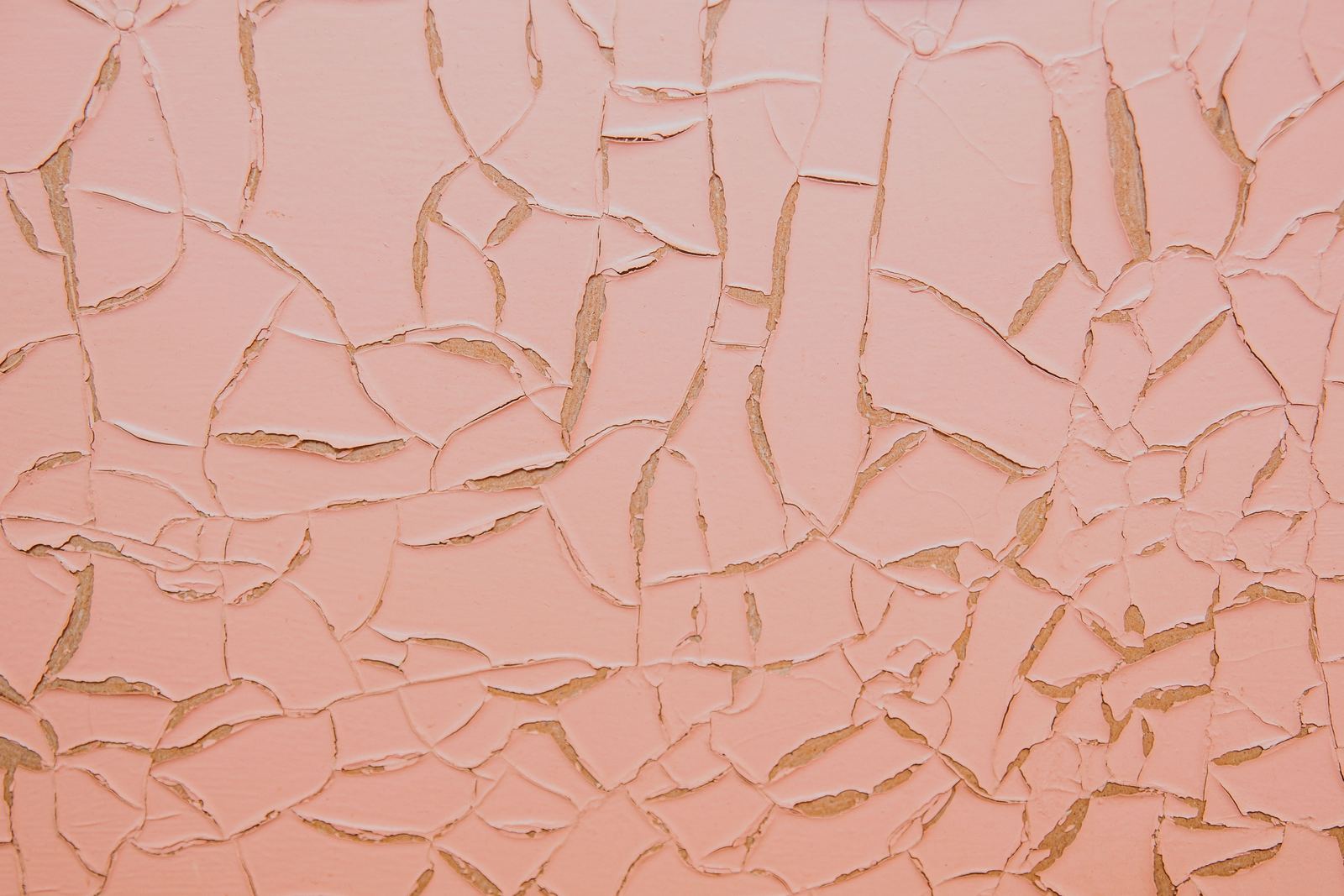
Hollow patches are delamination: the bond has gone. They start where water has been getting in for years: under a leaking sill, below a cracked corner, along a gutter joint that has dripped down the same stripe of wall every winter. That is why we look at the rainwater goods before quoting an elevation, and why a render repair sometimes starts on our gutter cleaning page.
The systems
Silicone Thin Coat, Monocouche, Sand and Cement, Lime
There is no best render, only the right one for the wall behind it. A modern cavity blockwork gable and a pre-1919 solid wall want opposite things, and getting that wrong is the most expensive mistake made on external walls.
Silicone thin coat
A polymer basecoat with a glass fibre mesh bedded into it, a tinted primer, then a through-coloured silicone topcoat scraped or floated to the grain you choose. The mesh stops hairline cracks travelling, so it copes with the small movement that opens a traditional coat up. It sheds water while still letting the wall breathe, and the colour is in the material rather than painted on. On cavity blockwork and anything built since the seventies it is usually the sensible answer.
Monocouche
Through-coloured, put on as one build rather than layered up, then scraped back once it has taken up to reveal the aggregate. It is quick over a large plain elevation and it wants setting out properly, because there is no second coat to hide a wandering line. It is less forgiving of movement than a meshed thin coat, so it belongs on sound, stable blockwork.
Traditional sand and cement
Two or three coats, scratched and floated, painted afterwards or finished with a dash. Still the right answer in plenty of places: matching a repair into an existing coat, garden and boundary walls, garages and outbuildings. Mixed too strong it is harder than the brick it sits on and cracks rather than moving, which is how most of the failed render round here got that way.
Pebbledash and Tyrolean
Both are finishes over a backing coat rather than systems in their own right. Pebbledash is dry aggregate thrown onto a wet butter coat, Tyrolean is a flicked cement finish off a hand machine. Plenty of interwar housing here carries one or the other and both can be repaired. One caveat is worth hearing first: new dash will not match a weathered wall for years, so we hang a sample panel and let you see it in daylight.
Lime render on solid walls
An old solid wall of brick, flint rubble, chalk block or cob was never meant to be waterproof. It takes up rain in a wet spell and gives it back in a dry one, and the coat over it has to be soft enough to let that happen. Lime is, and it is sacrificial by design: the render weathers so the wall does not. Two or three coats, hair gauged into the base, protected while it cures, finished with a float or a limewash. The material standard is BS EN 459-1 on building lime, and the case against cement on a historic wall is well documented in the comparison of lime and cement in traditional mortars.
Render over external wall insulation
Where a solid wall is coming back to brick anyway, insulation is worth pricing at the same time, because board and render share one scaffold. A render carrier is fixed to the face and takes the same mesh basecoat and topcoat over it. There is a regulation attached: renewing the finish on more than half an external wall counts as renovating a thermal element under regulation 23, and Approved Document L then sets the standard the wall should reach where that is feasible. We raise it at the survey and you confirm the position with building control. Our insulation page covers what goes behind the render.
Fault finding
Six Things People See, and What Each One Actually Needs
Six symptoms, six different jobs, and only two of them are a new render. This is what the survey works through while the mallet is going.
| What you see | What it usually is | What it damages | What puts it right |
|---|---|---|---|
| A patch that sounds hollow when you tap it | The coat has lost its bond to the background | The brickwork behind it, once water gets in | Hack off to a firm edge, make good, key and re-coat |
| Fine crazing spread evenly over the whole wall | Shrinkage in an old sand and cement coat | Nothing, while the coat is still stuck down | Leave it, or a breathable coating if you want it tidied |
| A crack stepping down from a window corner | Movement, or a lintel or sill working | Everything behind the render, through that one line | Cut it out, mesh across it, repair and then coat |
| A brown line running down from a corner | A galvanised bead corroding inside the coat | The face of the render along the whole arris | Cut the bead out, replace in stainless or PVC, make good |
| Green or black film on a shaded elevation | Algae on a surface that never dries out properly | Appearance only, unless it is masking a damp fault | A soft wash, a treatment, then a breathable topcoat |
| Damp inside and a sound wall outside | Render bridging the damp proof course at the base | Skirtings, floors and the bottom of the internal wall | Cut the render back clear of the ground and detail the base |
It matters when you compare quotes, because two of those lines are an afternoon and two are a scaffold. Anybody treating all six as a re-render is selling the most expensive answer to the cheapest problem.
When not to render
The Walls We Would Talk You Out of Rendering
Rendering is not an upgrade for every wall. A sound Georgian or early Victorian brick front is the clearest case: the bricks were chosen for the face they present and the gauged work over the openings is part of how the house reads, so a coat over all of it turns a handsome frontage into a flat panel. If the problem is really the joints rather than the bricks, the answer is on our repointing page.
A cob or earth wall can be rendered, and it should be, but only in lime. A cement or plastic rich coat on cob does not simply fail: it traps the water the wall has to give back, softens the earth behind it, and by the time a section comes off there is less wall than there was. We will price the lime and decline the cement.
Purbeck stone is the third. A rubble or ashlar elevation out towards Swanage, Corfe Castle and Langton Matravers is the reason those villages look the way they do, and most sit in a conservation area where appearance is controlled anyway. Where a stone wall is holding damp the cause is usually hard cement pointing or a failed gutter above it.
Weather and permission
Driving Rain, Salt Air & What Needs Consent First
Two things separate a render that lasts from one that starts moving in five years: how much weather that elevation takes, and whether the finish you want is allowed on that building.
Exposure is measured rather than guessed. BS 8104 on exposure to wind driven rain puts a number on it, and the south west is at the sharp end of that scale. In practice the south and west elevations of a house near the coast take several times the wetting the sheltered back of the same house does, which is why one wall greens over and blows while the others look fine. That wall wants the more breathable system, the better base detail and the stainless beads, and how it handles the moisture is set out in BS 5250 on managing moisture in buildings.
Salt does something extra along the seafront and around the harbour. It holds damp on the face of a wall long after the rain has stopped, and it crystallises under the surface of a porous coat as the wall dries. That is what pushes a topcoat apart from behind, and what eats galvanised beads from inside the render.
Permission is the other half. Re-rendering in the same finish is maintenance and normally needs nothing. Changing the appearance is a different question, and the Planning Portal guidance on external walls sets out where it bites. It bites hardest on listed buildings, where works affecting the character of a listed building need consent before anything is touched, and in conservation areas, where the control is over appearance. Dorset Council publish their listed building consent guidance and BCP Council publish their list of conservation areas. Boundaries do not follow the streets you would expect, so we check the address first.
What it costs
How a Rendering Quote Is Put Together
Render is priced on what has to come off, how you stand to reach the wall, and which system the background can take. The square metres are the easy part, and the part everybody quotes on.
We do not publish a rate by the square metre, because a metre of sound blockwork on a garage and a metre of blown pebbledash three storeys up behind a bay are not the same metre. These move it, each on its own line.
What the survey is measuring
- How much of the old coat is blown. The chalked area is the biggest number on the quote. Rendering over sound brick is one job. Taking off a failed coat, filling the skip and making the background good is another.
- How you stand to reach it. A bungalow gable comes off a tower. A three storey elevation over a pavement wants a scaffold, and it has to stand for the whole system rather than a day, because a thin coat build needs the wall across several visits. Scaffold competence and inspection are why access is its own line.
- Which system, and how many coats. Silicone thin coat over a meshed basecoat, monocouche in one build, sand and cement scratched and floated, or lime with curing time between coats all price differently.
- How complicated the elevation is. A blank gable is fast. A frontage with a bay, four reveals and a porch is mostly beading and cutting in, and that is hours rather than materials.
- What has to come off and go back. Downpipes, vents, alarm boxes and light fittings come off a wall that is rendered properly, and go back onto the finished coat rather than being cut around with a trowel.
- Protection and clearing up. Windows, drives, paths and planting are sheeted before a bag is opened, the site is swept at the end of each day, and the waste leaves with us.
What we will ask you before we come out
How many storeys, and whether there is room for a tower or a scaffold. What is on the wall now: pebbledash, painted sand and cement, a modern thin coat, or bare brick. Roughly when the house was built, which tells us solid or cavity. Whether it is listed or in a conservation area. Then two photographs, one of the elevation and one of the worst area.
Reading two rendering quotes side by side
Ask which system is quoted and how many coats it is built up in. Ask whether the old render is being hacked off or overlaid, and how the hollow areas were measured. Ask whether beads, bellcast and stop ends are in the figure and what they are made of, and whether the scaffold is included. Two prices for the same elevation are usually two different jobs, and the cheaper one is normally the one that skipped the tapping.
Questions
Rendering Questions We Get Asked Most
Why has my render gone hollow in patches?
The bond between the coat and the wall has failed, and water is nearly always the reason. It gets in behind the render through a crack, a leaking sill or a dripping gutter joint, and freeze and thaw does the rest. Tapping tells you how far it has travelled, and the chalked area is usually wider than the patch you noticed.
Do you have to hack pebbledash off before rendering over it?
Only where it has let go. Dash that is well stuck, dry and sound across the elevation can be dubbed out and taken as a background. Dash that is hollow, cracked or lifting has to come off, and so does the backing coat behind it. We tap the elevation first so you know which you are buying before the scaffold goes up.
What is the real difference between silicone thin coat and monocouche?
Build and tolerance. Silicone thin coat is layered: a basecoat with mesh set into it, a primer, then a thin coloured topcoat, and the mesh stops small cracks travelling. Monocouche is one thicker through-coloured coat put on in a single build and scraped back. Monocouche is quick on a big plain elevation; the meshed system copes better with a wall that moves.
Will rendering the outside cure damp on my inside walls?
Sometimes, and sometimes it makes it worse, so find the cause first. If rain is driving through a solid wall on the weather elevation, a breathable coat helps. If the damp is at skirting level, render taken down to the ground and bridging the damp proof course is the likely culprit, and another coat over it only seals the wall tighter.
Is there a time of year when render should not go on?
Frost and heavy rain stop us, not the calendar. A fresh coat that freezes before it sets is ruined, and rain on a green topcoat washes the finish out of it. Heat is the same problem at the other end: sand and cement dries too fast in full sun and crazes, so it gets damped down. Lime wants protecting while it cures, so lime work is planned around the season.
Areas covered
Render Work Across Bournemouth, Poole & Dorset
New render, repairs and recoating in these towns, and everywhere between them:
Inside work is a separate page: skimming, ceilings, dry lining and plasterboarding are on our plastering page. Brickwork and mortar joints are on our bricklaying and repointing page. Green on a wall that needs washing rather than rendering is on our exterior cleaning page. We will tell you which you are looking at.
Rendering by location
Rendering in every town and village we cover
Each page is written around the walls that are actually standing in that settlement: whether they are cavity blockwork, solid brick, flint rubble or cob, what is already on the face of them, how exposed the elevation is, and what the planning position does to a change of finish. 84 pages covering 115 settlements, grouped here by the part of the coverage they sit in.
Bournemouth, Poole and Christchurch
Wimborne, Ferndown and the east Dorset heaths
- Wimborne Minster
- Corfe Mullen
- Ferndown
- West Moors
- Verwood
- Three Legged Cross
- Furzehill
- Holt (also Chalbury Common, Gaunt's Common and more)
- Woodlands
- Ashley Heath
- Stone (also Sturminster Marshall)
- Alderholt
- Cranborne (also Whitmore)
Purbeck, Wareham and the Frome valley
- Swanage
- Corfe Castle (also Studland)
- Langton Matravers (also Worth Matravers, Harman's Cross)
- Wareham
- Ridge (also Stoborough)
- Sandford
- Holton Heath
- Lytchett Matravers
- Wool
- West Lulworth (also Burngate)
- Winfrith Newburgh (also Briantspuddle)
- Owermoigne
- Crossways
- Bere Regis
Blandford, the Winterbornes and Cranborne Chase
- Blandford Forum
- Bryanston
- Stourpaine (also Durweston, Ash)
- Spetisbury (also Charlton Marshall)
- Tarrant Monkton (also Pimperne)
- Iwerne Minster (also Shroton)
- Winterborne Kingston
- Winterborne Stickland
- Milborne St Andrew (also Winterborne Whitechurch)
- Tolpuddle
- Sixpenny Handley
- Ashmore
Ringwood, Fordingbridge and the Avon valley
- Ringwood
- Hangersley (also Hightown)
- Burley (also Burley Street)
- Bransgore
- Sopley
- Thorney Hill
- Fordingbridge
- Sandleheath
- Rockbourne (also Martin)
- Breamore (also Woodgreen)
- Hyde (also Frogham, North Gorley and more)
- Downton
- Redlynch
- Lover
The New Forest and the Solent shore
- New Milton
- Barton on Sea
- Bashley
- Ashley
- Milford on Sea
- Everton (also Hordle)
- Lymington
- Walhampton and Portmore (also Pilley)
- Boldre (also Sandy Down, Tiptoe and more)
- East Boldre
- Brockenhurst
- Lyndhurst
- Minstead
- Cadnam and Bartley
West Wight, across the Solent
- Yarmouth (also Bouldnor)
- Freshwater and Totland
- Norton
Free quote
Have the Wall Tapped Before You Have It Priced
Send one photograph of the whole elevation and one of the worst patch. We will come out, go over the wall with a mallet, work out how much of the old coat is still stuck down, and put a written itemised price in front of you.