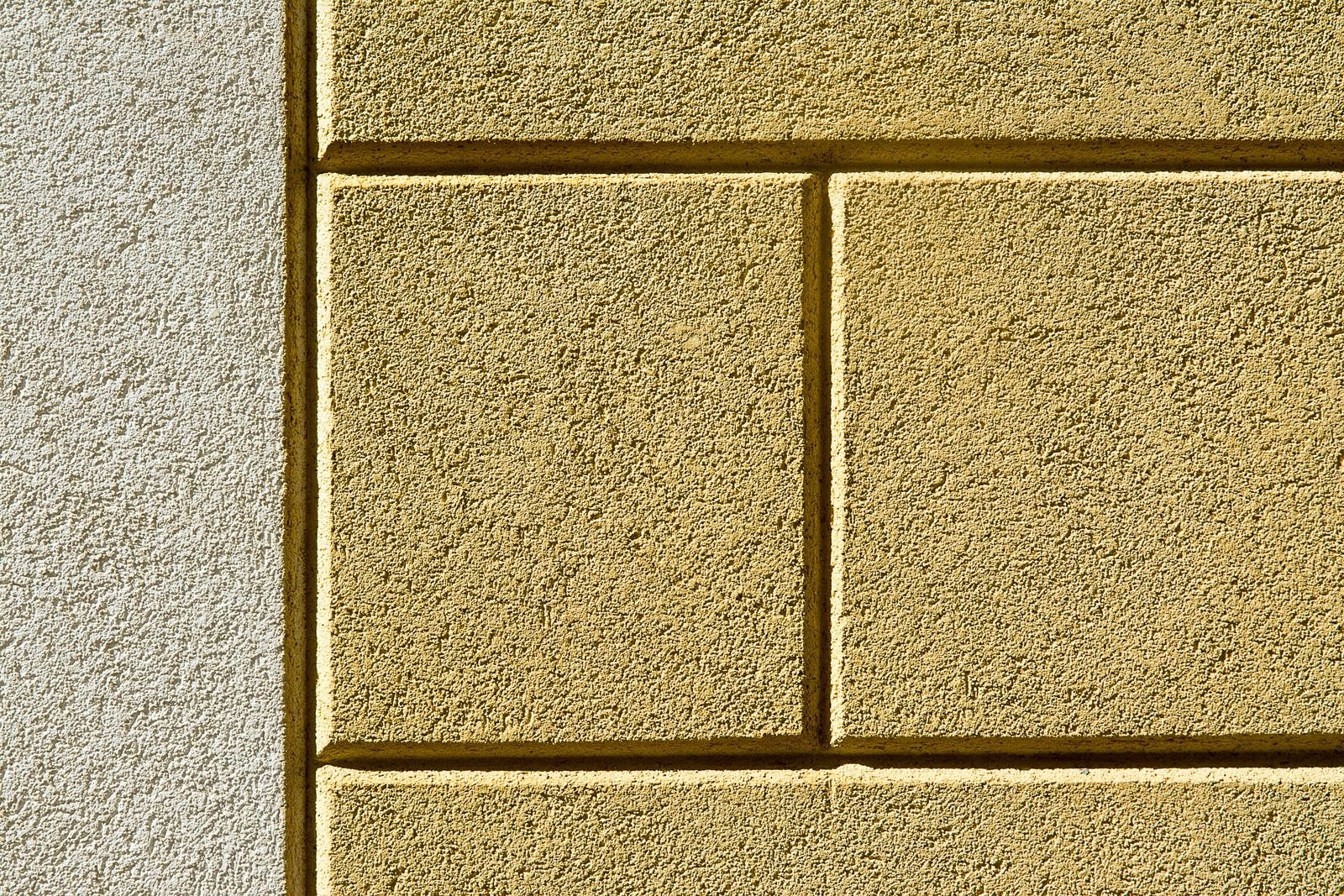
Rendering in Merritown, walls that take the weather
With nothing in front of the south west wall the render is a rain screen rather than a finish, and it wants specifying accordingly.
The site visit is free and so is the written itemised quote. Thomas Hannen prices every job himself.
Out here a rendered wall is doing a harder job than the same wall in a street. There is nothing between the south west elevation and the weather, so the render is a rain screen rather than a finish, and it should be specified as one.
The pattern is easy to spot once you know it. The sheltered side of a building looks fine. The side that takes the weather has open cracks at the corners, a chalky face where the topcoat has gone, and a wet band along the bottom that never quite dries.
So we quote elevation by elevation rather than by the building. We tap each wall, look at what the weather has done to each one separately, and often recommend a different answer on the exposed face from the sheltered one. Everything goes in a written itemised quote, with the access, the preparation, each coat and the beads on their own lines. The visit and the quote are free.
The work
Rendering on buildings with nothing in front of them
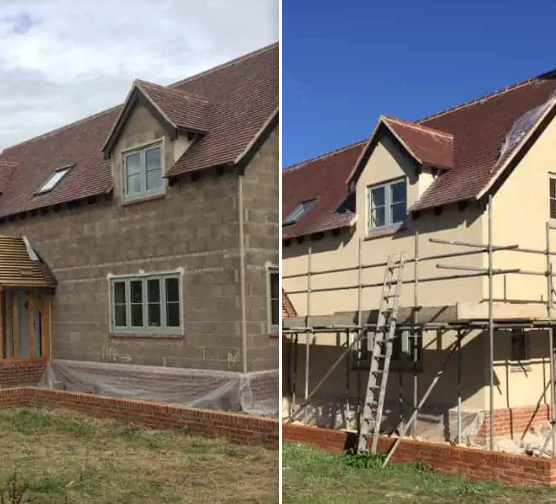
Tapping every elevation, not the building. A mallet over each wall in turn, with the hollow areas chalked. On an exposed plot the difference between two faces of the same house can be twenty years of wear, and quoting them as one job either overspends on the sheltered side or underspecifies the exposed one.
Hacking off and preparing the background. Blown render comes off with a breaker back to a firm edge. The brickwork or blockwork behind is made good and given a key, and any friable face is brushed down and stabilised with a primer before the basecoat goes on.
Silicone thin coat, specified for weather. On a wall that takes driven rain the basecoat goes on at full thickness with mesh across the whole face rather than just at the corners and openings, and the topcoat is chosen for how it sheds water rather than for its colour. Silicone does that better than acrylic, and it stays breathable.
Monocouche and traditional sand and cement. Monocouche is through-coloured and goes on in one build, scraped back the next day. Traditional scratch and floating coats still suit outbuildings and older walls, and they take a knock better than anything modern. Both are perfectly good out here provided the thickness is right.
Texture, and why it matters more here. A deep scraped texture or a heavy dash holds dirt and organic growth on a face that never gets a sheltered dry spell. On an exposed elevation a finer float finish stays cleaner and washes down more easily, so the texture is a weather decision as much as a look.
Beads, bellcast and the base. Angle beads at the corners, stop beads at the reveals and a bellcast bead well clear of the ground. Surface water sits high around here after heavy rain, so keeping the bottom of the render above the splash line is not a detail worth saving money on.
Cracking, delamination and staining. Open cracks at corners and around openings are the classic exposed elevation failure, because that is where wind driven water works. They are cut out, meshed and made good. Green algae staining on the shaded face is a surface matter and washes off.
Render over external wall insulation. If a wall is coming back to the background anyway, insulation board or a render carrier fixed to the face and rendered over gives the thermal improvement and the weather protection in the same visit.
How it runs
From your call to a written price
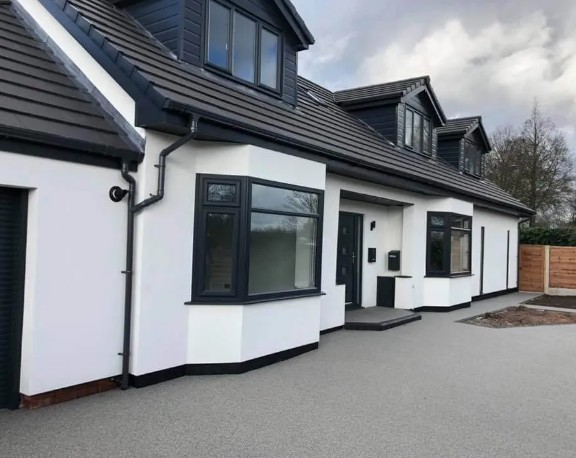
Same team from first visit to last, one person to ring, and no sub-contracting your work out to somebody you have never met. The quote is itemised, not a figure on the back of a card: access and scaffold, protection, preparation of the existing wall, the system and number of coats, beads and stop ends, and making good on separate lines, so you can compare it properly against anyone else's.
Nothing is left open or unusable overnight. The site is swept at the end of each day rather than the end of the job, and what comes out leaves with us. If something turns up once we start that nobody could have seen, you get a photograph and a price before we carry on.
Re-rendering a wall the way it was rendered before is maintenance and needs no application. There is no conservation area at Merritown and the handful of listed entries nearby sit on the older farm properties rather than among the housing, so on an ordinary building the finish is your choice. the council keeps the list for the designated areas if you are not sure of an address. Insulation behind a render is building control work rather than planning, and Approved Document L sets the Part L standard.
Cost
What decides the price of a rendering job
No rate per square metre, because the square metres are the easy part; what is already on the wall decides the price.
Getting to it. A single storey cottage on open ground, a two storey house with a wide gable facing the weather, and an outbuilding with no hard standing to stand a tower on are three different platforms. A bungalow gable comes off a tower, a three storey elevation wants a scaffold, and the platform has to stand for the whole system rather than a day. The work at height rules are why it is a priced line rather than something folded into a rate.
What is already on the wall. Rendering over sound brick is one job. Hacking off blown sand and cement, or a pebbledash that has parted from the background, is another, and it is the part nobody can see from the road. We tap the whole elevation before quoting, because the hollow areas set the hours.
The system, and what the wall behind it needs. Silicone thin coat over insulation, monocouche through-coloured, or traditional sand and cement all price differently and behave differently. On a solid wall that has to breathe, a plastic-rich modern system traps moisture and moves the problem inside, so the right system is a wall decision rather than a colour decision.
Comparing quotes? Ask which system is being quoted and how many coats, whether the old render is being hacked off or overlaid, whether beads, bellcast and stop ends are included, whether the scaffold is in the price, and what happens to the existing sills and pipework. Two quotes for the same job are usually two different jobs.
If it has started to come away
Render that has blown or cracked open
Ring rather than use the form. A section that sounds hollow when you tap it, or a crack you can get a coin into, is letting water behind the render and the frost does the rest. We make the loose area safe, sheet it if the weather is against us, and price the elevation once we can see how far the blown area actually goes. We are five miles away, so a Merritown address is normally looked at within a day or two. The phone is answered 24 hours for emergencies; scheduled work runs Monday to Friday, 8am to 6pm.
Worth knowing
Exposure decides the specification, not the colour
The most exposed face of a building here looks south west, straight into the prevailing wind, and there is very little between it and the weather. That matters because wind driven rain does not behave like rain falling on a wall. It is pushed into the face, and it finds every corner, reveal, bead junction and hairline crack rather than running politely down the middle of the elevation.
On a sheltered street a slightly thin basecoat, mesh only at the openings and a topcoat picked off a colour chart will last a long time. On an open plot the same specification fails at the edges within a few winters, and it fails from the outside in: the topcoat goes chalky, the water gets into the basecoat, the frost lifts it and the coat parts from the background in sheets rather than in patches.
So when you compare quotes out here, the questions are about specification rather than price per metre. Is the mesh across the whole elevation or only at the corners. Is the basecoat going on at full thickness. Is the topcoat one that sheds water and stays breathable. And is the render stopping high enough above the ground that the splash from a saturated garden does not reach it.
Who you are dealing with
A local firm you can check
We cover Merritown, Hurn, Parley, Avon and the lanes towards Christchurch, broadly BH23, under Bournemouth, Christchurch and Poole Council. You are dealing with Bournemouth Roofing & Building, the trading name of Bournemouth Roofing & Building Ltd, registered in England and Wales, company number 15471719, which you can look up in a minute. Thomas Hannen's business, and he is the one who comes out to price the job, not a salesman. A verified customer's 10 out of 10 on Checkatrade. The visit and the written quote are both free.
Questions
Merritown questions we get asked
Why has only one side of my building failed?
Because only one side takes the weather. The south west face gets wind driven rain pushed into it, and that finds the corners, reveals and bead junctions. The sheltered elevations on the same building are often decades behind it.
Does an exposed wall need a thicker render?
It needs the basecoat at its proper thickness with mesh across the full face, which is not always what gets quoted. That is what stops a crack at a corner turning into water in the basecoat and a coat that lets go in sheets.
Which finish stays cleanest on an open site?
A finer float texture, generally. A deep scraped or heavily dashed face holds dirt and growth on a wall that never gets a sheltered dry spell, so out here texture is a weather decision rather than only a look.
Can you work on a site with no hard standing?
Yes, but it shows in the access line. A tower needs a level base and a scaffold needs something to stand on, so on soft ground we allow for boarding out rather than pretend the ground is not there.
How does wind affect when you can render?
As much as rain does. A strong drying wind takes water out of a fresh coat too quickly and it cracks, so on an exposed elevation the scaffold is sheeted and the work is timed around the forecast rather than the diary.
Nearby, and next door
Rendering near Merritown
Rendering nearby
Our other trades in Merritown
Everything we do in Ferndown Rendering, all areas Every area we cover
Free quote
Get each elevation quoted for the weather it actually takes
Thomas comes out, taps each wall separately and prices the specification each one needs in writing. The visit and the quote are free.