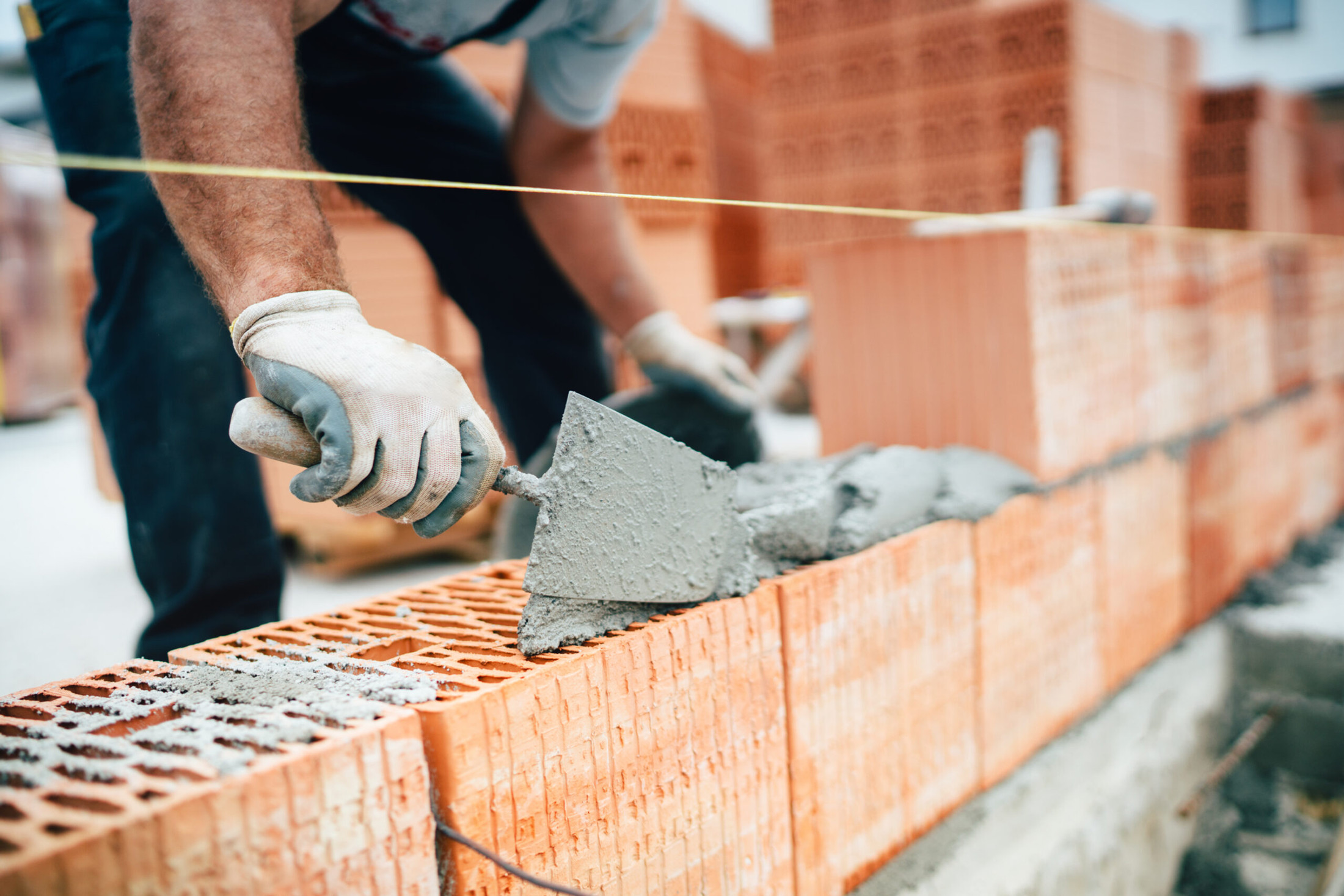
Bricklaying and repointing at Merritown
Repointing, brick replacement, damp bottom courses, barn and boundary walls at Merritown and around Hurn.
The site visit is free and so is the written itemised quote. Thomas Hannen prices every job himself.
Bricklaying and repointing
Brickwork at Merritown: what we do, and where walls fail here
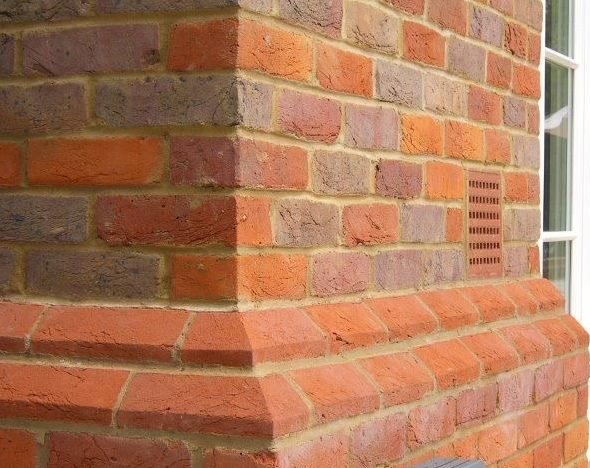
Brickwork around Merritown fails from the bottom up rather than the top down. The ground is flat and it stays wet, so the lowest courses of a wall are the ones that go soft, blow their faces and lose their mortar first. We cut out and replace what has gone, repoint in a mix that lets the wall dry out again, and sort out what is keeping it wet in the first place.
Three things bring most calls. A band of crumbling brick and open joints along the bottom metre of a wall, often with white salting on the face. A garden or yard wall that has leaned or bowed, because there is no damp proof course in it and the footing sits in ground that holds water. And the ordinary weather jobs: joints raked back by wind and rain on the exposed side, cracked flaunching on a stack, a crack over an opening.
We come and look at the wall and at the ground it stands in, which out here is the half of the job most quotes leave out. You get a straight answer on whether it is pointing, damp or movement, and an itemised written price if you want one. The site visit and the quote are free.
The work
The brickwork jobs we do around Merritown
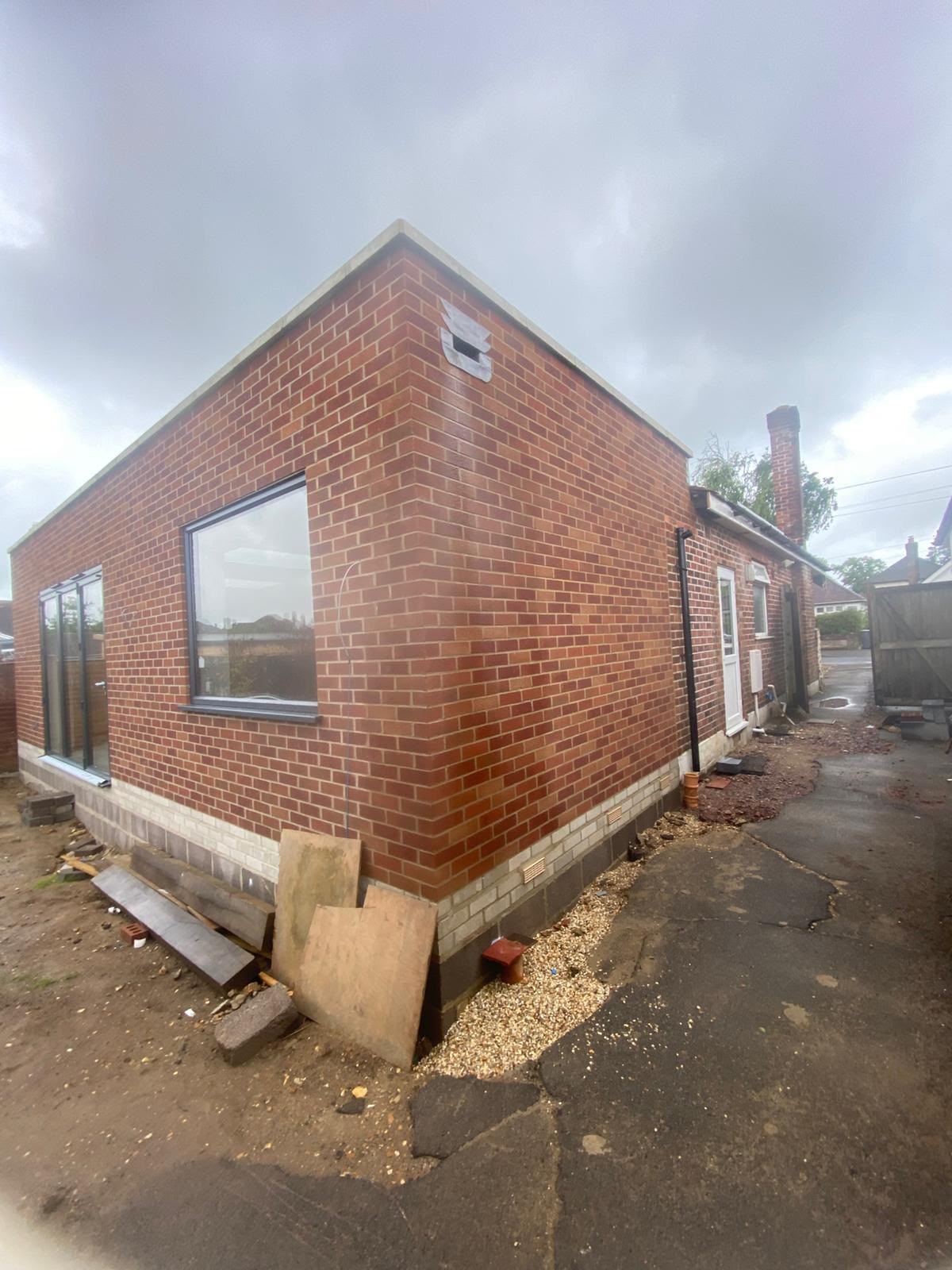
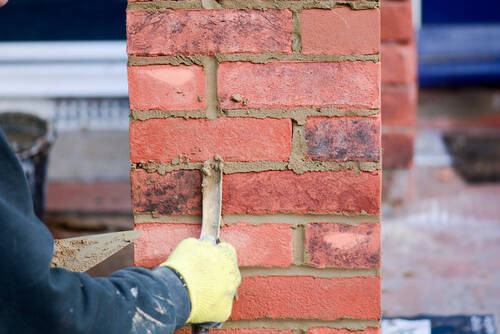
Rebuilding the bottom courses. The commonest job here. Where a wall has stood wet for years the brick faces spall off, the mortar goes back to sand and you can rake a joint out with a finger. Pointing over that is a waste. We cut out the failed brick, replace it with matched stock, reclaimed or handmade where the wall is old enough to want it, and rebed the course properly, putting a damp proof course in while the wall is open where it will take one. On solid wall brickwork with no cavity the joint is the only route water has back out, which is why we repoint the older walls here in an NHL lime mix rather than a hard cement one, raked by hand and never with a disc cutter. On the modern cavity walls a cement mix is right, matched for colour by picking the sand.
Barns, yard walls and stacks. A lot of the brickwork around Merritown is not a house. Single skin walls with piers, old stores, stables and farm buildings, generally with no cavity, no damp proof course and a footing that was never much more than a wide first course. We repair, stitch and rebuild sections of these, and will tell you honestly when a wall has gone far enough that a rebuild costs less than patching it twice. Boundary walls along the lanes take knocks from anything farm sized and gate piers get leaned on by gates that have dropped, so we rebuild bowed lengths, reset coping and bond piers in. Flat ground and no shelter means a stack takes wind from every side: cracked flaunching lets water into the head and eventually the stack moves. On this ground the footing decides whether new work is still straight in ten years.
How it runs
From your call to a written price
You get one person to ring and a price broken down by elevation, so it can be compared properly. On permission, Merritown itself is not in a conservation area, though Hurn next door is and the council keeps the list for this side of the river. Three buildings here are listed, the farmhouse, its barn and the church, and on a listed building repointing counts as alteration and needs consent before a joint comes out. On everything else repair is repair and needs no application, with Planning Portal guidance on external walls covering where a change of appearance starts. Structural work goes through building control, and a wall shared with a neighbour brings in Party Wall etc. Act 1996.
Cost
What decides the price of a brickwork job
A rate per square metre would tell you nothing here. A farmhouse with room to work all the way round, a barn wall running straight out into a working yard and a cottage tucked behind a hedge on a single track lane price differently. A gable or a stack needs a scaffold and a boundary wall needs none, and work at height rules are why that platform is priced by time as well as size. Matching mortar for colour and strength takes trial panels, and sourcing a brick takes longer still. Ask how deep the raking goes, hand or disc.
If something has moved
Loose brickwork, or a wall that has shifted
Ring, do not use the form. Anything overhead or leaning goes to the front of the queue. The first visit makes it safe and stable, and the permanent repair is priced once we can see how far the movement goes. Around here it is usually a yard wall pushed out by a root or clipped by something farm sized. The phone is answered 24 hours for emergencies; scheduled work runs Monday to Friday, 8am to 6pm.
The one local thing
The ground stays wet, and that decides how a wall is repaired
Merritown sits low and flat on the gravel between the Moors River and the airport, and the ground here is naturally wet rather than free draining. Surface water has almost no fall to run away down, and the water table comes up in winter. Brickwork does not mind rain. It minds standing wet, month after month, because water carries salts through the brick and they crystallise behind the face and lift it off, and because mortar that never dries loses its strength.
That is why walls out here fail in a band along the bottom while the same wall at eye level is perfectly sound. Part of the address sits in the middle flood zone as well, and the government flood risk service will tell you what applies to a particular property.
What that changes is the order of the work, and it is worth checking before you have anyone quote. Look at where the ground sits against the wall: soil, a raised border, a new path or a drive laid over the old one will often have buried the damp proof course, and once that is bridged the wall drinks. Lowering the ground back below it, or digging a gravel channel along the wall, does more good than any amount of pointing.
Then look at where the rainwater goes, because a downpipe emptying at the foot of a wall or a gully that has stopped taking keeps one patch permanently wet, and Approved Document H covers where surface water is allowed to go. Do those two, then repoint, and repoint in a mortar softer than the brick rather than a hard cement one that traps the water in and moves the damage into the brick face. That order is what makes the repair last out here.
Who you are dealing with
A local firm you can check
Merritown is under five miles from the yard, off the Hurn road, and we work the BH23 lanes around it most weeks: Hurn, Parley, Sopley and Avon, and on into Christchurch. Bournemouth Roofing & Building Ltd, registered in England and Wales, company number 15471719, which you can look up in a minute. Thomas Hannen's business, and he is the one who comes out to price the job, not a salesman. A verified customer's 10 out of 10 on Checkatrade. The visit and the written quote are both free.
Questions
Merritown questions we get asked
Why is the bottom of our wall always wet?
Surface water rather than rising damp, more often than not. Merritown sits in flood zone 2 with a high surface water band, so run off gathers and stands against the base of a wall in a downpour even with the Moors most of a kilometre away. The bottom courses stay saturated and frost then takes the joint faces off. Levels and drainage come before any pointing.
Should the lower courses get a different mix?
Yes, softer than the rest. The base of a wall in Hurn stays wet longest, and a hard cement joint down there traps the water in the brick so the frost lifts the face instead of the mortar. A mix weaker than the brick gives way first and can be cut out again later. Higher up, where the wall dries between showers, a stronger mix causes no trouble.
Can you repoint a barn or a stable block?
We do that work. An agricultural building is usually a single skin with wide joints and no cavity, so it behaves more like a garden wall than a house and it wants a mix that suits soft old brick. Access is normally easier than on a dwelling and a tower will reach most of it. There is no conservation area at Merritown and only 3 listed entries in the parish, so a straight repair needs nothing from Bournemouth, Christchurch and Poole Council.
What can we look at ourselves before you visit?
Give the bottom metre of each wall a look after a wet week. Green staining, a tide mark, or mortar you can rub away with a thumb tells you that band is holding water, which is the usual pattern around Hurn where the surface water band is high. Then look up at the verge and the cills. Note the worst elevation and we will start there.
What will the written quote actually list?
The elevations by name, the depth we are raking back to, the mix, the access allowance and the disposal. It sets out which sections are being done now and which are deliberately being left, so nothing is hidden inside a single line. Thomas Hannen writes it after walking the wall himself, and at 4.7 miles from our base Merritown is an easy call to make. VAT is shown on top rather than buried in the figures.
Nearby, and next door
Bricklaying and repointing near Merritown
Bricklaying and repointing nearby
Our other trades in Merritown
Everything we do in Ferndown Bricklaying and repointing, all areas Every area we cover
Free quote
Get the wall and the ground looked at
Tell us which wall it is and how long it has been like that. We will come out, look at the ground as well as the brickwork, and put an itemised written price in your hand.