
Driveways and patios in Merritown
Drives, hardstanding and patios on low, wet ground, where the drainage decides the job before the surface does.
The site visit is free and so is the written itemised quote. Thomas Hannen prices every job himself.
Out at Merritown the ground is the job. It sits low, it stays wet for a good part of the year, and a soakaway here is as likely to fill as to empty. So a drive has to be built to move water somewhere real, and that gets decided before anybody talks about what the surface will look like.
The calls tend to be about water. There is a pool across the entrance every time it rains, the ruts hold it for days, and the gully by the gate stopped taking anything a while ago. Or the hardstanding you park the van on has gone soft and the wheels are sinking into it. Or the patio behind the house stays damp, goes green and is genuinely slippery by October.
None of that gets fixed from a photograph. We come out, survey where the water comes from and where it can go, open a hole to see what stone is under the surface and how far down the ground is soft, and then price it: excavation, muck away, sub-base, edgings, surface and drainage, each on its own line. If the honest answer is that the drainage has to be sorted before a new surface is worth laying, that is what the quote will say.
The work
Building a drive that stands up on wet ground
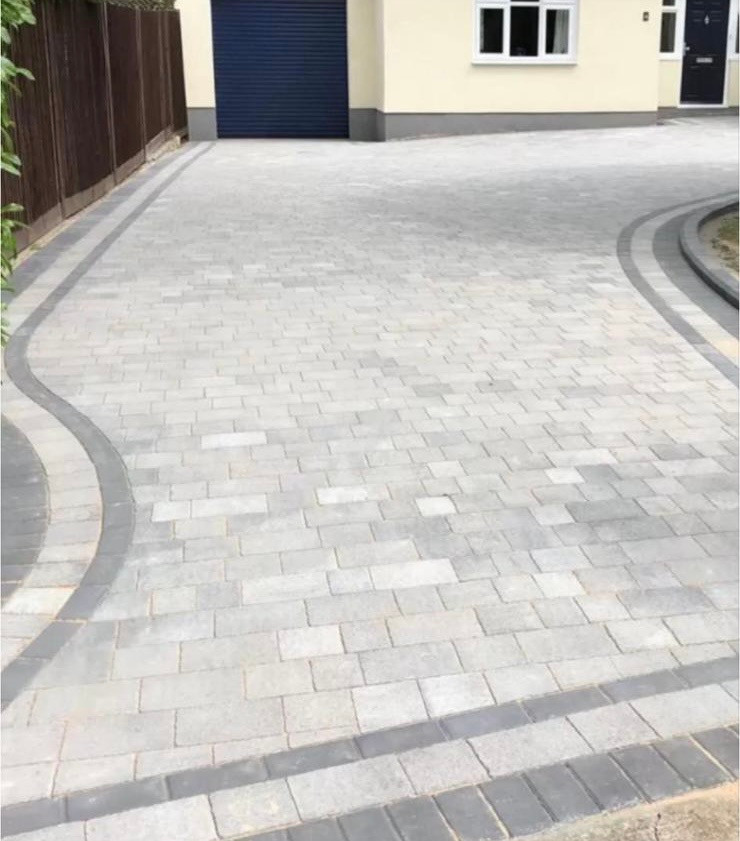
The dig, and why the depth is different here. This is wet ground, so the formation is everything. We excavate down to something that will carry a load, lay a geotextile membrane so the stone and the subsoil cannot mix, then bring a compacted sub-base up at a depth set by the ground rather than by habit. Without that separation the sub-base pumps down into wet subsoil under traffic, which is exactly how a drive turns into ruts a year after it was laid.
Falls first, so nothing runs at the house. Then a channel drain across the entrance to stop the lane emptying onto your drive, a gully or linear drain at the low point, and a real outfall for it. This land sits in flood zone 2 with a high surface water rating and the Moors about a kilometre away, so where the water is allowed to go is the design rather than an afterthought. Where the ground will not take it we say so instead of digging a hole and hoping.
On ground like this a permeable drive is often the sensible answer, because the drive becomes the storage: permeable blocks over open-graded stone hold a downpour in the voids and let it away slowly. It only works built as a system, with clean stone, the right jointing grit and somewhere for the water to go once it is through, with a haunched kerb or edging round it so the field cannot creep. Tarmac for length and weight, resin bound where a sound concrete or tarmac base already exists, block paving where cars turn, a concrete pad where a van or trailer stands in one spot all winter. Patios go on a full mortar bed with the finished level kept clear of the damp proof course, so the water runs off instead of ponding and staining, and there is smaller work as well: silt out of a gully, potholes cut out square, a sunken bay lifted and relaid, a re-sand where the kiln dried sand has washed out and weed has taken the joints.
How it runs
From your call to a written price
Same team throughout, one person to ring, nothing sub-contracted out. The quote is itemised, with excavation, muck away, sub base, edgings, surface and drainage on separate lines, and the spoil leaves with us.
On permission. More than five square metres of new hard surface at the front needs planning permission unless it is permeable or the water goes to a border, a lawn or a soakaway on your own land, and Planning Portal guidance on paving your front garden sets out the test. A patio at ground level behind the house is permitted development. The council here is Bournemouth, Christchurch and Poole, no conservation area covers this stretch, and the council keeps the list if your address sits near a listed entry.
Cost
What decides the price of a driveway
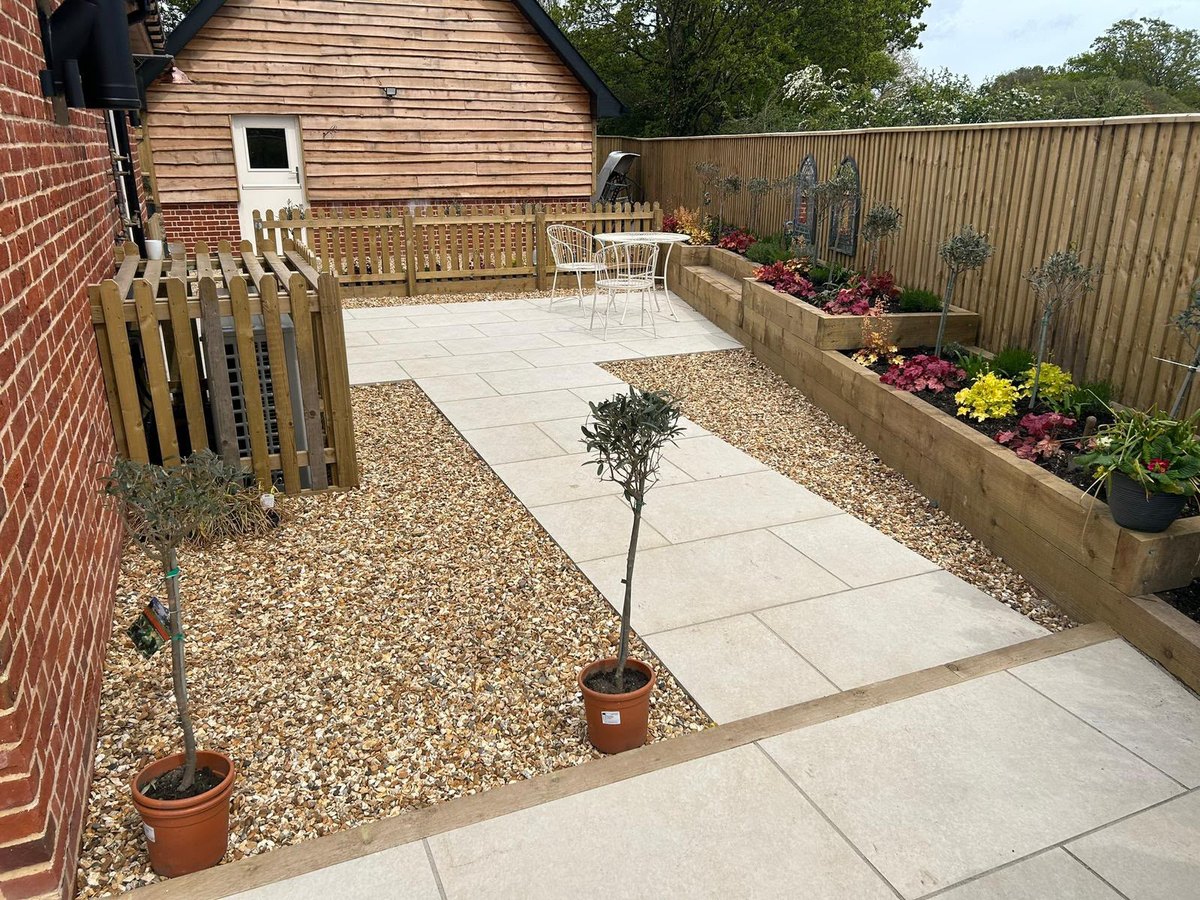
What is under a drive here, and how wet it is, moves the figure more than the surface on top ever will. A cottage on the lane, a smallholding with a working yard to cross and a house set back behind a long gravel access are three different jobs before the first load arrives, because one takes a lorry to the door, one is barrow work through a side gate, and one wants a grab lorry that can reach. On ground that holds water the dig goes deeper, the spoil is heavier and the drainage is a line of its own. Ask what depth of sub base is going in, where the surface water is being taken, and who is carting the muck away.
If it is urgent
A trip hazard, or a drive that floods
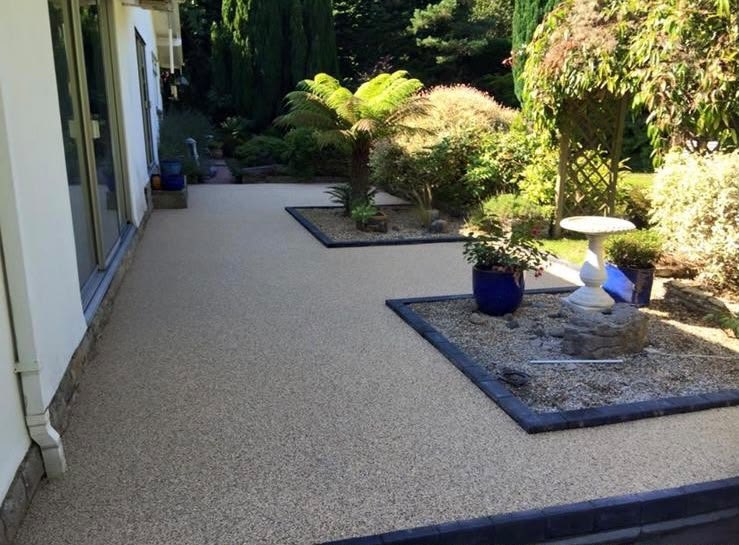
Ring rather than filling in the form. A lifted slab, a cracked or sunken bay by a doorway or a gully that has stopped taking water will not wait: somebody falls, or the water ends up against the house. If a gully has given up and the drive is now running towards the house or out onto the lane, say that when you ring. We work Monday to Friday, 8am to 6pm; outside that, by arrangement.
Worth knowing
Where your rainwater is supposed to go when the ground is already full
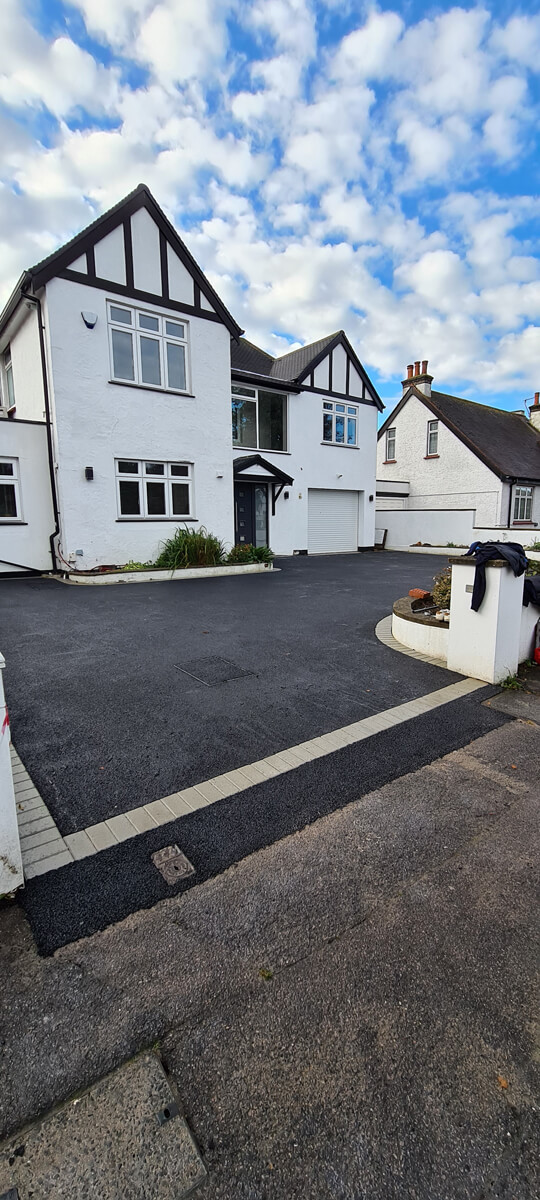
Surface water is the whole story here. The ground is naturally wet, so infiltration is not a safe assumption: a soakaway needs a percolation test rather than a guess, and around here plenty of test holes fill and stay full. Approved Document H sets out the order you are meant to work through, soaking away first, then a watercourse, then a sewer as the last resort.
If a test fails we look at a positive outfall or at permeable construction sized to hold water and release it slowly, and we will tell you which before you commit to a surface, not after the diggers have gone.
Two practical points that follow from that. First, check your own address on the government flood risk service before you change anything: surface water risk here is not the same field to field, and it tells you whether you are designing for a heavy shower or for a genuine event.
Second, watch your levels. Raising a drive or a patio so that it sheds towards the house, or across a route water has always taken, moves the problem rather than solving it, and it can put it on a neighbour. Falls away from buildings, a channel drain where the water has to cross, and nothing built that dams the flow.
Who you are dealing with
A local firm you can check
We cover Merritown, Hurn, West Parley, Burton and Christchurch, and BH23 generally. Bournemouth Roofing & Building Ltd, registered in England and Wales, company number 15471719, which you can look up in a minute. Thomas Hannen's business, and he is the one who comes out to price the job, not a salesman. A verified customer's 10 out of 10 on Checkatrade. The visit and the written quote are both free.
Questions
Merritown questions we get asked
The ground by us stays wet. Will permeable paving still drain?
Only if the water has somewhere to go once it is through. Merritown sits on naturally wet sandy ground that is close to flat, so a permeable build can fill and stay full instead of emptying. We dig a pit and watch it before specifying anything, and where infiltration fails the surface water goes to a positive outfall. A permeable drive over saturated subsoil just puts the puddle underground where you cannot see it.
We are in flood zone 2. Does that change the design?
It changes where the water is sent, not what you are allowed to lay. Merritown falls in flood zone 2 with a high surface water band, and the Moors watercourse is under a kilometre away. So the new surface must not raise levels against the house or push run off onto a neighbour. We set the finished level so water leaves towards a drain or a soakaway well clear of the building, and the quote states where it discharges.
Why does the dig go deeper on this kind of ground?
Because there is more soft material to get through before anything will carry a car. On the wet sandy ground out towards Hurn the upper layer holds water and has no bearing at all, so it comes out. The base then goes back in compacted layers with a geotextile between the subgrade and the stone, otherwise the two mix and the stone quietly disappears into the ground over one winter.
Is a dry spell in summer better for working here?
It is, and on naturally wet ground we would rather dig in one. The paving is not the problem, running a machine over saturated subgrade and churning it is. Where the job has to happen in a wet stretch we board the route, open smaller sections and get stone in on the same day so nothing sits open. Whichever it is going to be, we say so at the visit rather than after the start date.
What is actually itemised on the quote for this?
The dig and the depth we are taking it to, the stone base and its thickness, any geotextile, the edgings, the surface, the drainage run with the point it discharges at, and taking the arisings off site. On wet ground like Merritown the drainage line is the one worth reading twice, because that is where both the money and the risk sit. Thomas Hannen prices it himself and the visit and the written quote are free.
Nearby, and next door
Driveways and patios near Merritown
Driveways and patios nearby
Our other trades in Merritown
Everything we do in Ferndown Driveways and patios, all areas Every area we cover
Free quote
Free quote for a drive or patio at Merritown
Tell us where the water stands and we will come and look at it. The visit and the written itemised quote are free.