
Driveways in Matchams
Access drives, turning space, hardstanding and patios around Matchams, built from the formation up and priced line by line.
The site visit is free and so is the written itemised quote. Thomas Hannen prices every job himself.
Last updated
Around Matchams the job is normally the approach, not the front garden. A long drive off the lane fails where water sits on it and where the wheels always run, and the fix is a proper formation and the right depth of stone under it, not another load of scalpings tipped on top.
Out in Matchams a drive ruts and potholes, a van or trailer has nowhere solid to stand, or the patio sinks. The drive has rutted into a washboard and the potholes are back within weeks of being filled. There is a van, a caravan or a trailer with nowhere solid to stand once the ground softens. Or the patio has sunk at one corner, gone green in the shade and turned slippery enough that nobody uses it.
The first visit is a survey of the whole length, not a look at the worst ten feet. We walk it with you, find where water crosses it and where it stands, dig a hole to see what stone is actually under there, and ask what drives on it: a car and a car every day is one build-up, an oil tanker and a horsebox is another. Then you get a written price with the dig, the sub-base, the edges, the surface and the drainage listed separately.
The work
What we build out along the lanes here
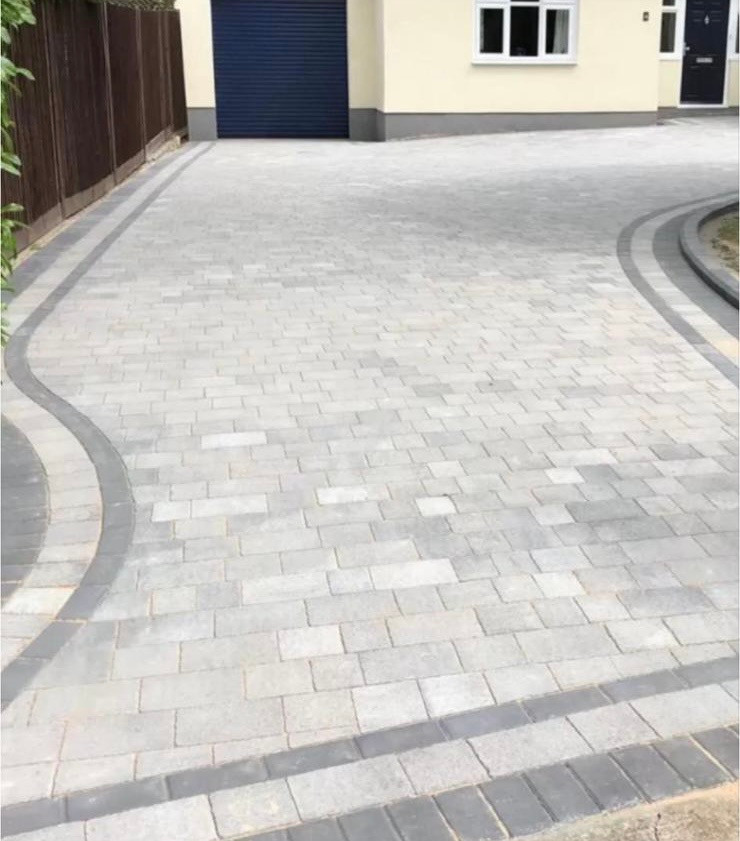
Long approach drives. A drive that runs a hundred feet from the lane to the house is a small road and wants building like one: excavate to formation, a geotextile membrane over anything soft, then a compacted sub-base at a depth that suits the heaviest thing that comes down it. One delivery lorry on a thin base in February does more damage than a year of cars.
Tarmac is usually the sensible answer over that length, because it goes down fast, takes weight and patches. Resin bound over a sound concrete or tarmac base gives a quieter finish with no loose stone to carry indoors. Gravel is the cheapest to lay and the dearest to keep, so it wants a cellular grid, a haunched edge restraint and a channel drain at the top of any slope. Block paving earns its keep at the house end where you turn and park, not down the whole length, and a standing for a caravan, a trailer or a works van needs a deeper build up than a car bay, because that load sits in one place for months.
The first few metres take the worst of it. Water coming down the lane wants in and loose stone wants out onto the road, so a channel drain across the entrance, a haunched kerb and a bound surface at the mouth deal with both at once. Where a drive crosses a roadside ditch the pipe under it has to be the right size and clear, or your drive becomes the dam. Round the back, flags go on a full mortar bed with the falls running away from the house, and under trees the honest advice is a textured surface you clean now and then, because sealing will not cure it. For that side of things, see patios in Matchams. Where a block area has emptied its jointing, a re-sand with kiln dried sand and a sound edge stops the weed and the rutting.
How it runs
Digging out and laying a drive off the lane
Thomas walks the length of the drive with you from the lane to the house, checks the fall, and works out where the rain off it will go. The quote then prices the dig, removing the spoil, the stone sub-base, the edging, the surface you choose and the drainage, one line each. Digging and laying follow once you agree it.
A long drive off the lane means every load in and out uses one route, so before the first lorry comes we agree where it turns and where the stone is tipped. We leave you a way through where we can and brush the lane each evening. Old soakaway, buried cable or a soft patch in the dig? Work pauses, you get a picture and a figure, and you choose.
On permission. Matchams has no conservation area, so unless your own house is on the Historic England list, what the drive is made of is up to you. The front garden rule still applies: new hard surfacing in front of the house needs planning permission if it covers more than five square metres and sends rain onto the road, but not if it is permeable or falls to your own lawn or soakaway. A new or wider opening onto the road needs a dropped kerb from the highway authority, covered by Planning Portal guidance on dropped kerbs. Read the Planning Portal's page on paving a front garden before choosing a surface.
Cost
Long approaches, gates and what goes under the surface
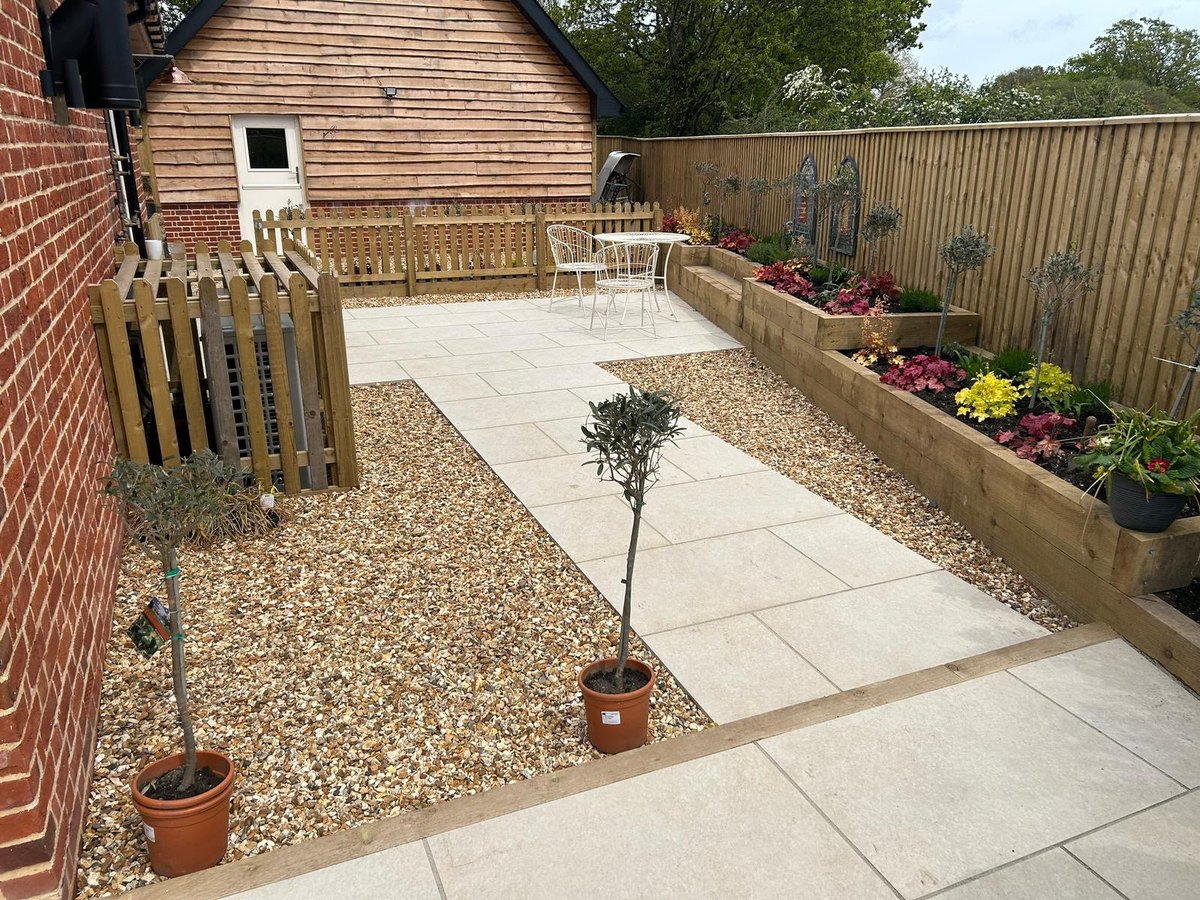
Access decides more of this than the surface does. The approach. A long drive off the lane, a gate with no turning space behind it, or a yard to cross are all different jobs. Everything arrives and leaves the same way, whether that is a grab lorry at the gate or barrow runs round the side of the house.
The sub-base. How deep the dig goes, and how much spoil comes out, is the other half of the price. We dig a trial hole before quoting instead of guessing what the ground is like.
Where the water goes. A long drive sheds a lot of rain. It has to go somewhere on your land: a permeable surface, a soakaway or a channel to a border. Approved Document H sets out where surface water may go.
The surface. Gravel on a stabilising grid, block paving, tarmac and resin each need different edges and bases. Gravel suits a long rural drive and is quicker to lay, but it needs raking and topping up.
Ask any rival quote what depth of stone is going in, where the water ends up, whether the edgings are haunched in concrete, and who takes the spoil.
If it is urgent
A drive washed into ruts, or a slab lifted by the door
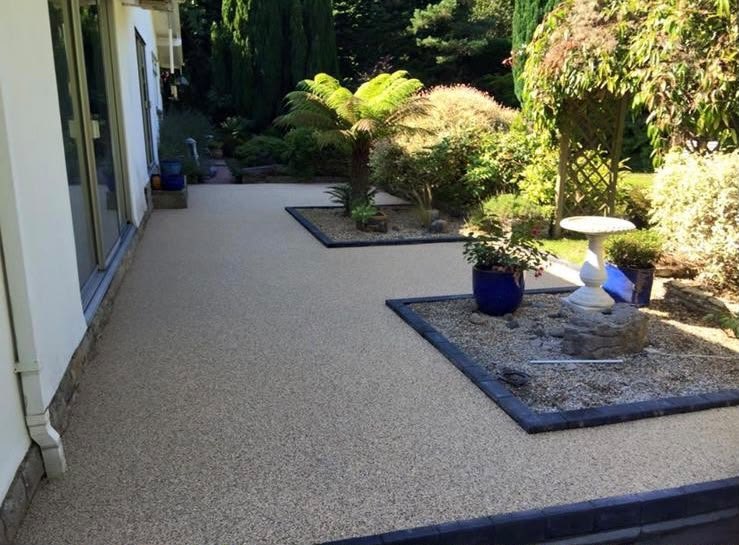
A lifted slab, a sunken bay by the door, or a gully that has stopped taking water will not wait long before someone trips or rain sits against the house.
If the drive is your only way in and it has washed into ruts, tell us, because making it usable again may be a load of stone and a day's grading, not a new drive. Ring about anything like this; the form is slower. Driveway work is booked Monday to Friday, 8am to 6pm. If we cannot pick up, we ring you once we are free, as soon as we can.
Worth knowing
Green Belt, not heritage, is the constraint on a drive here
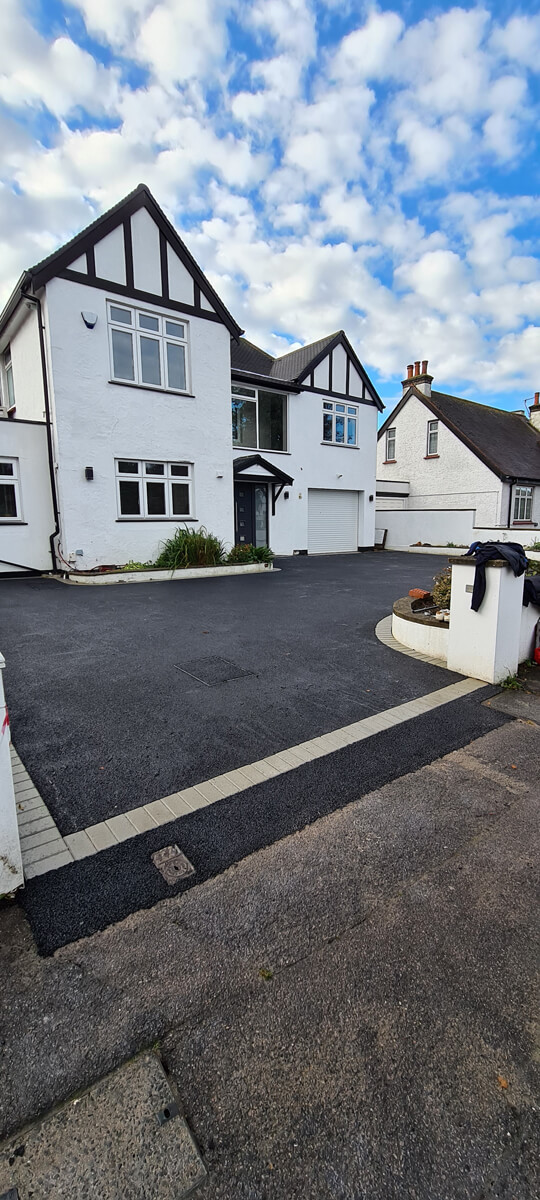
Matchams is one of the few places on our patch with nothing on the heritage list and no conservation area over it, which makes the surface question simple. Nobody has to approve what the drive is made of.
The only thing standing between you and any surface you like is the water it sheds: over five square metres at the front, either the surface is permeable, or the water goes to a border, a lawn or a soakaway inside your boundary, never out onto the lane. That is a design decision we make with you at the quote stage, and it is usually free to get right and expensive to get wrong.
What does bite around Matchams is Green Belt, and it bites on structures, not surfaces. Resurfacing a drive, laying a patio or forming a parking area is not the kind of development it troubles. A carport, a garage, a large outbuilding at the end of the drive, or raising ground levels behind a retaining wall, can be.
So if your plan for the front includes a building as well as a surface, settle the permission question first: the drive can be built to suit the building, but only once you know the building is happening.
Who you are dealing with
Who is laying your drive
Thomas Hannen owns the business and comes out to price your drive in person. It is a short five and a half miles from Boscombe up to Matchams, and we also lay drives in St Leonards, St Ives, Ashley Heath, Ringwood and across BH24, where Dorset Council is the authority.
The limited company behind the name is Bournemouth Roofing & Building Ltd, registered in England and Wales, company number 15471719. A customer gave us a verified 10 out of 10 on Checkatrade. Coming out costs you nothing, and neither does the itemised quote in writing. Before you book a visit in Matchams, you can read our customers' Google reviews, word for word, on our reviews page.
Planning at a glance
Do you need planning permission in Matchams?
Most repairs in Matchams need no application at all. What decides whether a change to the outside of your house does is who the council is, whether a conservation area or a listing applies, and whether the place sits in a protected landscape.
| Question | In Matchams |
|---|---|
| Who decides | Dorset Council is the planning authority for Matchams. Dorset Council's heritage pages set out what it controls. |
| Conservation area | None covers Matchams, so a like-for-like repair is ordinary maintenance. |
| Listed buildings | Nothing in Matchams is on the statutory list, so listed building consent does not come into it. |
| Protected landscape | No National Park or National Landscape covers Matchams. |
Questions
Questions about driveways in Matchams
There is no conservation area here. Does that make it simpler?
Usually, since Matchams has no conservation area of its own, so unless your house is itself listed, which the Historic England list will tell you, nobody is going to argue about the colour of your blocks or the finish on a resin surface. What still applies is the surface water rule on a front garden, and, if you are putting up a structure, not paving, the Green Belt designation. For paving alone the look of it is your decision.
Will a gravel drive stand up to a van on sand?
Only if it is built rather than tipped. The freely draining sandy ground around Matchams gives nothing to push against, so gravel without a bound base and a haunched edge migrates into the wheel tracks and then out onto the road. We dig out, compact a stone base, set the edgings in concrete, and put the gravel on last. A van also wants a deeper base than a car, which changes the dig depth rather than the surface.
Which side of the house needs the tighter paving detail?
The exposed face at Matchams looks south west, and driven rain works at edges, joints and thresholds rather than at the middle of a slab. So on that side we want a firmer edge restraint, a joint that will not wash out and a fall that clears water quickly. On the sheltered side the same paving can be detailed more simply. It changes the perimeter and the pointing, not the material you choose.
Does the Green Belt stop us making a parking area?
Not for laying a hard surface on ground that is already garden. Green Belt bites on new buildings, so a carport, a store or a stable beside the parking area is the thing to put to Dorset Council before you order anything. The paving itself is dealt with under the surface water rules instead. If there is a structure in the plan, tell me at the visit and we look at that part first.
How deep does the excavation go on ground like this?
Deeper than people expect: sand looks like a ready made base and behaves like the opposite, so the topsoil and soft material come out until we reach something that will carry a wheel. Then it is built back in compacted layers. Trench sides also slump here while they are open, so drainage runs are dug in bays and backfilled as we go, never left standing open.
Nearby, and next door
Driveways near Matchams
Nearby places we also cover for driveways, with straight-line distances from Matchams, and the other trades we offer in Matchams itself.
Driveways nearby
Our other trades in Matchams
Driveways and patios guides
Driveway planning permission and where water goes Sunken or ponding driveway: base or drainage Indian sandstone vs porcelain paving: an honest comparisonEverything we do in West Moors Driveways, all areas Every area we cover
Free quote
Free quote for a drive or patio at Matchams
Tell us what comes down the drive and what it is doing now. The visit and the written itemised quote are free.