
Driveways and patios in Ashley Heath
New drives, resurfacing, gravel put right and rear terraces rebuilt across Ashley Heath. We survey what is there and price it in writing, itemised.
The site visit is free and so is the written itemised quote. Thomas Hannen prices every job himself.
On the long drives around Ashley Heath the surface is rarely the whole story. What decides the price is the depth of the dig, how much spoil leaves the site and where several hundred square metres of rainwater is allowed to go.
The calls we get from here fall into a pattern. The tarmac laid when the house was built has gone grey and grainy and is breaking up at the entrance. The gravel keeps ending up on the road and in ruts where the cars turn. Or the rear terrace has settled, the joints have opened and it is slippery for half the year.
All of those are fixable, and not all of them need the whole drive taking out. We come and survey what is there, dig a small hole to see the build up underneath, and walk the falls with you. Then you get a written price that separates the dig, the base, the edges, the surface and the drainage, so you can see exactly what you are buying.
The work
Big frontages, long drives, and what they need
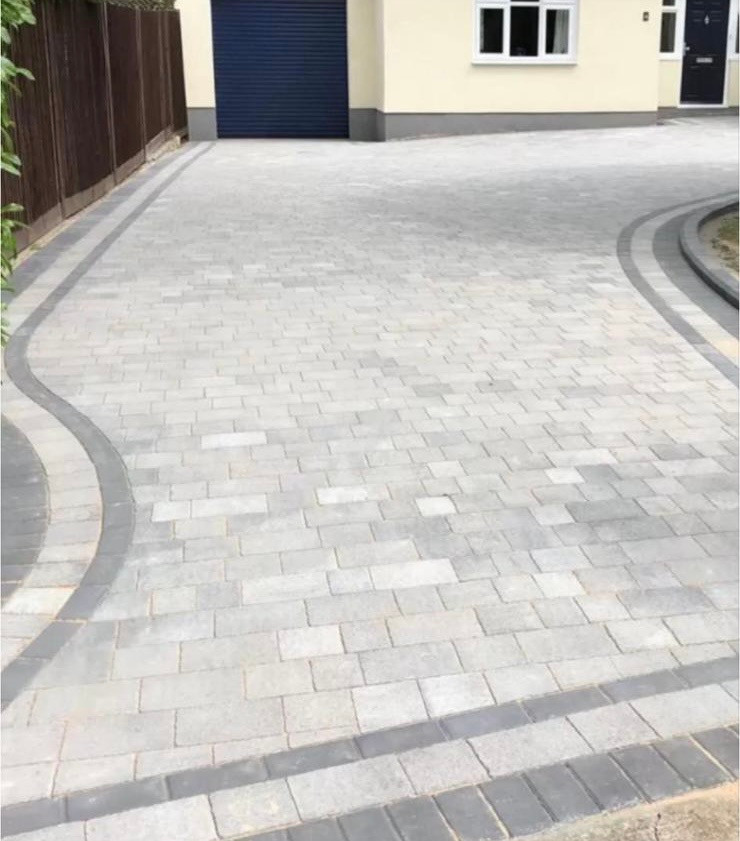
Tarmac at the end of its life. Much of the housing here went up through the seventies and early eighties and a good many drives are still on their original macadam. It fails predictably: the binder oxidises so the surface goes grey and loose, the edges ravel where nothing restrains them, and the entrance potholes first because that is where every wheel turns. On a sound, well drained base an overlay is honest value. Where the base has broken up or the drive is rutting under the wheel tracks, an overlay just follows the fault down, and we would rather quote the rebuild.
Gravel is the other common surface and the one most often laid badly. Stone migrates towards the road, the crown wears into channels, and weed comes through wherever the membrane has been torn. The fixes are graded: a proper geotextile membrane with a rolled hoggin or sub-base underneath, a haunched edge restraint or kerb to hold the stone, cellular grids on the sloping sections, or resin bound gravel over a bound base where you want the look with none of the sweeping up.
Concrete of this era was poured in bays and the bays crack and lift once a root gets under a corner. Block paving on the newer plots sinks in the wheel tracks and loses its jointing sand, and a lift and relay onto sharp sand with fresh kiln dried sand in the joints is two or three days rather than a rebuild. Where the ground beneath is soft and holds water through the winter, we excavate to formation, lay a membrane and compact a fresh sub-base in layers to the depth the plot actually needs.
Turning space, and the entrance. On plots this size the useful thing is often not more parking but somewhere to turn, so you come out forwards instead of reversing into the road. That changes the area, the muck away and the price, so it is a decision for the survey. The entrance earns its own attention: a channel drain or gully across the threshold stops the drive delivering its water to the highway, which is the thing that freezes first. Round the back, big gardens want big terraces, and large slabs are unforgiving of a poor base, so every unit is bedded fully in mortar on a compacted base with a fall away from the house, and the steps down to the lawn are built as part of the same job.
How it runs
From your call to a written price
The quote is itemised line by line. Paving a front garden stays permitted development so long as the water is kept on your land. Above five square metres the surface has to be permeable or drain to a soakaway or a border, and the Planning Portal explains what counts. On a drive the size most plots here run to, you are well past that threshold, so the drainage design is part of the quote. To widen the opening or make a new one, a new or wider crossing over the footway is a separate application to the highway authority. There is no conservation area over Ashley Heath and one listed entry in the area, so listed building consent will not arise for almost anybody.
Cost
What decides the price of a driveway
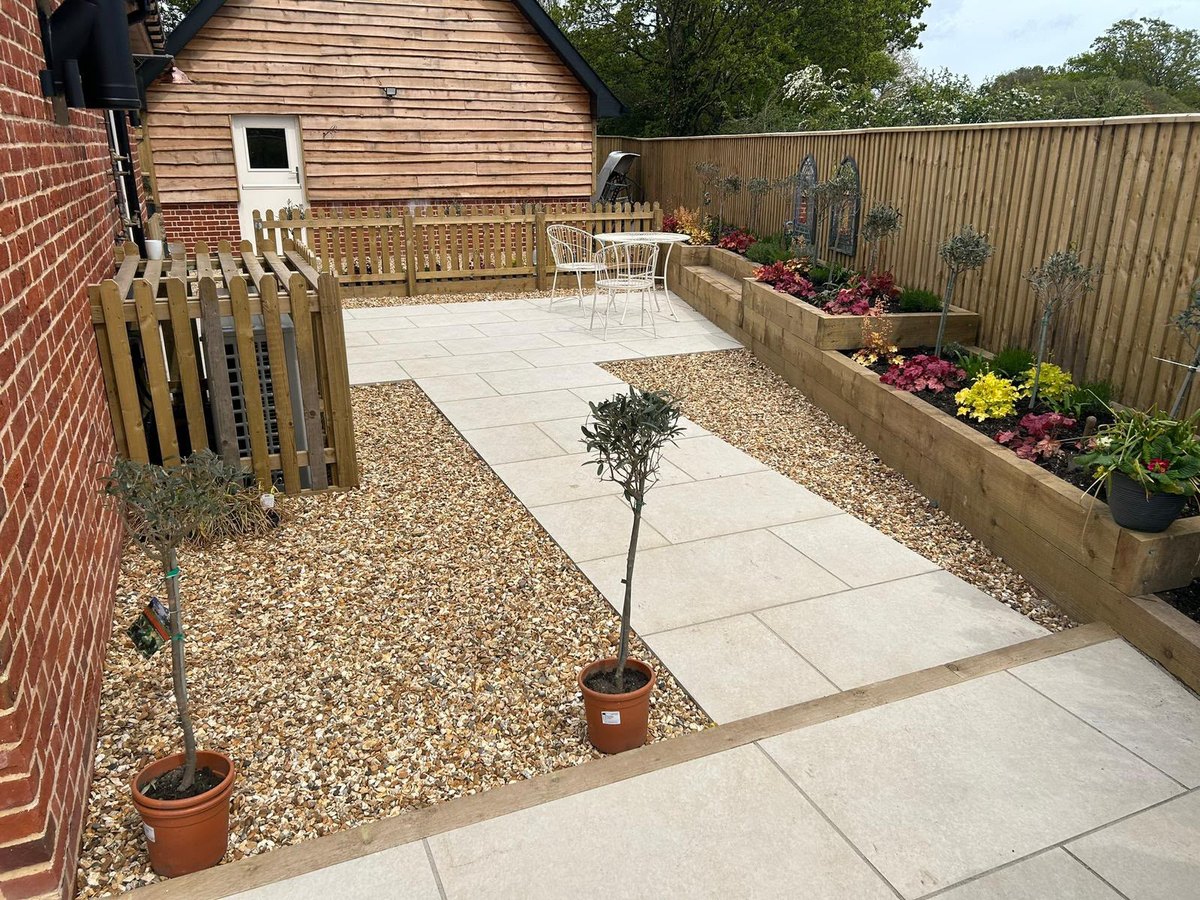
Getting to it. A drive you can back a grab lorry onto, a bungalow set well behind a hedge with a narrow entrance, and a rear garden reached through a side gate barely wider than a barrow are three different jobs before any material is priced. The other Ashley Heath variable is size: long frontages mean more square metres of sub base, more spoil and a bigger muck away line, and that is where the money goes rather than into the surface. Ask any quote the dig depth, the sub base, the drainage and who takes the spoil.
If it is urgent
A trip hazard, or a drive that floods
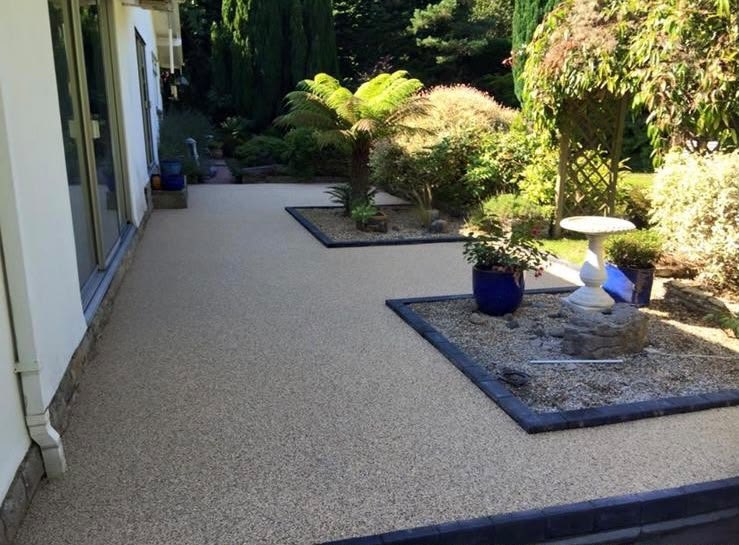
Some of it will not wait. Ring instead of the form: a slab lifted across a path, a bay sunk by a doorway, a gully that has stopped taking water. Somebody falls, or the water starts standing against the house. We make it safe and get the water away first, then price the permanent work once the ground can be opened. Ashley Heath is a little over eight miles from us.
Worth knowing
What the length of the drive really changes
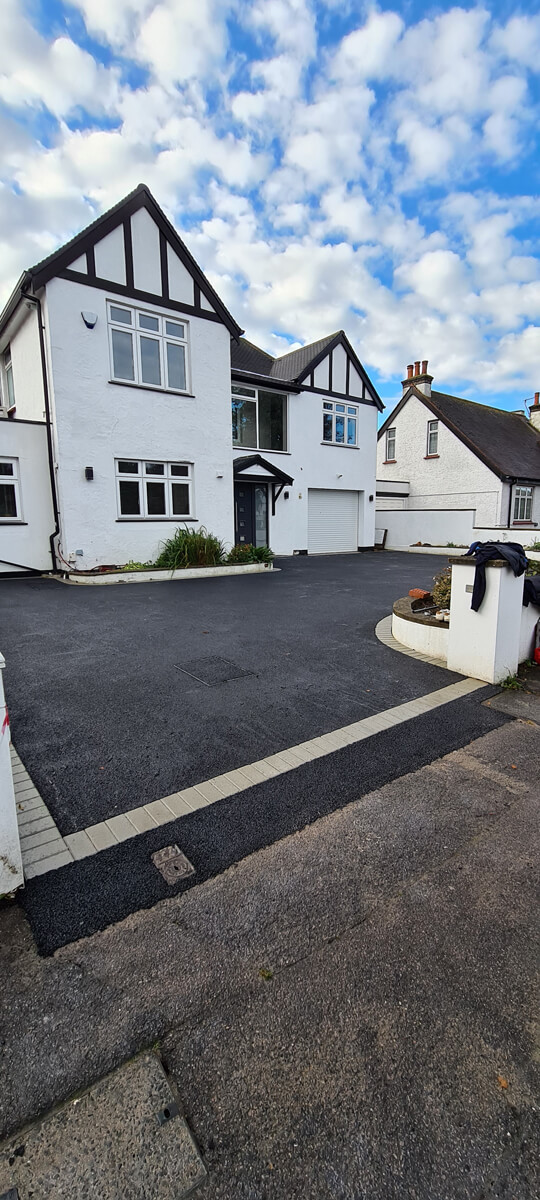
Plots here are generous and the drives are long, and the first thing that changes is arithmetic you cannot see. A drive twice the length is twice the excavation, twice the sub-base and twice the spoil going away, and the muck away is charged by the load whatever the surface on top.
That is why two quotes for the same drive can be so far apart: one has priced the dig at the depth the ground needs and the other has assumed a shallow scrape. Ask any quote how deep it is going and how many loads it expects to take off site, because that is where the money is.
The second thing is water. On a small front garden the five square metre rule is a formality. On several hundred square metres of drive it is the whole design, because all of that rain has to be dealt with on your ground rather than run out to the road.
That points either to a permeable surface over an open graded stone layer deep enough to store a downpour and let it away slowly, or to a positive outfall with a silt trap ahead of it. Approved Document H sets out the drainage hierarchy that thinking follows, and a SuDS approach on a plot this size is not a green add on, it is the cheapest way to stop the far end of the drive ponding every winter. If the budget will not stretch to all of it at once, we would rather phase it, the base and the drainage first and the top surface next year, than build the whole thing shallow.
Who you are dealing with
A local firm you can check
We cover Ashley Heath, St Leonards and the BH24 postcodes around Ringwood and Three Legged Cross, working out from Bournemouth. Bournemouth Roofing & Building Ltd, registered in England and Wales, company number 15471719, which you can look up in a minute. Thomas Hannen's business, and he is the one who comes out to price the job, not a salesman. A verified customer's 10 out of 10 on Checkatrade. The visit and the written quote are both free.
Questions
Ashley Heath questions we get asked
Ashley Heath is mostly bungalows. Does the patio work differently?
It usually ends up bigger and closer to the house. At 52.2% of dwellings, the bungalow is the normal house here, and a single storey spreads across the plot so paving wraps two or three elevations rather than sitting in one square out the back. That means more perimeter against the wall, more falls to set and more thresholds to work down to. Every door and air brick gets surveyed before a finished level is fixed.
Does water off a new drive have to be piped away?
Round Ashley Heath it often does. This ground is naturally wet, so a percolation test comes before any decision about a crate soakaway. If the water in the test pit just sits there, infiltration will not work and the drive needs a positive outfall to somewhere that can actually accept it. The result of that test decides the shape of the job, and it is worth having before anybody prices the work.
Only one building near us is listed. Does that free things up?
For paving, effectively it does. Ashley Heath has no conservation area of its own and a single listed entry, so what goes down at the front is a choice rather than a negotiation with Dorset Council. The constraints left are practical: where the water ends up, how the drive meets the footway, and whether the levels work against the house. Better to spend on the base than on matching a material nobody is asking you to match.
Why does one end of the paving green over first?
Because one face takes the weather. The most exposed elevation at Ashley Heath looks south west, and driven rain keeps that side damp for longer between showers, so algae gets going there while the sheltered end stays clean. It is a surface film rather than a failure. What matters is that the joints on that side stay full, because open joints on the weather face let water into the bedding and then the slabs begin to rock.
When can the car go back on a new block drive?
Once the edge restraint has gone off and the surface has been vibrated and jointed, which on a straightforward Ashley Heath frontage is the last day on site. Concrete haunching behind the edge course wants a night before anything heavy rolls over it, so we finish the far end first and keep a run open where the layout allows. Mortar bedded and resin work want longer, and wet ground slows both of them down.
Nearby, and next door
Driveways and patios near Ashley Heath
Driveways and patios nearby
Our other trades in Ashley Heath
Everything we do in West Moors Driveways and patios, all areas Every area we cover
Free quote
Get a price for your Ashley Heath drive or terrace
Tell us the length of the drive and what it is doing, and we will come out, check what is under it and put a written price in front of you.